sh030106u.pdf - 第227页
6. NORM AL GAIN ADJ USTMENT 6 - 26 (2) 2 gain adj ustme nt mode 2 Use 2 gain adjustm ent mod e 2 when proper gain adj ustment cannot b e made with 2 gain adj ustment mode 1. Since th e load to motor inertia ra tio is n o…
6. NORMAL GAIN ADJUSTMENT
6 - 25
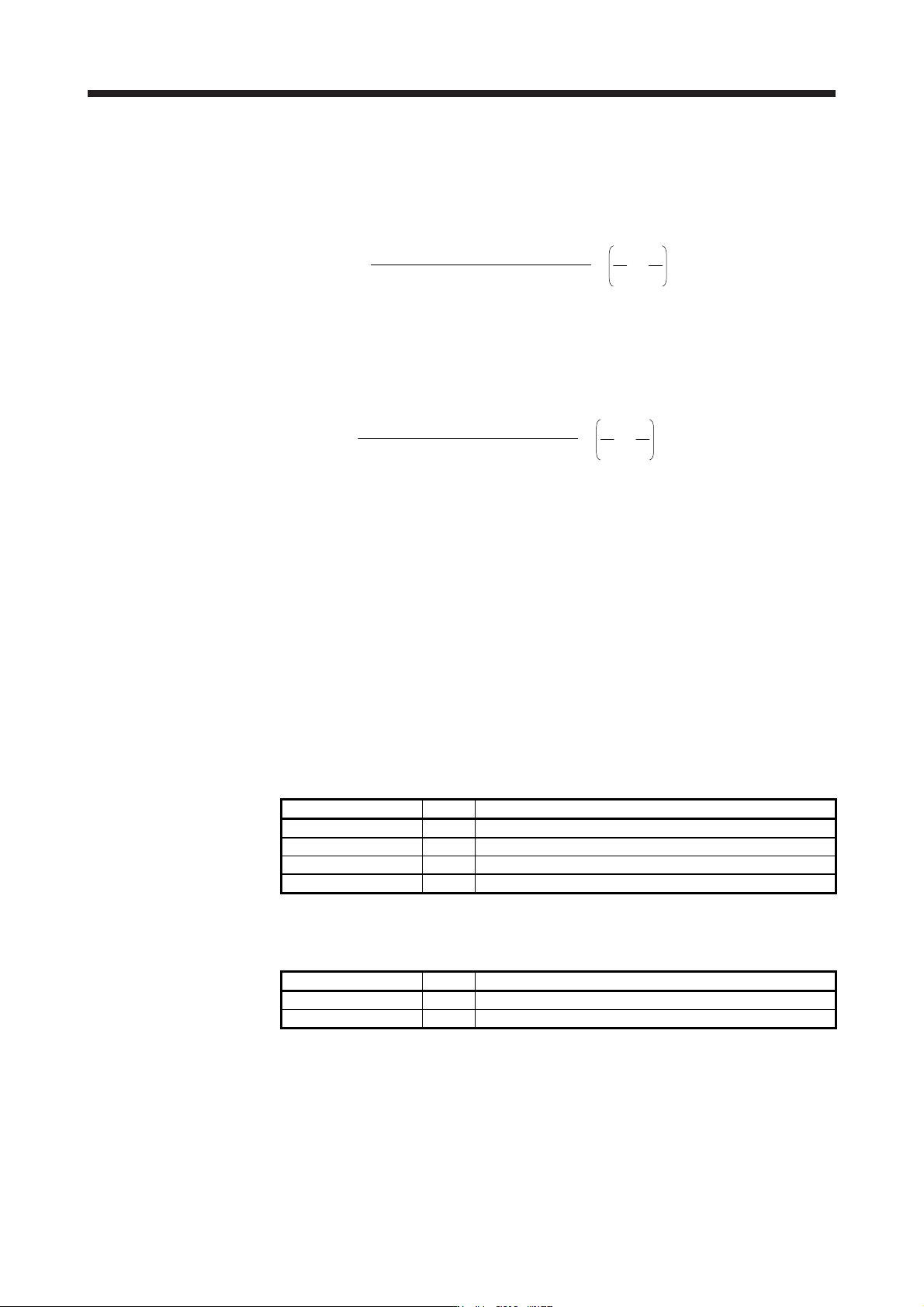
3) [Pr. PB08 Position loop gain]
This parameter determines the response level to a disturbance to the position control loop.
Increasing the value increases the response level to the disturbance, but a too high value will
increase vibration of the mechanical system.
Position loop gain guideline ≤
(1 + Load to motor inertia ratio)
Speed loop gain
×
8
1
4
1
to
4) [Pr. PB07 Model loop gain]
This parameter determines the response level to a position command. Increasing the value
improves trackability to a position command, but a too high value will make overshoot liable to
occur at settling.
Model loop gain guideline ≤
(1 + Load to motor inertia ratio)
Speed loop gain
×
8
1
4
1
to
6.5 2 gain adjustment mode
The 2 gain adjustment mode is used to match the position loop gains of the axes when performing the
interpolation operation of servo motors of two or more axes for an X-Y table or the like. In this mode,
manually set the model loop gain that determines command trackability. Other parameters for gain
adjustment are set automatically.
(1) 2 gain adjustment mode 1 (interpolation mode)
The 2 gain adjustment mode 1 manually set the model loop gain that determines command trackability.
The mode constantly estimates the load to motor inertia ratio, and automatically set other parameters for
gain adjustment to optimum gains using auto tuning response.
The following parameters are used for 2 gain adjustment mode 1.
(a) Automatically adjusted parameter
The following parameters are automatically adjusted by auto tuning.
Parameter Symbol Name
PB06 GD2 Load to motor inertia ratio/load to motor mass ratio
PB08 PG2 Position loop gain
PB09 VG2 Speed loop gain
PB10 VIC Speed integral compensation
(b) Manually adjusted parameter
The following parameters are adjustable manually.
Parameter Symbol Name
PA09 RSP Auto tuning response
PB07 PG1 Model loop gain
6. NORMAL GAIN ADJUSTMENT
6 - 26
(2) 2 gain adjustment mode 2
Use 2 gain adjustment mode 2 when proper gain adjustment cannot be made with 2 gain adjustment
mode 1. Since the load to motor inertia ratio is not estimated in this mode, set the value of a proper load
to motor inertia ratio in [Pr. PB06].
The following parameters are used for 2 gain adjustment mode 2.
(a) Automatically adjusted parameter
The following parameters are automatically adjusted by auto tuning.
Parameter Symbol Name
PB08 PG2 Position loop gain
PB09 VG2 Speed loop gain
PB10 VIC Speed integral compensation
(b) Manually adjusted parameter
The following parameters are adjustable manually.
Parameter Symbol Name
PA09 RSP Auto tuning response
PB06 GD2 Load to motor inertia ratio/load to motor mass ratio
PB07 PG1 Model loop gain
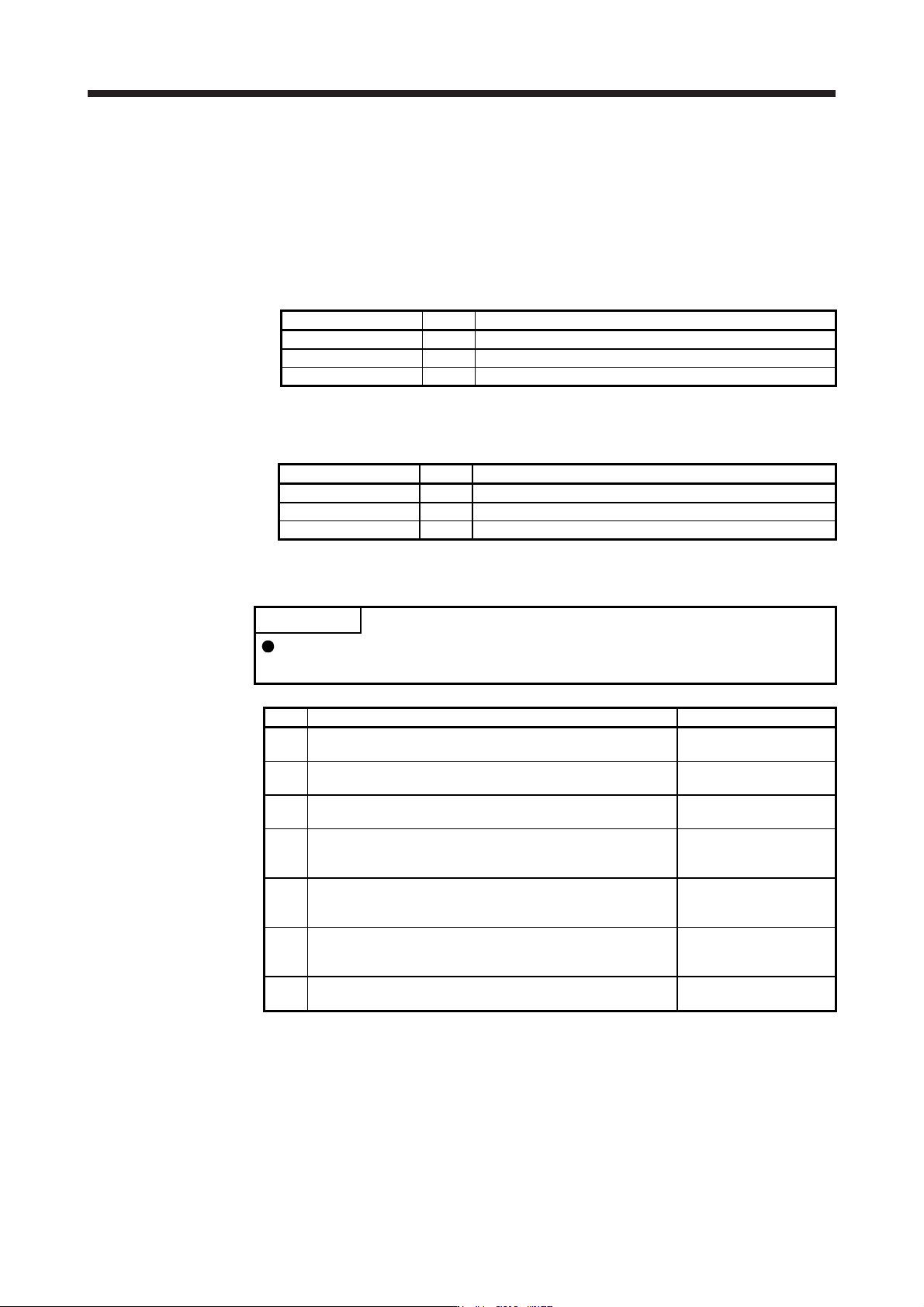
(3) Adjustment procedure of 2 gain adjustment mode
POINT
Set the same value in [Pr. PB07 Model loop gain] for the axis used in 2 gain
adjustment mode.
Step Operation Description
1 Set to the auto tuning mode.
Select the auto tuning
mode 1.
2
During operation, increase the response level setting value in [Pr.
PA09], and return the setting if vibration occurs.
Adjustment in auto tuning
mode 1.
3
Check value of the model loop gain and the load to motor inertia
ratio in advance.
Check the upper setting
limits.
4
Set the 2 gain adjustment mode 1 ([Pr. PA08]: _ _ _ 0).
Select the 2 gain
adjustment mode 1
(interpolation mode).
5
When the load to motor inertia ratio is different from the design
value, select the 2 gain adjustment mode 2 ([Pr. PA08]: _ _ _ 4)
and then set the load to motor inertia ratio manually in [Pr. PB06].
Check the load to motor
inertia ratio.
6
Set the model loop gain of all the axes to be interpolated to the
same value. At that time, adjust to the setting value of the axis,
which has the smallest model loop gain.
Set model loop gain.
7
Considering the interpolation characteristic and motor status,
fine-adjust the model loop gain and response level setting.
Fine adjustment

6. NORMAL GAIN ADJUSTMENT
6 - 27
(4) Parameter adjustment
[Pr. PB07 Model loop gain]
This parameter determines the response level of the position control loop. Increasing the value improves
trackability to a position command, but a too high value will make overshoot liable to occur at settling.
Number of droop pulses is determined by the following expression.
Number of droop pulses [pulse] =
Model loop gain setting
Position command frequency [pulse/s]
Position command frequency differs depending on the operation mode.
Rotary servo motor and direct drive motor:
Position command frequency
=
Speed [r/min]
60
× Encoder resolution (number of pulses per servo motor revolution)
Linear servo motor:
Position command frequency = Speed [mm/s] ÷ Encoder resolution (travel distance per pulse)