sh030106u.pdf - 第632页
APPENDIX App. - 1 APPENDIX App. 1 P eripheral equi pment manuf acturer (f or referenc e) Manufactur er nam es give n in t he table ar e as of Augus t 2021. For inf ormation , such as th e deliv ery time, pric e, and spec…
17. APPLICATION OF FUNCTIONS
17 - 80
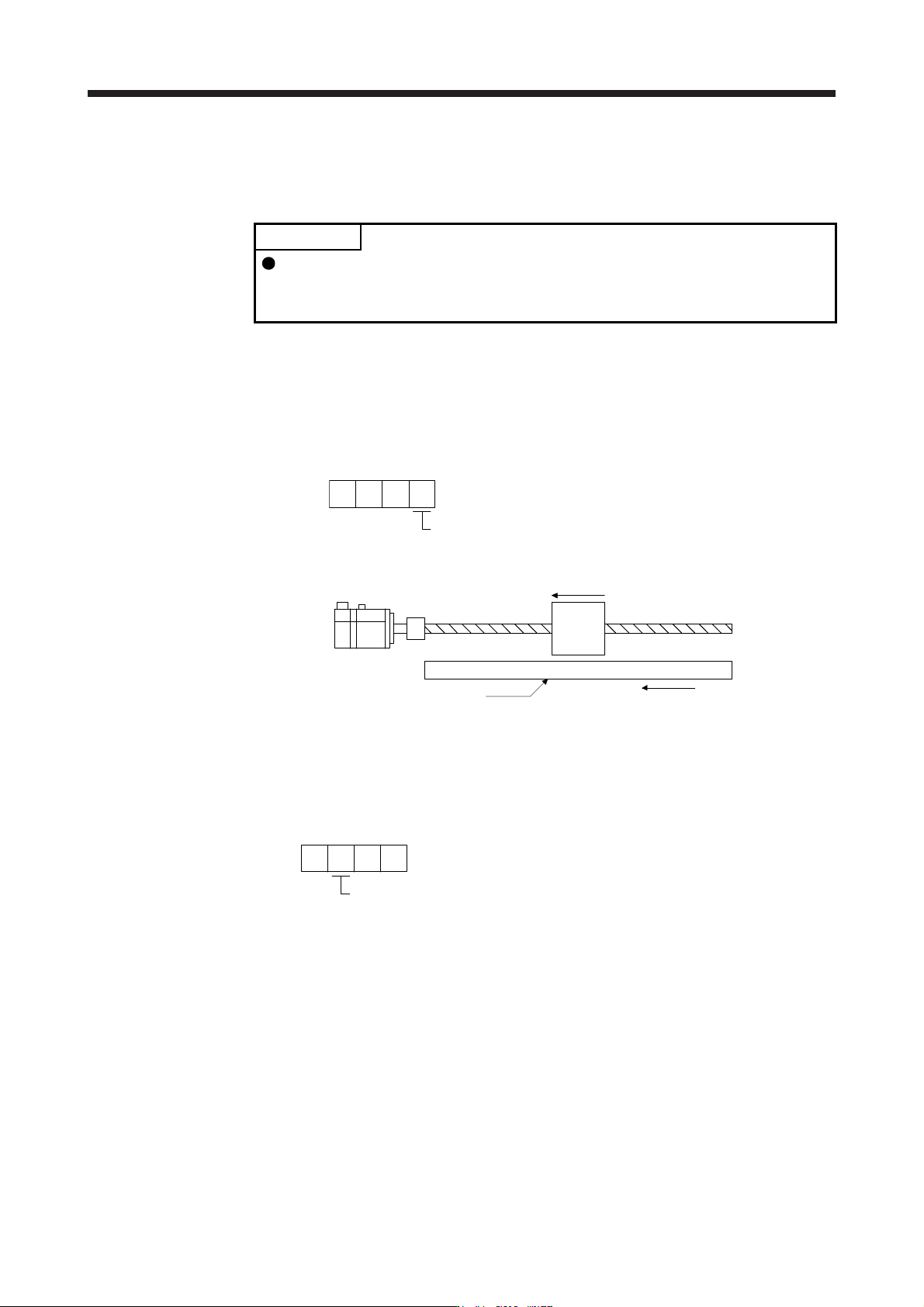
Select a polarity of the scale measurement encoder with the following "Encoder pulse count polarity
selection" and "Selection of A/B/Z-phase input interface encoder Z-phase connection judgment function"
of [Pr. PC27] as necessary.
POINT
"Encoder pulse count polarity selection" in [Pr. PC27] is not related to [Pr. PA14
Rotation direction selection]. Make sure to set the parameter according to the
relationships between servo motor and linear encoder/rotary encoder.
(a) Parameter setting method
1) Select a encoder pulse count polarity.
This parameter is used to set the load-side encoder polarity to be connected to CN2L connector
in order to match the CCW direction of servo motor and the increasing direction of load-side
encoder feedback. Set this as necessary.
000
[Pr. PC27]
Encoder pulse count polarity selection
0: Load-side encoder pulse increasing direction in the servo motor CCW
1: Load-side encoder pulse decreasing direction in the servo motor CCW
Servo motor
Linear encoder
Servo motor CCW direction
Address increasing direction of linear encoder
2) A/B/Z-phase input interface encoder Z-phase connection judgment function
This function can trigger an alarm by detecting non-signal for Z phase.
The Z-phase connection judgment function is enabled by default. To disable the Z-phase
connection judgment function, set [Pr. PC27].
000
[Pr. PC27]
Selection of A/B/Z-phase input interface encoder Z-phase connection judgment function
0: Enabled
1: Disabled
(b) How to confirm the scale measurement encoder feedback direction
You can confirm the directions of the cumulative feedback pulses of servo motor encoder and the
load-side cumulative feedback pulses are matched by moving the device (scale measurement
encoder) manually in the servo-off status. If mismatched, reverse the polarity.
(3) Confirmation of scale measurement encoder position data
Check the scale measurement encoder mounting and parameter settings for any problems.
Operate the device (scale measurement encoder) to check the data of the scale measurement encoder
is renewed correctly. If the data is not renewed correctly, check the wiring and parameter settings.
Change the scale polarity as necessary.
APPENDIX
App. - 1
APPENDIX
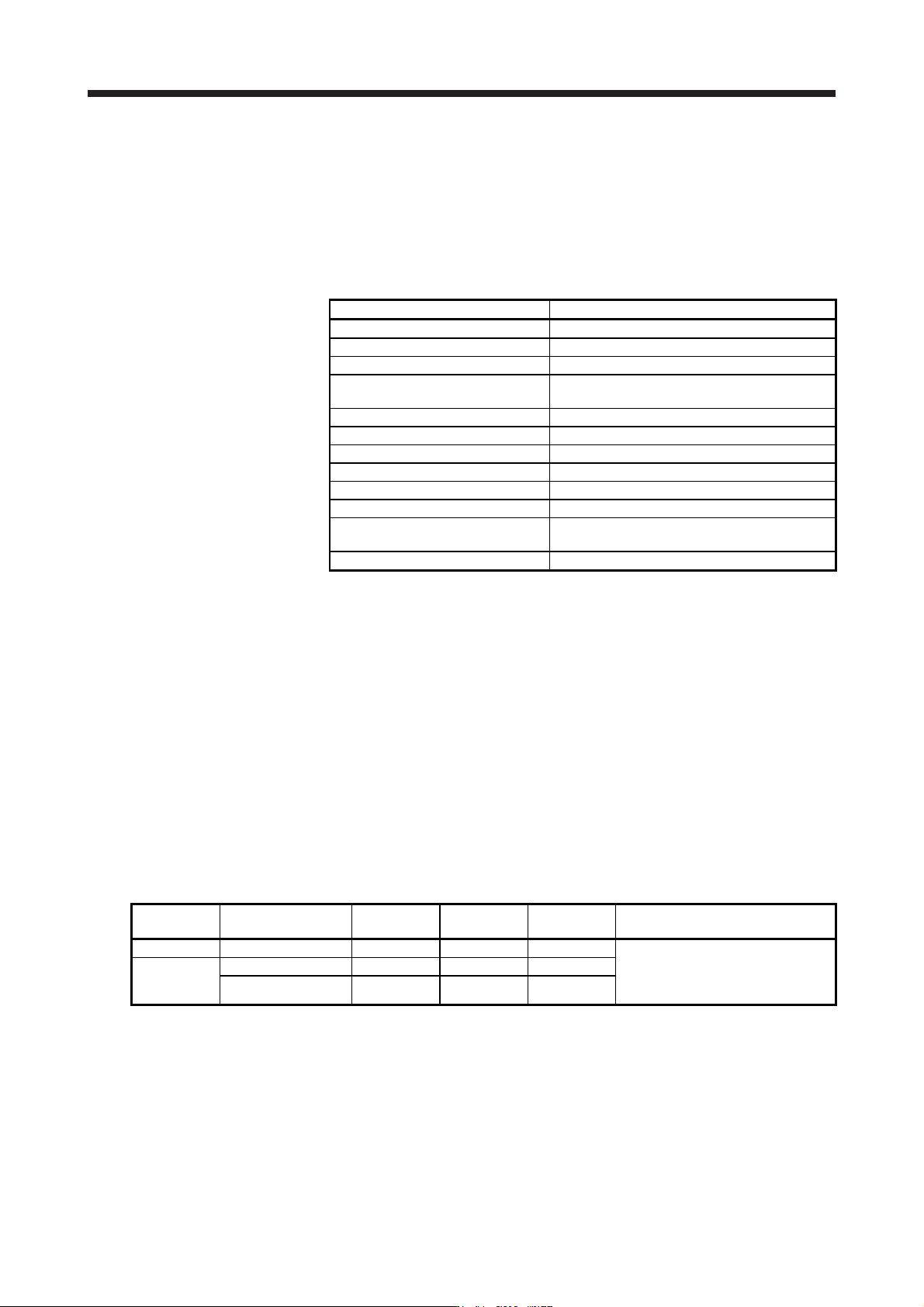
App. 1 Peripheral equipment manufacturer (for reference)
Manufacturer names given in the table are as of August 2021.
For information, such as the delivery time, price, and specifications of the recommended products, contact
each manufacturer.
Manufacturer Reference
NEC TOKIN TOKIN Corporation
Kitagawa Industries Kitagawa Industries Co., Ltd.
JST J.S.T. Mfg. Co., Ltd.
Junkosha
Purchase from Toa Electric Industrial Co. Ltd.,
Nagoya Branch
3M 3M
SEIWA ELECTRIC Seiwa Electric Mfg. Co. Ltd.
Soshin Electric Soshin Electric Co., Ltd.
TE Connectivity TE Connectivity
TDK TDK Corporation
Molex Molex Japan LLC
Toho Technology
Toho Technology Corp. Yoshida terminal block
Division
COSEL COSEL CO., LTD.
App. 2 Handling of AC servo amplifier batteries for the United Nations Recommendations
on the Transport of Dangerous Goods
United Nations Recommendations on the Transport of Dangerous Goods Rev. 15 (hereinafter
Recommendations of the United Nations) has been issued. To reflect this, transport regulations for lithium
metal batteries are partially revised in the Technical Instruction (ICAO-TI) by the International Civil Aviation
Organization (ICAO) and the International Maritime Dangerous Goods Code (IMDG Code) by the
International Maritime Organization (IMO).
To comply the instruction and code, we have modified the indication on the package for general-purpose AC
servo batteries.
The above change will not affect the function and performance of the product.
(1) Target model
(a) Battery (cell)
Model Option model Type
Lithium
content
Mass of
battery
Remark
ER6 MR-J3BAT Cell 0.65 g 16 g
Cells with more than 0.3 grams of
lithium content must be handled as
dangerous goods (Class 9) depending
on packaging requirements.
ER17330
MR-BAT Cell 0.48 g 13 g
A6BAT Cell 0.48 g 13 g
APPENDIX
App. - 2
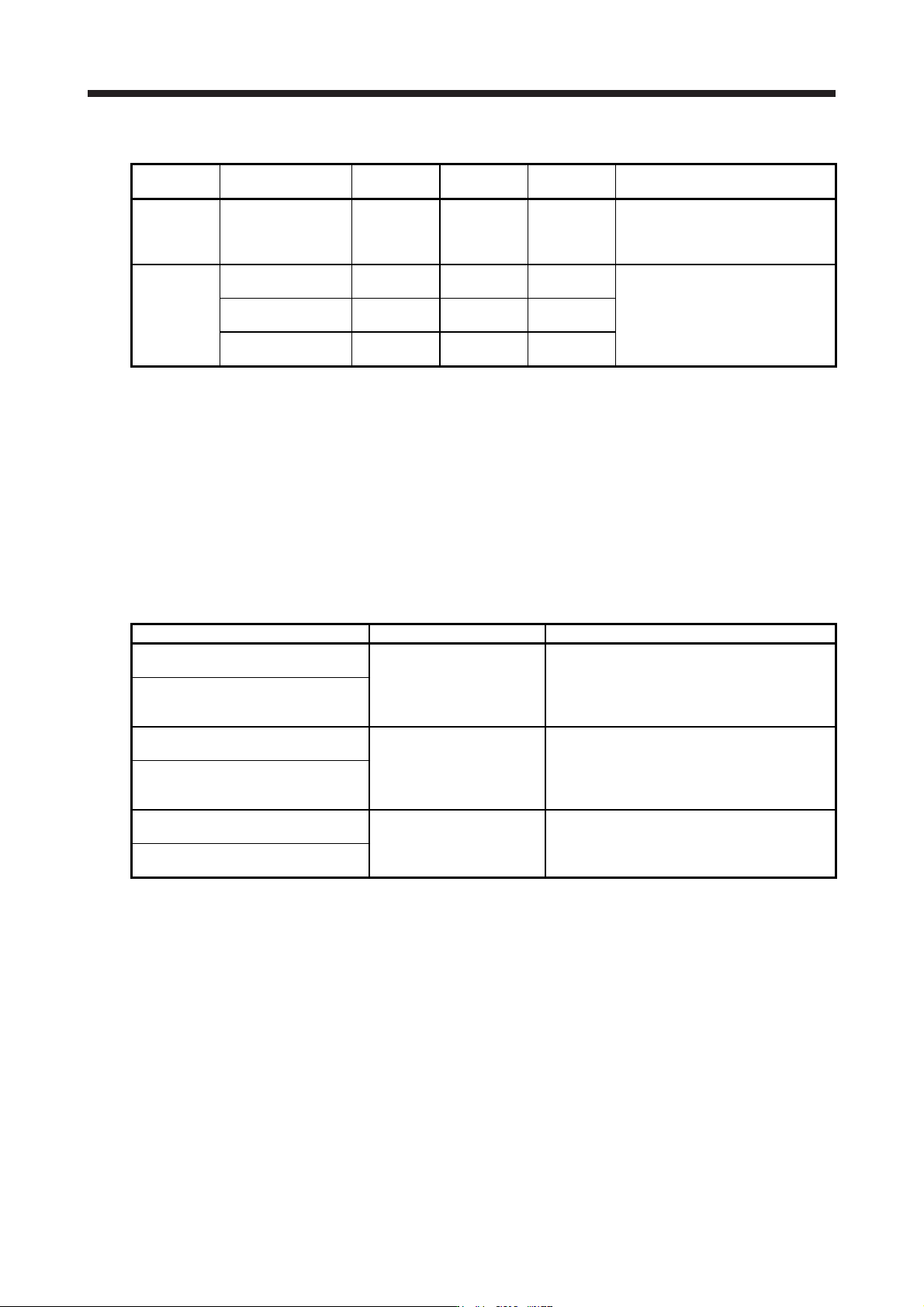
(b) Battery unit (assembled battery)
Model Option model Type
Lithium
content
Mass of
battery
Remark
ER6 MR-J2M-BT
Assembled
battery
(Seven)
4.55 g 112 g
Assembled batteries with more than
two grams of lithium content must be
handled as dangerous goods (Class 9)
regardless of packaging requirements.
CR17335A
MR-BAT6V1
Assembled
battery (Two)
1.20 g 34 g
Assembled batteries with more than
0.3 grams of lithium content must be
handled as dangerous goods (Class
9) depending on packaging
requirements.
MR-BAT6V1SET(-A)
Assembled
battery (Two)
1.20 g 34 g
MR-BAT6V1BJ
Assembled
battery (Two)
1.20 g 34 g
(2) Purpose
Safer transportation of lithium metal batteries.
(3) Change in regulations
The following points are changed for lithium metal batteries in transportation by sea or air based on the
revision of Recommendations of the United Nations Rev. 15 and ICAO-TI 2009-2010 edition, and IATA
Dangerous Goods Regulations 54th Edition (effective January 1, 2013). For lithium metal batteries, cells
are classified as UN3090, and batteries contained in or packed with equipment are classified as
UN3091.
(a) Transportation of lithium metal batteries alone
Packaging requirement Classification Main requirement
Less than eight cells per package with
less than one gram of lithium content
UN3090 PI968 Section II
The package must pass a 1.2 m drop test, and the
handling label with battery illustration (size: 120 ×
110 mm) must be attached on the package.
Less than two assembled batteries per
package with less than two grams of
lithium content
More than eight cells per package with
less than one gram of lithium content
UN3090 PI968 Section IB
The package must pass a 1.2 m drop test, and the
handling label with battery illustration (size: 120 ×
110 mm) must be attached on the package.
The Class 9 hazard label must be attached or
others to comply with dangerous goods (Class 9).
More than two assembled batteries per
package with less than two grams of
lithium content
Cells with more than one gram of lithium
content
UN3090 PI968 Section IA
The package must be compliant with Class 9
Packages, and the Class 9 hazard label must be
attached or others to comply with dangerous
goods (Class 9).
Assembled batteries with more than two
grams of lithium content