sh030106u.pdf - 第634页
APPENDIX App. - 3 (b) Trans portation of lit hium m etal batter ies pac ked with or co ntained in equ ipmen t 1) For batteries p acked wi th equipme nt, follow t he neces sary re quirements of UN30 91 PI96 9. Batteries a…
APPENDIX
App. - 2
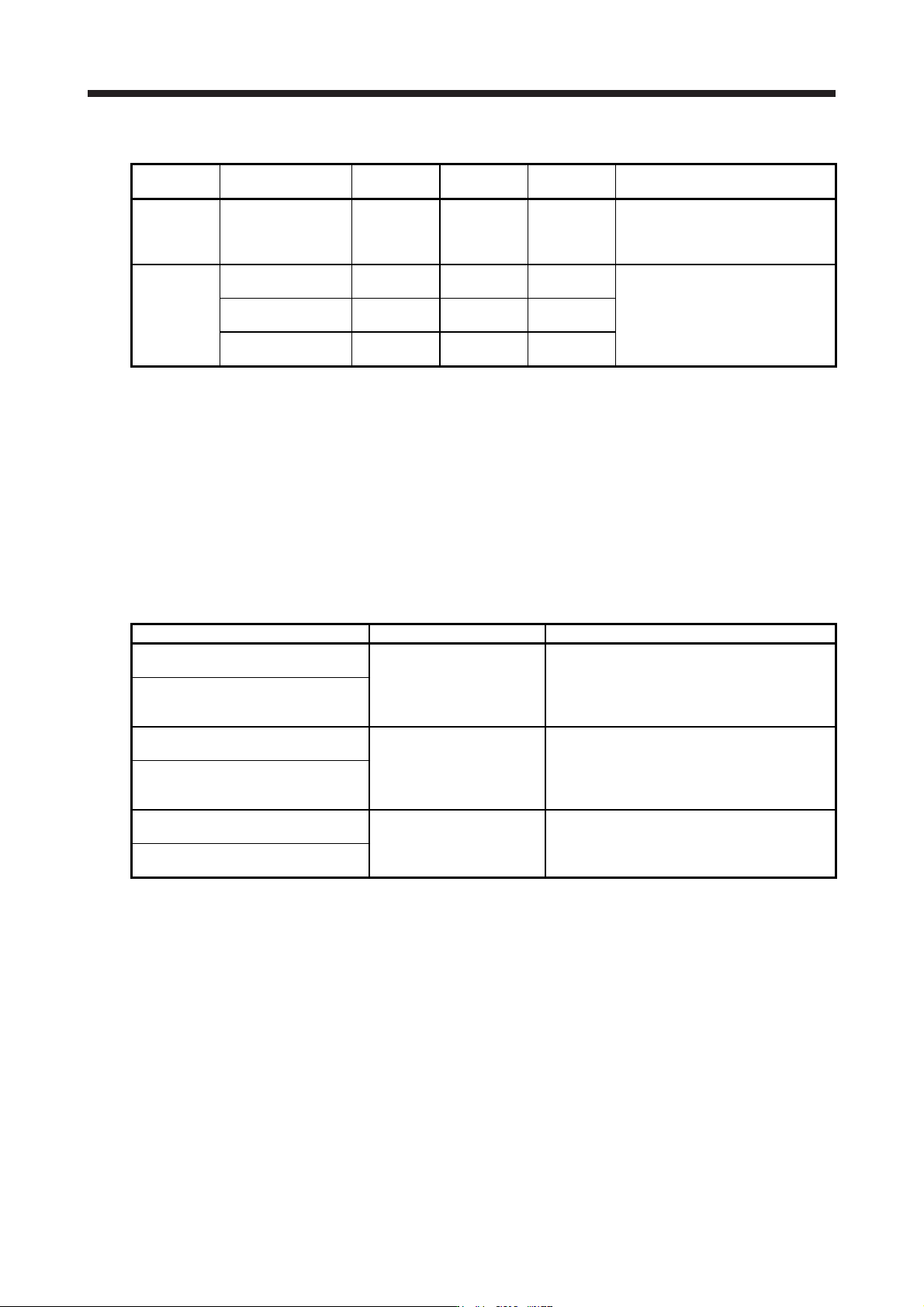
(b) Battery unit (assembled battery)
Model Option model Type
Lithium
content
Mass of
battery
Remark
ER6 MR-J2M-BT
Assembled
battery
(Seven)
4.55 g 112 g
Assembled batteries with more than
two grams of lithium content must be
handled as dangerous goods (Class 9)
regardless of packaging requirements.
CR17335A
MR-BAT6V1
Assembled
battery (Two)
1.20 g 34 g
Assembled batteries with more than
0.3 grams of lithium content must be
handled as dangerous goods (Class
9) depending on packaging
requirements.
MR-BAT6V1SET(-A)
Assembled
battery (Two)
1.20 g 34 g
MR-BAT6V1BJ
Assembled
battery (Two)
1.20 g 34 g
(2) Purpose
Safer transportation of lithium metal batteries.
(3) Change in regulations
The following points are changed for lithium metal batteries in transportation by sea or air based on the
revision of Recommendations of the United Nations Rev. 15 and ICAO-TI 2009-2010 edition, and IATA
Dangerous Goods Regulations 54th Edition (effective January 1, 2013). For lithium metal batteries, cells
are classified as UN3090, and batteries contained in or packed with equipment are classified as
UN3091.
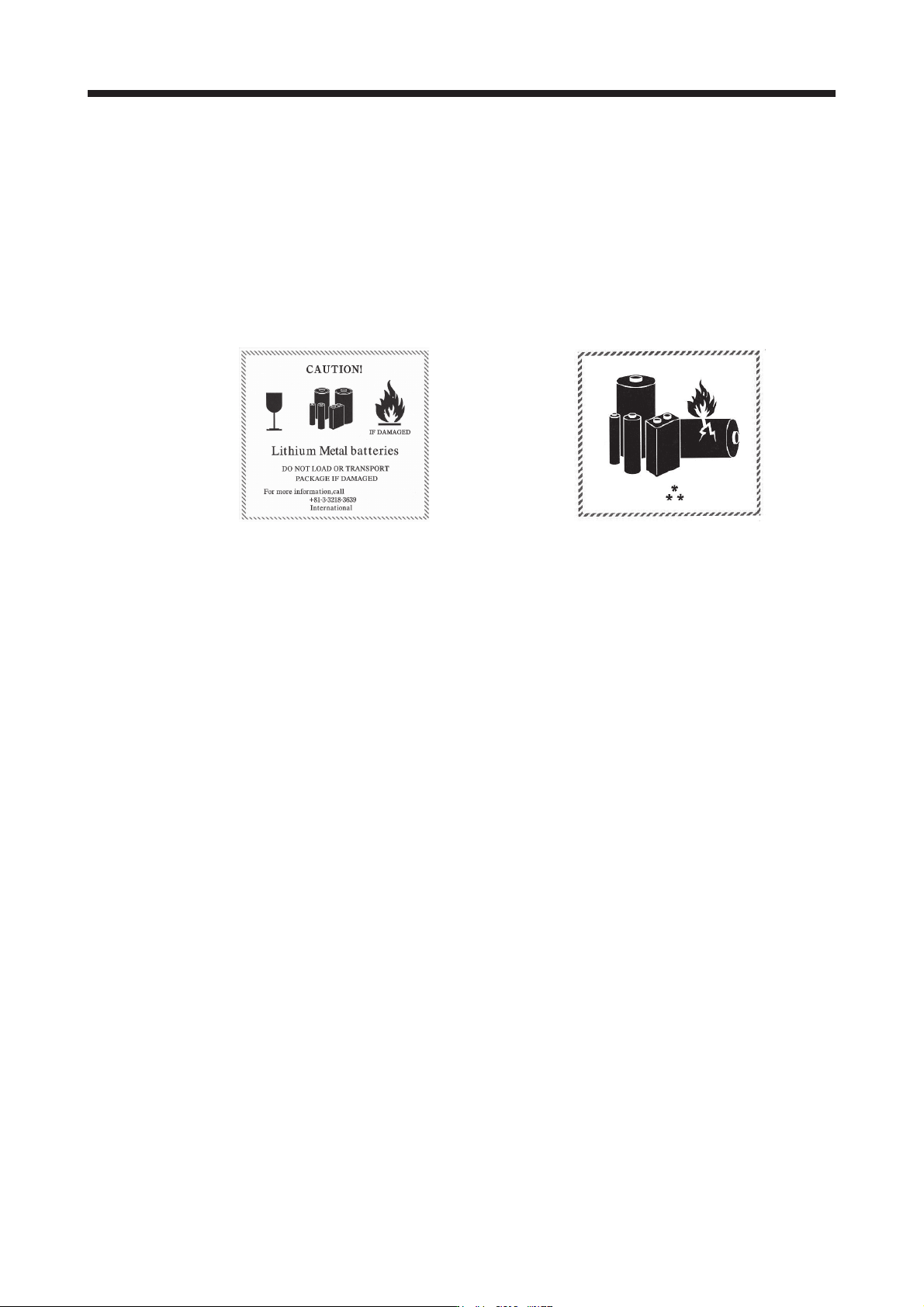
(a) Transportation of lithium metal batteries alone
Packaging requirement Classification Main requirement
Less than eight cells per package with
less than one gram of lithium content
UN3090 PI968 Section II
The package must pass a 1.2 m drop test, and the
handling label with battery illustration (size: 120 ×
110 mm) must be attached on the package.
Less than two assembled batteries per
package with less than two grams of
lithium content
More than eight cells per package with
less than one gram of lithium content
UN3090 PI968 Section IB
The package must pass a 1.2 m drop test, and the
handling label with battery illustration (size: 120 ×
110 mm) must be attached on the package.
The Class 9 hazard label must be attached or
others to comply with dangerous goods (Class 9).
More than two assembled batteries per
package with less than two grams of
lithium content
Cells with more than one gram of lithium
content
UN3090 PI968 Section IA
The package must be compliant with Class 9
Packages, and the Class 9 hazard label must be
attached or others to comply with dangerous
goods (Class 9).
Assembled batteries with more than two
grams of lithium content
APPENDIX
App. - 3
(b) Transportation of lithium metal batteries packed with or contained in equipment
1) For batteries packed with equipment, follow the necessary requirements of UN3091 PI969.
Batteries are classified into either Section II/Section I depending on the lithium content/packaging
requirements.
2) For batteries contained in equipment, follow the necessary requirements of UN3091 PI970.
Batteries are classified into either Section II/Section I depending on the lithium content/packaging
requirements.
The special handling may be unnecessary depending on the number of batteries and gross mass
per package.
* Place for UN number (s)
** Place for telephone number for additional
information
Fig. app. 1 Example of Mitsubishi label with
battery illustration
(Available until December 31, 2018)
Fig. app. 2 Example of Mitsubishi label with
battery illustration
(Available from January 1, 2017)
The handling label shown in Fig. app. 1 has been changed to the one shown in Fig. app. 2 in
accordance with the IATA Dangerous Goods Regulations 58th Edition (effective January 1, 2017).
However, the label shown in Fig. app. 1 may be used until December 31, 2018 (for two years as an
interim measure).
(4) Details of the package change
The following caution is added to the packages of the target batteries.
"Containing lithium metal battery. Regulations apply for transportation."
(5) Transportation precaution for customers
For sea or air transportation, attaching the handling label (Fig. app. 1) must be attached to the package
of a Mitsubishi Electric cell or battery. In addition, attaching it to the outer package containing several
packages of Mitsubishi Electric cells or batteries is also required. When the content of a package must
be handled as dangerous goods (Class 9), the Shipper's Declaration for Dangerous Goods is required,
and the package must be compliant with Class 9 Packages. Documentations like the handling label in
the specified design and the Shipper's Declaration for Dangerous Goods are required for transportation.
Please attach the documentations to the packages and the outer package.
The IATA Dangerous Goods Regulations are revised, and the requirements are changed annually.
When customers transport lithium batteries by themselves, the responsibility for the cargo lies with the
customers. Thus, be sure to check the latest version of the IATA Dangerous Goods Regulations.
APPENDIX
App. - 4
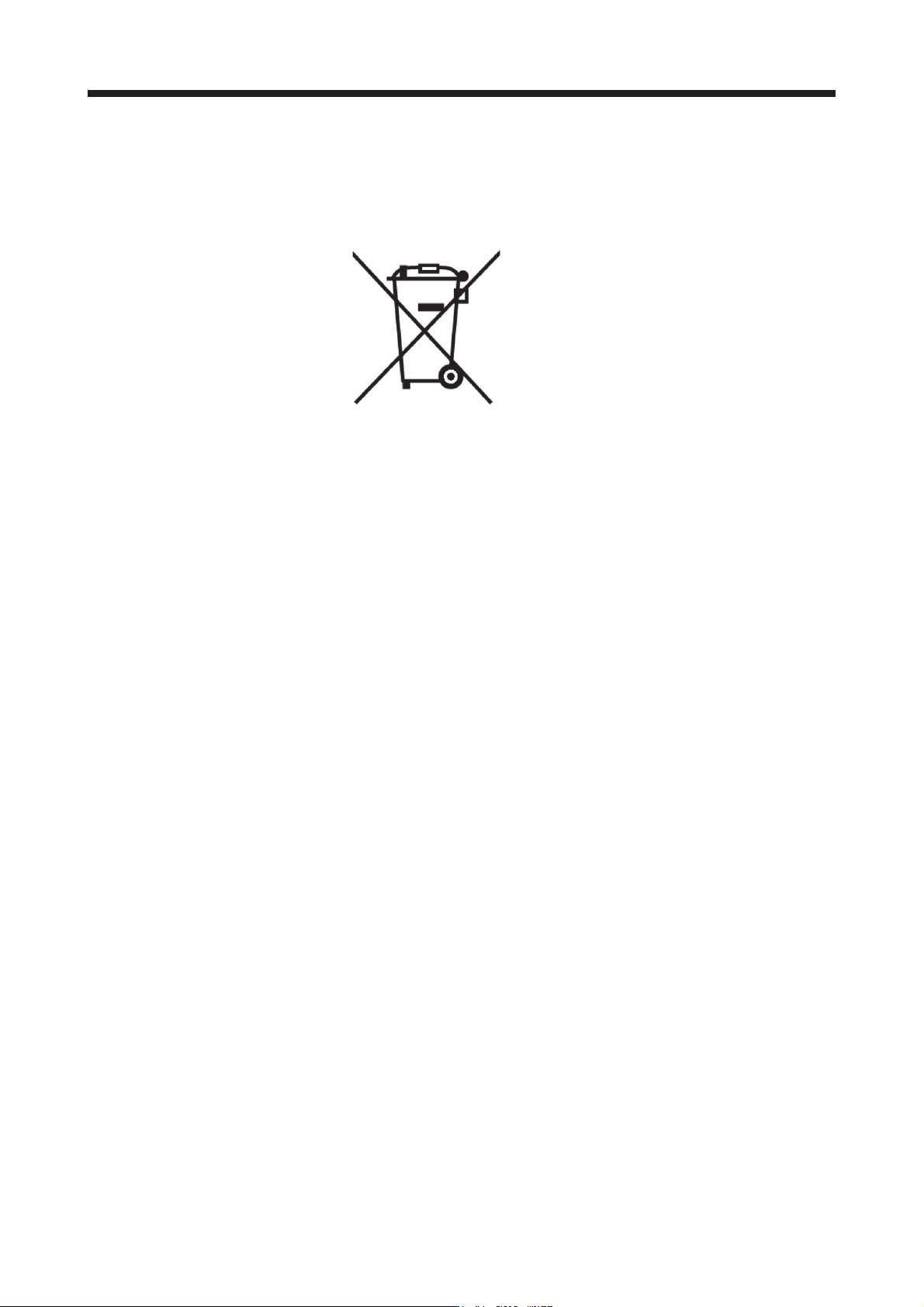
App. 3 Symbol for the new EU Battery Directive
The symbol for the new EU Battery Directive (2006/66/EC) that is plastered to the general-purpose AC servo
battery is explained here.
Note. This s
y
mbol is valid onl
y
in EU.
This symbol is in accordance with directive 2006/66/EC Article 20 "Information for end-users" and Annex II.
Your MITSUBISHI ELECTRIC product is designed and manufactured with high quality materials and
components which can be recycled and/or reused.
This symbol means that batteries and accumulators, at their end-of-life, should be disposed of separately
from your household waste.
If a chemical symbol is printed beneath the symbol shown above, this chemical symbol means that the
battery or accumulator contains a heavy metal at a certain concentration.
This will be indicated as follows.
Hg: mercury (0.0005%), Cd: cadmium (0.002%), Pb: lead (0.004%)
In the European Union there are separate collection systems for used batteries and accumulators. Please,
dispose of batteries and accumulators correctly at your local community waste collection/recycling center.
Please, help us to conserve the environment we live in!
App. 4 Compliance with global standards
For compliance with the standards of Europe/UK, United States/Canada, and South Korea, refer to the
following manual.
Instructions and Cautions for Safe Use of AC Servos (IB(NA)-0300175)