sh030106u.pdf - 第635页
APPENDIX App. - 4 App. 3 Symb ol for the new EU B attery Directive The symbo l for t he new EU Batter y Direct ive ( 2006/66/ EC) that is plast ered t o the gener al-purp ose AC servo battery is expla ined her e. Note. T…
APPENDIX
App. - 3
(b) Transportation of lithium metal batteries packed with or contained in equipment
1) For batteries packed with equipment, follow the necessary requirements of UN3091 PI969.
Batteries are classified into either Section II/Section I depending on the lithium content/packaging
requirements.
2) For batteries contained in equipment, follow the necessary requirements of UN3091 PI970.
Batteries are classified into either Section II/Section I depending on the lithium content/packaging
requirements.
The special handling may be unnecessary depending on the number of batteries and gross mass
per package.
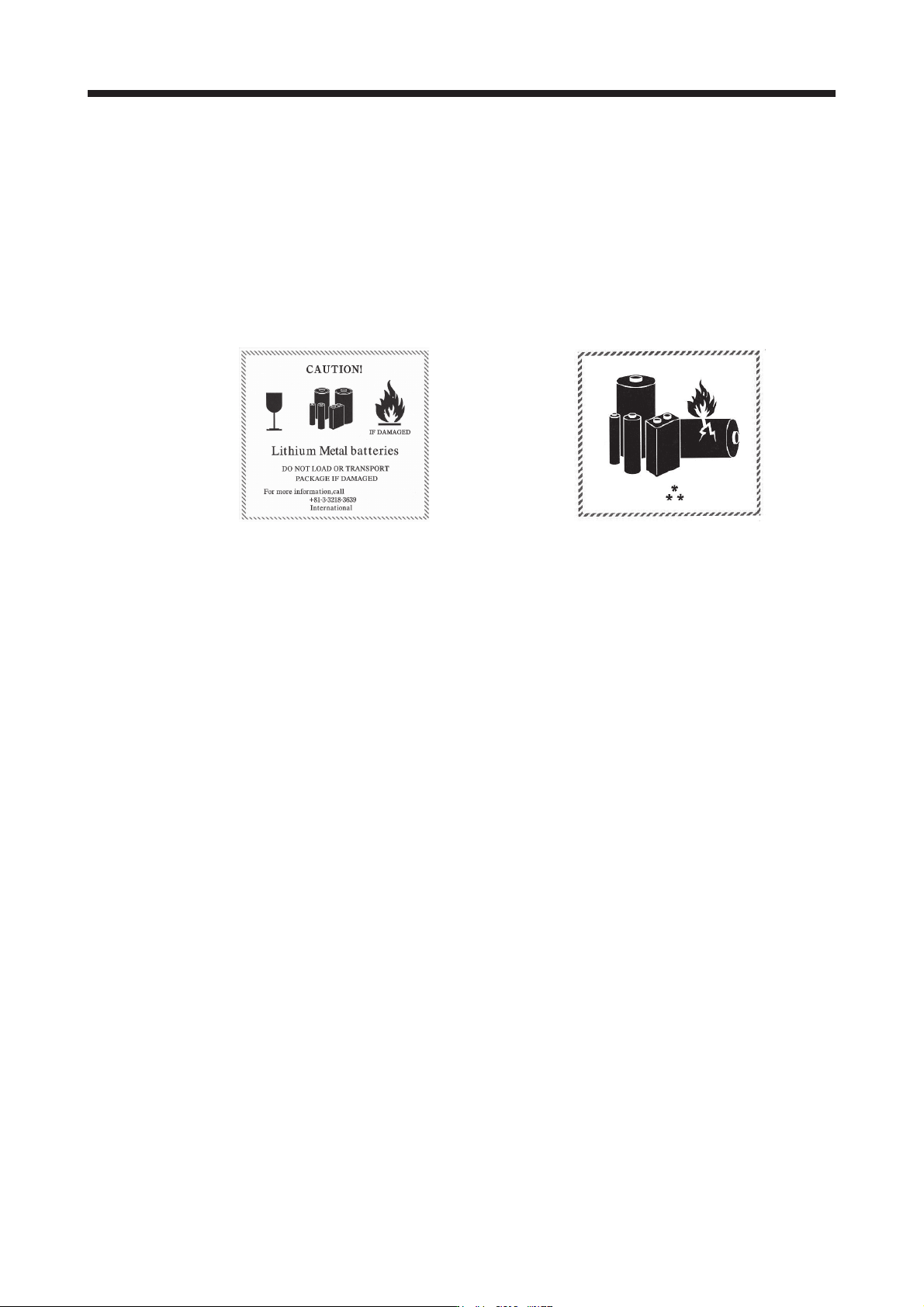
* Place for UN number (s)
** Place for telephone number for additional
information
Fig. app. 1 Example of Mitsubishi label with
battery illustration
(Available until December 31, 2018)
Fig. app. 2 Example of Mitsubishi label with
battery illustration
(Available from January 1, 2017)
The handling label shown in Fig. app. 1 has been changed to the one shown in Fig. app. 2 in
accordance with the IATA Dangerous Goods Regulations 58th Edition (effective January 1, 2017).
However, the label shown in Fig. app. 1 may be used until December 31, 2018 (for two years as an
interim measure).
(4) Details of the package change
The following caution is added to the packages of the target batteries.
"Containing lithium metal battery. Regulations apply for transportation."
(5) Transportation precaution for customers
For sea or air transportation, attaching the handling label (Fig. app. 1) must be attached to the package
of a Mitsubishi Electric cell or battery. In addition, attaching it to the outer package containing several
packages of Mitsubishi Electric cells or batteries is also required. When the content of a package must
be handled as dangerous goods (Class 9), the Shipper's Declaration for Dangerous Goods is required,
and the package must be compliant with Class 9 Packages. Documentations like the handling label in
the specified design and the Shipper's Declaration for Dangerous Goods are required for transportation.
Please attach the documentations to the packages and the outer package.
The IATA Dangerous Goods Regulations are revised, and the requirements are changed annually.
When customers transport lithium batteries by themselves, the responsibility for the cargo lies with the
customers. Thus, be sure to check the latest version of the IATA Dangerous Goods Regulations.
APPENDIX
App. - 4
App. 3 Symbol for the new EU Battery Directive
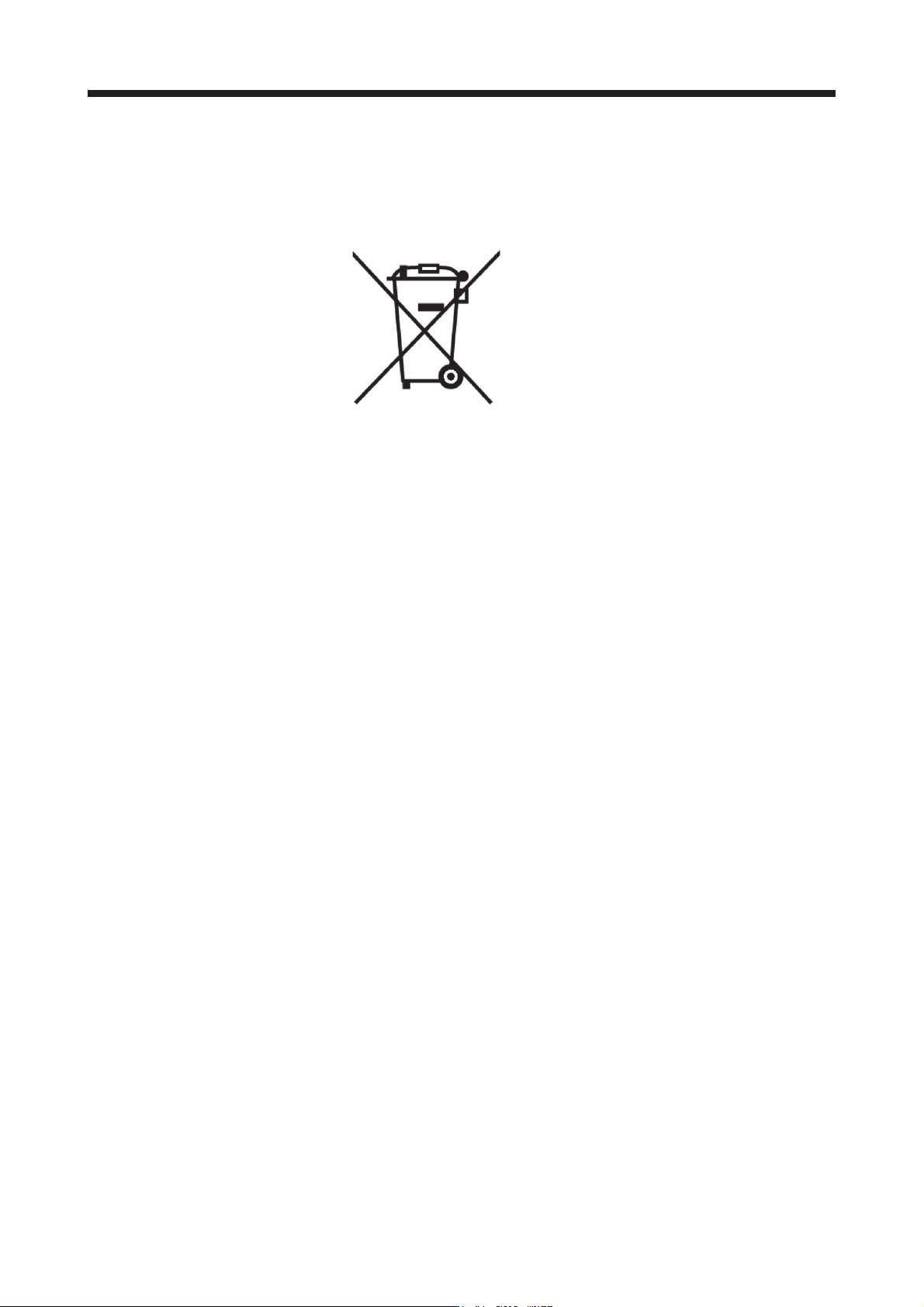
The symbol for the new EU Battery Directive (2006/66/EC) that is plastered to the general-purpose AC servo
battery is explained here.
Note. This s
y
mbol is valid onl
y
in EU.
This symbol is in accordance with directive 2006/66/EC Article 20 "Information for end-users" and Annex II.
Your MITSUBISHI ELECTRIC product is designed and manufactured with high quality materials and
components which can be recycled and/or reused.
This symbol means that batteries and accumulators, at their end-of-life, should be disposed of separately
from your household waste.
If a chemical symbol is printed beneath the symbol shown above, this chemical symbol means that the
battery or accumulator contains a heavy metal at a certain concentration.
This will be indicated as follows.
Hg: mercury (0.0005%), Cd: cadmium (0.002%), Pb: lead (0.004%)
In the European Union there are separate collection systems for used batteries and accumulators. Please,
dispose of batteries and accumulators correctly at your local community waste collection/recycling center.
Please, help us to conserve the environment we live in!
App. 4 Compliance with global standards
For compliance with the standards of Europe/UK, United States/Canada, and South Korea, refer to the
following manual.
Instructions and Cautions for Safe Use of AC Servos (IB(NA)-0300175)
APPENDIX
App. - 5
App. 5 MR-J3-D05 Safety logic unit
App. 5.1 Contents of the package
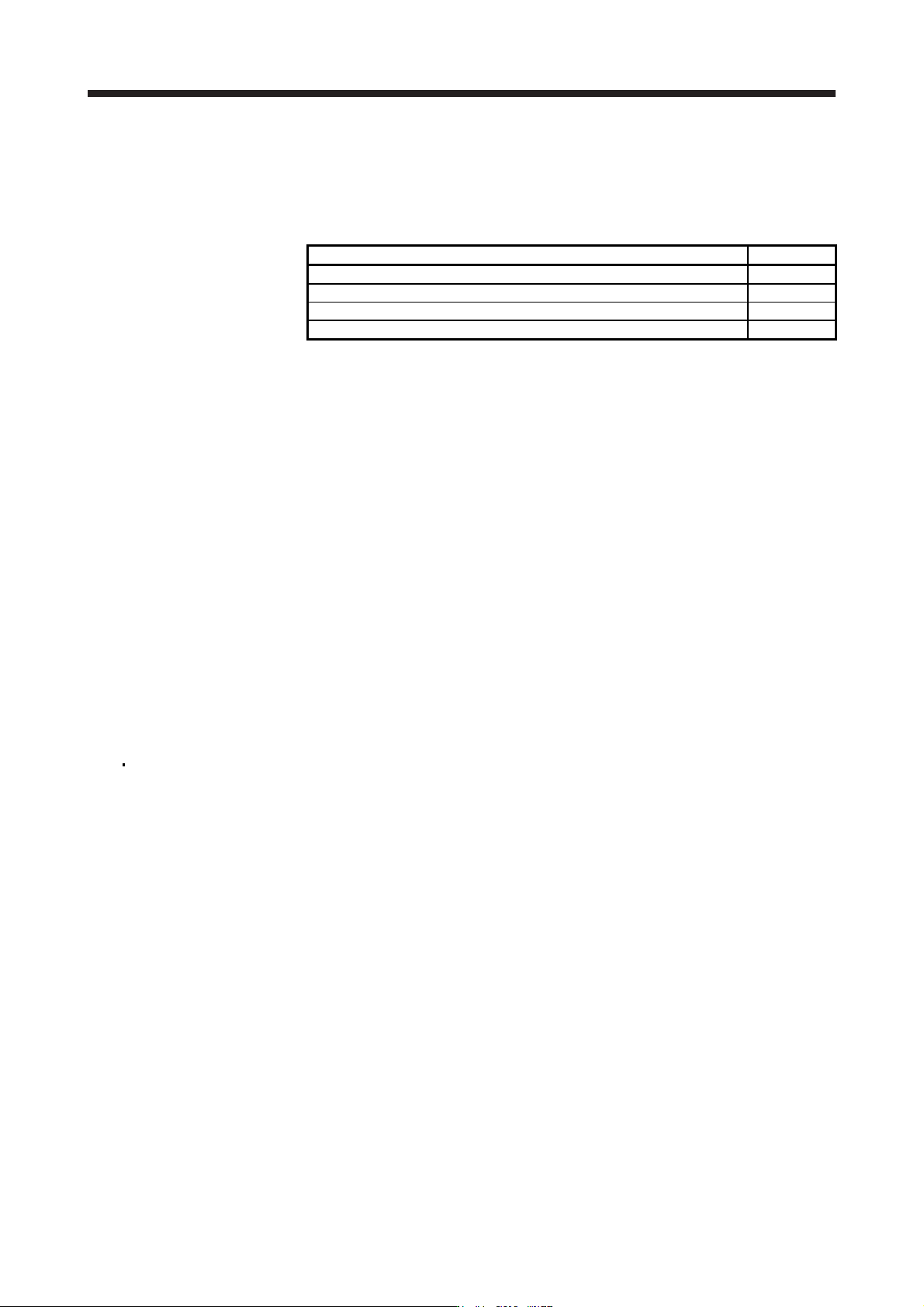
Open packing, and confirm the content of packing.
Contents Quantity
MR-J3-D05 Safety logic unit 1
Connector for CN9 1-1871940-4 (TE Connectivity) 1
Connector for CN10 1-1871940-8 (TE Connectivity) 1
MR-J3-D05 Safety Logic Unit Installation Guide 1
App. 5.2 Terms related to safety
App. 5.2.1 Stop function for IEC/EN 61800-5-2
(1) STO function (Refer to IEC/EN 61800-5-2:2016 4.2.2.2 STO.)
This function is integrated into the MR-J4 series servo amplifiers.
The STO function shuts down energy to servo motors, thus removing torque. This function electronically
cuts off power supply in servo amplifiers for MR-J4 series servo amplifiers.
The purpose of this function is as follows.
1) Uncontrolled stop according to stop category 0 of IEC/EN 60204-1
2) Preventing unexpected start-up
(2) SS1 function (Refer to IEC/EN 61800-5-2:2016 4.2.2.3C Safe stop 1 temporal delay.)
SS1 is a function which initiates the STO function when the previously set delay time has passed after
the servo motor starts decelerating. The delay time can be set with MR-J3-D05.
The purpose of this function is as follows. This function is available by using an MR-J4 series servo
amplifier with MR-J3-D05.
Controlled stop according to stop category 1 of IEC/EN 60204-1
App. 5.2.2 Emergency operation for IEC/EN 60204-1
(1) Emergency stop (Refer to IEC/EN 60204-1:2016 9.2.5.4.2 Emergency Stop.)
Emergency stop must override all other functions and actuation in all operation modes. Power to the
machine driving part which may cause a hazardous state must be either removed immediately (stop
category 0) or must be controlled to stop such hazardous state as soon as possible (stop category 1).
Restart must not be allowed even after the cause of the emergency state has been removed.
(2) Emergency shut-off (Refer to IEC/EN 60204-1:2016 9.2.5.4.3 Emergency Switching OFF.)
Removal of input power to driving device to remove electrical risk and to meet above mentioned safety
standards.