Spec of AX-3 AX-5 June 2005 LR - 第13页
2.7 Component alignment 2.7.1 Component laser 2.7.2 Vision alignment Figure 5 Figure 6 Contents 11 of 34 Components up to 45 x 45mm can be aligned with a component vision camera that optionally can be fitted behind the b…
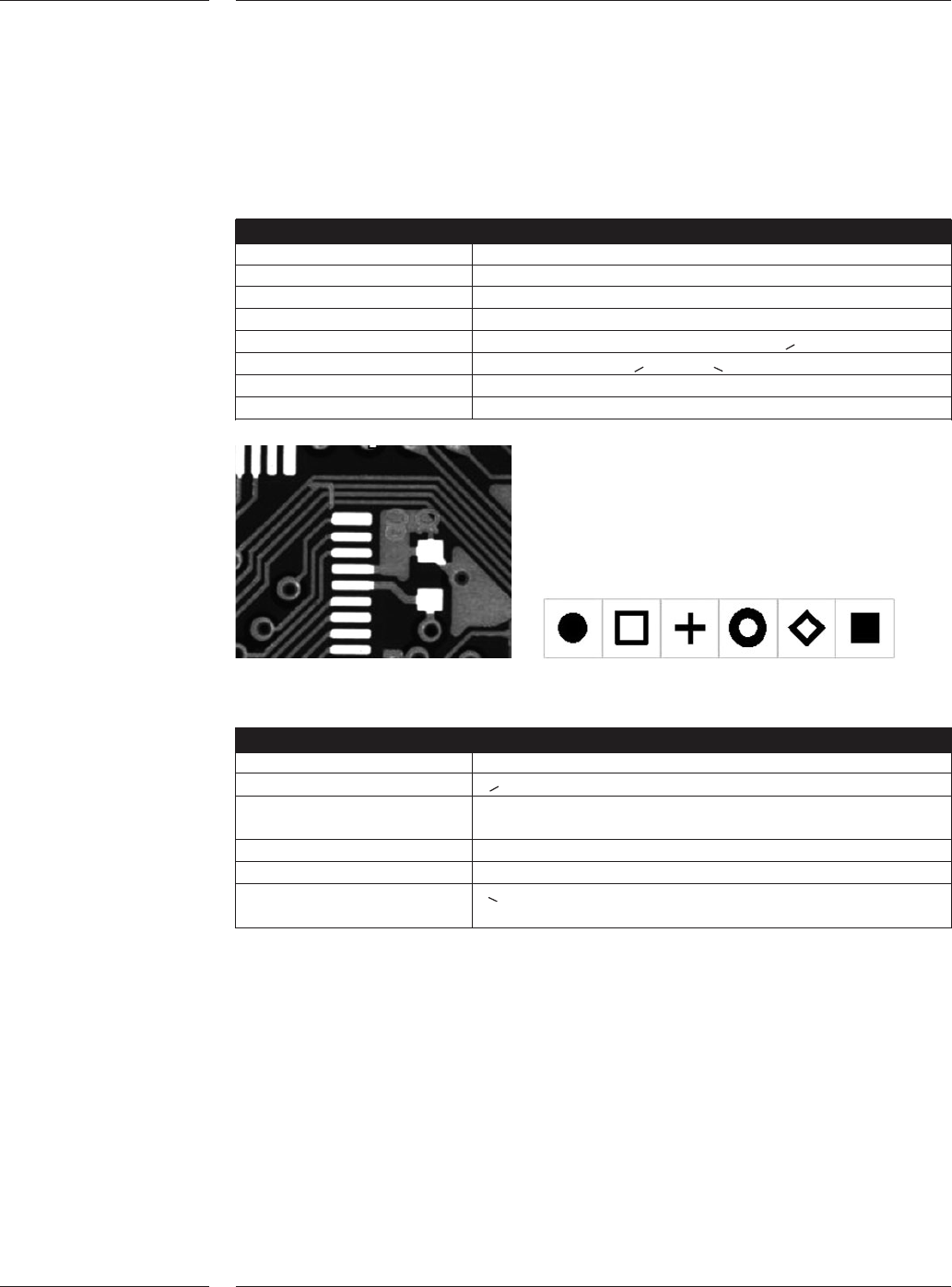
Each placement head has its own board alignment camera. The board alignment
camera is used for fiducial and artwork alignment. The board alignment camera is
also used for the position detection of feeder trolleys, toolbit exchange unit, dump
bin, component vision camera and badmark sensing.
Board alignment camera
Camera Field of View 8.6 x 6.8mm
Camera pixels 1024 x 768
Camera pixel resolution 8.4 µm
Illumination Bright field & dark field
Fiducial types All regular types with a contrast level of >30%
Fiducial shape size Fiducial shape size >0.3mm, <3.0 mm
Free zone around fiducial No features allowed within 0.1mm, no look-a-likes
within 2.6mm from fiducial
Examples of artwork and typical fiducials
Badmark sensing
Bad mark type Black or whyte dot, or fiducial shape
Size >φ 1mm
Color Bad marks can be dark in a light background or light in
a dark background
Contrast At least 30 %
Badmark levels 3
Number of bad marks <2048
per board
2.6 Board
alignment
Figure 4
Features
10 of 34
2.7 Component
alignment
2.7.1 Component
laser
2.7.2 Vision
alignment
Figure 5
Figure 6
Contents
11 of 34
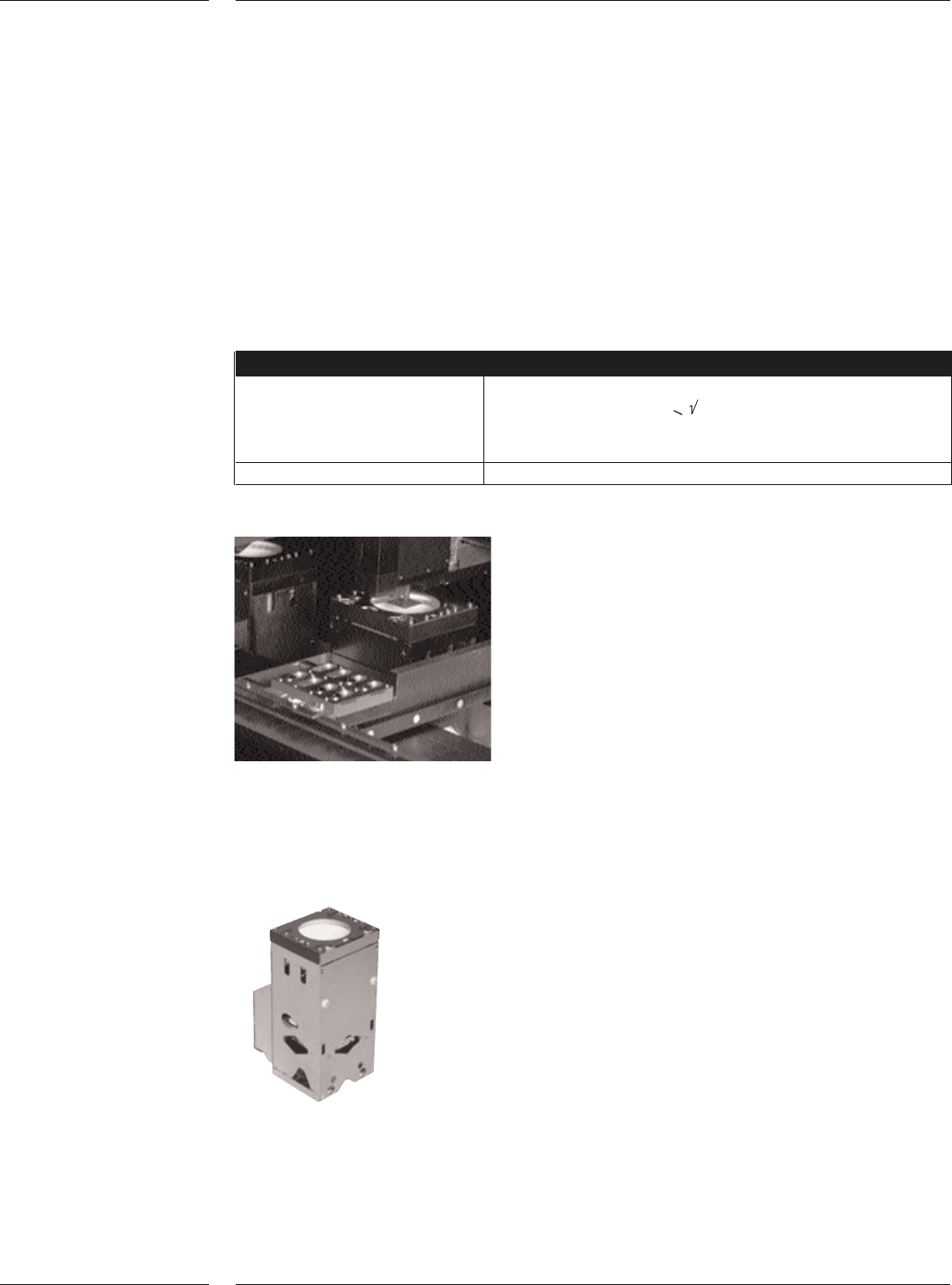
Components up to 45 x 45mm can be aligned with a component vision camera that
optionally can be fitted behind the board transport and underneath a standard
placement robot. Components up to 17.5 x 17.5mm can be aligned with "on the
fly" laser alignment that is fitted on each placement head.
This allows a standard placement robot to alternate the alignment method without
the need to change the configuration of the machine during production.
A component laser module is part of each placement head. The component laser is
used for component presence check, component alignment, nozzle type identifica-
tion and nozzle verification.
Laser alignment
Component size 0.4 x 0.2mm (01005) to 17.5 x 17.5mm
(diagonal 24.75mm, < (Length
2
+ width
2
))
Length & width including leads
Height: 6.3mm (10.75 with restrictions)
Min. component thickness 0.130mm
Vision alignment
Vision alignment is used for alignment of components on leads, edges or bumps.
Vision alignment is achieved by moving the component above the lens of an
upward-facing vision camera.
Alignment takes place at Z=0, which is the board level height.
Three light sources (dark field, midfield and bright field) ensure
sufficient contrast between the component (leads) and the
background. The illumination intensity is automatically chosen
based upon the reflectivity of the respective components. The
vision camera can determine the position of the component
with respect to a reference plate. The deviations, together with
the fiducial alignment values, will be used to determine the
correct placement position.
AX Component Vision camera
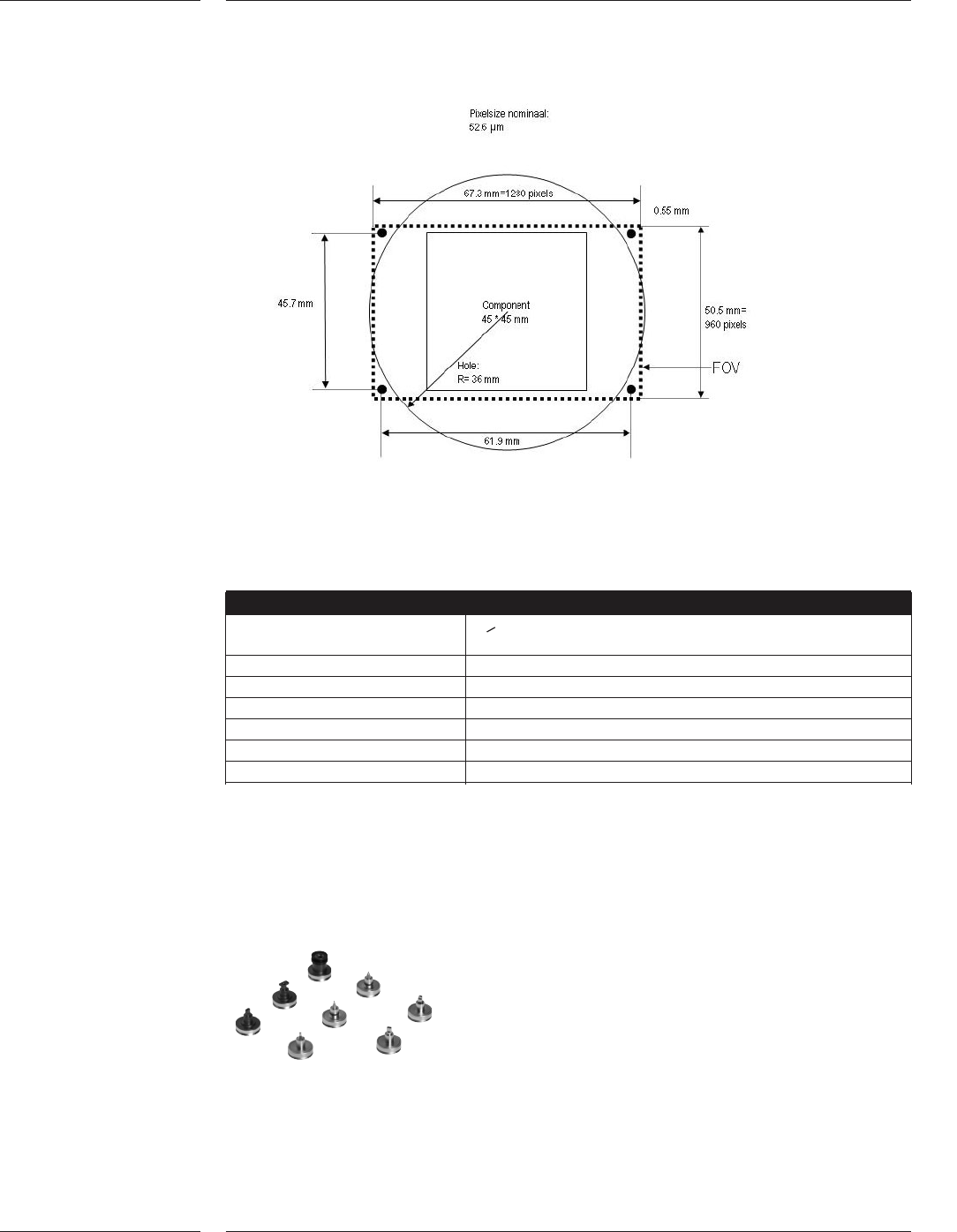
Camera field of view
Vision alignment
Component size > 2.0 x 1.25 mm
2
(0805 passives) to 45mm x 45mm
(1.77” x 1.77”)
Min. Lead width 0.200mm (0.005”)
Min. Lead pitch 0.400mm (0.012”)
Min. Bump size 0.300mm (0.012”) 0.150mm for size < 12x12mm
Min. Bump pitch 0.500mm (0.020”) 0.300mm for size < 12x12mm
Field of view (LxW) 67.8mm x 50.5mm
CCD Array resolution 1280 x 960 pixels
The AX System uses different nozzles to handle the component range from
0.4 x 0.2mm (01005) up to 45 x 45mm. The nozzles are designed to ensure
durability, minimal wear, whilst providing robust and delicate component handling.
The nozzles are connected to the placement head using a magnetic connection.
Various nozzle types of the AX
Figure 7
2.8 Toolbits
Figure 8
Features
12 of 34