(TI)对半导体器件的长期存储评估.pdf - 第7页
Figure 8-1. Cover T ape Peel Strength T est Setup Figure 8-2. Cover T ape Peel Strength T est 9 Cover T ape Peel Strength Measurement Results Figure 9-1. Cover T ape Peel Strength T est Result for 16 mm T ape. Reel #16 M…
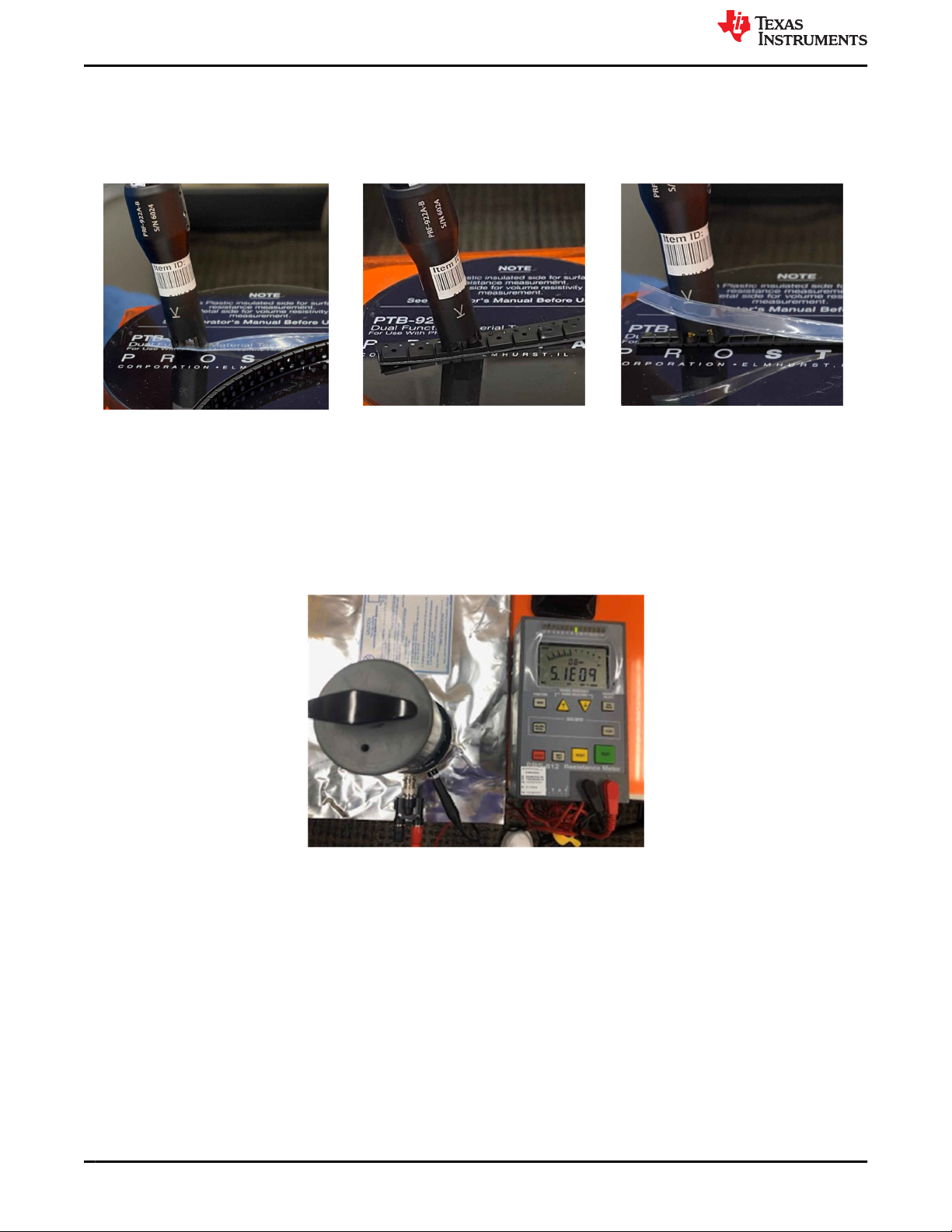
7 Tribocharge Evaluation – ESD Testing
The measurement for the originally used tape and reel packing material was made in accordance with
ANSI/ESD STM11.13-2018 Two-Point Resistance Measurement. This specific type of testing was used due
to the size of cover tape pockets.
Figure 7-1. Cover Tape Inside
Resistivity Measurement
Figure 7-2. Cover Tape Bottom
Figure 7-3. Cover Tape Pocket
Side Resistivity
The pocket tape (black) is in the conductive range, while the cover tape (clear) is in the dissipative range as
expected. No degradation was observable for the tested material.
A concentric ring setup was used to evaluate a large surface area of each original MBB. All bags were found to
be in the expected dissipative range.
Figure 7-4. Measurement of ESD Bag
8 Cover Tape Peel Strength Evaluation
8.1 Test Setup
A sample strip was cut from the original tape and reel and the peel force of the cover tape was measured during
the removal of the cover tape. The test is done to confirm that the cover tape adhesion did not change over the
long term storage of the reel. The peel force of the cover tape was measured within the 10 gram minimum force
and 130 gram maximum limit according industry standard EIA 481. The peeling speed of the cover tape was set
to 300 mm per minute. This test is also referenced as a peel-back test in the industry.
Tribocharge Evaluation – ESD Testing www.ti.com
6 Long Term Storage Evaluation of Semiconductor Devices SLPA019 – SEPTEMBER 2021
Submit Document Feedback
Copyright © 2021 Texas Instruments Incorporated
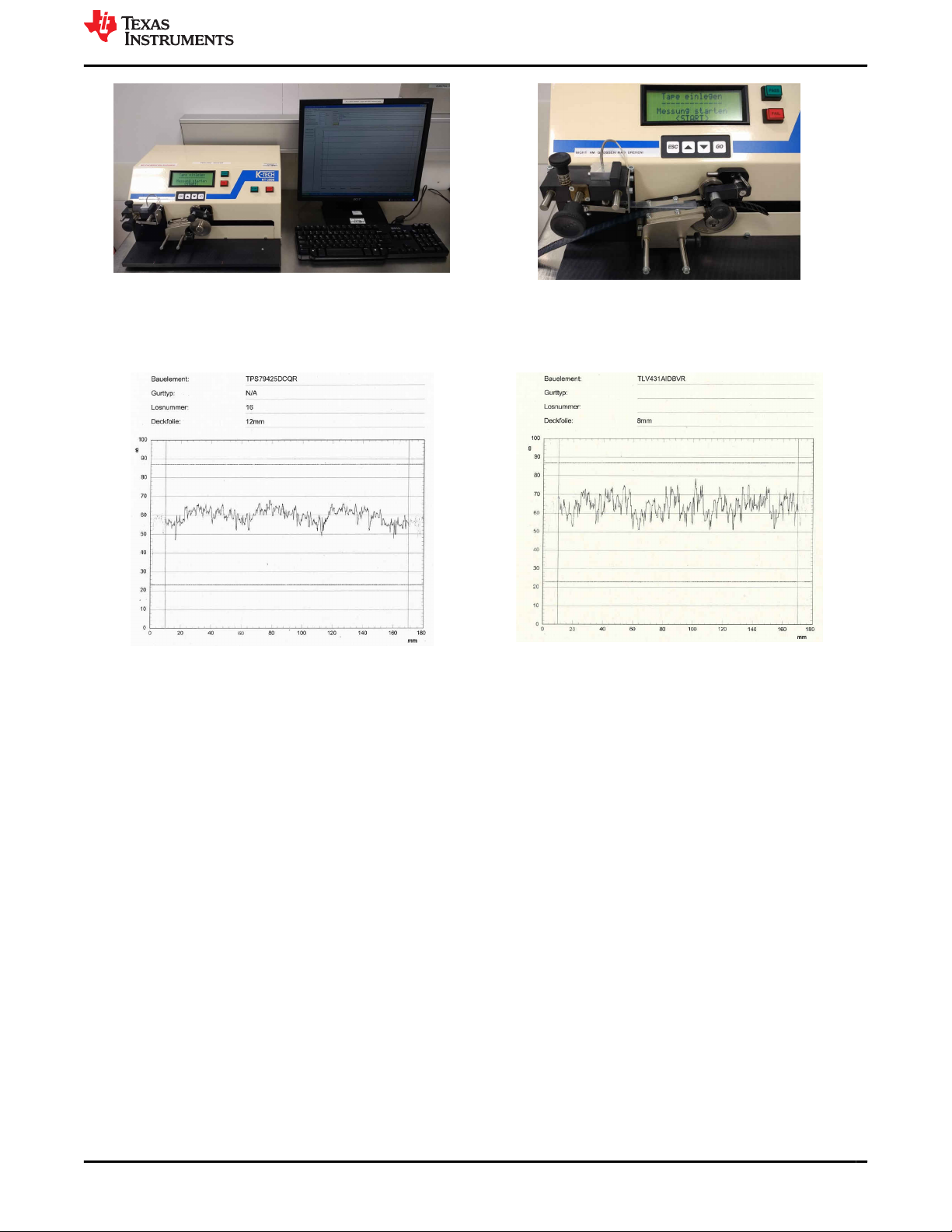
Figure 8-1. Cover Tape Peel Strength Test Setup
Figure 8-2. Cover Tape Peel Strength Test
9 Cover Tape Peel Strength Measurement Results
Figure 9-1. Cover Tape Peel Strength Test Result
for 16 mm Tape. Reel #16 Manufactured September
2005
Figure 9-2. Cover Tape Peel Strength Test Result
for 8 mm Tape. Reel #20 Manufactured December
2000
10 Solderability Evaluation
10.1 Test Description
Samples from each of the selected lots were tested for solderability using the Surface Mount Process Simulation
Test (Test S1 of JEDEC standard J-STD-002E). Lead-free (SnAgCu) solder paste, with no-clean flux, was used
to reflow at ≈240°C peak package temperature in air atmosphere.
Figure 10-1 shows how solder paste printing is performed on a ceramic substrate using a manual solder stencil
fixture. The solder paste stencils are laser cut and electro polished. After printing the solder paste on the ceramic
plate substrate as shown in Figure 10-2, the substrate is fixed in a movable table under the microscope as
shown in Figure 10-3 to align the solder paste print pattern with the component leads in the holder as shown in
Figure 10-6 through an overlay optical image.
www.ti.com Cover Tape Peel Strength Measurement Results
SLPA019 – SEPTEMBER 2021
Submit Document Feedback
Long Term Storage Evaluation of Semiconductor Devices 7
Copyright © 2021 Texas Instruments Incorporated
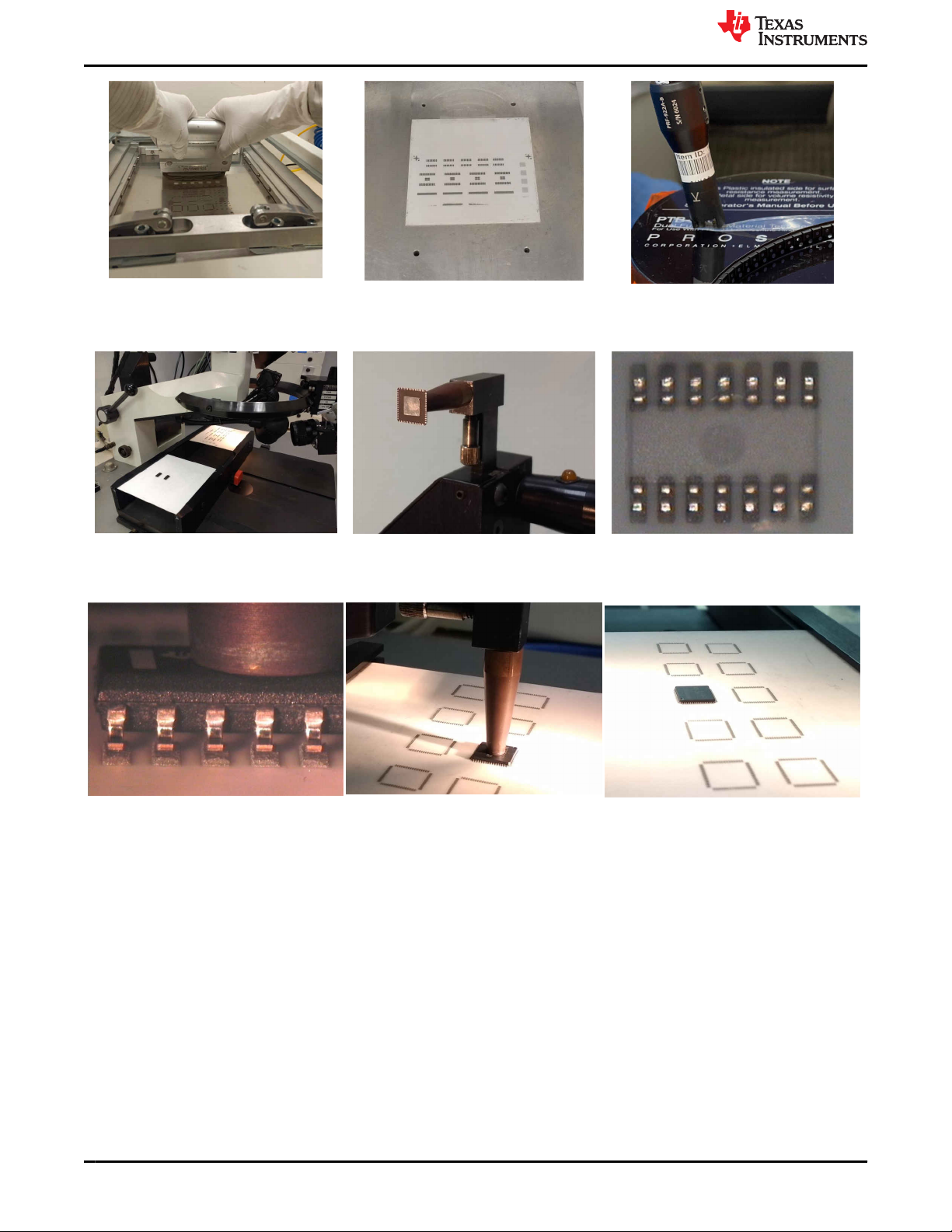
Figure 10-1. Solder Stencil in
Holder with Solder
Figure 10-2. Solder Paste Printed
Figure 10-3. Component
Placement Equipment
Figure 10-4. Component
Placement Equipment
Figure 10-5. Component
Placement Arm
Figure 10-6. Overlay Image
Package of Lead and Solder Paste
Figure 10-7. Side Camera View for
Final Placement Height
Figure 10-8. Placement Tool on
Substrate
Figure 10-9. Placed Component
on Substrate
The ceramic substrates were run through the convection reflow oven with a measured package temperature of
≈240°C and air atmosphere (Compressed Dry Air purge).
After reflow, the soldered products were cleaned in an ultrasonic bath with flux removal agent followed by DI
water rinse before the optical inspection of the solder wetting on the package leads.
Solderability Evaluation www.ti.com
8 Long Term Storage Evaluation of Semiconductor Devices SLPA019 – SEPTEMBER 2021
Submit Document Feedback
Copyright © 2021 Texas Instruments Incorporated