MR8740T_user_manual_eng_20191016H.pdf - 第177页
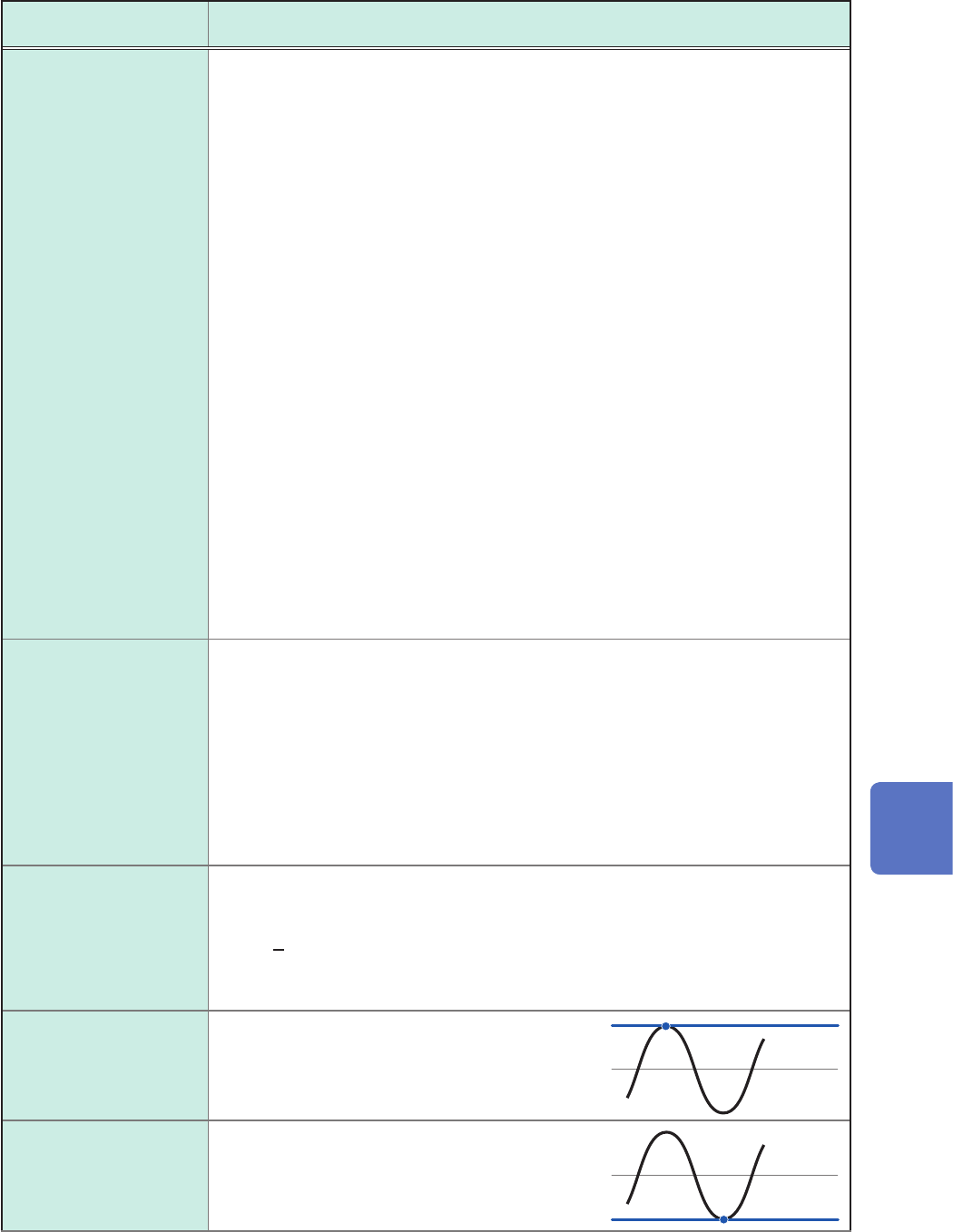
172 Operators of W aveform Calculation and Calculation Results b i : i th data point of calculation results, d i : i th data point acquired across the source channel W aveform calculation type Description Level at time (…
171
Operators of Waveform Calculation and Calculation Results
b
i
:
i
th data point of calculation results,
d
i
:
i
th data point acquired across the source channel
Waveform calculation
type
Description
1st-order integration
(INT)
2nd-order integration
(INT2)
To calculate values of 1st-order and 2nd-order integration, the instrument uses the
trapezoidal formula.
The instrument integrates data
d
1
to
d
n
considering them as the corresponding data for
the sampling time
t
1
to
t
n
.
Arithmetic expressions of 1st-order integration
Point
t
1
I
1
= 0
Point
t
2
I
2
= (d
1
+ d
2
) h / 2
Point
t
3
I
3
= (d
1
+ d
2
) h / 2 + (d
2
+ d
3
) h / 2 = I
2
+ (d
2
+ d
3
) h / 2
↓
Point
t
n
I
n
= I
n-1
+ (d
n-1
+ d
n
) h / 2
I
1
through
I
n
: Calculation result data
h
=
Δt
: Sampling period
Arithmetic expressions of 2nd-order integration
Point
t
1
II
1
= 0
Point
t
2
II
2
= (I
1
+ I
2
) h / 2
Point
t
3
II
3
= (I
1
+ I
2
) h / 2 + (I
2
+ I
3
) h / 2 = II
2
+ (I
2
+ I
3
) h / 2
↓
Point
t
n
II
n
= II
n−1
+ (I
n−1
+ I
n
) h / 2
II
1
through
II
n
: Calculation result data
Note Integration is susceptible to minor deviation of the zero-position. Be sure to
execute zero-adjustment before performing a measurement. In addition, zero-
point offset correction may be required.
Example: To adjust the zero point by 0.124 mV
Z1 = INT (CH1-0.000124)
Waveform shifting
by PLC delay time
specied in digital
voltmeter module
(PLCS)
The instrument shifts a waveform by a frequency (PLC) specied in a digital voltmeter
module and a delay time of PLCS.
Since digital voltmeter modules calculate averages during periods specied in the
NPLC setting, observed waveforms will lag behind waveforms acquired with Model
8966 Analog Unit by a half of the NPLC setting.
The PLCS calculation advances the waveforms acquired with the digital voltmeter
module by the delay time and thus compensates the results for the lag behind the
waveforms acquired with Model 8966.
Note If the end of the calculation result contains no data, this part measures a voltage
of 0 V.
Average value (PAVE)
Calculates an average value of waveform data to use this numerical calculation result
for waveform calculations.
=
∑
AVE
n
n
d
AVE
: Average
n
: Number of data points
d
i
:
i
th data point acquired across
the channel
Maximum value
(PMAX)
Calculates the maximum value of waveform
data to use this numerical calculation result
for waveform calculations.
Maximum
Minimum value (PMIN)
Calculates the minimum value of waveform
data to use this numerical calculation result
for waveform calculations.
Minimum
8
Waveform Calculation Function
172
Operators of Waveform Calculation and Calculation Results
b
i
:
i
th data point of calculation results,
d
i
:
i
th data point acquired across the source channel
Waveform calculation
type
Description
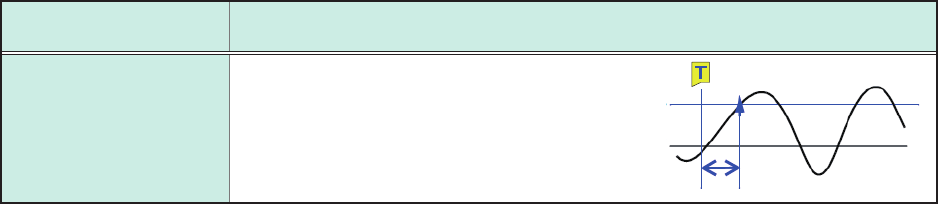
Level at time
(PLEVEL)
Calculates a measured value at a time a
specied time has elapsed from a trigger
point to use this numerical calculation
result for waveform calculations.
Level
0 V
173
9
Memory Dividing Function
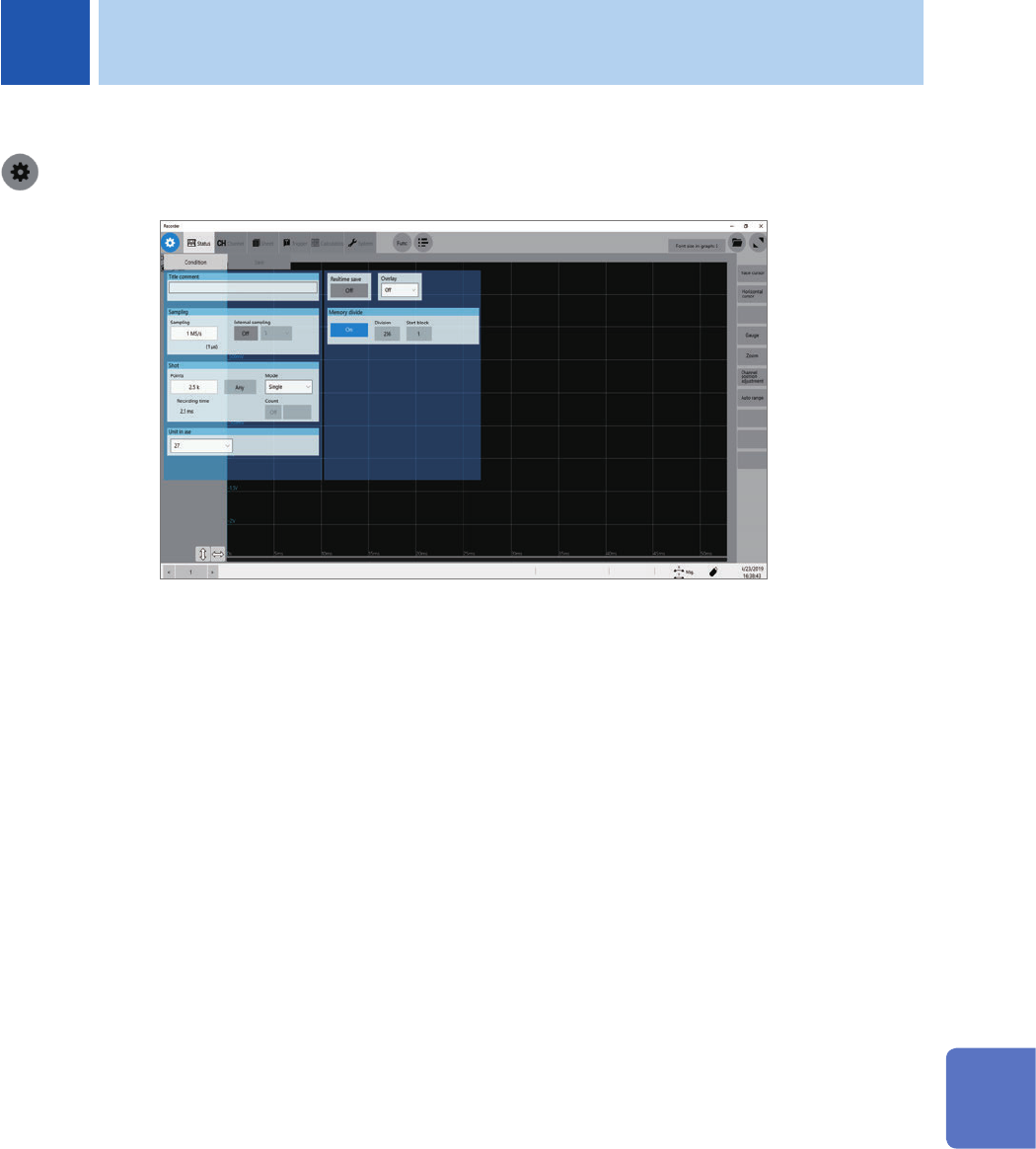
You can divide the memory capacity into several blocks, each of which is used to store waveforms.
> [Status] > [Condition]
Operation available with the memory dividing function
• You can divide the memory capacity into several blocks and save waveforms onto any blocks.
• When triggered, the instrument starts to sequentially acquire waveform data and store the data
onto the block you specied (start block).
During use of the memory division, the instrument may switch the trigger output (TRIG_OUT
terminal) to a low level or irregularly output signals.
• The trigger output method is set to pulse.
• Recording (measuring) length: 5 ms or less
• You can divide a memory into up to 1024 blocks.
• You cannot use the real-time save function concurrently with the memory division function.
Refer
to “Real-time save” (p. 88).
9 Memory Dividing Function
9
Memory Dividing Function