IPC-SM-782A 表面安装设计和焊盘设计标准(带BGA).pdf - 第113页
5.0 LAND PATTERN DIMENSIONS Figure 3 provides the land pattern dimensions for TO 252 components. These numbers represent industry consensus on the best dimensions based on empirical knowledge of fab- ricated land pattern…
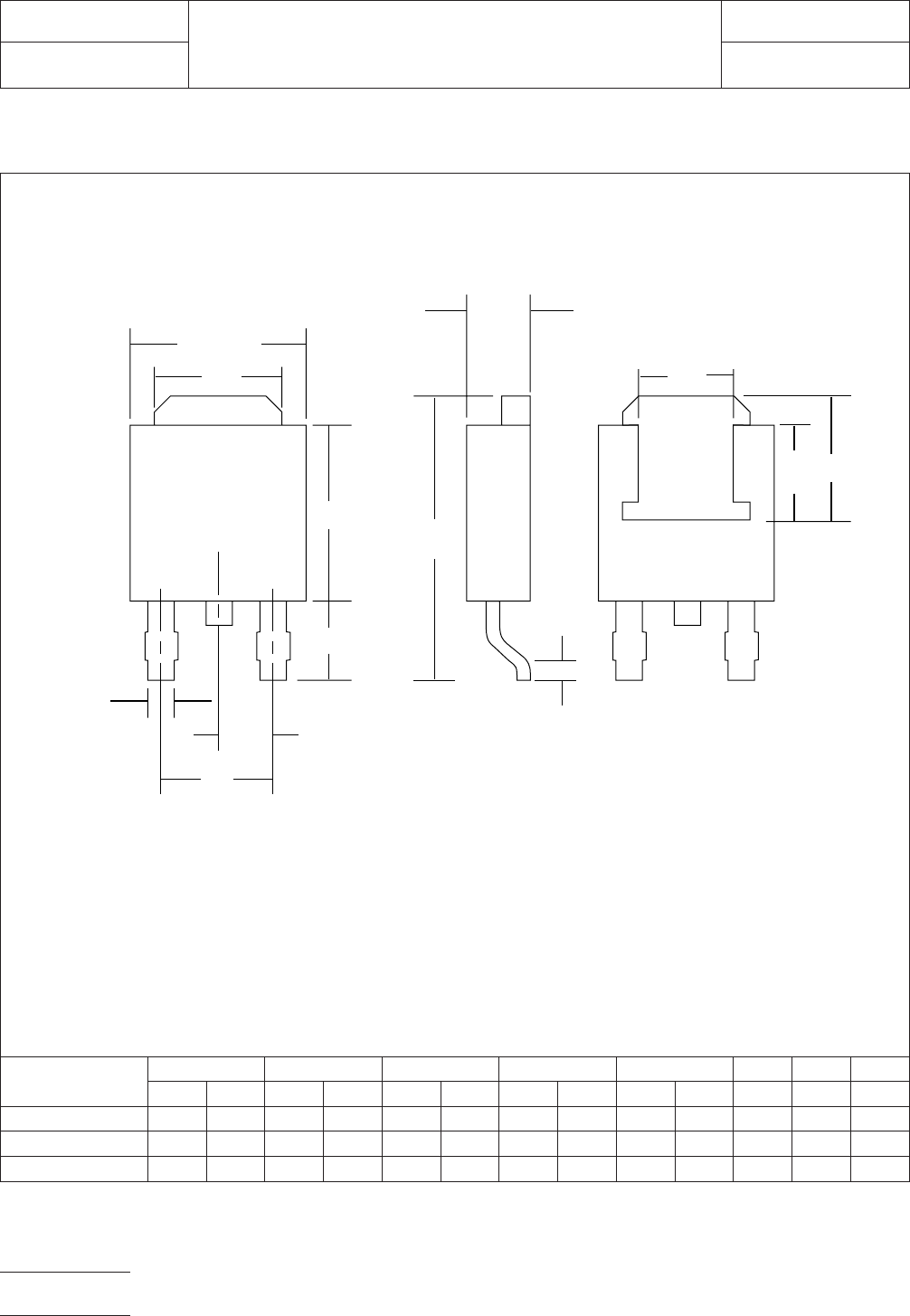
4.0 COMPONENT DIMENSIONS
Figure 2 provides the component dimensions for TO 252 components.
Component
Identifier
LW1W2T1T2P1P2H
min max min max min max min max min max basic basic max
TS-003* 9.32 10.41 0.64 0.91 4.35 5.35 0.51 0.80 4.00 5.50 2.28 4.57 2.38
TS-005** 14.60 15.88 0.51 0.91 6.22 6.86 2.29 2.79 8.00 9.00 2.54 5.08 4.83
TO 368 18.70 19.10 1.15 1.45 13.30 13.60 2.40 2.70 12.40 12.70 5.45 10.90 5.10
Figure 2 TO 252 component dimensions
*Formerly TO 252
**Formerly TO 263
6.35–6.73
▼
▼
▼
▼
▼
▼
▼
▼
▼
▼
W1
P2
▼
▼
L
▼
▼
H
▼
▼
4.32
MIN
T2
▼
▼
▼
▼
T1
W2
▼
▼
5.97–6.22
2.55–2.93
▼
▼
4.32
MIN
▼
▼
P1
IPC-782-8-11-2
IPC-SM-782
Subject
TO 252/TO 268
Date
5/96
Section
8.11
Revision
A
Page2of4
电子技术应用 www.ChinaAET.com
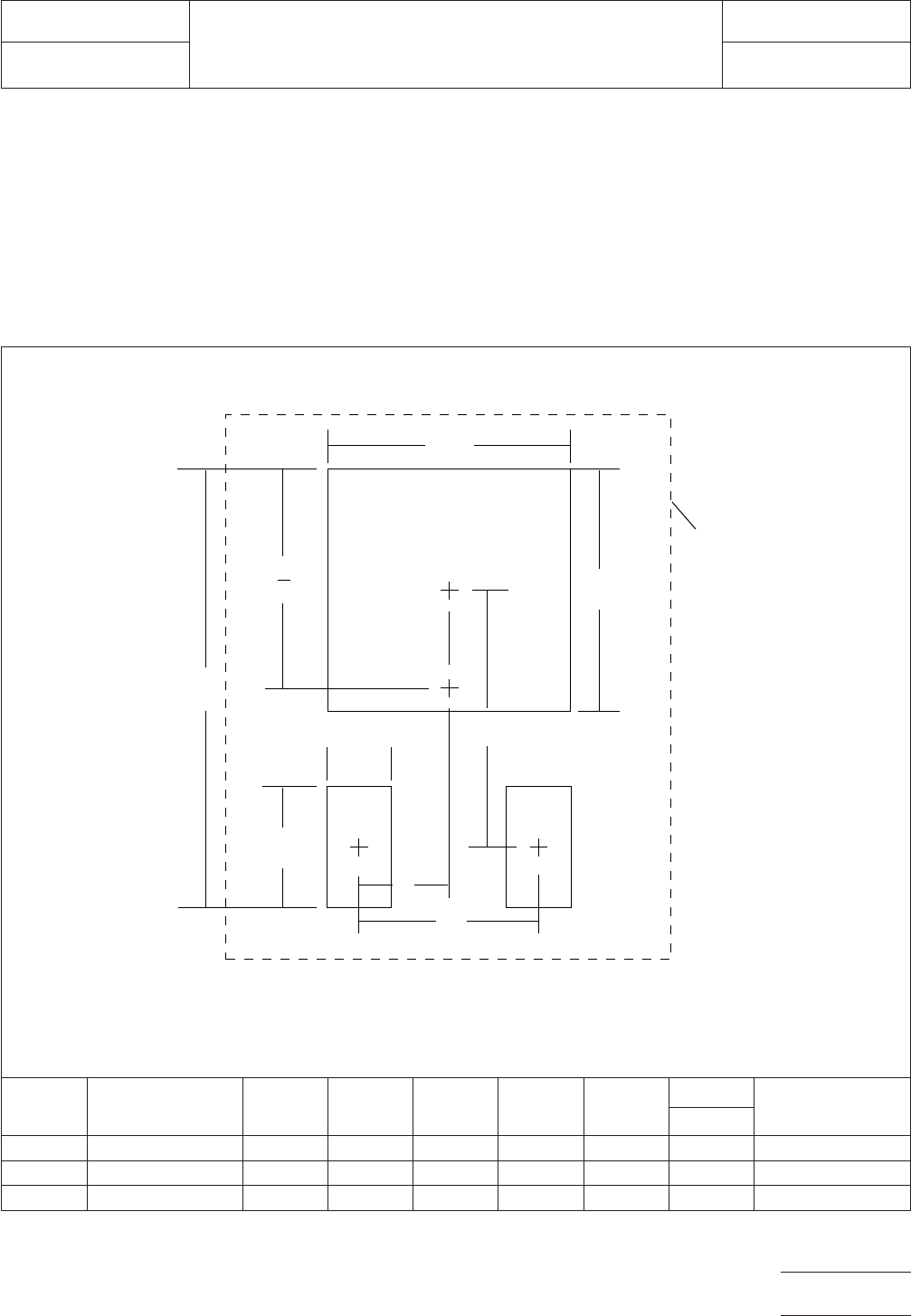
5.0 LAND PATTERN DIMENSIONS
Figure 3 provides the land pattern dimensions for TO 252
components. These numbers represent industry consensus
on the best dimensions based on empirical knowledge of fab-
ricated land patterns.
In the table, the dimensions shown are at maximum material
condition (MMC). The least material condition (LMC) should
not exceed the fabrication (F) allowance shown on page 4.
The LMC and the MMC provide the limits for each dimension.
The dotted line in Figure 3 shows the grid placement court-
yard which is the area required to place land patterns and
their respective components in adjacent proximity without
interference or shorting. Numbers in the table represent the
number of grid elements (each element is 0.5 by 0.5 mm) in
accordance with the international grid detailed in IEC publica-
tion 97.
RLP No.
Component
Identifier Z (mm) Y1 (mm) Y2 (mm) X1 (mm) X2 (mm)
C (mm)
Placement Grid
(No. of Grid
Elements)
ref
235A TS-003* 11.20 1.60 6.20 1.00 5.40 7.30 24x16
236 TS-005** 16.60 3.40 9.60 1.00 6.80 10.10 36x24
237 TO 268 19.80 3.40 13.40 1.40 13.60 11.40 42x34
Figure 3 TO 252 land pattern dimensions
▼
▼
▼
▼
▼
▼
▼
▼
X2
C
Y1
Z
▼
▼
▼
Grid
placement
courtyard
▼
▼
X1
E1
Dimensions are in millimeters
E2
▼
▼
▼
▼
Y2
▼
▼
Z
2
IPC-782-8-11-3
IPC-SM-782
Subject
TO 252/TO 268
Date
5/96
Section
8.11
Revision
A
Page3of4
电子技术应用 www.ChinaAET.com
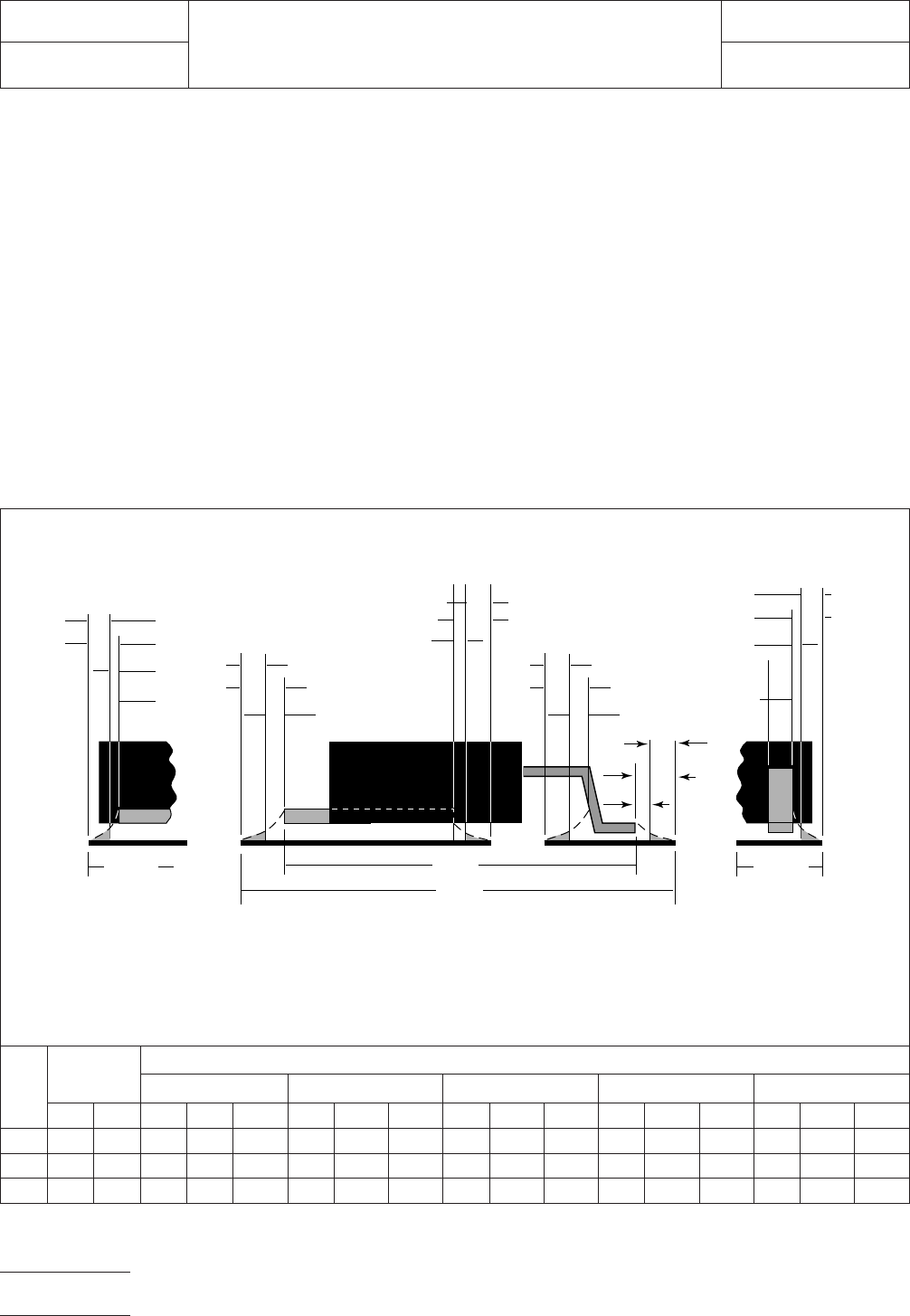
6.0 TOLERANCE AND SOLDER JOINT ANALYSIS
Figure 4 provides an analysis of tolerance assumptions and
resultant solder joints based on the land pattern dimensions
shown in Figure 3. Tolerances for the component dimensions,
the land pattern dimensions (fabrication tolerances on the
interconnecting substrate), and the component placement
equipment accuracy are all taken into consideration.
Figure 4 provides the solder joint minimums for toe, heel, and
side fillets, as discussed in Section 3.3. The tolerances are
addressed in a statistical mode, and assume even distribution
of the tolerances for component, fabrication, and placement
accuracy.
Individual tolerances for fabrication (‘‘F’’) and component
placement equipment accuracy (‘‘P’’) are assumed to be as
given in the table. These numbers may be modified based on
user equipment capability or fabrication criteria. Component
tolerance ranges (C
L
,C
S
, and C
W
) are derived by subtracting
minimum from maximum dimensions given in Figure 2. The
user may also modify these numbers, based on experience
with their suppliers. Modification of tolerances may result in
alternate land patterns (patterns with dimensions other than
the IPC registered land pattern dimensions).
The dimensions for minimum solder fillets at the toe, heel, or
side (J
T
,J
H
,J
S
) have been determined based on industry
empirical knowledge and reliability testing. Solder joint
strength is greatly determined by solder volume. An observ-
able solder fillet is necessary for evidence of proper wetting.
Thus, the values in the table usually provide for a positive sol-
der fillet. Nevertheless, the user may increase or decrease the
minimum value based on process capability.
RLP
No.
Tolerance
Assumptions
(mm)
Solder Joint
Toe (mm) Heel 1 (mm) Heel 2 (mm) Side 1 (mm) Side 2 (mm)
FPC
L
J
T
min J
T
max C
T1
J
H1
min J
H1
max C
T2
J
H2
min J
H2
max C
W1
J
S1
min J
S1
max C
W1
J
S2
min J
S2
max
235A 0.10 0.10 1.09 0.39 0.94 0.29 0.37 0.51 1.50 0.29 1.04 0.27 0.03 0.16 1.00 0.02 0.52
236 0.10 0.10 1.28 0.36 1.00 0.50 0.19 0.44 1.00 0.19 0.69 0.40 0.03 0.23 0.64 –0.04 0.28
237 0.10 0.10 0.40 0.34 0.54 0.30 0.27 0.42 0.30 0.27 0.42 0.30 –0.04 0.11 0.30 –0.02 0.13
Figure 4 Tolerance and solder joint analysis
Zmax
▼
▼
1
/2 T
T
1
/2 T
T
J
T
min
J
T
min
Zmax = Lmin + 2J
T
min + T
T
Where:
J
T
min = Minimum toe fillet
T
T
= Combined tolerances
at toe fillet
J
H2
min
1
/2 T
H
Xmax = Wmin + 2J
S
min + T
S
Where:
J
S
min = Minimum side fillet
T
S
= Combined tolerances
at side fillet
Side Fillet Toe Fillet
▼
Heel Fillets
Side Fillet
▼
▼
▼
▼
▼
J
T
max
J
T
max
J
H2
max
J
S1
min
▼
▼
▼
▼
▼
▼
1
/2 T
S
J
S1
max
W1min
▼
▼
▼
▼
▼
▼
▼
▼
▼
▼
X1maxX2max
▼
▼
J
S2
min
▼
▼
▼
▼
1
/2 T
S
J
S2
max
▼
▼
▼
W2min
Lmin
▼
▼
1
/2 T
H
J
H1
min
▼
▼
▼
▼
▼
▼
J
H1
max
▼
IPC-782-8-11-4
IPC-SM-782
Subject
TO 252/TO 268
Date
5/96
Section
8.11
Revision
A
Page4of4
电子技术应用 www.ChinaAET.com