IPC-SM-782A 表面安装设计和焊盘设计标准(带BGA).pdf - 第17页
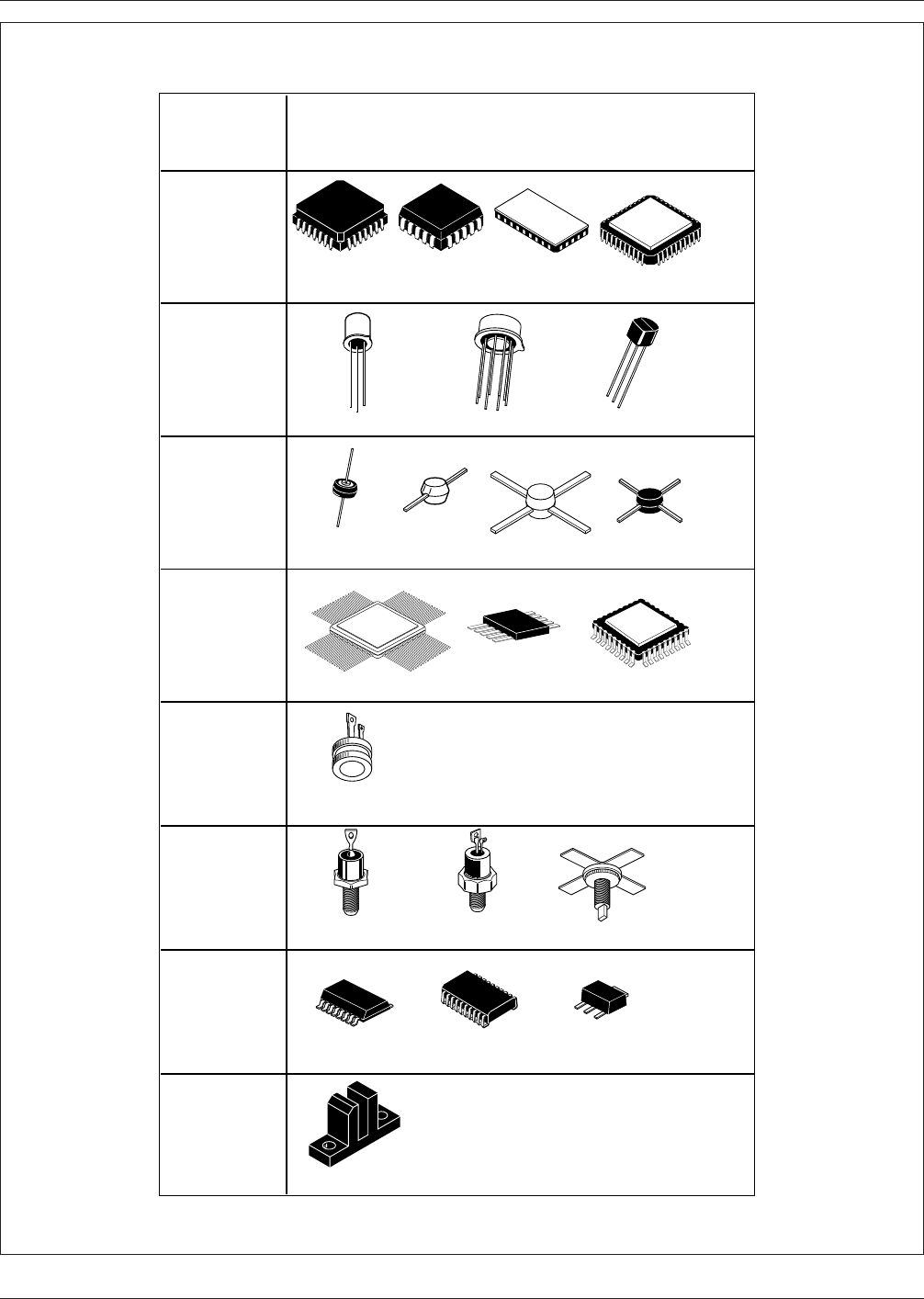
IPC-782-3-1 Figure 3–1 Examples of typical package styles and package descriptive designators Examples Package Outline Style and Code CC Chip Carrier PQCC PQCC (PLCC) PQCC (CLCC) PQCC (CLCC) CY Cylinder DB Disk Button MB…
a. All dimensions are basic (nominal)
b. Limits of size control form as well as size.
c. Perfect form is required at maximum dimensions.
d. Datum references and position tolerances apply at maxi-
mum dimensions, and are dependent on feature size.
e. Position dimensions originate from maximum dimen-
sions.
f. Tolerances and their datum references other than size
and position apply regardless of feature size (RFS).
g. Interpretations are per ANSI Y14.5.
The dimensioning concepts used for this system of analy-
sis consider the assembly/attachment requirements as their
major goal. Specification (data) sheets for components or
dimensions for land patterns on boards may use different
dimensioning concepts, however, the goal is to combine all
concepts into a single system. Users are encouraged to
establish the appropriate relationship between their dimen-
sioning system(s) and the profile dimensioning system and
analysis concepts described herein to allow for ease of tai-
loring these concepts for robust process performance. As
an example, if the tolerance used for positioning is larger
than the machine tolerance used in production, a single
dimensional change in a ‘‘spread sheet’’ program could
modify the land pattern dimensions shown in sections 8.0
through 13.0 in order to optimize the process for a given
facility.
3.3.1 Component Tolerancing
The component manu-
facturers and the Electronic Industries Association (EIA)
are responsible for the dimensioning and tolerancing of
electronic components. Their concepts have been converted
to a functional equivalent using the profile tolerancing
method with all components shown with their basic dimen-
sions as limit dimensions (maximum or minimum size).
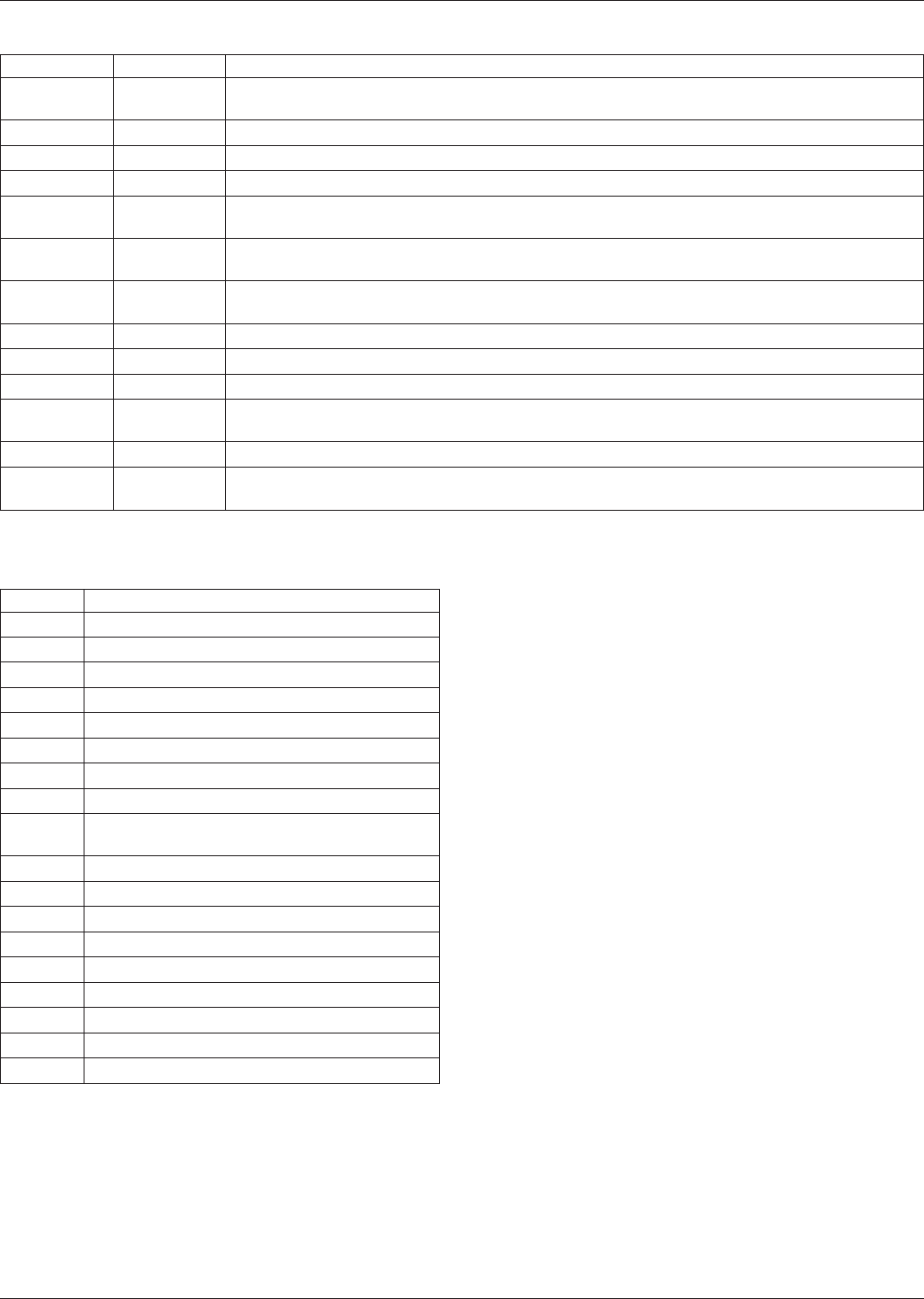
Table 3–1 Terminal Position Prefixes
Code Name Position (see notes 1 and 2)
A Axial Terminal extend from both ends in the direction of the major axis of a cylindrical or elliptical
package.
B Bottom Terminals beneath the seating plan of the package.
D Dual Terminals on opposite sides of a square or rectangular package or located in two parallel rows.
E End Terminals are package endcaps having circular or elliptical cross section.
L Lateral Terminals are on the four sides of a square or rectangular package. The preferred name is
‘‘Quad,’’ code Q.
P Perpendicular Pins are perpendicular to seating plan on a square or rectangular package. Restrict to PGA
family.
Q Quad Terminals are on the four sides of a square or rectangular package or located in four parallel
rows.
R Radial Terminals extend radially from the periphery of a cylindrical or spherical package
S Single Terminals are on one surface of a square or rectangular package in a single row.
T Triple Terminals are on three sides of a square or rectangular package.
U Upper Terminals are perpendicular to and opposite the seating plane, and are on one surface of a
package.
X Other Terminal positions other than those described.
Z Zig-zag Terminals are on one surface of a square or rectangular package arranged in a staggered
configuration. Restrict to ZIP family.
NOTE 1: These descriptions assume the seating plane is the bottom of the package.
NOTE 2: Reference to package shape does not take into account flanges, notches, or irregularities.
Table 3–2 Package-Outline-Style Codes
Code Outline Style
CC Chip-carrier package
CY Cylinder or can package
DB Disc-button package
FM Flange-mount package
FO Fiber-optic-device package
FP Flatpack package
GA Grid-array package
IL In-line package. The preferred designator is IP
IP In-line package or inserted package. Restrict to
DIP/SIP/ZIP.
LF Long-form horizontal package.
MA Microelectronic assembly.
MW Microwave package
PF Press-fit package
PM Post-/stud-mount package
SO Small-outline package
SS Special-shape package
UC Uncased chip
XA-XZ Nondefiend family; vendor or user option.
IPC-SM-782A December 1999
8
电子技术应用 www.ChinaAET.com
IPC-782-3-1
Figure 3–1 Examples of typical package styles and package descriptive designators
Examples
Package
Outline
Style
and Code
CC
Chip Carrier
PQCC PQCC
(PLCC)
PQCC
(CLCC)
PQCC
(CLCC)
CY
Cylinder
DB
Disk Button
MBCY MBCY
CQFP
LRDB GRDB PRDB
PBCY
PF
Press Fit
PM
Post/Stud
Mount
SO
Small
Outline
SS
Special
Shape
MUPF
MUPM MUPM CRPM
PDSS
PDSO PDSO PSSO
FP
Flatpack
PADB
CDFP PQFP
December 1999 IPC-SM-782A
9
电子技术应用 www.ChinaAET.com
Profile tolerances are unilateral, and are described to reflect
the best condition for solder joint formation usually at
minimum component size. As the profile tolerance moves
in this unilateral direction toward maximum component
size, the opportunity for a robust solder joint decreases.
The concept for component dimension evaluations is based
on evaluating the surfaces of the component termination
and component lead that are involved in the formation of
the acceptable solder joint. Component manufacturers usu-
ally provide dimensions for their parts with a nominal size
and then put a tolerance on that nominal dimension. Inor-
der to facilitate the dimensioning system, these dimensions
and their associated tolerances are converted to minimum
and maximum size.
As an example, capacitor C1206 has a manufactured nomi-
nal dimension for its length (L) of 3.2 mm. The tolerance
described by the manufacturer is
˜
0.2 mm. Thus, the mini-
mum dimension of ‘‘L’’ is 3.0 mm with a unilateral toler-
ance of 0.4 mm, resulting in its maximum dimension being
3.4 mm.
Figure 3–4 shows the characteristics for the C1206. Figure
3–4a shows the component manufacturers dimensions for
IPC-782-3-2
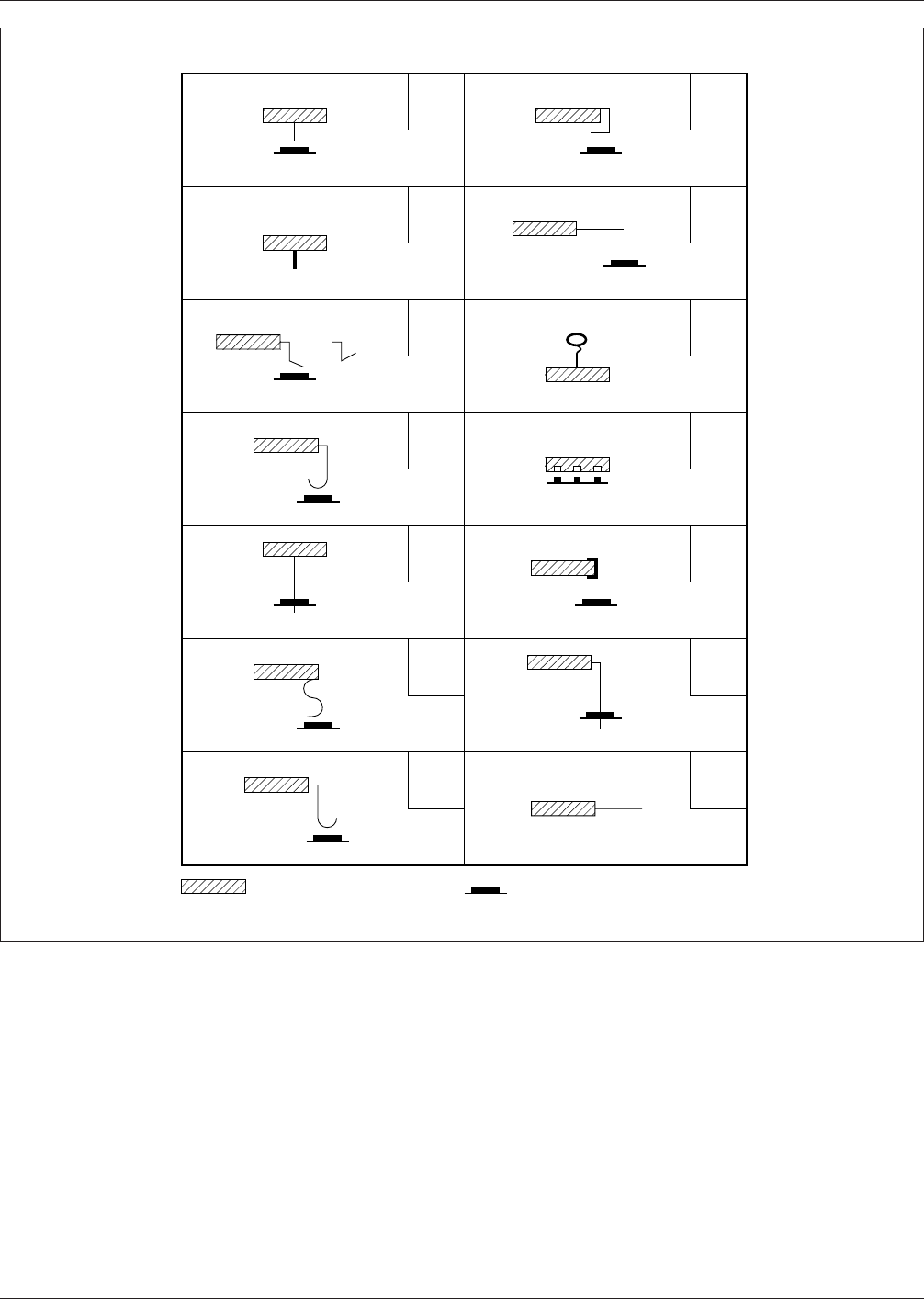
Figure 3–2 Lead-form (or terminal-shape) examples
B
D
G
J
P
S
U
C
F
H
N
R
T
W
BUTT "C" BEND
SOLDER LUG FLAT
GULL WING HIGH-CURRENT CABLE
"J" BEND NO LEAD
PIN/PEG WRAPAROUND
"S" BEND THROUGH-HOLE
"J" INVERTED WIRE
BODY OF PACKAGE LAND STRUCTURE
IPC-SM-782A December 1999
10
电子技术应用 www.ChinaAET.com