IPC-SM-782A 表面安装设计和焊盘设计标准(带BGA).pdf - 第21页
Therefore, the calculations for ‘ ‘S’ ’ minimum and maxi- mum dimensions are as follows: S min =L min –2T max = 5.8 – 2(1.27) = 3.26 S max =L max –2 T min = 6.2 – 2(0.4) = 5.4 mm S tol =S max –S min = 5.4 – 3.26 = 2.14 m…
termination, or castellation; but also because the inner
dimensions must be derived by subtracting the sum of the
dimensions of the leads (with all their inherent tolerances)
from the overall dimensions of the part.
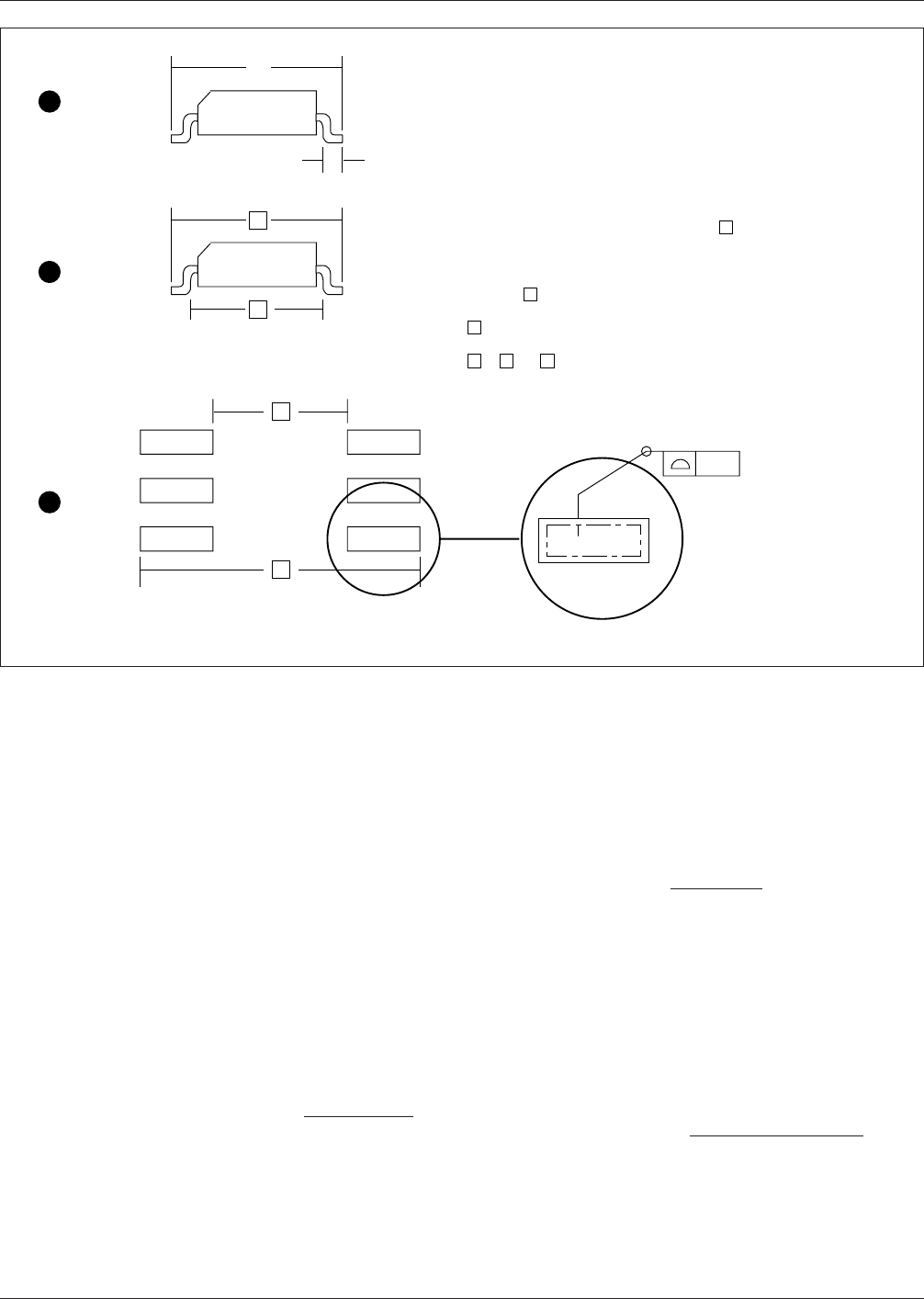
Figure 3–5a shows the concept for the manufacturers
dimensions and tolerances for a gull-wing SOIC. Figure
3–5b shows the converted dimensions to be considered in
the overall mounting system requirements. Figure 3–5c
shows the land pattern dimensions. The basic dimensions
define the minimum length as measured across the two
outer extremities. Tolerances increase this dimension to the
maximum width, reducing toe fillet opportunity. The inner
dimensions between heel fillets on opposing sides are the
most important. Inner dimensions are derived by:
a. Establishing the maximum width of the component as
measured from lead termination to lead termination.
(This dimension is shown as ‘‘L,’’ and is provided by
the manufacturer).
b. Establishing the minimum amount of the lead length as
measured across the ‘‘footprint’’ (from heel to toe for
gull-wing leads). (This dimension is ‘‘T,’’ and is pro-
vided by the manufacturer).
c. Subtracting twice the minimum lead length of (b) from
the maximum overall component length of (a) to arrive
at the maximum length inside the leads across the length
of the component (the inner dimension between oppos-
ing heel fillets). Including the tolerances on dimensions
(a) and (b) will yield the minimum dimension between
opposing heels. This signifies worst case tolerance
analysis.
d. Three sets of tolerances are involved in the analysis
described in (c.); tolerances on the overall component,
plus the tolerances for the lead on each end. Since not
all three tolerances are considered at their worse case, a
recommended method for determining the statistical
impact is to summarize the squares of the tolerances and
take the square-root of their sum as the rms (root-mean-
square) tolerance difference.
For example:
RMS tolerance accumulation =
√
(L
tol
)
2
+ 2(T
tol
)
2
Where:
L
tol
=L
max
–L
min
T
tol
=T
max
–T
min
As an example, the SOIC with 16 leads has the follow-
ing limits for the ‘‘L’’ (component length) and ‘‘T’’ (ter-
minal length) dimensions:
L
min
= 5.8 mm, L
max
= 6.2 mm
L
tol
=L
max
–L
min
= 6.2 – 5.8 = 0.4 mm
T
min
= 0.4 mm, T
max
= 1.27 mm
T
tol
=T
max
–T
min
= 1.27 – 0.4 = 0.87 mm
IPC-782-3-4
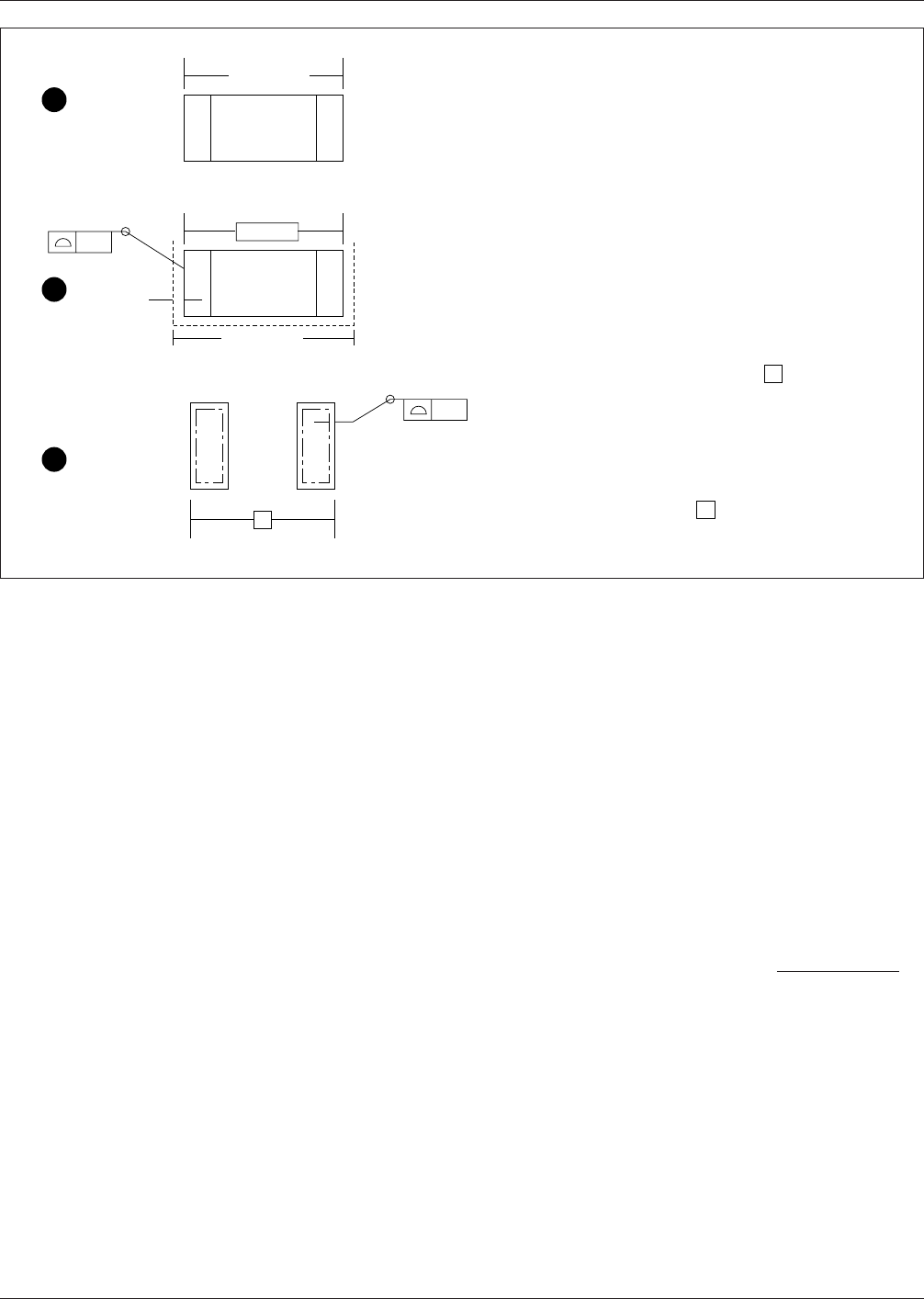
Figure 3–4 Example of C1206 capacitor dimensioning for optimum solder fillet conditions
3.2 ± 0.2
mm
▼
▼
▼
▼
3.0 LMC
▼
0.2
▼
▼
Maximum
component size
▼
▼
Z
MMC
▼
▼
▼
▼
0.05
Manufacturers dimensions
and tolerances
(maximum length of part is 3.4
mm).
Part shown with length at
"least material condition", and
profile tolerance to indicate
maximum range of
component length at 3.4
mm.
Land pattern with dimension Z at
"maximum material condition". Profile
tolerance of part (0.2 X 2), plus profile
tolerance of land pattern (0.05 X 2) plus
placement accuracy (0.1 diameter of true
position) are considered in determining the
proper dimension for Z , plus the desired
toe fillet.
A
B
C
IPC-SM-782A December 1999
12
电子技术应用 www.ChinaAET.com
Therefore, the calculations for ‘‘S’’ minimum and maxi-
mum dimensions are as follows:
S
min
=L
min
–2T
max
= 5.8 – 2(1.27) = 3.26
S
max
=L
max
–2T
min
= 6.2 – 2(0.4) = 5.4 mm
S
tol
=S
max
–S
min
= 5.4 – 3.26 = 2.14 mm
The difference between S
min
and S
max
is 2.14 mm,
which is probably a larger tolerance range than the
actual range within which these components are manu-
factured. This worst-cast scenario for the tolerance
range for ‘‘S’’ can also be calculated by adding the tol-
erances for the component length and the two terminals:
S
tol
=L
tol
+2T
tol
= 0.4 + 2(0.87) = 2.14 mm
In order to arrive at a more realistic tolerance range, the
RMS (root-mean-square) value is calculated using the
tolerances on the dimensions involved (‘‘L’’ and ‘‘T’’):
S
tol
(rms) =(L
tol
)
2
+ 2(T
tol
)
2
=
√
0.4
2
+ 2(0.87)
2
= 1.29mm
S
tol
(rms) is added to S
min
to arrive at a maximum ‘‘S’’
dimension. This technique is used so that a more realis-
tic S
max
dimension is used in the land pattern equations
for calculating G
min
(minimum land pattern gap between
heel fillets). In this example, the following calculation is
used for S
max
:
S
max
(rms) = S
min
+S
tol
(rms) = 3.26 + 1.29 = 4.55 mm
To determine the G
min
dimension for the land pattern,
S
tol
(rms) is used for the component tolerance (i.e., S
tol
(rms) = ‘‘C’’). The calculations for G
min
are as follows:
G
min
=S
max
–2J–
√
C
2
+ F
2
+ P
2
Where:
J = 0.5 mm (target heel fillet)
C=S
tol
(rms) = 1.29 mm (see above calculations from
component dimensions)
F = 0.1 mm (assumed fabrication tolerance)
P = 0.1 mm (assumed assembly equipment placement
tolerance)
Therefore:
G
min
=4.55–2(0.5) –
√
(1.29)
2
+(0.1)
2
+(0.1)
2
= 2.25 mm
Another major condition for multiple-leaded components
that must be considered in land pattern design is lead, ter-
mination, or castellation pitch. The pitch describes the
IPC-782-3-5
Figure 3–5 Profile dimensioning of a gullwing leaded SOIC
L
▼
▼
▼
▼
T
L
▼
▼
S
MMC
▼
▼
G
▼
▼
▼
Z
▼
▼
▼
0.05
"
N
"
Places
Fabrication tolerance
equals 0.1
mm
Manufacturers dimensions and tolerances
converted to profile dimensions, with S
at "maximum material condition".
Note: if S is not provided by the component
manufacturer it may be determined by subtracting
T terminal dimensions from the length.
S = L - 2 T
Manufacturing dimensions of SOIC's
A
B
C
MMC MMC LMC
December 1999 IPC-SM-782A
13
电子技术应用 www.ChinaAET.com

basic dimension of the spacing of one component lead ter-
mination or castellation to its adjacent counterpart(s). No
tolerance is assigned to pitch in the profile dimensioning
concept. Differences in pitch shall be included in the width
dimensions of the lead, termination, or castellation which
are dimensioned as basic at the minimum size.
3.3.2 Land Tolerancing
Profile tolerancing is used for
lands in a manner similar to that of the components. All
tolerances for lands are intended to provide a projected
land pattern with individual lands at maximum size. Uni-
lateral tolerances intend to reduce the land size and thus
result in a smaller area for solder joint formation. In order
to facilitate companion dimension systems the land pattern
is dimensioned across outer and inner extremities.
The dimensioning concept in this standard uses limiting
dimensions and geometric tolerancing to describe the
allowable maximum and minimum dimensions of the land
pattern. When lands are at their maximum size, the result
is a minimum acceptable space between conductors; con-
versely when lands are at their minimum size, the result is
the minimum acceptable land pattern necessary to achieve
reliable solder joints. These thresholds allow for gauging of
the land pattern for go/no-go conditions. The whole con-
cept of the dimensioning system described in this docu-
ment is based on these principles and extends to compo-
nent mounting dimensions, land pattern dimensions,
positioning dimensions etc., so that the requirements may
be examined using optical gauges at any time in the pro-
cess in order to insure compliance with the tolerance analy-
sis.
Figure 3–5 shows the land pattern for an SOIC with gull-
wing leads intended to be a companion to the chip compo-
nent dimensioning concepts shown in Figure 3–4. The
basic dimension is across the outer extremities.
Dimension ‘‘Z’’ is at maximum size, while the inner
extremities (dimension ‘‘G’’) are dimensioned at minimum
size. Unilateral tolerances decreased the basic dimension
for ‘‘Z’’ while increasing the basic ‘‘G’’ dimension. This
action results in a reduced land pattern, thus processing
target values should be as close to the basic ‘‘Z’’ and ‘‘G’’
dimensions as possible. This concept also holds true for the
width (X) of the land dimension which is specified at maxi-
mum size.
3.3.3 Dimension and Tolerance Analysis
In analyzing
the design of a component/land pattern system, several
things come into play. The size and position tolerances of
the component lead or termination, the tolerances of the
land pattern, the placement accuracy of the man/machine to
center the part to the land pattern, and finally the amount
of solder area available for a solder joint for formation of
a toe, heel or side fillet.
System equations have been developed for chip compo-
nents and multiple leaded parts. These concepts assume
that the target values of parts and land patterns are maxi-
mized to reflect solder joint formation (i.e., outer dimen-
sions of components at minimum size with outer dimen-
sions of land patterns at maximum size). The equations use
the following symbols:
C = the unilateral profile tolerance(s) for the component
F = The unilateral profile tolerance(s) for the board land
pattern
P = the diameter of true position placement accuracy to
the center of the land pattern
With the assumption that a particular solder joint or solder
volume is desired for every component, some methods use
the worst case criteria for determining a dimension. This
would require that ‘‘C,’’ ‘‘F,’’ & ‘‘P’’ be added to the mini-
mum dimension of the component length plus the solder
joint requirements, in order to determine the maximum
dimension of the outer land pattern.
Experience shows that the worst case analysis is not always
necessary, therefore statistical methods are used by taking
the square root of the sum of the squares of the tolerances.
This method assumes that all features will not reach their
worst case. The equations for determining chip component
land pattern requirements are as follows:
Z max = L min + 2J
T
+
√
C
L
2
+ F
2
+ P
2
G min = Smax–2J
H
–
√
C
S
2
+ F
2
+ P
2
X max = W min + 2J
S
+
√
C
W
2
+ F
2
+ P
2
Where:
Z = Overall length of land pattern
G = Distance between lands of the pattern
X = Width of land pattern
L = Overall length of component
S = Distance between component terminations
W = Width of component
J = Horizontal dimension of solder fillet
J
t
= Solder fillet at toe
J
h
= Solder fillet at heel
J
s
= Solder fillet at side
C = Component tolerances
C
L
= Tolerance on component length
C
S
= Tolerance on distance between component
terminations
C
W
= Tolerance on component width
F = Printed board fabrication (land pattern geometric)
tolerances
P = Part placement tolerance (placement equipment
accuracy)
The formula (the square root of the sum of the squares) is
identical for both toe and heel solder joint formation (dif-
ferent tolerances are used, however). However, the desired
IPC-SM-782A December 1999
14
电子技术应用 www.ChinaAET.com