IPC-SM-782A 表面安装设计和焊盘设计标准(带BGA).pdf - 第24页
If the user of these land patterns desires a more robust pro- cess condition for placement and soldering equipment, individual elements of the analysis may be changed to new and desired dimensional conditions. This inclu…
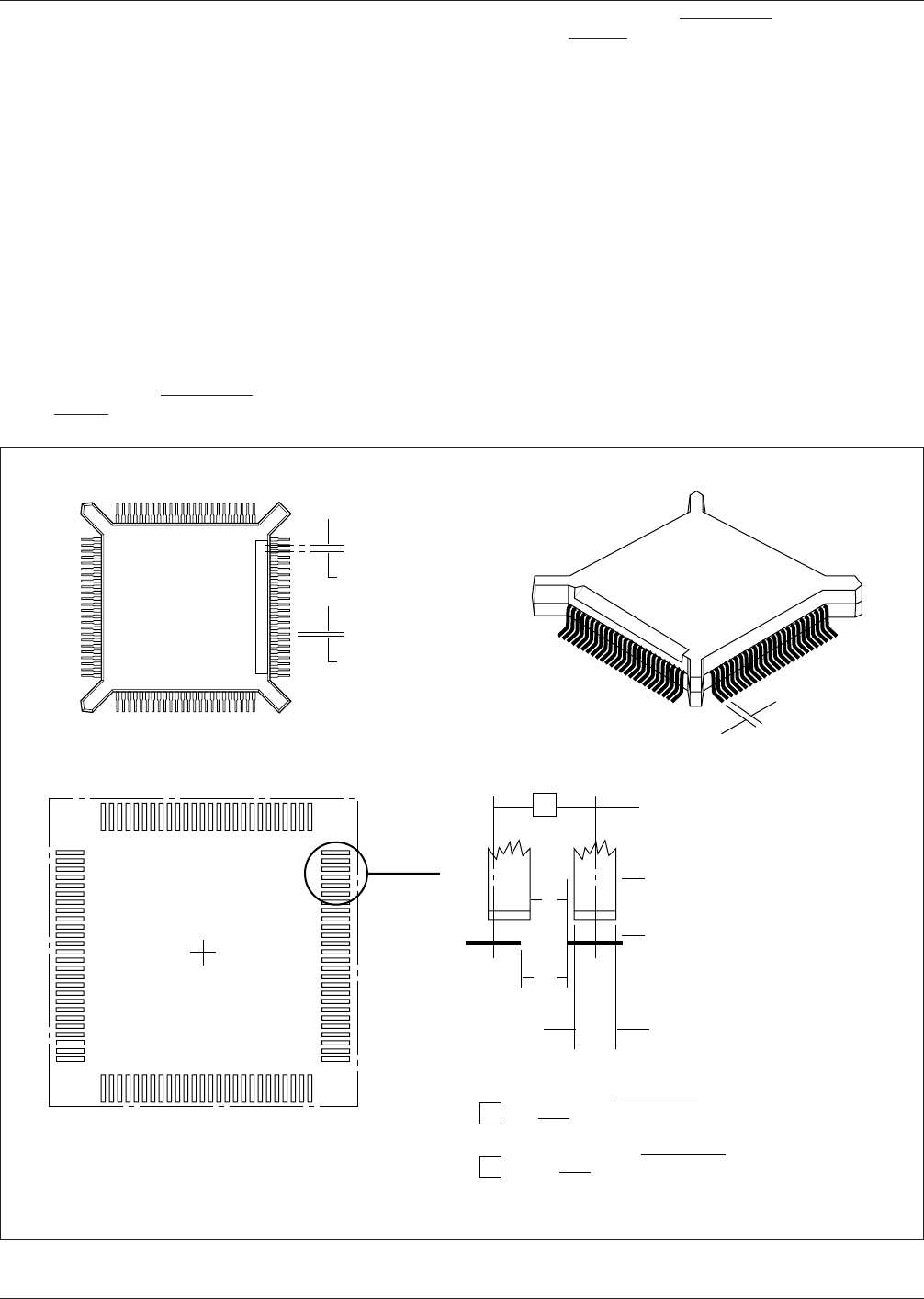
solder joint dimension and the square root of the sum of the
squares are added for outer land pattern dimensions and
subtracted for inner land pattern dimensions. The result
provides the final land pattern dimensions (Z, G, and X) for
chips.
The same concept is true for multiple leaded or leadless
components. Additionally, pitch with land-to-lead overlap
(M) can be evaluated as well as the space (N) to reflect the
clearance between a lead, termination, or castellation and
the adjacent land(s). These latter values are not used in the
equations to determine the land pattern sizes, but may be
used to limit lead-to-adjacent land proximity and to adjust
lead-to-land overlap. See Figure 3–6.
The equation for determining if the clearance ‘‘N’’ or the
attachment overlap ‘‘M’’ are sufficient is as follows:
M =
[
W + X
2
]
−
√
C
2
+ F
2
+ P
2
N = E–
[
W + X
2
]
+
√
C
2
+ F
2
+ P
2
3.3.3.1 Tolerance Analysis
The following tolerance
concepts are used to determine the land patterns for all
electronic components. These concepts are detailed in
Table 3-4, and reflect the tolerances on the component, the
tolerances on the land pattern (on the interconnecting sub-
strate), and the accuracy of the equipment used for placing
components.
Solder joint minimums are shown for toe, heel and side fil-
lets. These conditions are minimum, since the equations in
3.3 address the tolerance of component, board, and place-
ment accuracy tolerances (sum of the squares). The mini-
mum solder joint is increased by the amount that the toler-
ances are not used up.
IPC-782-3-6
Figure 3–6 Pitch for multiple-leaded components
0.63 Pitch
0.3 - 0.2
▼
▼
Pitch
▼
▼
▼
▼
Leads (W)
Lands (X)
Pitch
▼
▼
E
M
G
M =
W+X
-
=
C
2
+
F
2
+
P
2
2
Note: Positional tolerance takes angularity into account
N
▼
▼
▼
▼
N = E
-
[
W+X
]
-
=
C
2
+
F
2
+
P
2
2
▼▼
▼
▼
December 1999 IPC-SM-782A
15
电子技术应用 www.ChinaAET.com
If the user of these land patterns desires a more robust pro-
cess condition for placement and soldering equipment,
individual elements of the analysis may be changed to new
and desired dimensional conditions. This includes compo-
nent, board or placement accuracy spread as well as mini-
mum solder joint expectations.
3.3.3.2 Component Dimensions
Illustrations of compo-
nent dimensions beginning in each component section are
accompanied by table of figures for each of the different
part numbers, as taken from EIA-PDP-100, JEDEC-95 and
other world wide component standards.
EIA-PDP-100 is a catalogue listing of outline drawings
illustrating the dimensions of supplier registered passive
components; JEDEC-95 as the outlining document for
solid state products. At times, the component tolerances or
component gauge requirements do not necessarily reflect
the exact tolerance on a manufacturers data sheet. Usually,
this occurs when industry component specification ranges
are so broad that they defy good surface mount design
principles. When this action is taken, the tolerance is indi-
cated with an asterisk (*).
Component dimensions are provided according to the con-
cepts of maximum and least materials condition (MMC and
LMC). Both conditions are presented in the tables. The
component manufacturer may not always dimension his
component in accordance with the limits shown in the
tables, however, these limits may be used as a gauge for
go/no-go acceptance of the component. The LMC dimen-
sions of the figure are those that have been used in the
equations described in 3.3 for determining the recom-
mended land pattern.
Dimensions that have had their tolerance spread reduced
are so indicated in the tables. Parts that are available with
shape characteristics or tolerance limits that fall outside the
recommended norms require land patterns that must be
altered slightly from those presented.
Users of these specialized parts are encouraged to develop
their own land patterns which then become unique to a
specific component vendor part. A dimensioning system
with specific equations has been provided to facilitate
unique land pattern development or enhance process usage.
3.3.3.3 Land Pattern Dimensions
Land pattern dimen-
sions are provided according to the concepts of maximum
material conditions (MMC). Sometimes a dimension is pre-
sented as a minimum distance. This occurs when defining
a space(s) that exists between lands at MMC. The printed
board manufacturer may not always inspect his board in
accordance with the limit concepts shown in the table.
However, these limits may be used as a gauge for go/no-go
acceptance of the printed board land pattern. The dimen-
sions shown in each table are those that have been used in
the equations described in 3.3 for determining the recom-
mended land patterns.
All land patterns are designed to be transparent to the sol-
dering process to be used in manufacturing. This reduces
the number of land sizes in the component library, and is
less confusing for the designer, but may not be the most
robust for the placement or the soldering process.
3.3.3.4 Land Pattern Registration
Each land pattern has
received a registration number. The RLP (Registered Land
Pattern) number is a three digit number with a set of num-
bers assigned to land patterns for a particular family of
components. The original number assigned to a particular
component, uses that analysis shown for the specific sec-
tion (sections 8 through 16). The analyses assume certain
tolerances for board fabrication, placement machine accu-
racy and minimum desired solder joint. Changes in the
assumptions will result in a revision letter to the number.
Thus the first change to RLP 106 would be identified as
RLP 106A, the second change would be RLP 106B etc.
The letters x,y&zarereserved for user modifications to
the standard land pattern. If a company wishes to change
the approved standard land pattern the user would identify
his customized version as RLP 106X, RLP 106Y or RLP
106Z. It should be recognized that X, Y & Z type RLP’s
reflect unique land patterns and will differ company to
company. The number reservations are shown in Table 3-5.
Not every RLP is assigned in Sections 8 through 16, how-
ever all three digit number from 100 to 999 are reserved as
IPC standard RLP numbers. Users of the system may
enhance their computer libraries by tailoring the IPC RLP’s
(adding X, Y or Z), using numbers 001 to 099 or using four
digit numbers to describe their custom standard land pat-
terns. The letter ‘‘W’’ may be used to signify a special user
pattern signifying that it is for wave soldered attachment
application (i.e. RLP 102 defines as RLP 102W.)
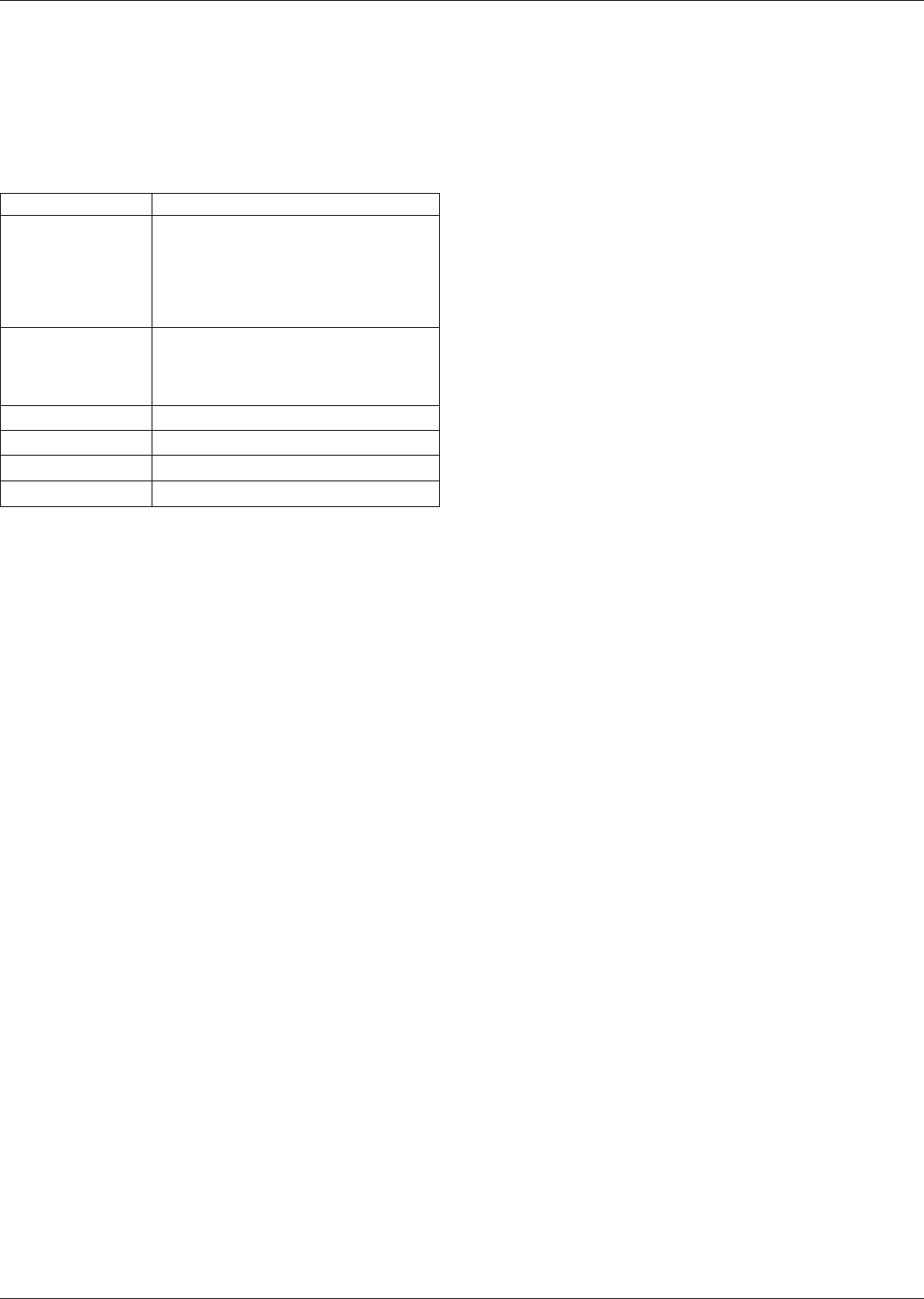
Table 3–4 Tolerance Analysis Elements for Chip Devices
Tolerance Element Detailed Description
Component
Tolerance
The difference between the MMC and
the LMC of each component
dimension, length, width and distance
between electrodes or leads. This
number is the ‘‘C’’ tolerance in the
equations.
Board Tolerance The difference between the MMC and
the LMC of each land pattern
dimension. This number is ‘‘F’’
tolerance in the equations.
Positional Accuracy 0.1 – 0.2 mm DTP
Toe Fillet 0.4 – 0.6 mm
Heel Fillet 0.0 – 0.2 mm
Side Fillet Width –0.02 – 0.02 mm
IPC-SM-782A December 1999
16
电子技术应用 www.ChinaAET.com

3.3.4 Dimension Tailoring
The concepts indicated in
this section are reflected in the individual component/land
pattern section of this document, sections 8.0 onward. In
each instance, the tolerances used for C, F, or P are identi-
fied as well as the desired solder joints—‘‘J.’’ At times the
component tolerances or component gauge requirements do
not necessarily reflect the exact tolerance on a manufactur-
ers data sheet. Usually this occurs when industry compo-
nent specification ranges are so broad that they defy good
surface mount design principles. When the action to
modify the tolerance range is taken, the tolerance ‘‘C’’ is
indicated with an asterisk (*).
In addition, solder joint formation has been considered as
being transparent to the soldering process or equipment
used for mass reflow solder processes. This technique
facilitates a single land pattern for the computer aided
design (CAD) system and allows the assembly to be pro-
cessed by more than one type of assembly operation. As
designs become more complex with denser component/
land pattern geometries, the land patterns may have to be
customized for specific components, and assembly pro-
cesses, in order to make the entire process more robust and
increase first pass defect-free assembly yields.
Users are encouraged to follow the equation principles
defined in this section and in sections 8.0 onward. Main-
taining the data in computer ‘‘spread sheet’’ formats will
facilitate ease of modification to specific land pattern
requirements for process yield improvements.*
Note: Electronic media (3.5 in disk) containing Lotus
spreadsheets are available with instructions for use. They
are identified as IPC-EM-782, ‘‘Land Pattern Data Analy-
sis Spreadsheets for IPC-SM-782 Land Patterns.’’
3.4 Design for Producibility
As part of the planning
cycle of a product’s development, a concurrent engineering
task group should be assembled to determine the criteria
for each new design. During this planning phase, the prod-
uct function and configuration is clearly defined and the
Table 3-5 RLP Numbers
IPC-SM-782 Section Component Type
Reserved Registered
Land Pattern Numbers
8.1 Chip Resisters 100 to 129
8.2 Chip Capacitors 130 to 159
8.3 Inductors 160 to 179
8.4 Tantalum Capacitors 180 to 199
8.5 Metal Electrode Face Components (MELFS) 200 to 209
8.6 Small Outline Transistor (SOT) 23 210 to 214
8.7 Small Outline Transistor (SOT) 89 215 to 219
8.8 Small Outline Diode (SOD) 123 220 to 224
8.9 Small Outline Transistor (SOT) 143 225 to 229
8.10 Small Outline Transistor (SOT) 223 230 to 234
8.11 Modified Through-Hole Component (TO) 252 235 to 239
9.1 Small Outline Integrated Circuits (SOIC) 300 to 329
9.2 Small Outline Integrated Circuits (SSOIC) 330 to 359
9.3 Small Outline Package Integrated Circuit (SOPIC) 360 to 389
9.4 Thin Small Outline Package (TSOP) 390 to 419
9.5 Ceramic Flat Pack (CFP) 420 to 459
10.1 Small Outline with ‘‘J’’ Leads (SOJ) 480 to 529
11.1 Plastic Quad Flat Pack (PQFP) 530 to 549
11.2 Shrink Quad Flat Pack, Square (SQFP) 550 to 579
11.3 Shrink Quad Flat Pack, Rectangular (SQFP) 580 to 629
11.4 Ceramic Quad Flat Pack (CQFP) 630 to 649
12.1 Square Plastic Leaded Chip Carrier (PLCC) 700 to 719
12.2 Rectangular Plastic Leaded Chip Carrier (PLCC) 720 to 739
12.3 Leadless Ceramic Chip Carrier (LCC) 740 to 759
13.1 Modified Dual-In-Line Pin Components (DIP) 760 to 779
14.1 Ball Grid Arrays (BGA) 900 to 1069
14.2 Plastic Rectangular Ball Grid Arrays 1080 to 1082
December 1999 IPC-SM-782A
17
电子技术应用 www.ChinaAET.com