00195941-03-UM SiplaceCA-EN.pdf - 第472页
7 Station Enlargements User Manual SIPLACE CA 7.8 Siemens Interface Edition 08/2011 EN 472 7.7.2 Functional Description The PCB is transpor ted into the place ment area un til the laser light barrier trigg e rs the stop …
User Manual SIPLACE CA 7 Station Enlargements
Edition 08/2011 EN 7.7 PCB Alignment
471
7.7 PCB Alignment
[00119677-xx] PCB alignment for single conveyor, SIPLACE HF/X/CA/D3
[00119678-xx] PCB alignment for dual conveyor, SIPLACE HF/X/CA/D3
7.7.1 General
PCBs to be processed sometimes have a length to width ratio of 1:2 or worse. This means that
the shorter side of the PCB points in the direction of travel. During travel, such PCBs may twist
slightly and, as a result, the fiducials no longer lie within the PCB vision camera's search window.
In this case, the "PCB alignment" option ensures that these PCBs are realigned precisely at the
stopping position.
If boards with recesses are processed in the direction of transport, this can lead to different pro-
cessing positions between machines with mechanical stoppers (HS-50, S-25 HM, F5 HM) and
machines which monitor this position with a laser light barrier (X, CA, HF series, HS-60, S-27 HM).
The "PCB alignment" option ensures that the PCBs are stopped at the same position on all PCB
conveyors. The "PCB alignment" option is available for both single and dual conveyors.
7
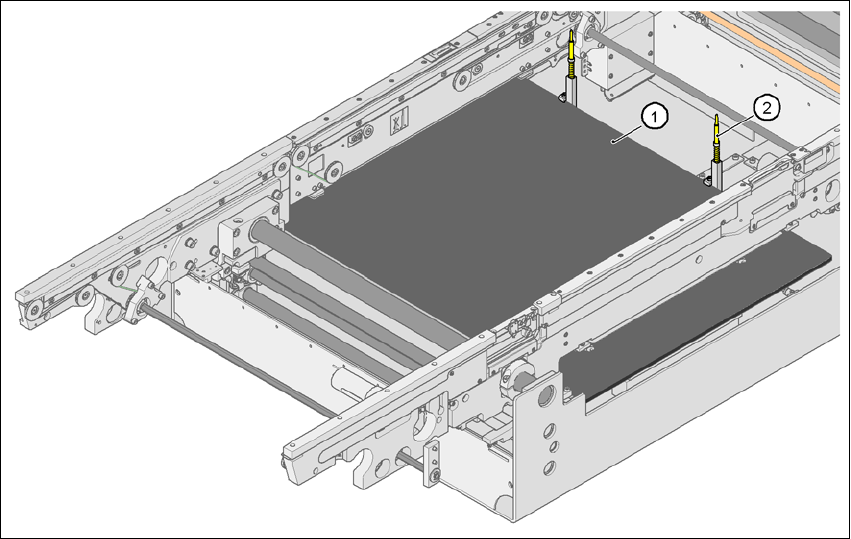
Fig. 7.7 - 1 PCB alignment
(1) Lifting table
(2) PCB stop
7 Station Enlargements User Manual SIPLACE CA
7.8 Siemens Interface Edition 08/2011 EN
472
7.7.2 Functional Description
The PCB is transported into the placement area until the laser light barrier triggers the stop signal
for the PCB conveyor. The lifting table with the PCB stops then moves up into a position in which
the PCB is not yet clamped and can still be moved by the conveyor belts. The two PCB stops are
level with the PCB, and the PCB supports (magnetic pins) are already in contact with the PCB.
The two conveyor belts move the PCB against the PCB stops and align them at the same time.
The lifting table then moves into its top end position, clamps the PCB and releases it from the PCB
stops so as not to affect the placement process. After the placement process, the lifting table and
PCB alignment are lowered and the PCB is moved on.
7
7.8 Siemens Interface
[00116808-xx]SIPLACE interface HF/X/CA/D3
The conveyor interface for CA series machines is configured according to the SMEMA standard.
However, you can also use the interface according to the Siemens standard. This is of benefit, if
a CA series machine is to be integrated into older SIPLACE lines, in which case it would not be
necessary to retrofit the older machines to conform to the SMEMA standard.
Simply configure the conveyor interface for the CA series machines to the Siemens standard and
connect the machine to the corresponding interface cable.
For more information, refer to the "Retrofitting Guide for Siemens Conveyor Interfaces"
[00194343-01].
User Manual SIPLACE CA 7 Station Enlargements
Edition 08/2011 EN 7.9 Long Board Option
473
7.9 Long Board Option
[00119672-xx]Stopper, long board, SIPLACE HF/X/CA/D3
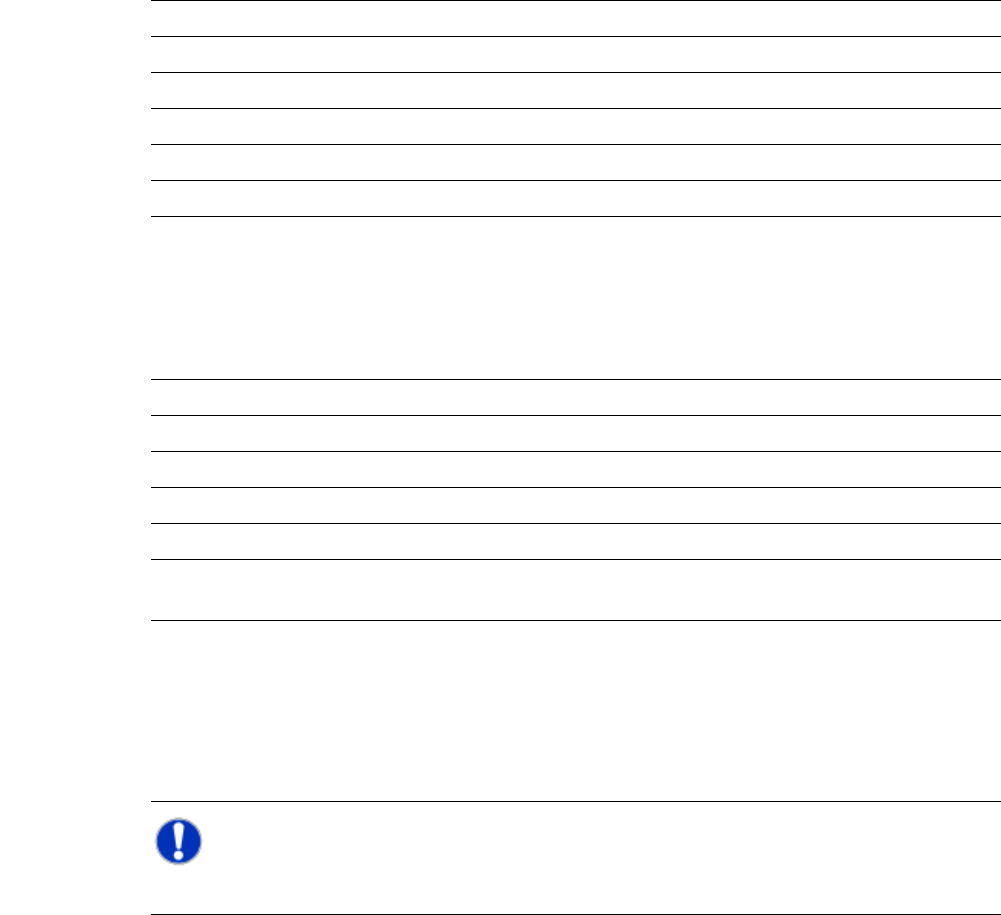
The following board formats can be placed with CA series machines:
7
7
7
We can supply the Long board option as a retrofit kit for placing PCBs that are over 450 mm long.
If the Long board option is installed, then the following PCB formats can be processed:
7
The retrofit kit consists of the following modules:
– Mechanics, comp.: stopper, sensors, cable and assembly parts
– Optional CD for enabling the function on the SIPLACE Pro computer
– Retrofit instructions
NOTE 7
The Long board option must be ordered 2x for the dual conveyor.
For more information, refer to the "Retrofitting Guide for the Long Board Option"
[00193888-01].
Single conveyor (standard width) 50 mm x 50 mm to 450 mm x 460 mm
Single conveyor: Wide board 50 mm x 50 mm to 450 mm x 508 mm
Dual conveyor (standard width) 50 mm x 50 mm to 450 mm x 216 mm
Dual conveyor: Wide board 50 mm x 50 mm to 450 mm x 250 mm
Dual Conveyor in Single Conveyor Mode 50 mm x 50 mm to 450 mm x 416 mm
Dual conveyor in Single conveyor mode: Wide board 50 mm x 50 mm to 450 mm x 450 mm
Single conveyor: Long board (standard width) 50 mm x 80 mm to 610 mm x 460 mm
Single conveyor: Wide board, Long board 50 mm x 80 mm to 610 mm x 508 mm
Dual conveyor: Long board 50 mm x 80 mm to 610 mm x 216 mm
Dual conveyor: Wide board, Long board 50 mm x 80 mm to 610 mm x 250 mm
Dual conveyor in Single conveyor mode: Long board 50 mm x 80 mm to 610 mm x 416 mm
Dual conveyor in Single conveyor mode: Wide board,
Long board
50 mm x 80 mm to 610 mm x 450 mm