00195941-03-UM SiplaceCA-EN.pdf - 第93页
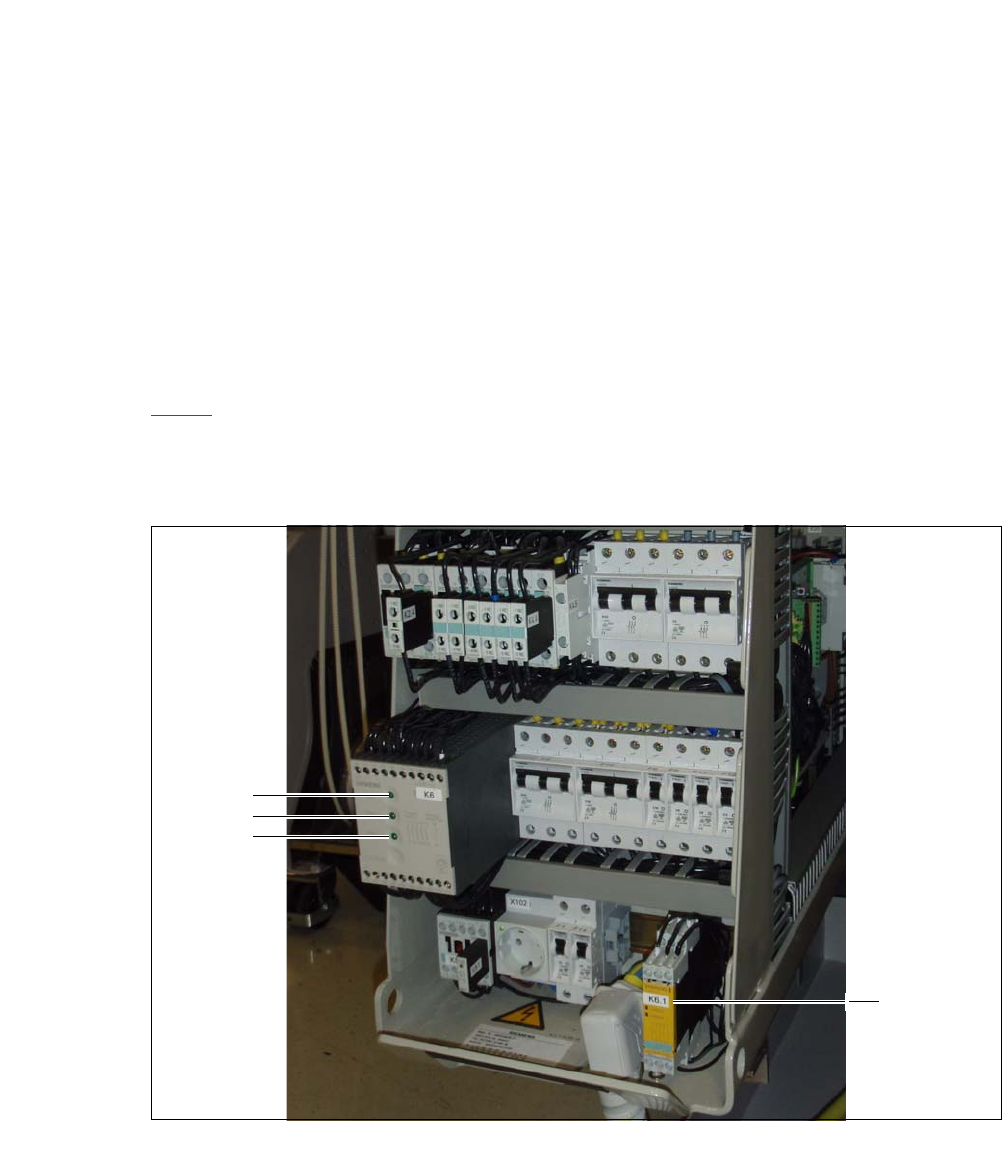
User Manual SIPLACE CA 2 Operational Safety Edition 08/2011 EN 2.8 Safety Equipment 93 (3) Kanal 2 / Channel 2 (4) SWS EMERGENCY STOP switching device extension K6.1 (3TK2830-1CB30) 2.8.4.2 Structure of the Signal ing Ci…
2 Operational Safety User Manual SIPLACE CA
2.8 Safety Equipment Edition 08/2011 EN
92
2.8.4.1 Structure of the SIPLACE EMERGENCY STOP Circuits
The following contacts are series-connected and form the EMERGENCY STOP circuit:
– normally open (NO) contacts for the four protective cover switches
– normally open (NO) contacts in the two protective switches for the cover flaps over the PCB
conveyor
– normally open (NO) contacts for the two EMERGENCY STOP buttons
– normally open (NO) contacts for the feeder module cover flaps (option)
– normally open (NO) contacts for the four component trolleys or SWSs (wafer feeders)
– channels of the protective contactor combination PCC 6 and the K6.1 (3TK2830-1CB30) ex-
tension
In the EMERGENCY STOP circuit 2, the CAN bus signal for the signaling circuit (see section
2.8.4.2
) is fed to channel 2 of the protective contactor combination PCC K6. If the EMERGENCY
STOP circuit is closed, and the signaling circuit is not signaling a malfunction, then the two green
LEDs for channels 1 and 2 light up, in addition to the green mains power check LED of the pro-
tective contactor combination.
2
Fig. 2.8 - 7 Signal LED on the protective contactor combination K6 and SWS EMERGENCY STOP switching device
K6.1
(1) Netz / Power
(2) Kanal 1 / Channel 1
1
2
3
4

User Manual SIPLACE CA 2 Operational Safety
Edition 08/2011 EN 2.8 Safety Equipment
93
(3) Kanal 2 / Channel 2
(4) SWS EMERGENCY STOP switching device
extension K6.1 (3TK2830-1CB30)
2.8.4.2 Structure of the Signaling Circuit
The signaling contacts of the protective switches for protective covers, for cover flaps above the
PCB conveyor, for component trolleys or the SWSs as well as for EMERGENCY STOP buttons
are polled individually. All the signaling contacts are closed when the machine is on standby. If a
protective cover, for example, is raised, the associated signaling contact opens. This change of
state is signaled to the control computer via the CAN bus. The relevant error message will be dis-
played on the user interface of the station computer and the SWS.
2.8.4.3 Functional Description of the SIPLACE EMERGENCY STOP Circuits
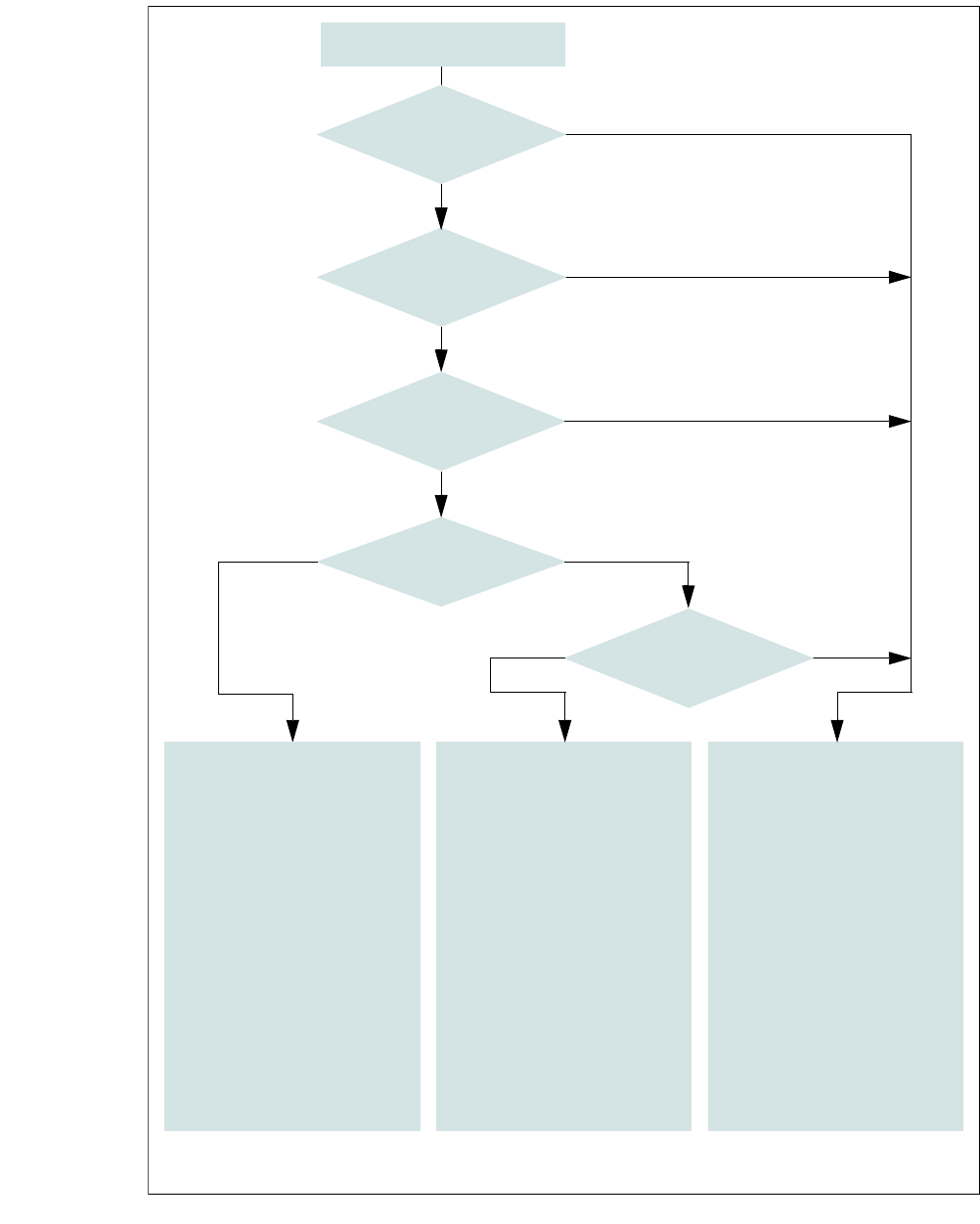
The following conditions must be fulfilled in order to start and operate the placement machine:
– The existing component trolley must be docked and connected.
– The SWSs must be inserted and connected (
EMERGENCY STOP interface connector X1x).
– The SWS EMERGENCY STOP circuits (1 per SWS) must be closed.
– All protective covers must be closed.
– Both cover flaps over the PCB conveyor must be closed.
– The EMERGENCY STOP buttons on the placement machine (2) and on the SWS (1) must
be released.
– The cover flaps (option) over the feeder modules must be closed.
– The minimum operating pressure must have been reached.
– The "software enable" signal must be active. This ensures that the safety circuit is closed.
– The power supply must be sending 24 V to the Start buttons and the protective contactor
combination.
– If one of the start buttons is pressed, the protective contactor combination PCC 6 and the ex-
tension K6.1 are actuated and activate the following components:
– 250 VDC link voltage for the servo amplifiers for the gantry axes
– 145 VDC link voltage for the star axes
– The axis unit receives a "Servo enable" signal for the servo amplifiers.
– 34 VDC operating voltage is switched to the component trolleys.
– 24 V operating voltage are being sent to the used tape cutters.
– The PCB conveyor control receives the enable signal for the PCB clamping, the PCB
stopper and the lifting table control.
Thus the machine is ready to operate.
2 Operational Safety User Manual SIPLACE CA
2.8 Safety Equipment Edition 08/2011 EN
94
2
Fig. 2.8 - 8 EMERGENCY STOP circuits
Start button pressed
No
No
Yes
No
No
Yes
Yes
No
Yes
2
Active
PCC
a
No
Voltage
Y-axis 0 V-
X-axis 0 V-
Star axis 0 V-
DP axis 40 V-
Z-axis 40 V-
Active
PCB conveyor Yes
Lifting table No
PCB clamp No
Width adjustment No
Laser light barrier No
Empty tape cutter No
Component trolley feed device
2
Active
PCC
a
No
Voltage
Y-axis 0 V-
X-axis 0 V-
Star axis 0 V-
DP axis 40 V-
Z-axis 40 V-
Active
PCB conveyor No
Lifting table No
PCB clamp No
Width adjustment No
Laser light barrier No
Empty tape cutter No
Component trolley feed device
a) PCC protective contactor combination K6
Yes
Compressed
air min. 0.5 MPa
(5.0 bar)?
EMERGENCY STOP button
pressed?
Protective cover open ?
EMERGENCY STOP circuit
to component trolley and
SWS interrupted?
Barrier
activated on the user
interface?
2
Active
PCC
a
Yes
Voltage
Y-axis 250 V-
X-axis 250 V-
Star axis 145 V-
DP axis 40 V-
Z-axis 40 V-
Active
PCB conveyor Yes
Lifting table Yes
PCB clamp Yes
Width adjustment Yes
Laser light barrier Yes
Empty tape cutter Yes
Component trolley feed device