00196433-02_AI_Vakuumpumpe_X-Serie_70XDE+EN.pdf - 第122页
Assembly instructions: Vacuum pump for SIPLACE X-se ries 04/2009 Edition 122 Leak test procedure for the C&P20 head: 2 2 T o avoid deviations due to offset errors , it is a good idea to t ake both measurement s using…
Assembly instructions: Vacuum pump for SIPLACE X-series
04/2009 Edition
121
2.11.2 Checking the vacuum circuit
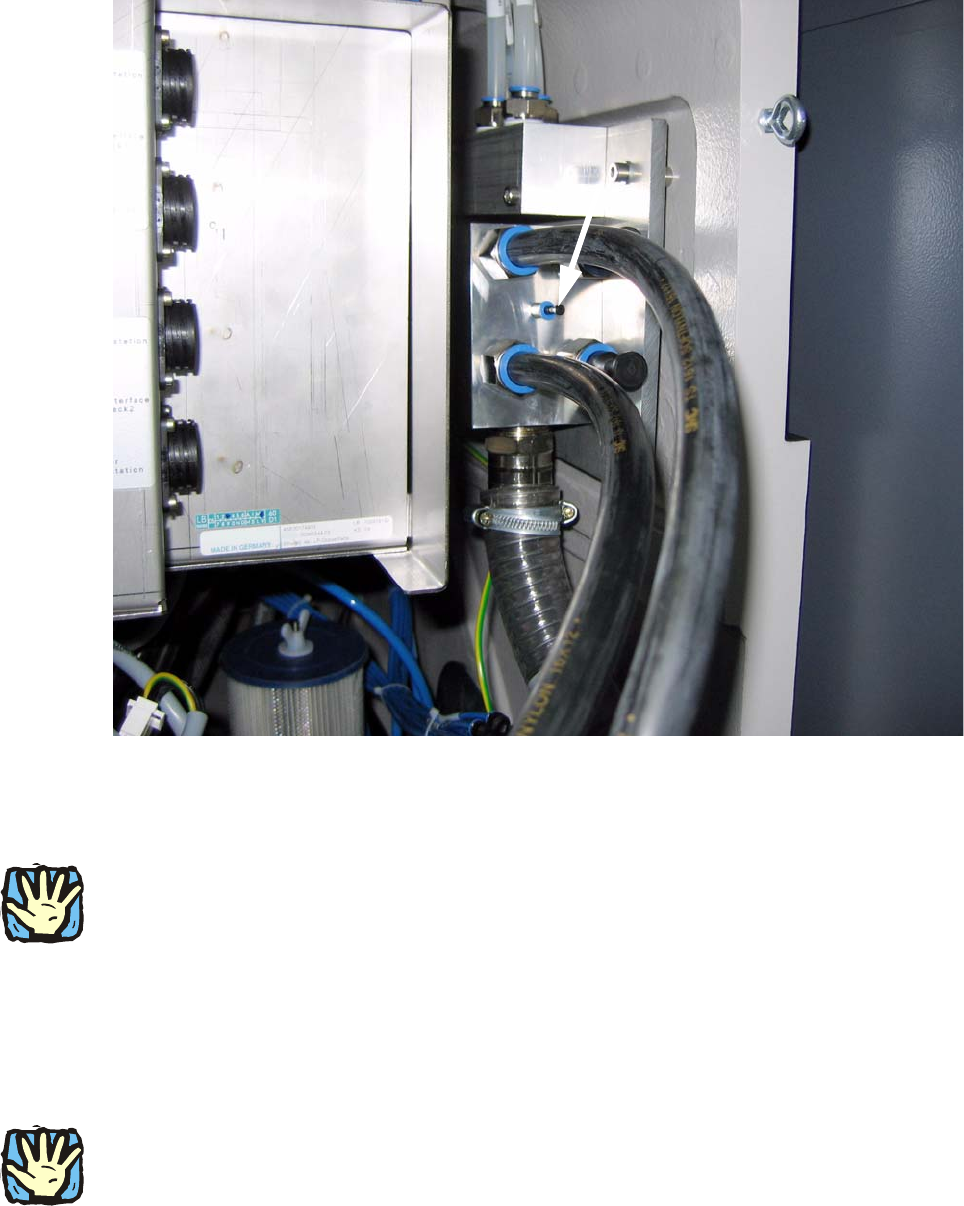
Fig. 2.11 - 1 Measuring point on the vacuum distributor block (machine input)
2.11.2.1 Checking the vacuum system for the C&P20 holding circuit for leaks
2
2
There should be a vacuum of at least -500 mbar (for very large nozzles 1235) to
-600 mbar (for very small nozzles 1006) at each placement machine/head depending on the noz-
zle configuration. 2
The measurement is taken at a nozzle using an external
measuring device that corresponds to a
closed nozzle (with component). 2
2
Measuring point on the vacuum distributor block, machine input (see Fig. 2.11 - 1): 2
2
2
The vacuum should never drop below -400 mbar in operation. If this does occur, please contact
the SIPLACE Hotline. 2

Assembly instructions: Vacuum pump for SIPLACE X-series
04/2009 Edition
122
Leak test procedure for the C&P20 head: 2
2
To avoid deviations due to offset errors, it is a good idea to take both measurements using the
same measuring device. 2
2
: Measure the vacuum using an external pressure measuring device:
– at a connection on the “Distributor, placemen
t head vacuum” on the gantry (see Fig. 2.8 - 5)
and then
– at an open nozzle in the holding circuit on the placement head.
The pressure differential must not exceed 30-50 mbar, otherwise there is a leak somewhere. 2
2
The vacuum test (in SITEST) is always measured at an open nozzle. For large nozzles (1235),
the vacuum drops away to values below -100 mbar due to the increased volume of leak air. This
sharp drop – for large nozzles without a component – is caused by the small diameter of the re-
ducing nozzle in the orifice ring compared to the nozzle diameter.
With a component, vacuum values of -500 to -600 mbar are achieved. 2
If the above values are not achieved
, the cause is gen
erally a hose that is not pushed on fully in
the vicinity of the head. Follow these steps: 2
: Use the tubing nipp
ers to make sure that all the hoses are pressed on correctly
: Repeat the vacuum measurement.
2.11.2.2 Checking that the vacuum system for the C&P20 holding circuit is working overall
Run a vacuum test in SITEST to check all the functions of the vacuum system as for the Venturi
principle. 2
The vacuum sensor in the holding circuit merely serves
to check that the small nozzles in the or-
ifice ring are unsoiled. 2
2.11.2.3 Checking the vacuum system for the C&P6/12 holding circuit for leaks
If the vacuum pump is used for the X-series (C&P20), it differs from the vacuum pump for the HS-
60 / HF as follows: 2
– The flow rate is 4x higher than with the “Vacuu
m pump for HS-xx / S-27HM / HF“ (item no.
00119017)
– The maximum vacuum achieved is now approx. -640 mbar, rather than the previous -850 mbar.
For th
is reason, the minimum permitted vacuum value for the holding circuit must be reduced
from -750 to -400, otherwise, the error message “258 Vacuum in holding circuit is too low (tar-
get/actual)“ will occur during the reference run.
Assembly instructions: Vacuum pump for SIPLACE X-series
04/2009 Edition
123
2
The change to the machine database must only be carried out by SIPLACE Service. 2
2
2
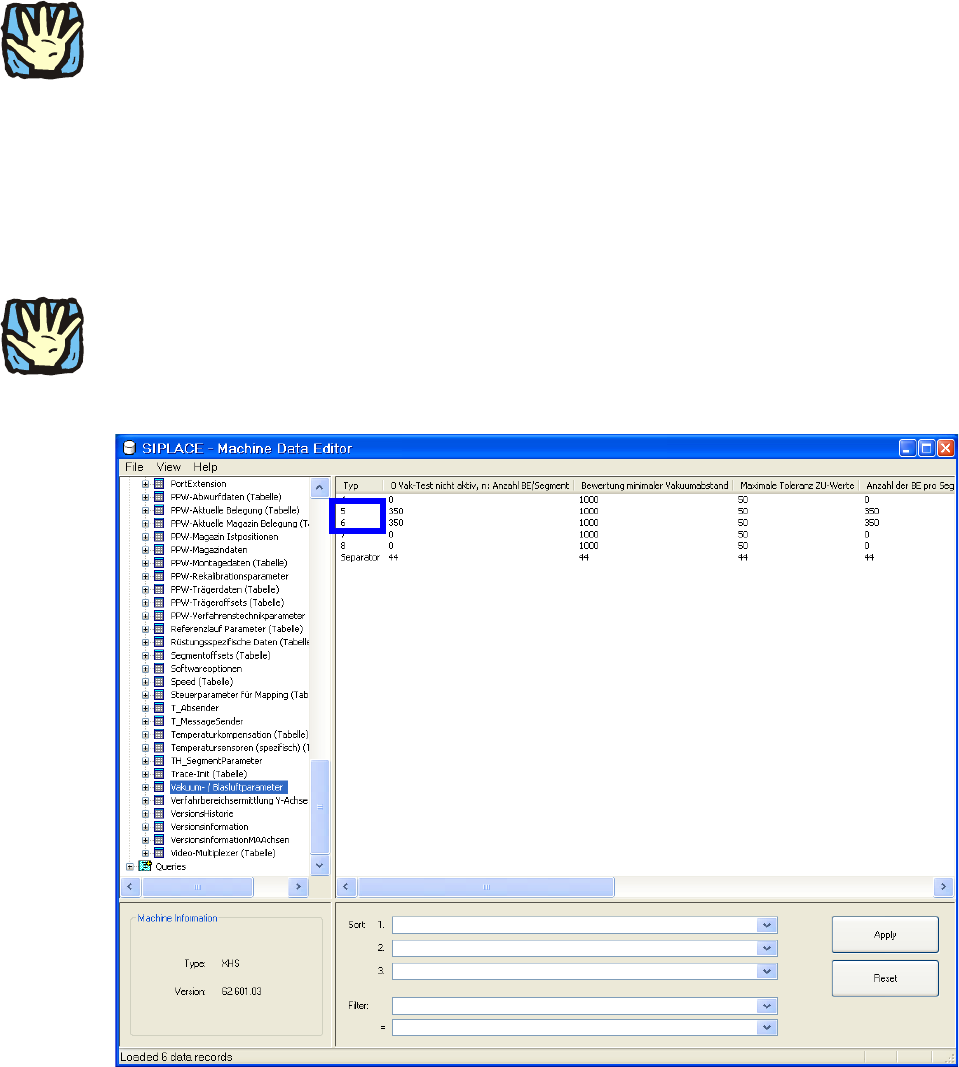
: Select the “Vacuum / Air blast parameters“ table from the database (see Fig. 2.11 - 2).
: Switch to Edit mode fo
r head types 5 and 6.
: Change “Vacuum value for holding circuit“ from 750 to 400 (see Fig.
2.11 - 3).
2
2
This data will be overwritten if the software is updated or if the MC distributor is used. It will then
have to be reedited. 2
2
2
Fig. 2.11 - 2 Select the Vacuum / Air blast parameters table
2