Host Computer System.pdf - 第15页
AVK3 HOST COMPUTER SYSTEM 1.2 PanaP rotoc ol and Co mm and S pecific ations D77HEC-51- 020-A0 1.2- 2 Command field The m essage bet ween AVK3 and t he host com puter is conduct ed by the specifi ed command. The c o mm …
AVK3
HOST COMPUTER SYSTEM
1.2 PanaProtocol and Command Specifications
D77HEC-51-020-A0
1.2-1
1.2. PanaProtocol and Command Specifications
D77HEC-51-020-A0
1.2.1 Message Format
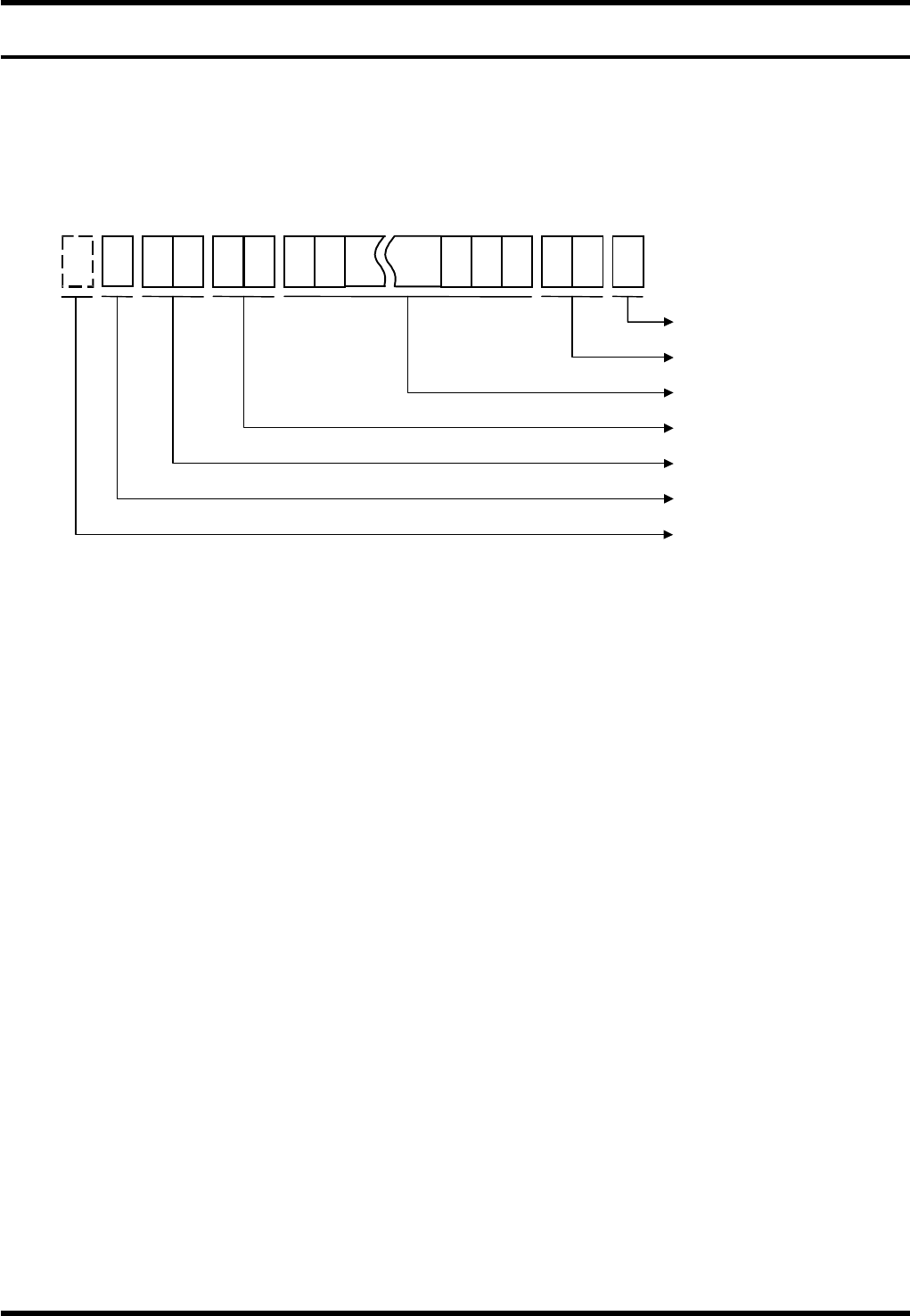
The machine and the host computer are connected by RS-232C interface as hardware. And, as software, in
byte unit, ASCII code (with parity) is used. The message format is as follows, and STX code to ETX code is
processed as one message. It includes number of characters, command, data and check sum data.
STX (START OF TEXT)
The character STX which appears first until the ETX which appears next are processed as one
message. The STX which appears in the message again is processed only as one unit of data. The
ASCII code with parity is H'82.
Number of characters
The number of characters in the command and data fields is counted in binary, and the result of 8 bits
are divided into 4 bits each of upper and lower digits. They are respectively expressed in hexadecimals
(X0” - F”) and processed by ASCII code.
Since hexadecimals are 2 digits, the largest number is FF (256). To read this much data, 256 codes for
256 buffers are required for the interface in the AVK3.
In actual practice, however, 36 codes can meet requirements for all commands according to the
command contents described later. As a result, the maximum number of codes to be received in one
message by the machine is 96 characters including margin. However, even when characters other
than those specified by commands are included in data, they are stored in the buffer when the machine
receives the data. So be careful not to overflow the capacity when the label is added by the user.
In this case, attention must also be paid since characters other than those specified should also be
counted.
C 1 D 0 5 EN 1 1Z 2
EXT: 1 digit
Check sum: 1 digit
Data field: Max. 88 digits
Command field: 2 digits
No. of characters: 2 digits
(
Command + data)
STX: 1 digit
Break code
(Optional)
AVK3
HOST COMPUTER SYSTEM
1.2 PanaProtocol and Command Specifications
D77HEC-51-020-A0
1.2-2
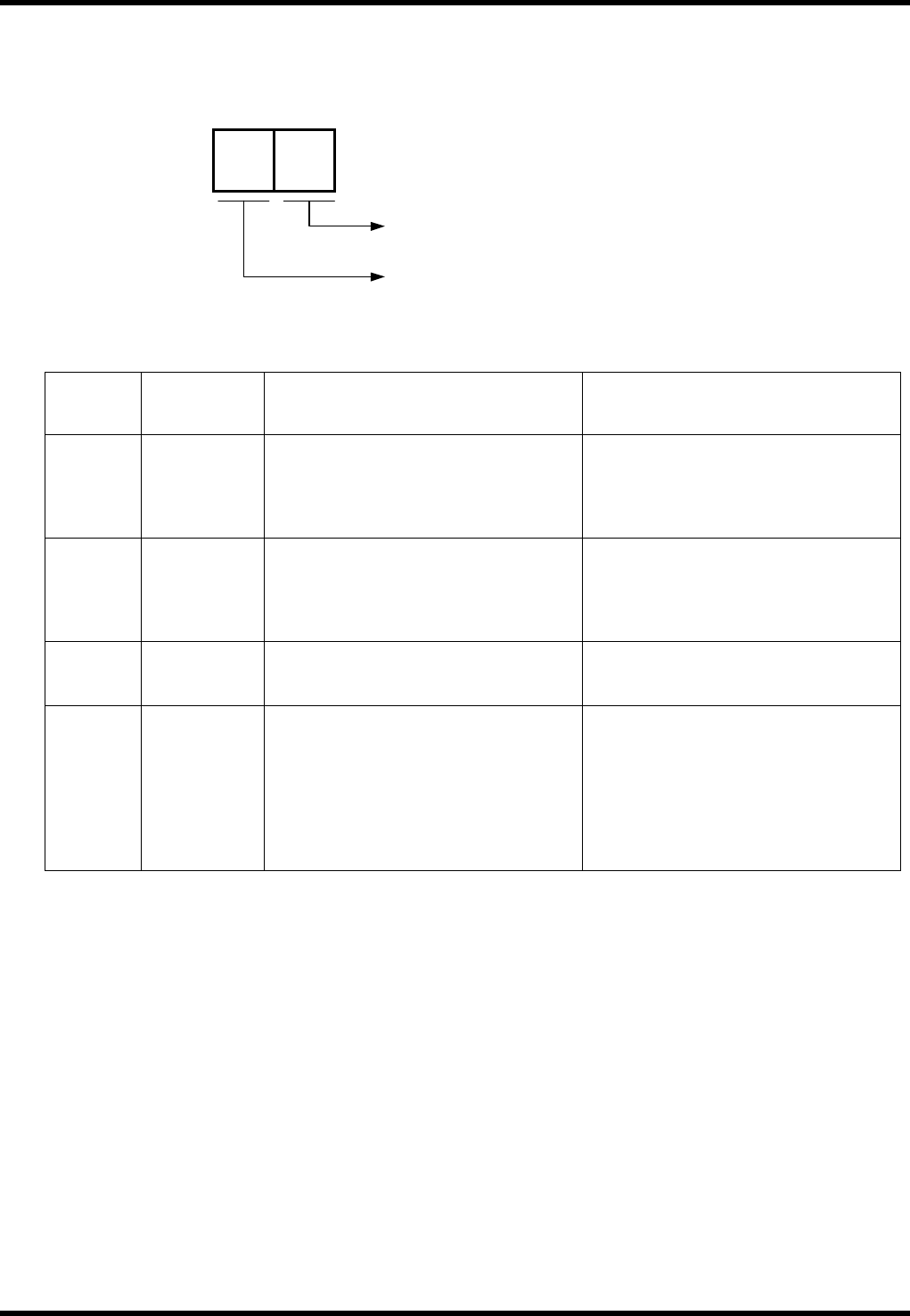
Command field
The message between AVK3 and the host computer is conducted by the specified command.
The command is largely categorized as follows and is processed by ASCII code.
The large category is actually limited to the following 4 types and used as follows:
Large
category
command
Message Contents How it is used
A Acknowledge
Used when AVK3 and host computer
mutually confirm that the message
has been received.
(Host CPU ← → AVK3)
Used as communication procedure,
for use in “acknowledgment”,
“negative acknowledgment” and
“request to resend” to the message
received.
C
Control
command
Used when the host computer
requests action to AVK3.
(Host CPU → AVK3)
Start of sending and receiving NC
program.
Specifies I/O monitoring.
Start/stop/reset command for
machine.
D Data
Means the data transmitted between
AVK3 and host computer.
(Host CPU ← → AVK3)
Transmits NC program.
Transmits the results of I/O
monitoring.
R
Real time
information
Used for AVK3 to inform host
computer of changes in information
whenever they occur.
(Host CPU ← AVK3)
“Operation mode information”,
“Error information” and “Recovery
information” are transmitted from
AVK3 on real time to Host
computer. The host computer
compiles and analyzes this
information and uses it for
production management of AVK3.
Data field
As explained above, the actual number range of data usable is 88 or less. In the data field, the
characters other than those specified by command are neglected. Also, all are processed by ASCII
code.
Check sum
The ASCII code, “number of characters”, “Command field” and “Data field” are subtracted by 8 bits not
counting zero, and the results are divided into 4 bits each of upper and lower digits. They are
respectively expressed in hexadecimals (X‘0’ - F”) and processed by ASCII code.
Therefore, at the time of confirmation of check sum, add command and data in ASCII code (7 bits, no
parity) to check sum data. If the total of 8-bit sum becomes zero, the check sum is OK.
To figure out the character position of check sum, do not figure the 2-digit character before ETX. But,
with the number of characters as the base, count the number of the data fields, and a 2-digit character
after the contents of the count should coincide with the number of characters. Therefore, if there is an
error in the number of characters, an error occurs in the check sum, too.
C 1
Small category (character used: 0-F)
Large category (character used: A-Z)
AVK3
HOST COMPUTER SYSTEM
1.2 PanaProtocol and Command Specifications
D77HEC-51-020-A0
1.2-3
If the check sum is not necessary because of making the software for the host computer, leave the
message format as it is and substitute a dummy data in the check sum column and then select
changeover switch. All the check sums in the machine will all be OK.
ETX (END OF TEXT)
The ETX which appears at the end of the message is to complete the message which started with STX.
In ASCII code with parity, it becomes X’03’.
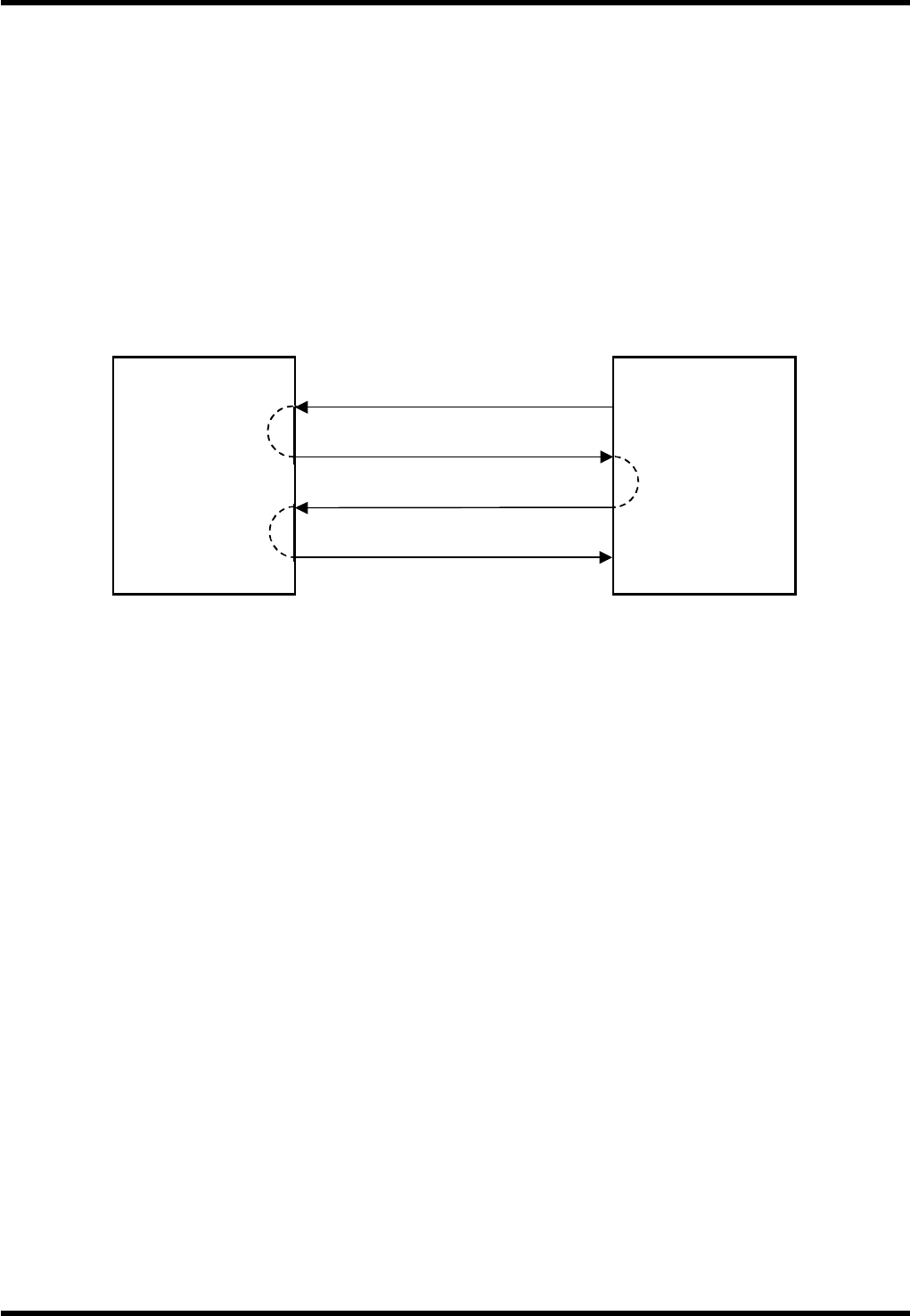
Break (Optional)
When a conversation takes place between a machine and the host computer, several messages are
exchanged between the two according to commands. A break code is used to start a conversation
from a machine to the host computer, and is output to the host computer only once at the start of the
conversation.
This is the code that SD terminal of the RS-232C interface is clamped forcefully to signal level “1” by
1.5-digit character, and this is usually used on the mini-computer to lead the data which is sent by
breaking the current job.
When this is not necessary for the convenience of the host computer, select changeover switch of
checksum function to cut the break. Never add this to the machine. This is not output in the standard
settings.
Start
End
A break code is attached
only this time.
No break code
Host
computer
AVK3
No break code
No break code