00193922-01.pdf - 第296页
7 Station extensions User Manual SIPLACE HF Series 7.1 Nozzle changer Software V ersion SR.505.xx 05/2004 US Edition 296 7.1.3.4 Assembly The nozz le chan ger is fixed to the c omponent tr olley docking unit. 7 Fig. 7.1 …
User Manual SIPLACE HF Series 7 Station extensions
Software Version SR.505.xx 05/2004 US Edition 7.1 Nozzle changer
295
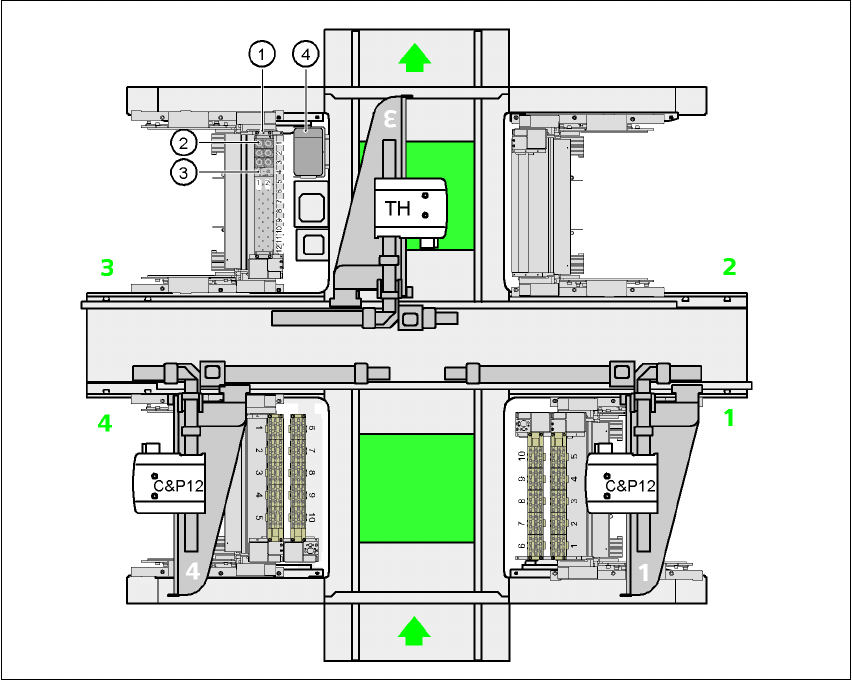
7.1.3.3 Position of the nozzle changers for the TwinHead on the HF/3 placement machine
One nozzle changer may be installed at location 3 for the TwinHead. This gives a total capacity of
12 magazines with a total of 24 nozzle holders.
7
Fig. 7.1 - 19 Position of the nozzle changers for the TwinHead on the HF/3 placement machine
(1)Nozzle changer
(2)Standard magazine
(3)Magazine for special nozzles or grippers
(4)Component reject bin
7 Station extensions User Manual SIPLACE HF Series
7.1 Nozzle changer Software Version SR.505.xx 05/2004 US Edition
296
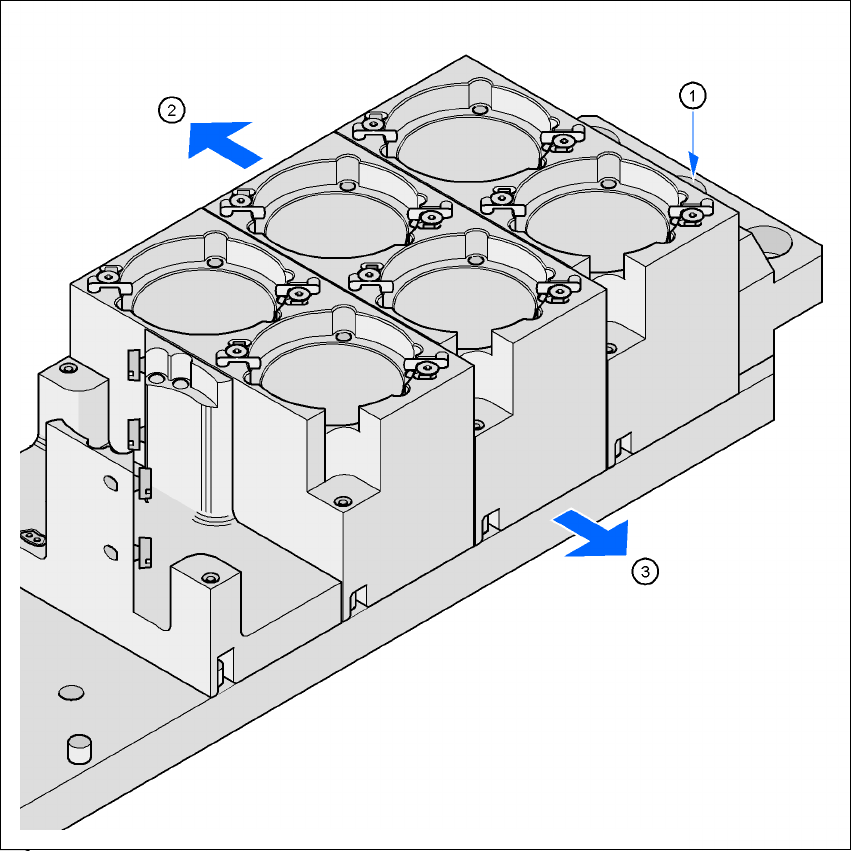
7.1.3.4 Assembly
The nozzle changer is fixed to the component trolley docking unit.
7
Fig. 7.1 - 20 Assembly position
(1) Marking hole
(2) Operator side
(3) Arrow pointing toward the PCB conveyor
7
Æ Align the nozzle changer so that the marking hole (item 1) is on the left, as viewed by the op-
erator.
User Manual SIPLACE HF Series 7 Station extensions
Software Version SR.505.xx 05/2004 US Edition 7.1 Nozzle changer
297
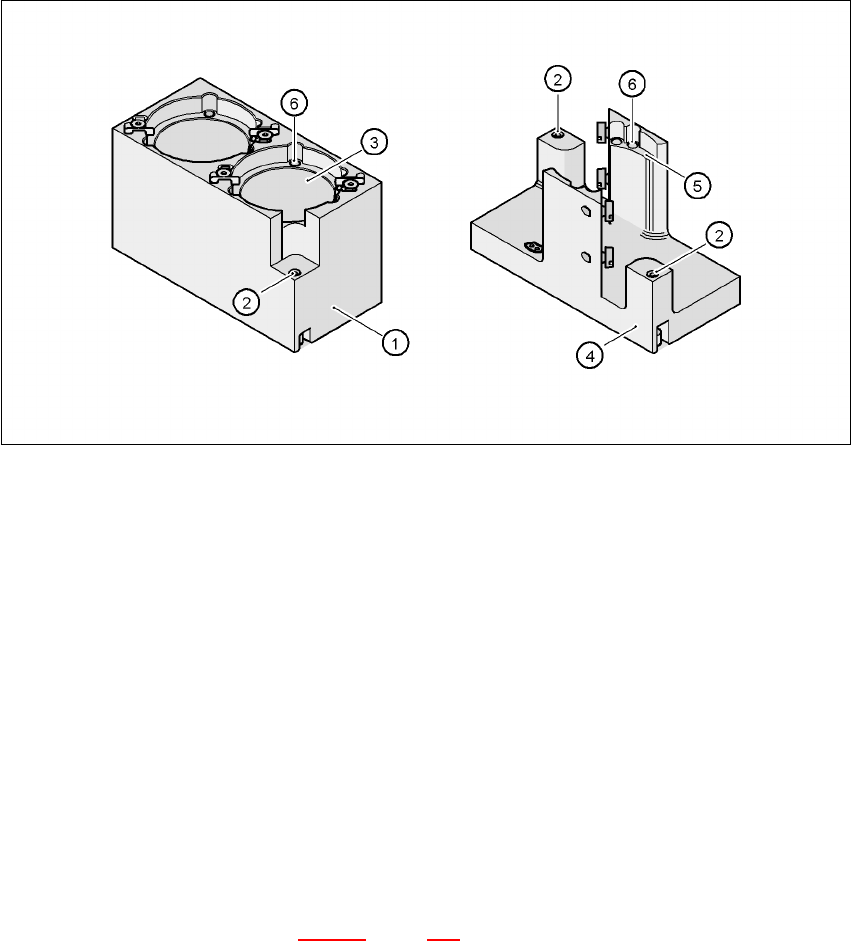
7.1.3.5 Description of the functions
The magazine for standard nozzles has 1 positioning fiducial for position detection, while the mag-
azine for special nozzles/grippers has two. The nozzles are fixed by balls in the holder. They are
then either clamped or released for removal, depending on the direction of rotation of the DP axis.
7
Fig. 7.1 - 21 Magazine for standard and special nozzles
(1)Standard magazine
(2)Positioning fiducial
(3)Nozzle garage
(4)Magazine for special nozzles and grippers
(5)Nozzle garage
(6)Balls for fixing the nozzles
7.1.3.6 Component reject bin
A component reject bin may be installed for the SIPLACE TwinHead. This is positioned beside the
fine-pitch vision module (see Fig. 7.1 - 12
, page 286).