IPC-TM-650 EN 2022 试验方法--.pdf - 第402页
Figure 15 T est Fixture Construction, Older Design IPC-TM-650 Page 23 o f 25 r 50.11 Q ] 0 0 r Dim ”B” — 76.76 - 73.58 - 72.67 69.49 - 66.32 - 17.75 14.58 6.65 3.48 3.05 hole, 2 places Drill & tap for #4-40 screw, 4 …

Users of this test method should apply the principles outlined
in E-691 to generate the data specific to their laboratory and
materials, or between specific laboratories. The principles
would then be valid for such data.
7.4.2
Concept of r and R (Reference ASTM D5045, Section
11.2). If Sr and SR have been calculated from a large enough
body of data, and for test results that were averages from
testing three specimens, the following information applies.
7.4.2.1
Repeatability, r (comparing two test results for the
same material, obtained by the same operator using the same
equipment on the same day). The two test results should be
judged not equivalent if they differ by more than the r value for
that material.
7.4.2.2
Reproducibility, R (comparing two test results for the
same material, obtained by different operators using different
equipment on the same day). The two test results should be
judged not equivalent if they differ by more than the R value
for that material.
7.4.2.3
Any judgement in accordance with the above would
have an approximate 95 % (0.95) probability of being correct.
7.4.3 Bias
There are no recognized standards by which to
estimate bias of these test methods.
7.4.4 Keywords (Reference ASTM D 5045, Section 12)
• Critical-strain energy release rate
• Energy-to-break
• Fracture toughness
• Plane-strain fracture toughness
References
(1) Brown, W. F., Jr., and Srawley, J. E., “Plane Strain Crack
Toughness Testing of High Strength Metallic Materials,” ASTM
STP 410, ASTM, 1966, p.1.
(2) “Fracture Toughness Testing and Its Applications,” ASTM
STP 381, ASTM, April 1965, p.30.
(3) Srawley, J. E., “Wide Range Stress Intensity Factor
Expressions for ASTM E399 Standard Fracture Toughness
Specimens,” International Journal of Fracture Mechanics, Vol.
12, June 1976, p.475.
(4) Newman, J. C., “Stress Analysis of Compact Specimens
Including the Effects of Pin Loading,” ASTM STP 560, ASTM,
1974, p.105.
(5) Williams, J. G., “Fracture Mechanics of Polymers,” Ellis
Horwood/Wiley, 1985.
(6) Towers, O. L., “Stress Intensity Factors, Compliances and
Elastic η
e
Factors for Six Test Geometries,” The Welding Insti-
tute, March 1981.
Number
2.4.52
Subject
Fracture Toughness of Resin Systems for Base Materials
Date
07/13
Revision
Page 8 of 8
IPC-TM-650
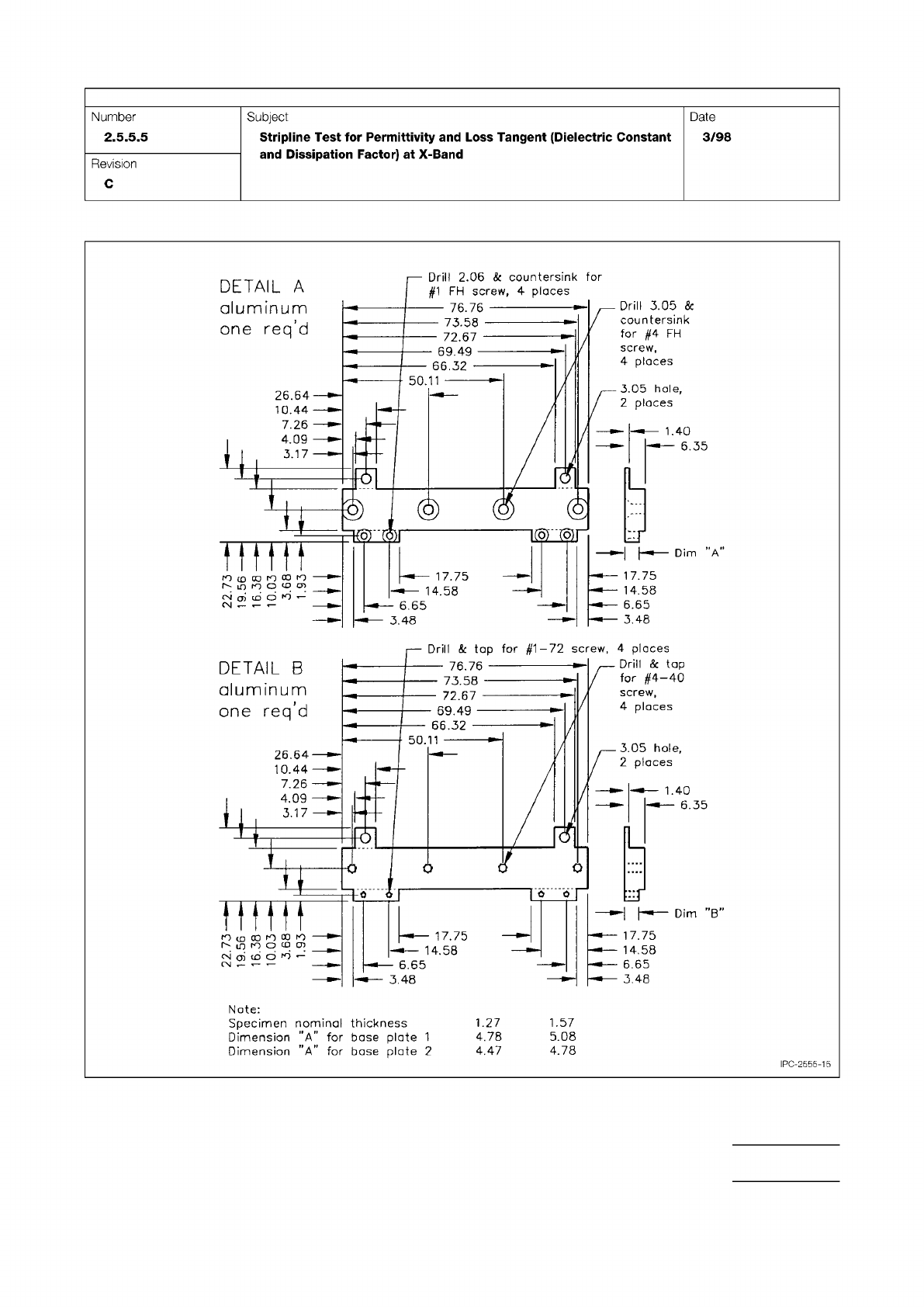
Figure 15 Test Fixture Construction, Older Design
IPC-TM-650
Page 23 of 25
r
50.11
Q
]
0
0
r
Dim
”B”
—
76.76
-
73.58
-
72.67
69.49
-
66.32
-
17.75
14.58
6.65
3.48
3.05
hole,
2
places
Drill
&
tap
for
#4-40
screw,
4
places
Drill
&
tap
for
#1-72
screw,
4
places
17.75
v—
14.58
!■*—
6.65
-
•-
548
—
—
1.40
v
—
6.35
DETAIL
B
aluminum
one
req'd
26.64—
10.44
—
7.26
——
—
4.09
—
3.17
—
Nate:
Specimen
nominal
thickness
1.27
1.57
Dimension
"A"
for
base
plate
1
4.78
5.08
Dimension
"A"
for
base
plate
2
4.47
4.78
©
©
©
K3F
mrn
A
17.75
14.58
17.75
14.58
6.65
3.48
3.05
hole,
2
places
DETAIL
A
aluminum
one
req'd
Drill
3.05
&
countersink
for
#4
FH
screw,
4
places
Drill
2.06
&
countersink
for
#1
FH
screw,
4
places
—
76.76
一
73.58
-
72.67
-
69.49
-
66.32
—
50.11
26.64
10.44
7.26
——
4.09
—
3.17
6.65
3.48
二
及
l)
=K5F
册
1.40
6.35
PC-2555-15
Number
2.5.5.5
Subject
Stripline
Test
for
Permittivity
and
Loss
Tangent
(Dielectric
Constant
and
Dissipation
Factor)
at
X-Band
Date
3/98
Revision
C
r-TTHn
29.0
n
OL
996L
R7Z
5.3.2
If there is a metal heat spreader on the BGA, it must
be left in place until after the dye-drying step (5.11).
5.4
Section out the desired component area leaving about
19 mm to 38 mm [0.75 in to 1.5 in] of board around the part.
If the board is small enough to fit the pull fixture, leave the
board intact.
5.4.1
A diamond sectioning saw is recommended to per-
form this step. Other sectioning equipment (e.g., diamond
saw, milling tool, water jet, etc.) can be used if it does not
induce stress on the sample area.
5.5
A detailed visual examination under stereomicroscope is
required at this stage. If needed, clean the sectioned part with
only water and compressed air. It is important to not use sol-
vent for this step.
5.5.1
A thorough visual examination can detect signs of
mechanical damage/stress, which are indicated by fractured/
broken-up flux around the SMT solder joint (see Figure 1 and
Figure 2).
5.5.2
If the SMT part utilizes corner-applied adhesive which
was not easily visible before, examine it now. Document the
glue coverage per IPC-7095 or as determined between the
lab and the customer.
5.5.3
Document the findings in lab notes and with photos.
5.6
Clean any flux residue from around the SMT solder joints
using the appropriate flux remover.
Isopropyl alcohol is not acceptable due to its inability to
dissolve flux.
5.6.1
The sectioned part/board area should be submerged
in liquid flux remover for at least one hour. The goal is to fully
remove the flux residue. The exact amount of time the part/
board is submerged depends on the sample conditions.
5.6.1.1
Approximately two to three times during soak, gen-
tly swirl the beaker containing the sectioned part for at least
20 seconds. This will aid the flux solvent in removing the flux
ring residue.
5.6.2
Reworked samples may require additional time in the
liquid flux remover.
5.6.3
Examine the sample under a microscope to determine
if additional time is needed to remove the flux ring.
5.6.4
After using the liquid flux remover, use a spray can flux
remover to thoroughly flush all four sides of the component.
5.6.4.1
Removing all flux residues and other particles/oils
enables the dye to penetrate the fractures.
5.6.4.2
Failure to completely remove the flux from around
the solder joint will prevent dye penetration and give false indi-
cations of a good solder joint.
5.7
Use low-pressure compressed air to blow off excess flux
solvent.
5.7.1
If desired, perform a final rinse with isopropyl alcohol
or acetone at this time.
5.8
Pour the dye into a small tray until the sectioned sample
is completely immersed in the dye.
5.8.1
If dye is being reused, ensure it has sufficient viscos-
ity. Viscosity is critical to the ability of the dye to penetrate into
cracks within the parts being dyed. If there are any concerns
with dye viscosity, discard the old dye and use fresh, new
dye.
5.9
Place the tray containing the sectioned sample into a
vacuum chamber.
5.9.1
Draw a 67.7 kPa [20 in Hg] vacuum for three to four
minutes.
5.9.2
Partially vent and then reapply vacuum to the chamber
to aid in dye penetration.
5.9.3
Leave the part submerged in dye for a minimum of 30
minutes with a constant vacuum of 67.7 kPa [20 in Hg].
5.9.3.1
Do not exceed 67.7 kPa [20 in Hg] of vacuum at any
time, or the dye will start to boil off.
5.10
Vent the vacuum chamber slowly and remove the
sample from the tray.
5.10.1
Allow the excess dye to drain off the sample.
Number
2.4.53
Subject
Dye and Pull Test Method (Formerly Known as Dye and Pry)
Date
8/2017
Revision
Page 2 of 11
IPC-TM-650
Note: