IPC-TM-650 EN 2022 试验方法--.pdf - 第411页
IPC-2-4-53-21 B A = 0 % = 1 to 25 % = 26 to 50 % = 51 to 75 % = 76 to 100 % B C D E C D E 1 A X X X X B C D E F G H J K L M N O P Q R T U V W 2 3 4 5 6 7 8 9 10 1 1 12 13 2B 4B 3D 3D 2D 3E 3B 3B 2B 2B 14 15 16 17 18 19 2…
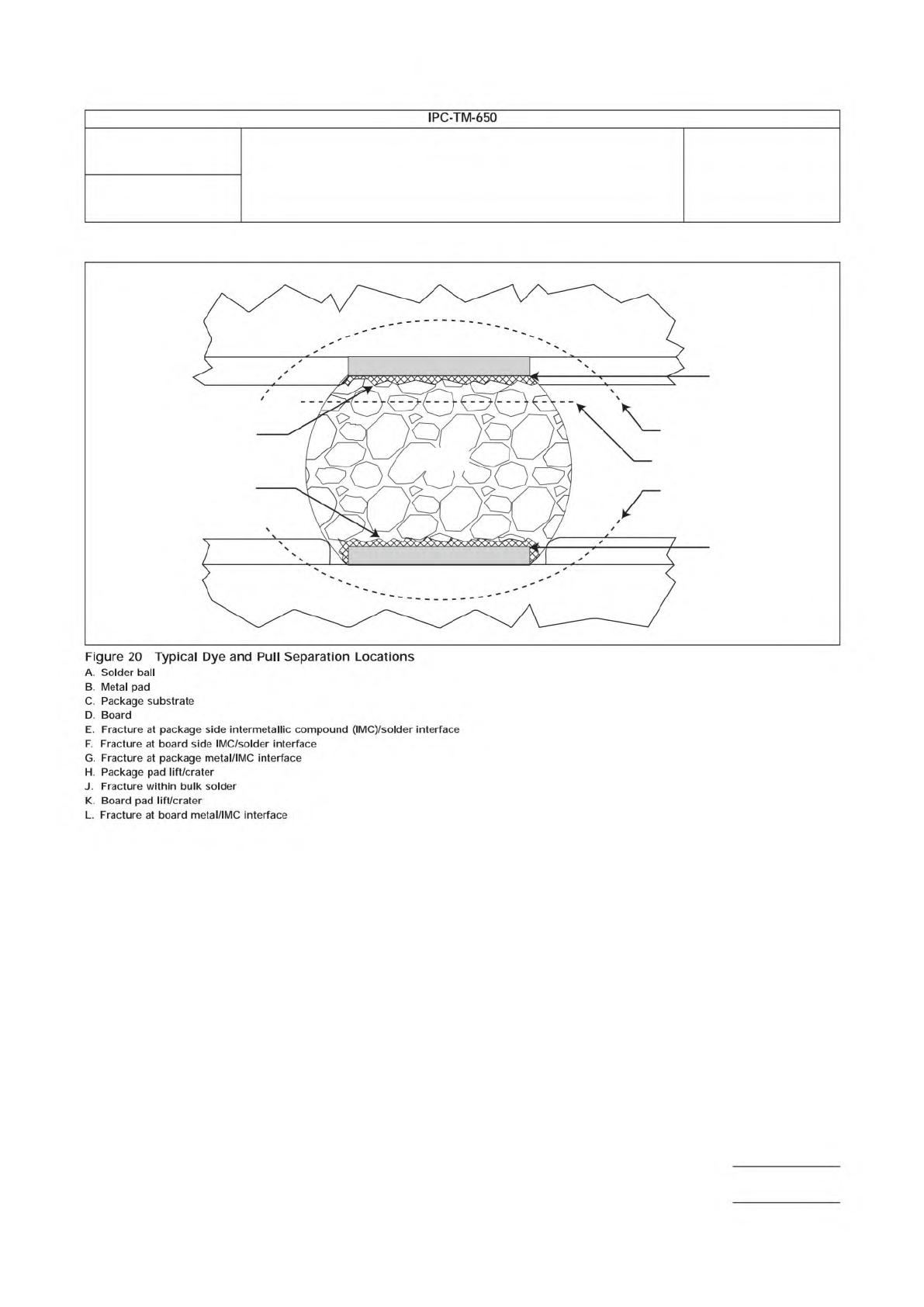
IPC-2-4-53-20
A
B
C
D
E
F
G
H
J
K
L
B
Number
2.4.53
Subject
Dye and Pull Test Method (Formerly Known as Dye and Pry)
Date
8/2017
Revision
Page 9 of 11
IPC-TM-650
Figure
20
Typical
Dye
and
Pull
Separation
Locations
A.
Solder
ball
B.
Metal
pad
C.
Package
substrate
D.
Board
E.
Fracture
at
package
side
intermetallic
compound
(IMC)/solder
interface
F.
Fracture
at
board
side
IMC/solder
interface
G.
Fracture
at
package
metal/IMC
interface
H.
Package
pad
lift/crater
J.
Fracture
within
bulk
solder
K.
Board
pad
lift/crater
L.
Fracture
at
board
metal/IMC
interface
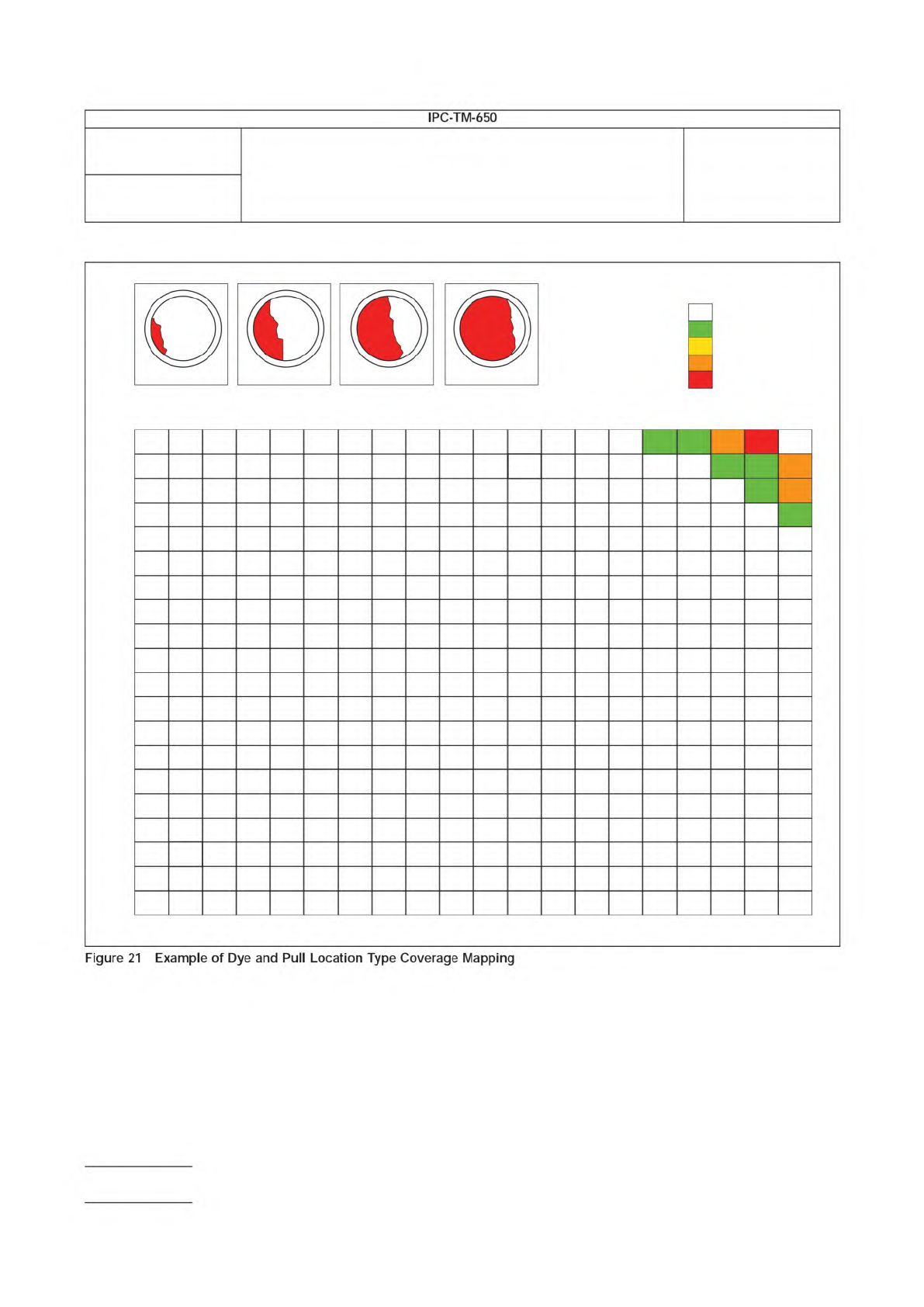
IPC-2-4-53-21
B
A
= 0 %
= 1 to 25 %
= 26 to 50 %
= 51 to 75 %
= 76 to 100 %
B
C
D
E
C D E
1
A X
X X
X
B
C
D
E
F
G
H
J
K
L
M
N
O
P
Q
R
T
U
V
W
2 3 4 5 6 7 8 9 10 11 12 13
2B 4B 3D
3D
2D
3E
3B
3B
2B
2B
14 15 16 17 18 19 20
Number
2.4.53
Subject
Dye and Pull Test Method (Formerly Known as Dye and Pry)
Date
8/2017
Revision
Page 10 of 11
IPC-TM-650
―
Figure
21
Example
of
Dye
and
Pull
Location
Type
Coverage
Mapping
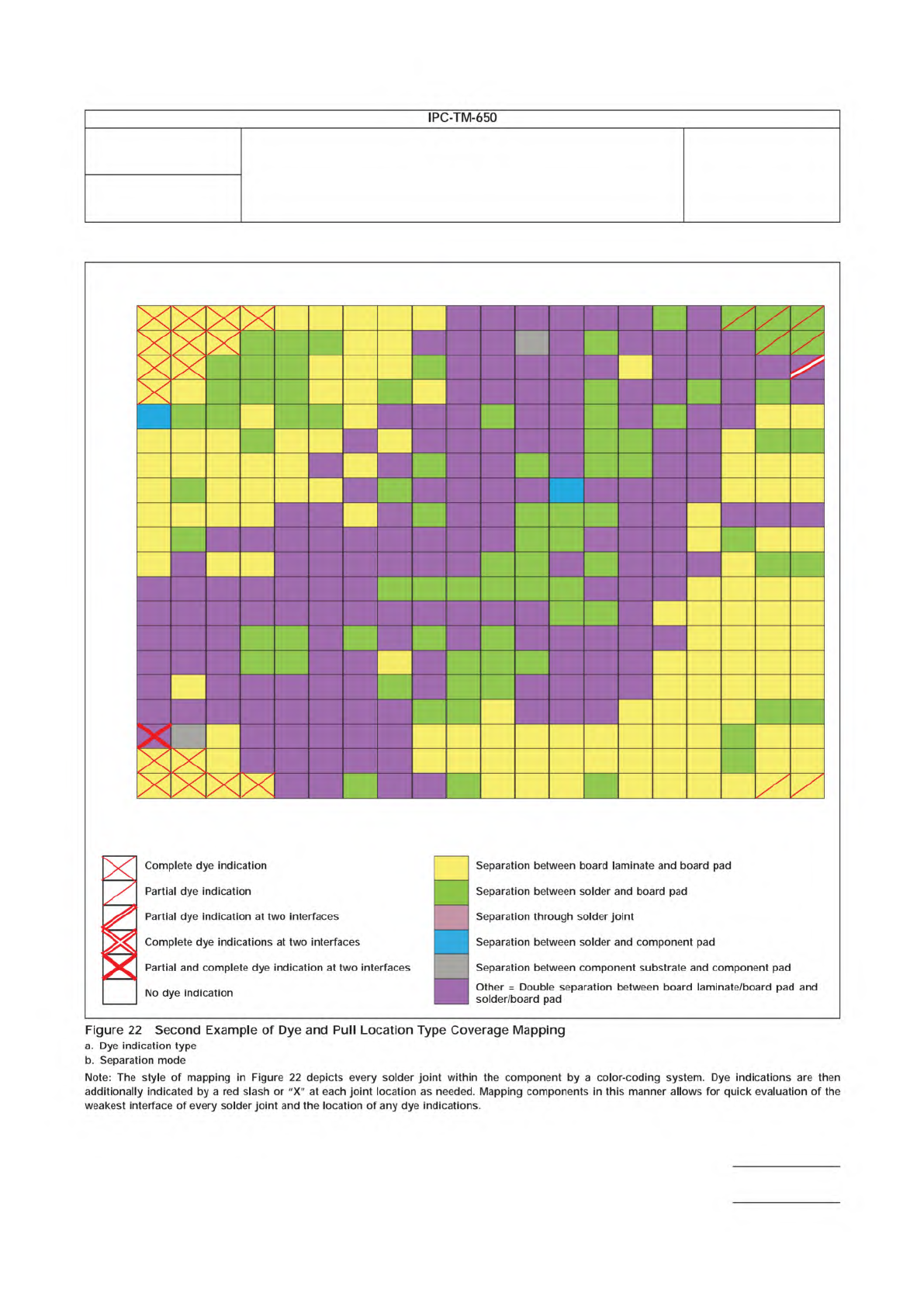
IPC-2-4-53-22
1
A
a
b
B
C
D
E
F
G
H
J
K
L
M
N
O
P
Q
R
T
U
V
W
2 3 4 5 6 7 8 9 10 11 12 13 14 15 16 17 18 19 20
Number
2.4.53
Subject
Dye and Pull Test Method (Formerly Known as Dye and Pry)
Date
8/2017
Revision
Page 11 of 11
IPC-TM-650
—
Complete
dye
indication
Partial
dye
indication
Partial
dye
indication
at
two
interfaces
Complete
dye
indications
at
two
interfaces
Partial
and
complete
dye
indication
at
two
interfaces
No
dye
indication
Separation
between
board
laminate
and
board
pad
Separation
between
solder
and
board
pad
Separation
through
solder
joint
Separation
between
solder
and
component
pad
Separation
between
component
substrate
and
component
pad
Other
=
Double
separation
between
board
laminate/board
pad
and
solder/board
pad
Figure
22
Second
Example
of
Dye
and
Pull
Location
Type
Coverage
Mapping
a.
Dye
indication
type
b.
Separation
mode
Note:
The
style
of
mapping
in
Figure
22
depicts
every
solder
joint
within
the
component
by
a
color-coding
system.
Dye
indications
are
then
additionally
indicated
by
a
red
slash
or
"X"
at
each
joint
location
as
needed.
Mapping
components
in
this
manner
allows
for
quick
evaluation
of
the
weakest
interface
of
every
solder
joint
and
the
location
of
any
dye
indications.