IPC-TM-650 EN 2022 试验方法--.pdf - 第429页
The Institute for Int erconnecting and Packaging E lectronic Circuits 2215 Sanders Road • Northbrook, IL 60062 Material in this T est M ethods Manual was vol untaril y establis hed by T echni cal Committees of the IP C. …
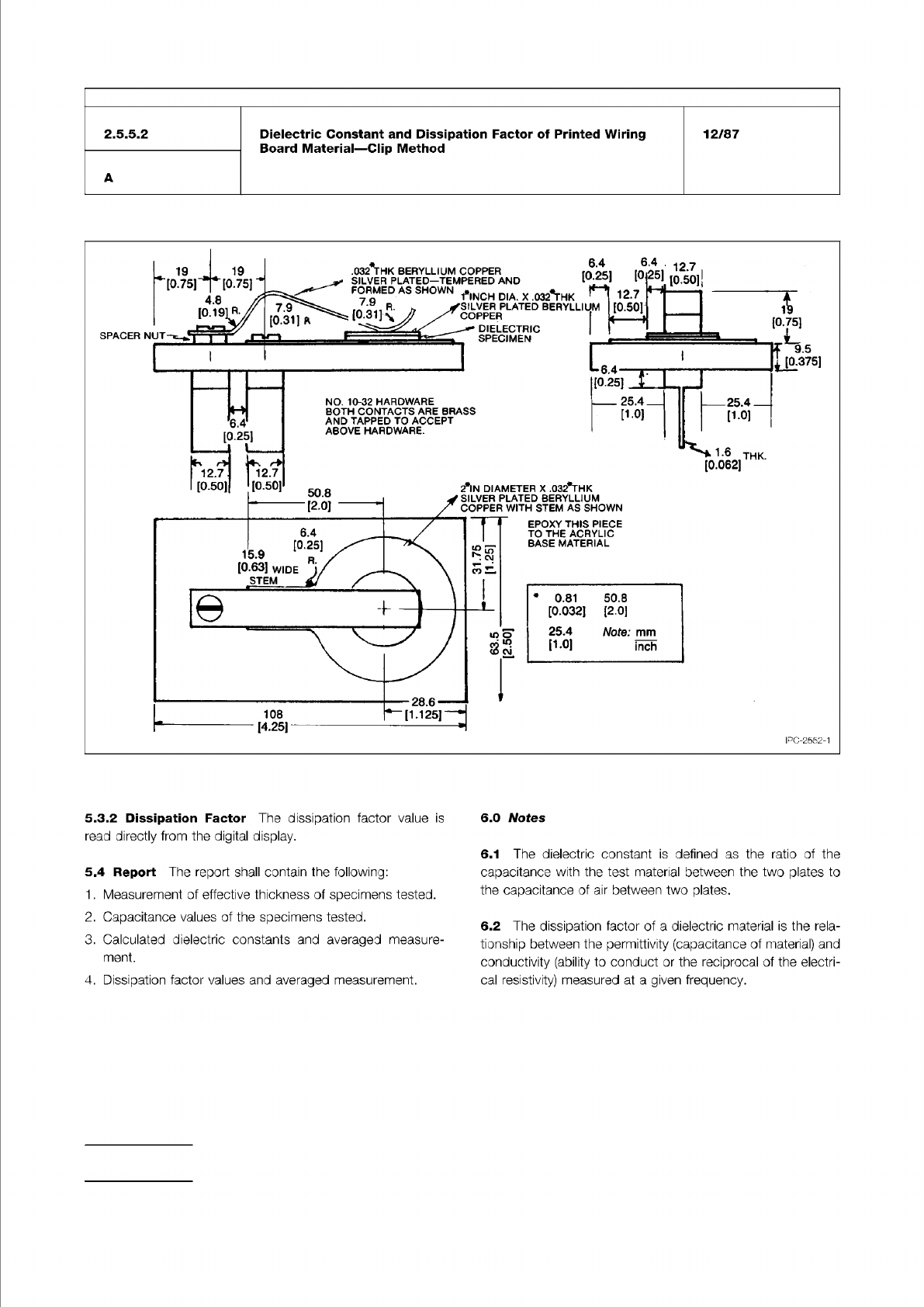
Figure 1 Special Test Fixture for Dielectric Constant and Dissipation Factor Measurements
IPC-TM-650
Number
Subject Date
Revision
Page 2 of 2
2.5.5.2
Dielectric
Constant
and
Dissipation
Factor
of
Printed
Wiring
Board
Material
—
Clip
Method
12/87
A
Q32,HK
BERYLLIUM
C
SILVER
PLATED—
TEMP
FORMED
AS
SHOWN
俞
7
融/
/
r
SPACER
N(
I
T
q
I
I
I
6.4
).2E
NO.
10-32
HARDWARE
BOTH
CONTACTS
ARE
BRAS
AND
TAPPED
TO
ACCEPT
ABOVE
HARDWARE.
K
•I
L-
12.7
[0.50]
K
C
12.7
[0.50]
50.8
2’
ys
Zc
卬
5
.
1
[0
6.4
一
[0.25]
/
5.9
r
/
•63]
WIDE
i/
y
STEM
Q
/
e
)
7
108
L25
—
[1.125]
—
r
k
J
r
COPPER
J
>ERED
AND
W
*INCH
DIA.
X
.032*THK
SILVER
PLATED
BERYLLIU
TOPPER
x
DIELECTRIC
SPECIMEN
5.4
.25
I
6
1
[0
12.7
[0.50]
.4
,
[2
7
巴哉。
11
tl~L
中
L
[0.
M
HO\
PIE
YLI
UAL
f
9.5
1
[0.375]
SS
力
N
DIA
SILVER
:
OPPEF
工
1
9
2
METER
X
.03
落
HK
'LATED
BERYLLIU
WITH
STEM
AS
S
EPOXY
THIS
TO
THE
ACR
BASE
MATEF
25]
丁
_25.4
—
[1.0)
WN
CE
二
1
1
阳
T
[01062]THK
I
*
0.81
50.8
[0.032]
[2.0]
&
|
25.4
Note:
mm
卷
I
[10]
麻
IPC-2552-1
5.3.2
Dissipation
Factor
The
dissipation
factor
value
is
read
directly
from
the
digital
display.
5.4
Report
The
report
shall
contain
the
following:
1
.
Measurement
of
effective
thickness
of
specimens
tested.
2.
Capacitance
values
of
the
specimens
tested.
3.
Calculated
dielectric
constants
and
averaged
measure¬
ment.
4.
Dissipation
factor
values
and
averaged
measurement.
6.0
Notes
6.1
The
dielectric
constant
is
defined
as
the
ratio
of
the
capacitance
with
the
test
material
between
the
two
plates
to
the
capacitance
of
air
between
two
plates.
6.2
The
dissipation
factor
of
a
dielectric
material
is
the
rela¬
tionship
between
the
permittivity
(capacitance
of
material)
and
conductivity
(ability
to
conduct
or
the
reciprocal
of
the
electri¬
cal
resistivity)
measured
at
a
given
frequency.
The Institute for Interconnecting and Packaging Electronic Circuits
2215 Sanders Road • Northbrook, IL 60062
Material in this Test Methods Manual was voluntarily established by Technical Committees of the IPC. This material is advisory only
and its use or adaptation is entirely voluntary. IPC disclaims all liability of any kind as to the use, application, or adaptation of this
material. Users are also wholly responsible for protecting themselves against all claims or liabilities for patent infringement.
Equipment referenced is for the convenience of the user and does not imply endorsement by the IPC.
Page 1 of 4
IPC-TM-650
TEST
METHODS
MANUAL
1
.0
Scope
1.1
Purpose
This
method
is
suitable
for
determining
the
volume
permittivity,
(dielectric
constant)
and
loss
tangent
(dis¬
sipation
factor)
of
insulating
materials
at
1
MHz.
It
is
not
dependent
on
either
direct
or
indirect
measurement
of
speci¬
men
thickness
and
therefore
is
very
useful
for
thin
films
and
laminates
but
may
also
be
used
on
specimens
up
to
approxi¬
mately
6.35
mm
[0.25
in]
thick.
It
is
useful
for
all
ranges
of
permittivity
and
for
loss
tangent
as
low
as
0.0005
providing
the
range
and
accuracy
of
the
bridge
used
are
adequate.
1.2
Description
of
Method
The
two
fluid
method
utilizes
air
as
one
fluid
and
a
suitable
liquid,
normally
Dow
200
1
.0CS
silicone
fluid,
as
the
second.
Using
an
established
value
for
the
permittivity
of
air,
the
values
for
the
permittivity
of
the
fluid
and
the
sample
may
easily
be
calculated.
The
cell
spacing
is
fixed
during
all
readings
but
does
not
need
to
be
known
accu¬
rately
for
the
series
of
readings
required.
Since
specimens
do
not
require
any
electrodes
to
be
applied
and
since
many
specimens
can
be
measured
at
one
time
without
changing
any
spacings
or
machine
settings,
the
method
is
not
only
very
accurate
but
very
rapid.
The
method
has
been
used
for
measurement
of
PTFE
and
epoxy
glass
laminates
and
flexible
films,
e.g.,
polyimide.
Reproducibility
lab
to
lab
is
excellent
for
permittivity
provided
minimal
precautions
are
observed
and
bridge
accuracy
is
appropriate.
On
most
materials,
the
effects
of
small
changes
in
moisture
or
temperature
are
larger
than
any
error
due
to
the
method.
Lab
to
lab
correlation
on
stable
material
such
as
PTFE
have
shown
results
to
be
consistently
within
0.005
or
(0.20%).
2
.0
Applicable
Document
3
.0
Test
Specimens
Number
2.5.5.3
Subject
Permittivity
(Dielectric
Constant)
and
Loss
Tangent
(Dissipation
Factor)
of
Materials
(Two
Fluid
Cell
Method)
Date
12/87
Revision
C
Originating
Task
Group
N/A
3.1
Number
Unless
otherwise
specified
in
the
material
specification,
one
specimen
is
adequate
for
materials
which
are
uniform,
e.g.,
unreinforced
plastics.
For
woven
reinforced
materials
where
resin
content
may
vary,
at
least
2
specimens,
representing
the
thinnest
and
thickest
part
of
the
sample,
should
be
tested.
For
material
with
random
reinforcement,
a
minimum
of
three
specimens
from
the
edge
and
center
of
the
sheet
are
recommended
to
characterize
variation
within
the
sheet.
3.2
Form
Individual
specimens
shall
be
81
.3
mm
±
1.3
mm
x
81
.3
to
101
.6
mm
[3.2
in
±
0.05
in
x
3.2
in
to
4.0
in]
x
thick¬
ness.
For
materials
under
0.254
mm
[0.010
in],
individual
specimens
should
be
stacked
to
a
minimum
of
0.381
mm
[0.015
in]
to
maximize
accuracy.
Thinner
specimen
buildups
may
be
used
if
the
correlation
with
the
0.381
mm
[0.015
in]
specimen
is
within
the
required
accuracy
for
the
particular
equipment,
cell
spacing
and
material
being
tested.
3.3
Foil
Clad
Materials
All
foil
clad
materials
shall
have
the
metal
cladding
completely
removed
by
etching
and
shall
be
rinsed
and
dried
prior
to
conditioning.
3.4
Marking
Mark
each
specimen
in
the
upper
left
corner
with
an
engraving
pencil
or
an
ink
which
is
not
soluble
in
the
Dow
Corning
200
fluid.
4
.0
Apparatus/Materials
4
J
1
MHz
Capacitance
Bridge
with
0-200
(or
0-1
00)
pf
range.1
4.2
Cell
Balsbaugh
LD-32
or
equivalent
(see
Figure
1)
three
terminal
cell.
Note:
For
accuracy
of
1
%
or
better,
room
tem¬
perature
must
not
vary
more
than
1
℃
during
measurements.
Temperature
control
is
necessary
if
laboratory
variation
exceeds
these
limits.
1
.
Capacitance
Bridge
—
Suggested
is
Boonton
76A
automatic
capacitance
bridge.
This
model
has
adequate
capacitance
range
and
adequate
conductance
resolu¬
tion
(0.001
microsiemen)
to
permit
measurement
of
dissipation
factors
down
to
approximately
0.0005.
Other
bridges,
e.g.,
Boonton
75D,
are
also
adequate
for
low
loss
materials
and
some
other
bridges
may
be
suitable
for
higher
loss
materials,
such
as
epoxy
where
dissipation
factors
exceed
0.01
and
resolution
of
0.01
microsiemen
or
even
0.1
microsiemen
may
be
adequate.
2.
Balsbaugh
LD-3
Gillian
and
Co,,
Watertown,
MA,
(617)
624-5688
or
Zincast
Corporation,
44
Homestead
Ave.,
Stanford,
CT
06902,
(203)
359-0109
IPC-TM-650
Number
Subject Date
Revision
Page 2 of 4
2.5.5.3
Permittivity
(Dielectric
Constant)
and
Loss
Tangent
(Dissipation
Factor)
of
Materials
(Two
Fluid
Cell
Method)
12/87
C
4.3
Test
Leads
2
RG
58/U
coax
cables
approximately
304.8
mm
[1
2
in]
long
with
suitable
connectors
for
the
bridge.
One
lead
shall
have
a
banana
plug
(high
lead)
and
the
low
lead
should
have
a
GR8743
at
the
cell
end.
(Note:
The
use
of
a
G874-QBJA3
4
instead
of
the
standard
GR874
will
permit
a
BNC5
connector
to
be
used
for
the
cell
connection
of
the
low
lead,
reducing
the
chances
of
damaging
the
874
connector.)
4.4
Flask
with
stopper
(for
silicone
fluid
storage).
4.5
Beaker
for
cell
overflow.
4.6
Funnel.
4.7
Filter
paper
(coarse).
4.8
1
Centistoke
Dow
Corning
200
Fluid
(500
ml
minimum).
Note:
Fluid
must
be
at
the
same
ambient
temperature
as
the
test
cell
and
should
be
stored
in
close
proximity
to
the
test
cell.
4.9
Forceps
or
large
tweezers.
5.0
Procedure
5.1
Conditioning
All
materials
which
are
affected
by
mois¬
ture,
including
all
reinforced
laminates
and
most
films,
should
be
conditioned
at
23℃
±
2
℃
50
±
5%
RH
for
a
minimum
of
24
hours
prior
to
testing.
If
required
by
the
specification,
specimens
may
be
tested
after
humidity
or
water
immersion
or
tested
after
desiccation.
5.2
Test
Conditions
For
ambient
temperature
tests
the
temperature
should
be
23℃
±
2
℃.
Note:
Variation
should
not
exceed
1
during
the
test.
Ambi¬
ent
humidity
is
not
critical
for
most
materials.
The
exception
is
very
thin,
very
hydroscopic
material
such
as
polyimide
film,
where
moisture
content
may
be
well
over
1
%.
Such
material
must
be
tested
at
the
desired
humidity
since
the
dielectric
constant
will
increase
measurably
with
moisture
content
and
changes
may
occur
very
rapidly
after
removal
from
a
con¬
trolled
environment.
For
materials
which
experience
glass
transitions
in
the
room
temperature
region,
e.g.,
PTFE,
some
acrylics,
the
temperature
should
be
23℃
±
1
℃.
5.3
Set
Up
5.3.1
Open
the
electrode
on
the
cell.
Blow
out
the
cell
using
clean
compressed
air
to
remove
any
dust
or
silicone
fluid.
5.3.2
Warm
up
the
bridge
for
at
least
the
minimum
amount
of
time
recommended
by
the
manufacturer.
5.3.3
Attach
the
low
lead
to
the
guarded
electrode
of
the
cell
and
the
bridge.
5.3.4
Attach
the
high
lead
to
the
bridge
and
place
the
banana
plug
in
the
vicinity
of,
but
not
touching,
the
banana
plug
jack
of
the
test
cell.
Note:
Be
certain
the
shielding
on
the
high
lead
does
not
con¬
tact
the
banana
plug.
5.3.5
Set
the
bridge
up
on
appropriate
ranges:
Capacitance:
200
pf
(or
1
00
pf)
Conductance:
microsiemens
0-2
PTFE
and
very
low
loss
material.
0-20
Epoxy
and
other
moderate
loss
materials.
0-200
Some
phenolic
and
very
high
loss
materials.
Note:
For
very
thick
specimens
>3.18
mm
[>0.125
in]
the
0
to
20
pf
range
can
often
be
used,
increasing
the
precision
of
the
measurement.
All
values
must
be
obtained
on
the
same
range
for
both
capacitance
and
conductance.
5.3.6
Set
the
cell
spacing
on
the
LD-3
to
approximately
125%
of
the
material
thickness
0.51
mm
minimum
to
7.62
[0.020
in
minimum
to
0.3
in]
Note:
The
spacing
may
be
as
little
as
1
0%
or
as
much
as
50%
greater
than
specimen
thick¬
ness
without
a
significant
effect
on
results.
5.3.7
Zero
the
bridge
for
both
capacitance
and
conduc¬
tance.
5.4
Measurement
5.4.1
Connect
the
banana
plug
of
the
high
lead
to
the
cell.
3.
GR874
•―
Catalogue
#874-9414
Gilbert
Engineering,
Glendale,
AZ,
(602)
245-1050
4.
G874-QBJA
—
Catalogue
#874
QBJA
Gilbert
Engineering,
Glendale,
AZ
5.
BNC
—
Catalogue
#999-225
Amphenol