IPC-TM-650 EN 2022 试验方法--.pdf - 第620页
Unbal/Bal Freq. Range Model No. 50/50 100 KHz to 125 MHz 00 01 BB 50/75 100 KHz to 125 MHz 01 01 BB 50/90 100 KHz to 125 MHz 02 00 BB 50/100 100 KHz to 100 MHz 0300 BB 50/150 100 KHz to 100 MHz 0400 BB The Institute for …
IPC-TM-650
Number
Subject Date
Revision
Page 2 of 2
2.5.27
Surface
Insulation
Resistance
of
Raw
Printed
Wiring
Board
Material
3/79
5.2.5
After
allowing
the
meter
to
"charge”
for
60
seconds,
switch
to
"measure”
and
read
the
meter
in
megohms
after
the
indicator
settles
down
(usually
within
60
seconds).
5.3
Evaluation
Readings
shall
be
recorded
to
two
signifi¬
cant
digits
in
megohms.
6
Notes
6.1
This
method
can
be
used
in
substitution
for
surface
resistance.
Volume
resistivity
cannot
be
replaced
by
this
method,
but
other
tests
such
as
dielectric
strength,
dissipa¬
tion
factor,
and
dielectric
constant
will
give
a
better
indication
of
the
electrical
properties
than
volume
resistivity.
Unbal/Bal Freq. Range Model No.
50/50 100 KHz to 125 MHz 0001 BB
50/75 100 KHz to 125 MHz 0101 BB
50/90 100 KHz to 125 MHz 0200 BB
50/100 100 KHz to 100 MHz 0300 BB
50/150 100 KHz to 100 MHz 0400 BB
The Institute for Interconnecting and Packaging Electronic Circuits
2215 Sanders Road • Northbrook, IL 60062
Material in this Test Methods Manual was voluntarily established by Technical Committees of the IPC. This material is advisory only
and its use or adaptation is entirely voluntary. IPC disclaims all liability of any kind as to the use, application, or adaptation of this
material. Users are also wholly responsible for protecting themselves against all claims or liabilities for patent infringement.
Equipment referenced is for the convenience of the user and does not imply endorsement by the IPC.
Page 1 of 4
IPC-TM-650
TEST
METHODS
MANUAL
1
Scope
This
method
is
used
to
determine
the
attenuation
of
balanced
and
unbalanced
cables.
2
Applicable
Documents
None
3
Test
Specimen
3.1
30.5
meters
of
completed
flat
cable
4
Apparatus
4.1
H.R.
Model
#8568A
or
equivalent
spectrum
analyzer
4.2
H.R.
Model
#8444A
or
equivalent
2
tracking
generator
4.3
Two
RG-223/U
or
equivalent
50
Ohm
coaxial
cables
4.4
North
Hills
or
equivalent
matching
transformers
4.5
Resistor
matching
network
(see
Figure
1)
5
Procedure
5.1
Procedure
(Balanced)
Number
2.5.30
Subject
Balanced
and
Unbalanced
Cable
Attenuation
Measurements
Date
Revision
12/87
Originating
Task
Group
5.1.2
Select
impedance
matching
transformers
that
match
(as
close
as
possible)
the
characteristic
impedance
of
the
cable
under
test.
5.1
.3
Connect
the
outputs
of
the
two
matching
transformers
together.
Sweep
the
spectrum
analyzer
through
the
required
frequency
range
to
determine
the
loss
in
the
matching
trans¬
formers.
5.1.4
Separate
the
two
matching
transformers
and
connect
30.5
m
of
the
test
cable
between
them;
again
sweep
the
spectrum
analyzer
through
the
required
frequency
range.
This
measurement
determines
the
total
loss,
which
includes
the
cable
and
matching
transformers.
5.1.5
To
determine
the
cable
attenuation,
based
on
30.5
meters
of
cable,
at
each
frequency
of
interest,
subtract
the
results
of
5.1
.3
from
the
results
of
5.1.4
(see
Figure
2).
5.2
Procedure
(Unbalanced)
5.2.1
Calculate
the
resistance
required
to
match
the
50
ohm
system
impedance
to
the
test
cable's
characteristic
imped¬
ance,
as
shown
in
Figure
1
.
5.2.2
Use
the
above
resistive
matching
network
in
place
of
the
balanced
transformers
as
indicated
in
5.1
.3.
Perform
the
unbalanced
attenuation
test
as
described
in
5.1
.1
through
5.1
.5
(see
Figure
3).
5.1.1
Calibrate
spectrum
analyzer
and
adjust
the
tracking
generator
for
accurate
frequency
tracking.
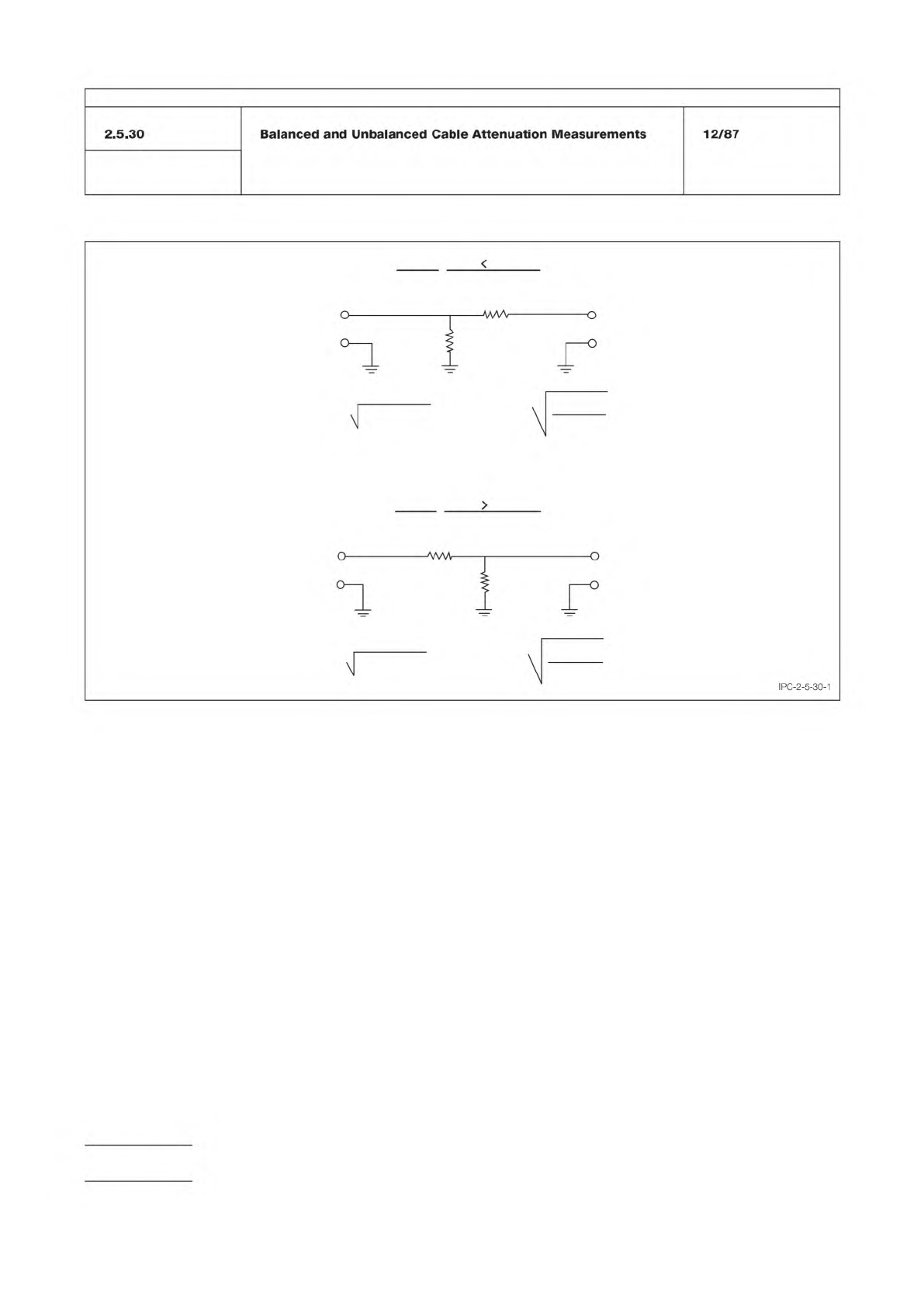
Figure 1 Resistive Matching Network for Unbalanced Cables
For Z System Z Cable:
Z System
R
1
R
2
For Z System Z Cable:
Z System
Z Cable
R
1
R
2
R =
1
Z (Z - Z )
C
C
S
R = Z
2
(Z - Z )
C
S
S
Z
S
R =
1
Z (Z - Z )
C
R = Z
2
(Z - Z )
C
S
Z
S
Z Cable
S
S
C
IPC-TM-650
Number
Subject Date
Revision
Page 2 of 4
I
PC-2-5-30-1
2.5.30
Balanced
and
Unbalanced
Cable
Attenuation
Measurements
12/87
o
--
--
>
n
0
0
0
0