IPC-TM-650 EN 2022 试验方法--.pdf - 第816页
Figure 1 One-Piece Edge Connector Mechanical Gauges 3 1. 7 5 mm M in . 3. 5 6 m m ± 0. 25 mm 1 5˚ S ee Det a il `` C´´ 1 5˚ ± 30 ˚ 1 5˚ ± 30 ˚ D et a il ` `C ´´ Di m . ``C ´ ´ Di m . ``A ´ ´ 1. 7 mm ± 0. 13 mm Ra d. T y …
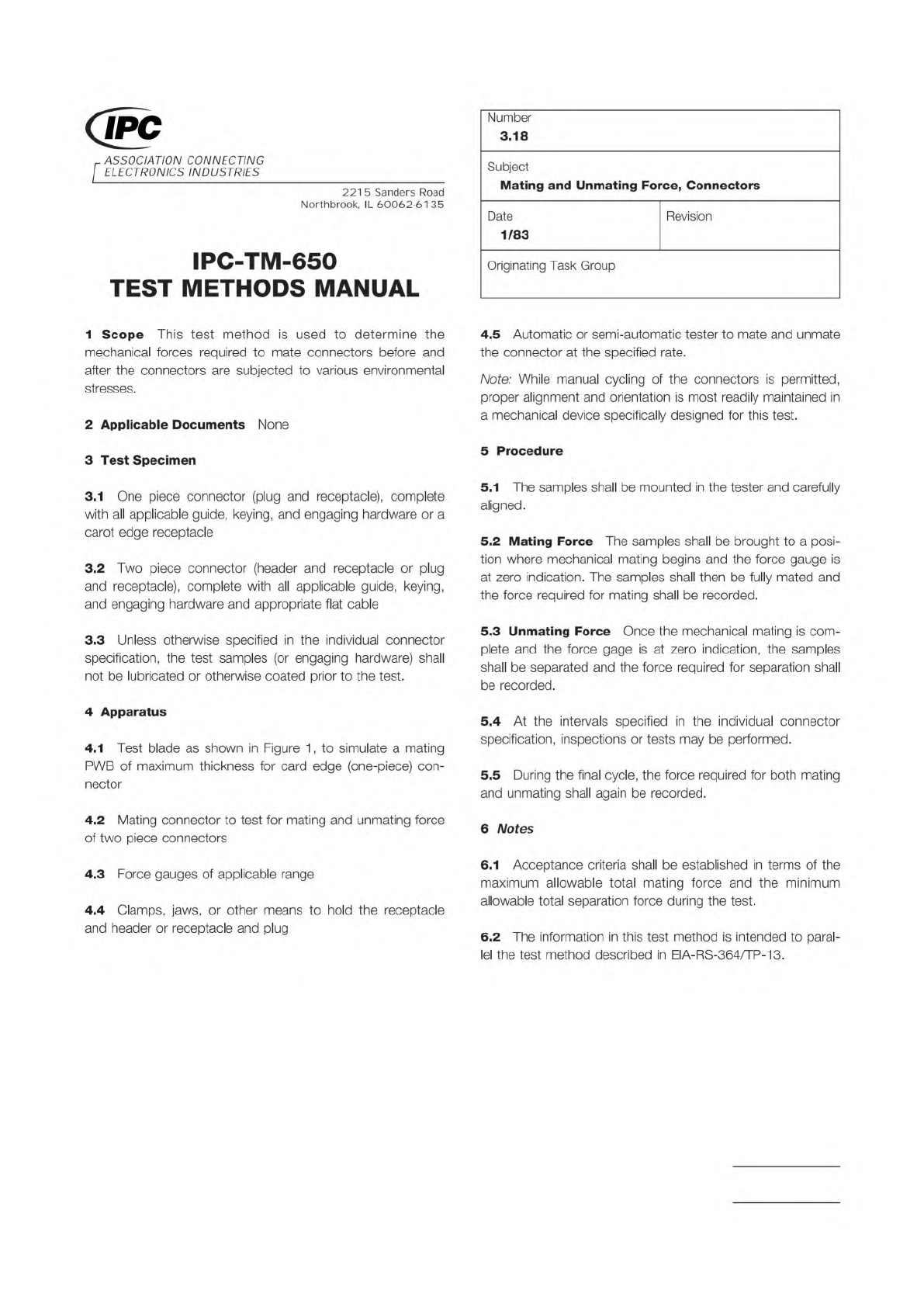
Material in this Test Methods Manual was voluntarily established by Technical Committees of the IPC. This material is advisory only
and its use or adaptation is entirely voluntary. IPC disclaims all liability of any kind as to the use, application, or adaptation of this
material. Users are also wholly responsible for protecting themselves against all claims or liabilities for patent infringement.
Equipment referenced is for the convenience of the user and does not imply endorsement by the IPC.
Page 1 of 2
r
ASSOCIATION
CONNECTING
/
ELECTRONICS
INDUSTRIES
2215
Sanders
Road
Northbrook,
IL
60062-6135
IPC-TM-650
TEST
METHODS
MANUAL
1
Scope
This
test
method
is
used
to
determine
the
mechanical
forces
required
to
mate
connectors
before
and
after
the
connectors
are
subjected
to
various
environmental
stresses.
2
Applicable
Documents
None
3
Test
Specimen
3.1
One
piece
connector
(plug
and
receptacle),
complete
with
all
applicable
guide,
keying,
and
engaging
hardware
or
a
carot
edge
receptacle
3.2
Two
piece
connector
(header
and
receptacle
or
plug
and
receptacle),
complete
with
all
applicable
guide,
keying,
and
engaging
hardware
and
appropriate
flat
cable
3.3
Unless
otherwise
specified
in
the
individual
connector
specification,
the
test
samples
(or
engaging
hardware)
shall
not
be
lubricated
or
otherwise
coated
prior
to
the
test.
4
Apparatus
4.1
Test
blade
as
shown
in
Figure
1,
to
simulate
a
mating
PWB
of
maximum
thickness
for
card
edge
(one-piece)
con¬
nector
4.2
Mating
connector
to
test
for
mating
and
unmating
force
of
two
piece
connectors
4.3
Force
gauges
of
applicable
range
4.4
Clamps,
jaws,
or
other
means
to
hold
the
receptacle
and
header
or
receptacle
and
plug
Number
3.18
Subject
Mating
and
Unmating
Force,
Connectors
Date
Revision
1/83
Originating
Task
Group
4.5
Automatic
or
semi-automatic
tester
to
mate
and
unmate
the
connector
at
the
specified
rate.
Note:
While
manual
cycling
of
the
connectors
is
permitted,
proper
alignment
and
orientation
is
most
readily
maintained
in
a
mechanical
device
specifically
designed
for
this
test.
5
Procedure
5
J
The
samples
shall
be
mounted
in
the
tester
and
carefully
aligned.
5
.2
Mating
Force
The
samples
shall
be
brought
to
a
posi¬
tion
where
mechanical
mating
begins
and
the
force
gauge
is
at
zero
indication.
The
samples
shall
then
be
fully
mated
and
the
force
required
for
mating
shall
be
recorded.
5
.3
Unmating
Force
Once
the
mechanical
mating
is
com¬
plete
and
the
force
gage
is
at
zero
indication,
the
samples
shall
be
separated
and
the
force
required
for
separation
shall
be
recorded.
5
.4
At
the
intervals
specified
in
the
individual
connector
specification,
inspections
or
tests
may
be
performed.
5
.5
During
the
final
cycle,
the
force
required
for
both
mating
and
unmating
shall
again
be
recorded.
6
Notes
6.1
Acceptance
criteria
shall
be
established
in
terms
of
the
maximum
allowable
total
mating
force
and
the
minimum
allowable
total
separation
force
during
the
test.
6.2
The
information
in
this
test
method
is
intended
to
paral¬
lel
the
test
method
described
in
EIA-RS-364/TP-1
3.
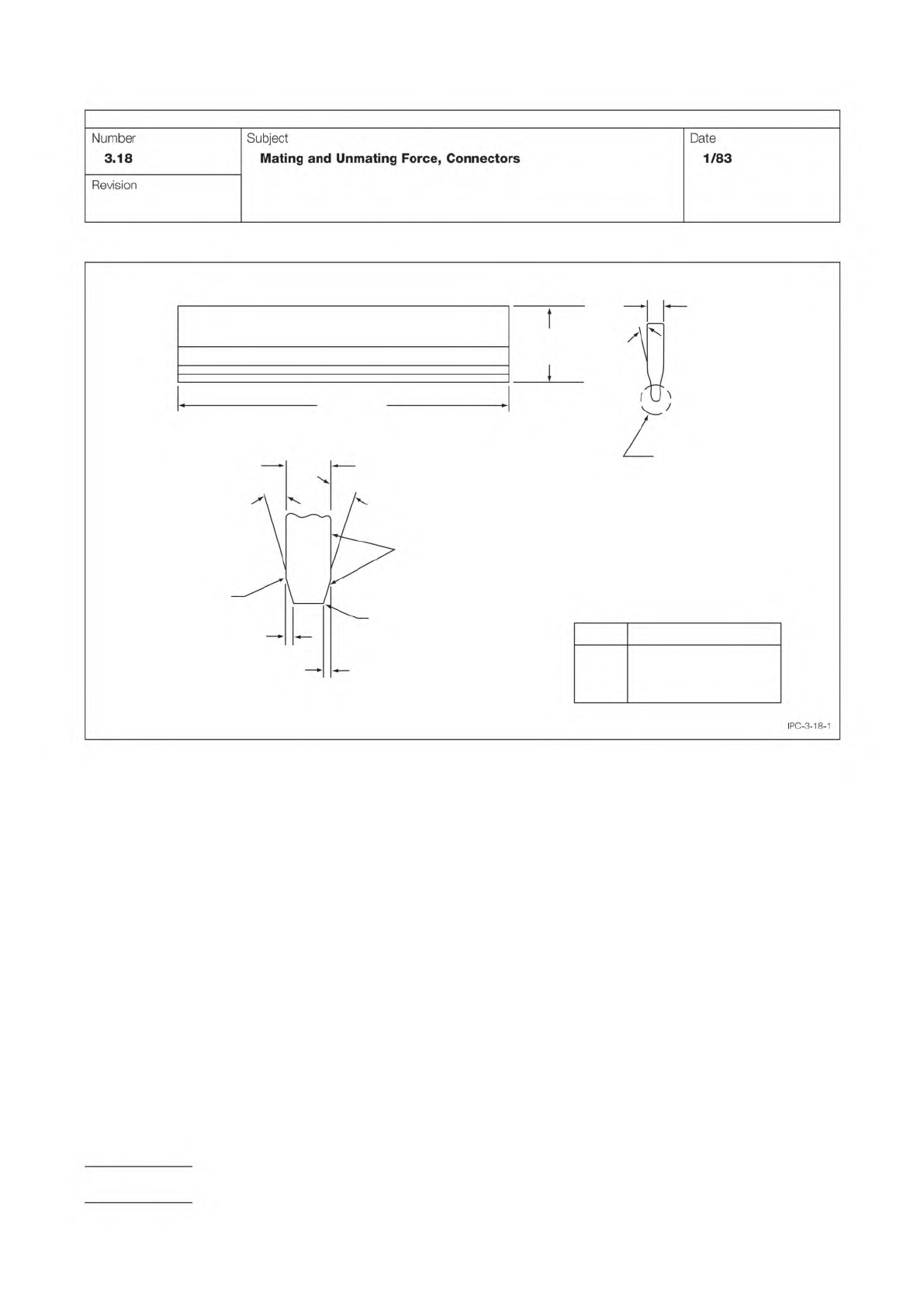
Figure 1 One-Piece Edge Connector Mechanical Gauges
31.75 mm
Min.
3.56 mm
± 0.25 mm
15˚
See Detail ``C´´
15˚ ± 30˚
15˚ ± 30˚
Detail ``C´´
Dim. ``C´´
Dim. ``A´´
1.7 mm ± 0.13
mm Rad. Typ.
3.43 mm ±
0.0025 mm
0.34 mm ± 0.0025 mm
Entire Surface 4 µm
Finish to 9.53 mm from
End (Typ. Both Sides)
0.25 mm ± 0.13 mm
Rad. Typ.
Size
Dim. ``C´´ ± 0.0001 mm
2
3
4
1.78 mm
2.62 mm
3.43 mm
IPC-TM-650
Page 2 of 2
Number
3.18
Subject
Mating
and
Unmating
Force,
Connectors
Date
1/83
Revision
IPC-3-18-1
New Test Method Revision to Current Test Method
1.
2.
3.
4.
5a.
APPROVED BY:
Originating Task Group Chair
Date:
5b.
APPROVED BY:
Test Methods Subcommittee Chairman
Date:
Number
ASSOCIATION
CONNECTING
/
ELECTRONICS
INDUSTRIES®
3000
Lakeside
Dr.,
Suite
309
S
Bannockburn,
IL
6001
5
IPC-TM-650
TEST
METHODS
MANUAL
Subject
Date
Revision
Originating
Task
Group
The
attached
test
method
is
being
worked
on
by:
Committee
Name
Chairman
Committee
Number
Is
this
the
originating
task
group?
yes
no
Reason
The
affected
committees/documents
are:
If
this
is
a
new
test
method,
the
new
number
is:
Completed
by:
Date:
IPG
Personnel
Test
Method
is
now
ready
to
be
reviewed
by
the
7-1
1
Test
Methods
Subcommittee
and
all
affected
committees.
This
test
method
has
been
submitted
for
comment
to
all
affected
committees
and
the
7-1
1
Test
Methods
Subcommittee
for
review
and
comments.
Completed
by:
Date:
I
PC
Personnel
All
comments
received
need
to
be
compiled
and
sent
to
originating
task
group
for
review.
All
comments
received
have
been
compiled
and
forwarded
to
the
originating
task
group.
Completed
by:
Date:
I
PC
Personnel
All
comments
are
to
be
resolved
by
originating
committee
and
a
final
draft
either
recirculated
or
submitted
for
typesetting.
Interim
final
draft
is
submitted
for
circulation
to
affected
committee
and
Test
Methods
Subcommittee.
Completed
by:
Date:
IPG
Personnel
Final
draft
is
submitted
for
typesetting.
Completed
by:
Date:
IPG
Personnel
The
originating
task
group
chair
of
this
test
method
approves
typeset
version.
The
7-1
1
Test
Methods
Subcommittee
has
approved
this
test
method
for
publication.