2OM-1075-002.pdf - 第62页
2. V arious Functions 2 . 1 Equivalent Repetitive Pattern Function Pattern program data for unit P .C.B.’s (same repetitive patterns) can easily be created through a combination of coordinate data of repetitive placement…
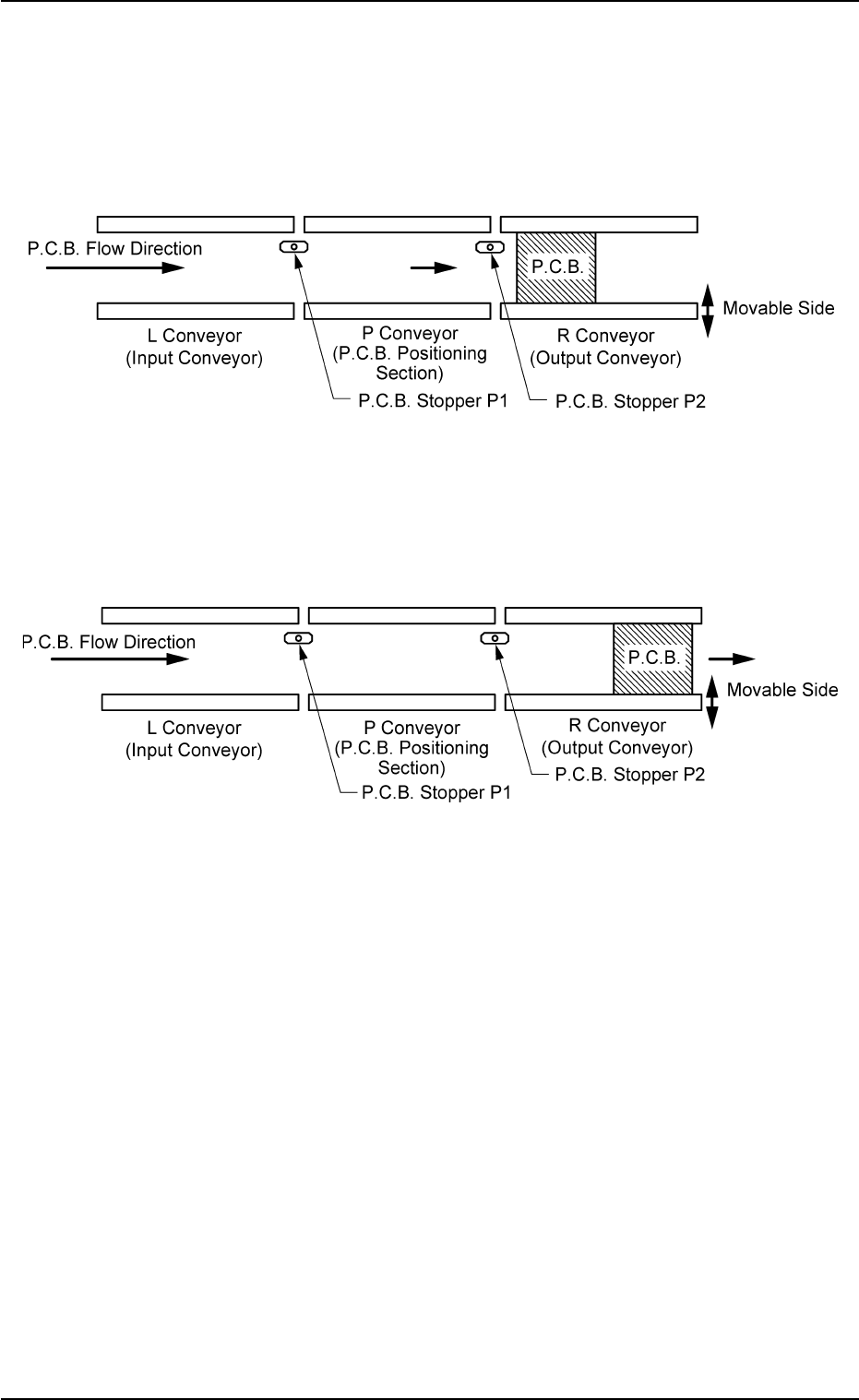
1.3 Discharge of P.C.B.
(1) The components-placed P.C.B. is carried out to the R conveyor.
At the same time, a new P.C.B. is carried to the P.C.B. positioning
section from the L conveyor.
Fig. 2B17
(2) The components-placed P.C.B. on the R conveyor is transferred to
the output machine by the R conveyor.
Fig. 2B18
0206-003 2-12
AHB01ESPP
1.3 Discharge of P.C.B.
2. Various Functions
2.1 Equivalent Repetitive Pattern Function
Pattern program data for unit P.C.B.’s (same repetitive patterns) can
easily be created through a combination of coordinate data of repetitive
placement patterns and each placement pattern origin.
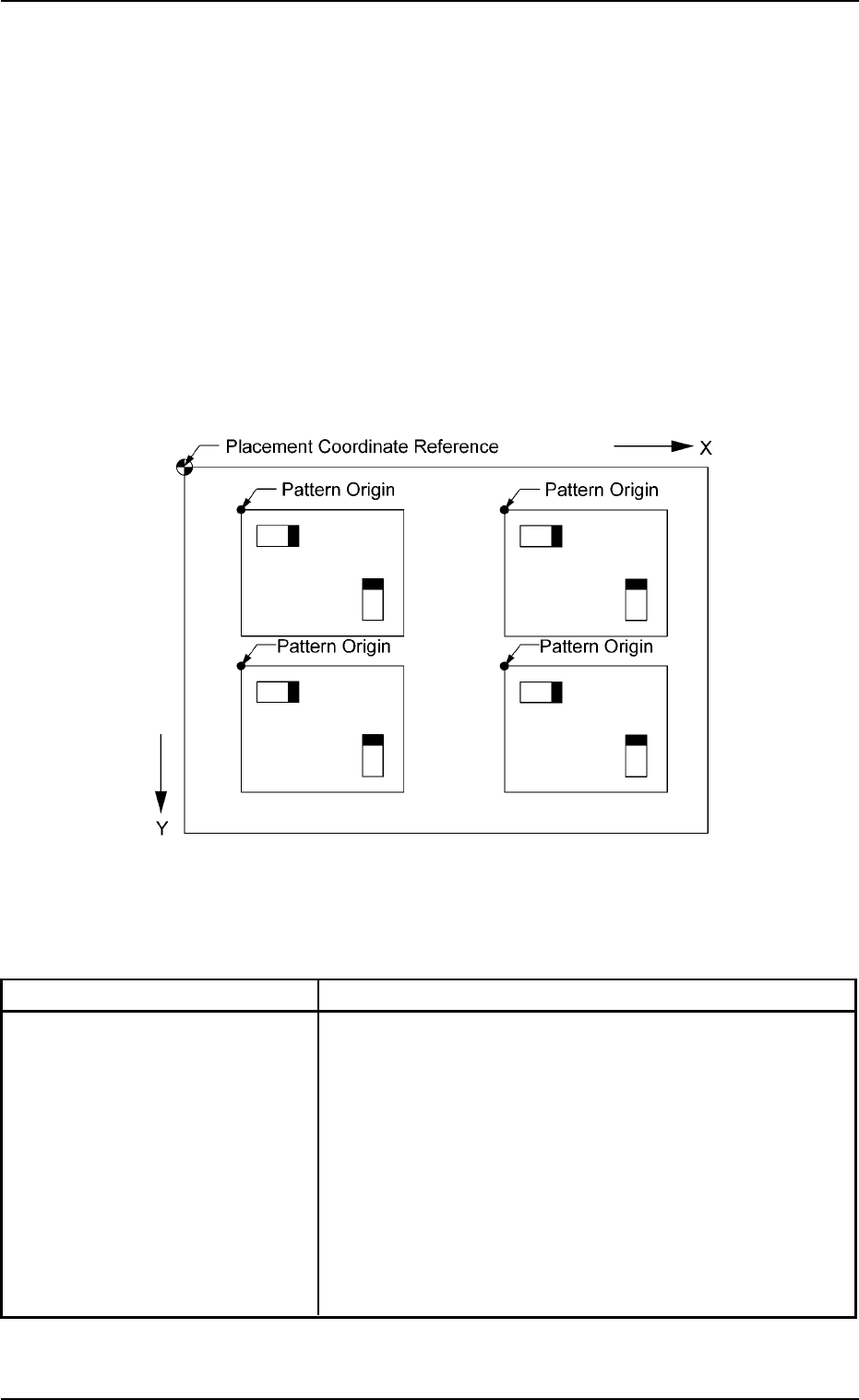
• The equivalent repetitive pattern function can be used when four pieces
of unit P.C.B.’s are arranged, forming constant patterns as shown
below and the same types of components are placed on each unit
P.C.B.
Fig. 2B19
• How to use the equivalent repetitive pattern function
Table 2B1
Step Reference
1. Creating a Pattern Program
(1) "2.1 Types of P.C.B.’s and Required Data" in "Section
2" of "Vol. 3: Programming and Machine Data"
(2) "2.5 Placement Data" in "Section 2" of "Vol. 3: Program-
ming and Machine Data"
• C01 Placement Data Un
• C02 Placement Data (P-data)
• C03 Placement Data (O-data)
(3) "3. Example of Pattern Program Creation" in "Section
2" of "Vol. 3: Programming and Machine Data"
• "3.3 Repetitive Patterns"
0206-002 2-13 AHB01ESPP
2.1 Equivalent Repetitive Pattern Function
2.2 Multi-Model Repetitive Pattern Function for
Mixed Programs
By creating several placement patterns in one pattern program, compo-
nents for different patterns can easily be placed on unit P.C.B.’s of a
multi-unit P.C.B.
• Because several placement data can be set in one pattern program,
the related operation and placement feeder location data can be used
commonly.
• Each placement data can be set independently for a repetitive pat-
tern, making it possible to create pattern program data efficiently.
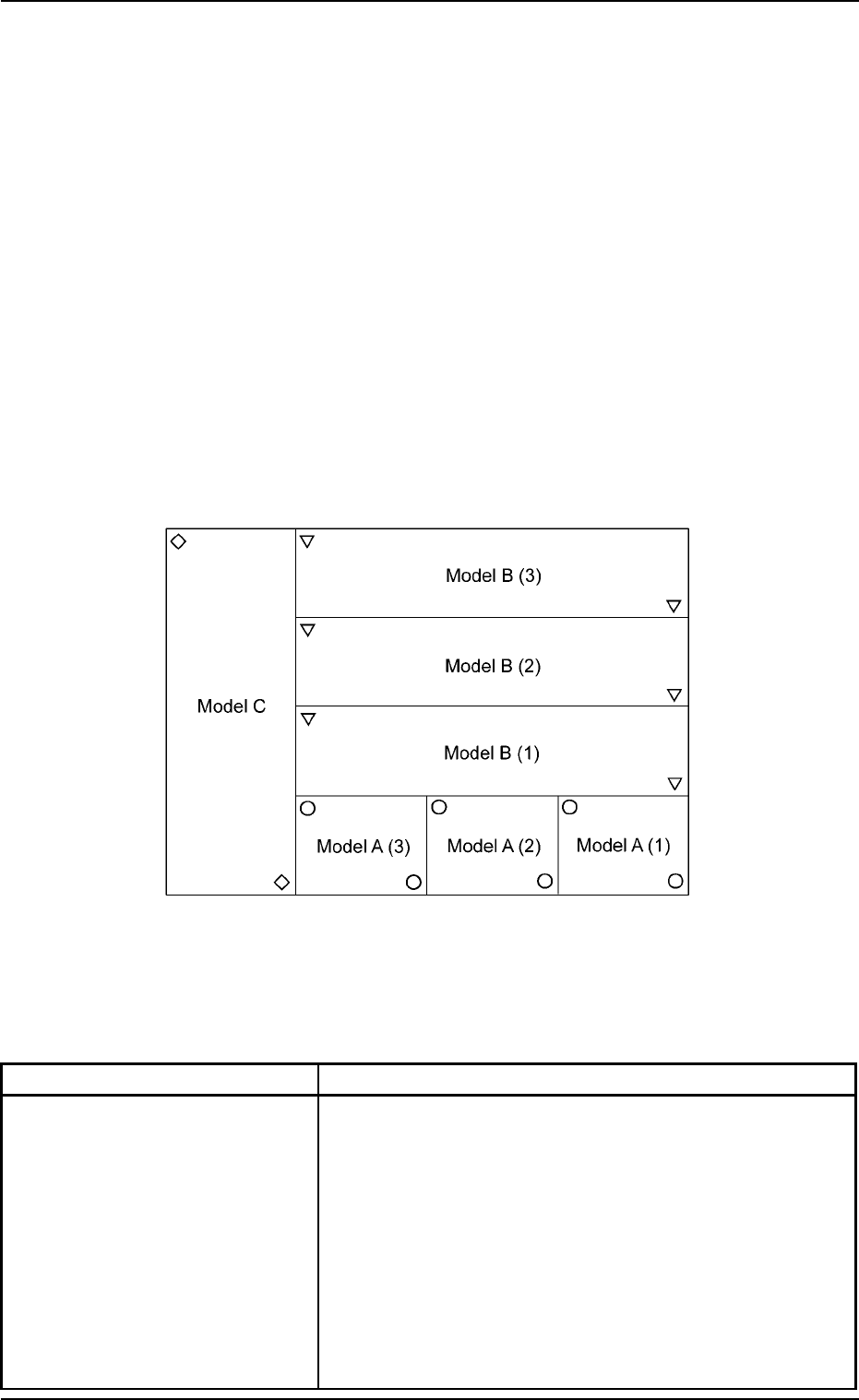
• When components are placed diversely on Patterns A, B, and C as
shown below (example), the multi-model repetitive pattern function
can be used for mixed programs.
Example:
Fig. 2B20
• How to use the multi-model repetitive pattern function for mixed
programs
Table 2B2
Step Reference
1. Creating a Pattern Program
(1) "2.1 Types of P.C.B.’s and Required Data" in "Section
2" of "Vol. 3: Programming and Machine Data"
(2) "2.5 Placement Data" in "Section 2" of "Vol. 3: Program-
ming and Machine Data"
• C01 Placement Data Un
• C02 Placement Data (P-data)
• C03 Placement Data (O-data)
(3) "3. Example of Pattern Program Creation" in "Section
2" of "Vol. 3: Programming and Machine Data"
• "3.8 Multi-Model Repetitive Patterns"
0206-002 2-14 AHB01ESPP
2.2 Multi-Model Repetitive Pattern Function for Mixed Programs