1OM-1625-004_w.pdf - 第106页
1OM-1603 2-5 2. Operation Screen : Chap.2 1007-004 2. Operation Windows The basic layout of the operation window is as follows. [1] [2] [3] [4] [5] [6] [8] F1B5 [1] [2] [3] [4] [5] [7] [8] F1B6 [1] Current Machine Mode T…
1OM-1603
2-4
1. Starting : Chap.2
1003-003
1.2.1 Login Procedure
Procedure
(1) Press one of the [Operator #1], [Operator #2] and [Supervisor] log-in user
selection buttons, appropriate for the access given to you.
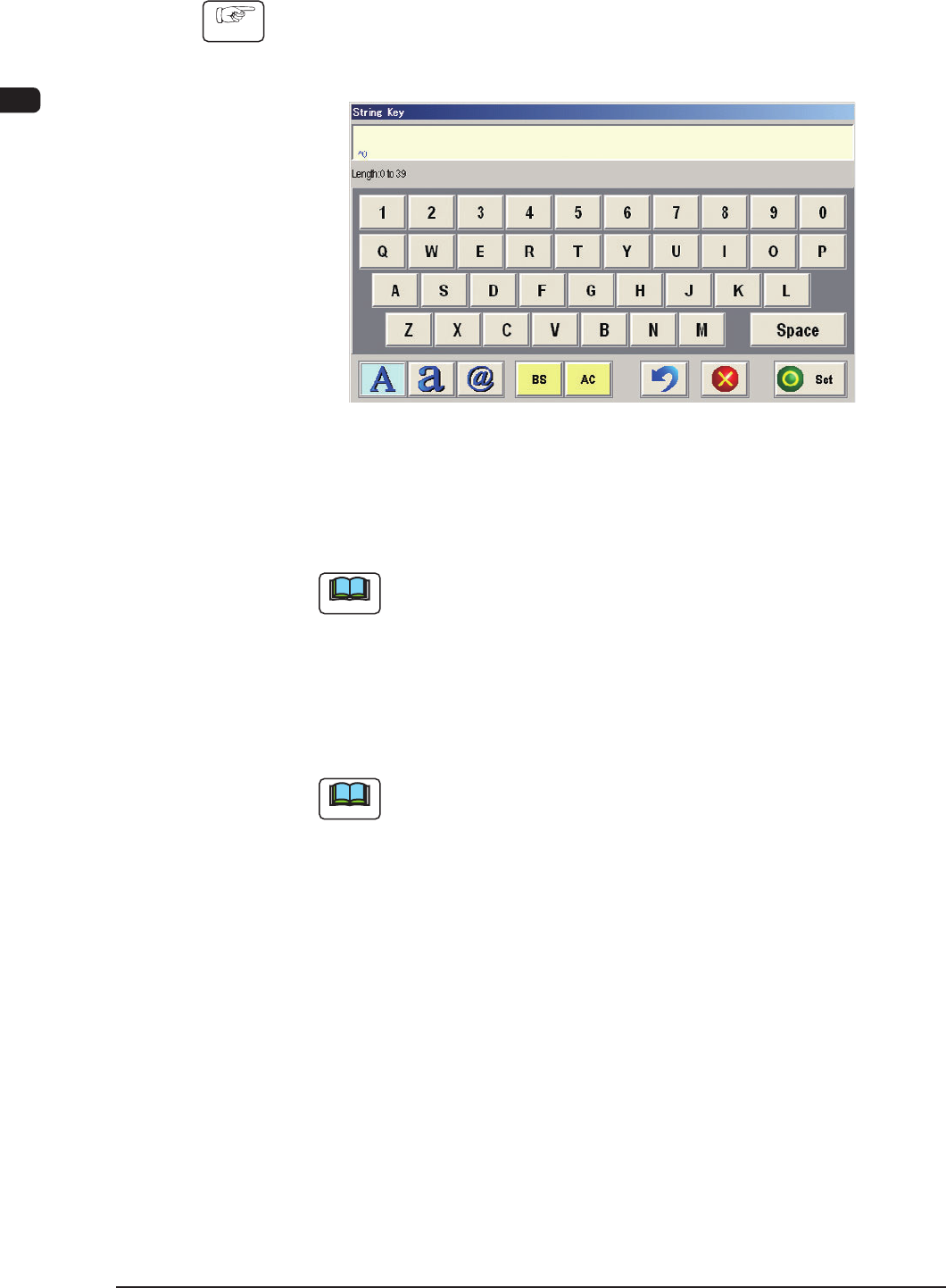
When a password is set, the "String Key" window opens.
F1B4
(2) Entry the specied password.
The entered password is signied by asterisk "*" and will not be disclosed to
anyone.
Note
(a) If no password is entered for 10 seconds after the "String Key"
window is opened, the window closes automatically.
(b) While the "String Key" window is active, no window appears on the
touch screen on the other side (not under operation).
(3) After entering the password, press the [Set] button.
The "MAINT." window appears on the touch screen.
Note
(a) When no password is set, press the [Supervisor], the [Operator #1],
or the [Operator #2] button according to the given authority. The
"Maintenance" window appears on the touch screen.
(b) The available function range in the "Maintenance" window varies
depending on the type of the log-in user.
1OM-1603
2-5
2. Operation Screen : Chap.2
1007-004
2. Operation Windows
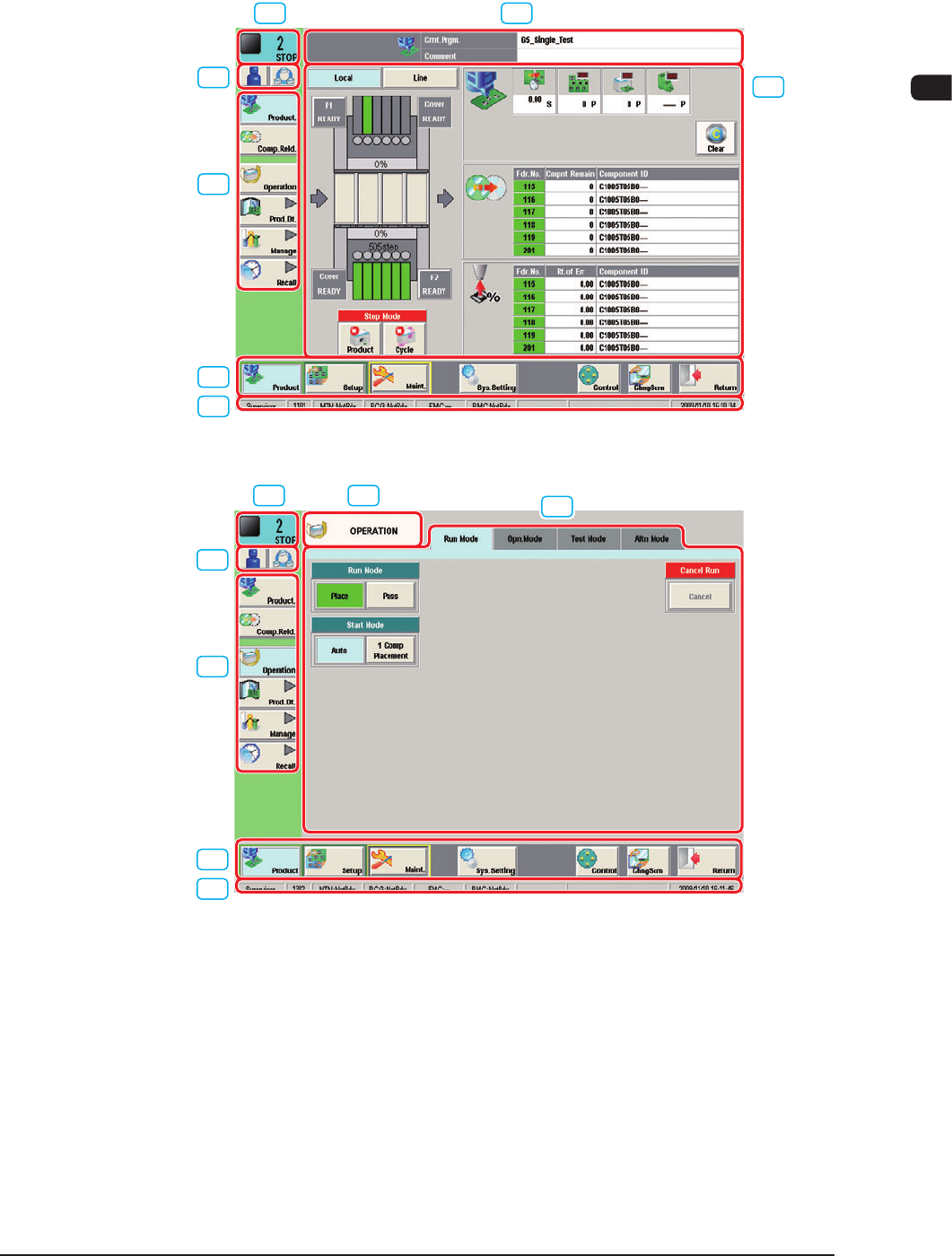
The basic layout of the operation window is as follows.
[1] [2]
[3]
[4]
[5]
[6]
[8]
F1B5
[1] [2]
[3]
[4]
[5]
[7]
[8]
F1B6
[1] Current Machine Mode
The Nos. of the machines that make up the production line and their current
machine mode are displayed in real time.
RUN
: Indicates that the machine is running.
MOVE
: The machine operation, such as zeroing operation, is being
performed.
STOP
: Indicates that the machine is stopped.
WAIT
: Indicates that the machine is set in the stand by mode.
PAUSE
: It shows that the machine is in the pause mode.
1OM-1603
2-6
2. Operation Screen : Chap.2
[2] Status Indicator
Current Operation Mode, Product Name (Pattern Program Name), Operation
Window Hierarchical Position (Host Window) and Name are displayed.
[3]
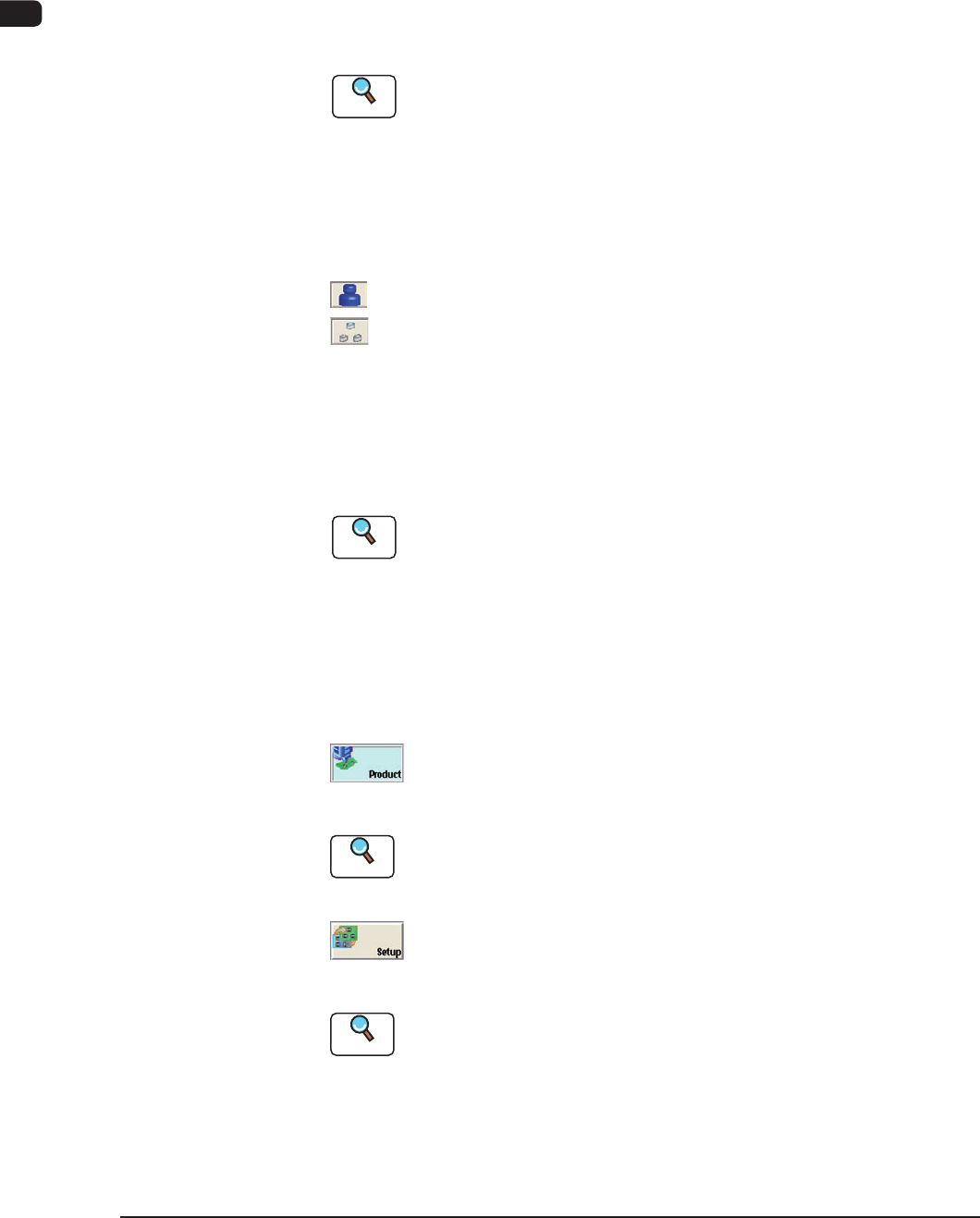
[Login User] Button
The current login user is indicated using an icon.
When the [
Login User] button is pressed, the "Login User Selection" window
appears and the login user change is available.
Reference
Refer to "1.2 Login User Selection" for the login user change.
[Line] Button
Using this button, the connection to the machine in the line is executed.
Each pressing the [Line] button connects or disconnects the machine in the
line alternatively.
:
This shows that the machine in the line is connected.
:
This shows that the machine in the line is disconnected.
[4] Main Menu Bar
The main menu buttons are arranged on the menu bar.
When any of the buttons is pressed, the corresponding menu operation
window appears.
Reference
Refer to "2. Product Window" in Chapter 1, Volume 2, for the details of
the main menu bar.
[5] Common Menu Bar
The common menu buttons are arranged on the bottom of the touch screen.
When each of the common menu buttons is pressed, the corresponding
operation window appears.
[Product] Button
When this button is pressed, the "Product" window is displayed.
Reference
Refer to "Menus for Automatic Operation" in "Chapter1 (Volume 2)" for
the detailed information on the "Product" window.
[Setup] Button
When this button is pressed, the "Set-up" window is displayed.
Reference
Refer to "Menus for Setup Operation" in "Chapter 6 (Volume 2)" for the
detailed information on the "Set-up" window.
1007-004