IPC J-STD-003B.pdf - 第27页
4.2.10.1 Apparatus 4.2.10.1.1 Stencil/Screen A stencil or screen with pad geometry openings that are appropriate for the test speci- men shall be used. Unless otherwise agreed upon between vendor and user the nominal ste…

4.2.8.4.3 Plated-Through Hole Evaluation Only plated-
through holes that are at least 3.0 mm [0.118 in] from any
surface or fixturing structure supporting the test specimen
during the test will be evaluated.
Accept/Reject Criteria:
• Class 1 and 2 Product – Solder shall fully wet the wall
area of the plated-through holes, and plug holes less than
1.5 mm [0.0591 in] diameter (complete filling is not nec-
essary).
• Class 3 Product – The test specimen has soldered suc-
cessfully if solder has risen in all plated-through holes.
The solder shall have fully wetted the walls of the hole.
There shall be no nonwetting or exposed base metal on
any plated-through hole.
Accept/reject criterion for board thicknesses of <3.0 mm
[<0.118 in] shall be in accordance with 5.2 and Figures 4-5
and 4-6. The solder must have wet over the knee of the
hole and out onto the land around the top of the hole,
except for boards whose thickness exceeds 3.0 mm [0.118
in].
On thick boards, i.e., greater than 3.0 mm [0.118 in] the
capillary forces due to surface tension may not be large
enough to support the weight of the solder needed to fill the
hole. This may prevent solder from filling the plated-
through hole and wetting over the knee of the hole and out
onto the land area around the top of the hole.
4.2.9 Test D1 – Wave Solder Test Lead-Free Solder
This test is for wave solder testing of plated-through holes,
surface conductors, and attachment lands.
4.2.9.1 Apparatus A wave soldering system adjusted to
provide the parameters of 4.2.4.3 shall be used.
4.2.9.2 Test Specimen The suggested test specimen
shall be in accordance with Figures 4-2 and 4-3 and 1.7.
Test specimen preparation shall be in accordance with 3.4.
4.2.9.3 Procedure Test specimens shall be fixtured so as
to be representative of the production setup without com-
ponents inserted. The fluxing unit should be filled with the
specific (3.2.2) or agreed upon flux. If the unit contains
other than the specified or agreed upon flux then the flux-
ing unit shall be turned off and the board test specimens
fluxed separately prior to placement on the conveyor per
4.1. The following parameters must be established and
noted: board fixturing (if required), conveyor speed, pre-
heater, solder unit with or without oil intermix, machine
process controls, incline, board preheat temperature and
solder temperature. The application of solder shall meet the
requirements of the applicable wave solder equipment, spe-
cifically for depth of contact, angle of contact, and duration
of contact. Solder temperature shall be255±5°C[455 ±
9 °F] unless another temperature is agreed upon by vendor
and user. Prior to examination, all test specimens shall
have the flux removed using a cleaning agent in accordance
with 3.2.3.
4.2.9.4 Evaluation
4.2.9.4.1 Magnification
Test specimens shall be exam-
ined at 10X using the equipment specified in 3.3.3.
4.2.9.4.2 Surface Evaluation – Accept/Reject Criteria
An area of 3.0 mm [0.118 in] width from the trailing edge
of each test specimen shall not be evaluated. Areas con-
tacted by fixtures shall not be evaluated. A minimum of
95% of each of the surfaces (i.e., each pad) being tested
shall exhibit good wetting. The balance of the surface may
contain only small pin holes, dewetted areas, and rough
spots provided such defects are not concentrated in one
area. For less critical applications, a smaller percent cover-
age may be determined between vendor and user. There
shall be no nonwetting or exposed base metal within the
evaluated area.
4.2.9.4.3 Plated-Through Hole Evaluation Only plated-
through holes that are at least 5.0 mm [0.197 in] from any
surface or fixturing structure supporting the test specimen
during the test will be evaluated.
Accept/Reject Criteria:
• Class 1 and 2 Product – Solder shall fully wet the wall
area of the plated-through holes, and plug holes less than
1.5 mm [0.0591 in] diameter (complete filling is not nec-
essary).
• Class 3 Product – The test specimen has soldered suc-
cessfully if solder has risen in all plated-through holes.
The solder shall have fully wetted the walls of the hole.
There shall be no nonwetting or exposed base metal on
any plated-through hole.
Accept/reject criteria for board thicknesses of <3.0 mm
[<0.118 in] shall be in accordance with 5.2 and Figures 4-5
and 4-6. The solder must have wetted over the knee of the
hole and out onto the land around the top of the hole,
except for boards whose thickness exceeds 3.0 mm [0.118
in].
On thick boards, i.e., greater than 3.0 mm [0.118 in], the
capillary action forces may not be large enough to over-
come forces exerted on the solder by the weight of the sol-
der. This may prevent solder from filling the plated-through
hole and wetting over the knee of the hole and out onto the
land area around the top of the hole.
4.2.10 Test E1 – Surface Mount Process Simulation
Test Lead-Free Solder
This test simulates actual surface
mount printed board performance in a reflow process.
IPC J-STD-003B March 2007
16
Copyright Association Connecting Electronics Industries
Provided by IHS under license with IPC
Not for Resale
No reproduction or networking permitted without license from IHS
--`,,```,,,,````-`-`,,`,,`,`,,`---
//^:^^#^~^^"^~"^"^:$^~#:"#:$@:~^"$^:#*~^$^~:^#*^^:^^*\\
4.2.10.1 Apparatus
4.2.10.1.1 Stencil/Screen
A stencil or screen with pad
geometry openings that are appropriate for the test speci-
men shall be used. Unless otherwise agreed upon between
vendor and user the nominal stencil thickness shall be per
Table 4-3.
4.2.10.1.2 Paste Application Tool A rubber or metal
squeegee device shall be used to distribute paste across the
stencil/screen.
4.2.10.2 Test Specimen The test specimen shall be in
accordance with 1.7. The test specimen shall be tested in
the condition that it would normally represent at the time
of assembly soldering. The test specimen surfaces to be
tested shall not be handled in such a manner as not to
cause contamination, nor shall the surfaces being tested be
wiped, cleaned, scraped or abraded.
4.2.10.3 Reflow Equipment An IR/convection reflow
oven, vapor phase reflow system, or storage oven capable
of reaching the reflow temperature of the paste shall be
used. The temperatures listed in Table 4-4 correspond to
the temperature/time duration for the solder paste. Addi-
tional time may be required to allow the test specimen
itself to reach the temperatures listed in Table 4-4. Unless
otherwise agreed upon between vendor and user the reflow
parameters shall be per Table 4-4.
4.2.10.4 Procedure Place the stencil/screen on a surface
termination area of interest, apply solder paste (see
3.2.1)onto the stencil/screen and print the stencil pattern
onto the test substrate by wiping paste over the stencil/
screen in one smooth motion using rubber or metal squee-
gee. Remove the stencil/screen carefully so as to avoid
smearing the paste print. Place test substrate on applicable
reflow equipment and conduct reflow process. After reflow,
carefully remove test specimen and allow to cool to room
temperature. Prior to examination, all test specimens shall
have the flux removed using a cleaning agent in accordance
with 3.2.3.
4.2.10.5 Evaluation
4.2.10.5.1 Magnification
Test specimens shall be exam-
ined at 10X using the equipment specified in 3.3.3.
4.2.10.5.2 Surface Evaluation – Accept/Reject Criteria
A minimum of 95% of each of the surfaces (i.e., each pad)
being tested shall exhibit good wetting. The balance of the
surface may contain only small pin holes, dewetted areas,
and rough spots provided such defects are not concentrated
in one area. For less critical applications, a smaller percent
coverage may be determined between vendor and user.
There shall be no nonwetting or exposed base metal within
the evaluated area.
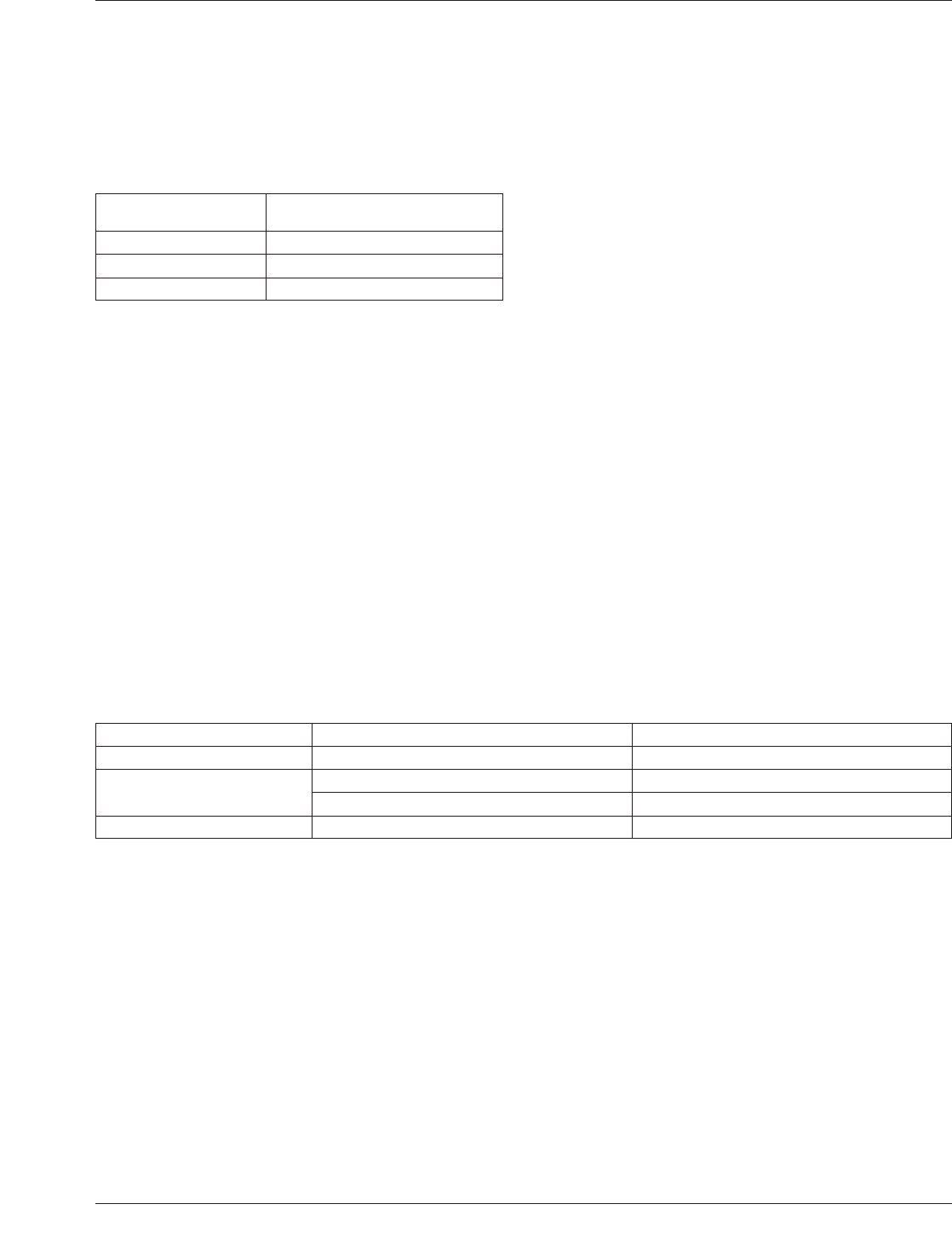
Table 4-3 Stencil Thickness Requirements
Nominal
Stencil Thickness Pitch
0.10 mm [0.00394 in] <0.50 mm [<0.0197 in]
0.15 mm [0.00591 in] 0.50-0.65 mm [0.0197-0.0256 in]
0.20 mm [0.00787 in] >0.65 mm [>0.0256 in]
Table 4-4 Lead-Free Reflow Parameter Requirements
Reflow Type Temperature Time
Vapor Phase Reflow 217-240 °C [423-464 °F] 45-90 seconds dwell at reflow
IR/Convection Reflow
150-180 °C [302-356 °F] Preheat 60-120 seconds
230-250 °C [446-482 °F] Reflow 30-60 seconds
Oven 230-250 °C [446-482 °F] 2-5 minutes (until reflow is assured)
March 2007 IPC J-STD-003B
17
Copyright Association Connecting Electronics Industries
Provided by IHS under license with IPC
Not for Resale
No reproduction or networking permitted without license from IHS
--`,,```,,,,````-`-`,,`,,`,`,,`---
//^:^^#^~^^"^~"^"^:$^~#:"#:$@:~^"$^:#*~^$^~:^#*^^:^^*\\
4.3 Tests with Force Measurement Criteria
4.3.1 Test F – Wetting Balance Test: Tin/Lead Solder
This test is for wetting balance testing of plated-through
holes, surface conductors and attachment lands.
4.3.1.1 Apparatus A solder meniscus force measuring
device (wetting balance) which includes a temperature con-
trolled solder pot containing solder per 3.2.1 and main-
tained per 3.5.1 and 3.5.2 shall be used. The equipment
shall have a means of recording force as a function of time,
such as a chart recorder, data logger, or computer.
4.3.1.1.1 Dipping Device A mechanical or electrome-
chanical dipping device incorporated in the wetting balance
shall be used. The device shall be preset to produce an
immersion and emersion rate as specified in 4.3.1.3.
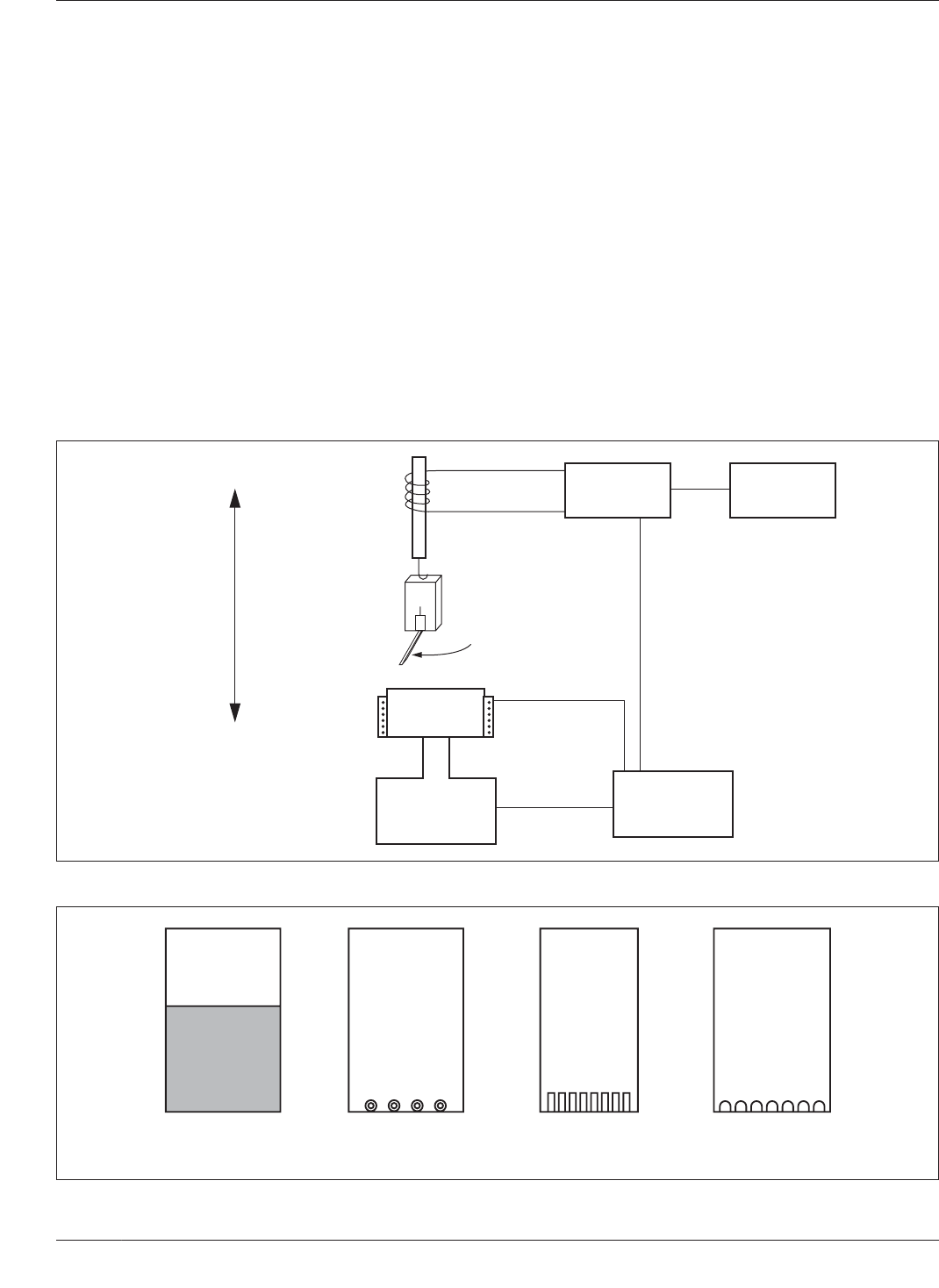
Thetest specimen dwell time is controlled to the time speci-
fied in 4.3.1.3 (see Figure 4-7).
4.3.1.2 Test Specimen The test specimen shall be in
accordance with 1.7. The test specimen shall either be a
full board, a section of a board, or a suggested test speci-
men as illustrated in Figure 4-8. Test specimen preparation
shall be in accordance with 3.4.
4.3.1.3 Procedure After application of the flux and par-
tial drying per 4.1, the test specimen shall be mounted on
the test equipment. After blotting away excess flux from
the test specimen with a piece of absorbent clean material,
hang it on the apparatus so that its lower edge is 10 ± 1
mm [0.394 ± 0.039 in] above the solder bath to preheat it
for 20 ± 1 seconds. The test shall be started after clearing
of the surface dross from the molten solder and a waiting
period of5±5seconds for the bath to settle down.
The flux covered surface shall be immersed only once in
the molten solder to a depth of 0.20 ± 0.1 mm [0.00787 ±
0.0039 in]. The angle of immersion shall be20°-40°.An
Chart
Recorder
Signal
Conditioner
Controls
Solder
Bath
Heater
Clamp
PWB
Specimen
Relative
Motion
LVDT
(Transducer)
IPC-003b-4-7
Figure 4-7 Wetting Balance Apparatus
Ground
Plane
Plated
Through-Holes
SM Pads SM Pads
IPC-003b-4-8
Figure 4-8 Suggested Wetting Balance Test Specimens and Soldering Immersion
IPC J-STD-003B March 2007
18
Copyright Association Connecting Electronics Industries
Provided by IHS under license with IPC
Not for Resale
No reproduction or networking permitted without license from IHS
--`,,```,,,,````-`-`,,`,,`,`,,`---
//^:^^#^~^^"^~"^"^:$^~#:"#:$@:~^"$^:#*~^$^~:^#*^^:^^*\\