00195166-0402_SM_D4_EN.pdf - 第254页
Settings Conveyor Light Barrier Functions in Input, Intermediate and Output Co nveyors 254 Serv ice Manual SIPLACE D4 6.5.8 Light Barrier Function s in Input, Intermediate and Output Conveyors Recognizing and stopping …
Settings
Function "Constant Transport Time in Placement Area" Conveyor
Service Manual SIPLACE D4
253
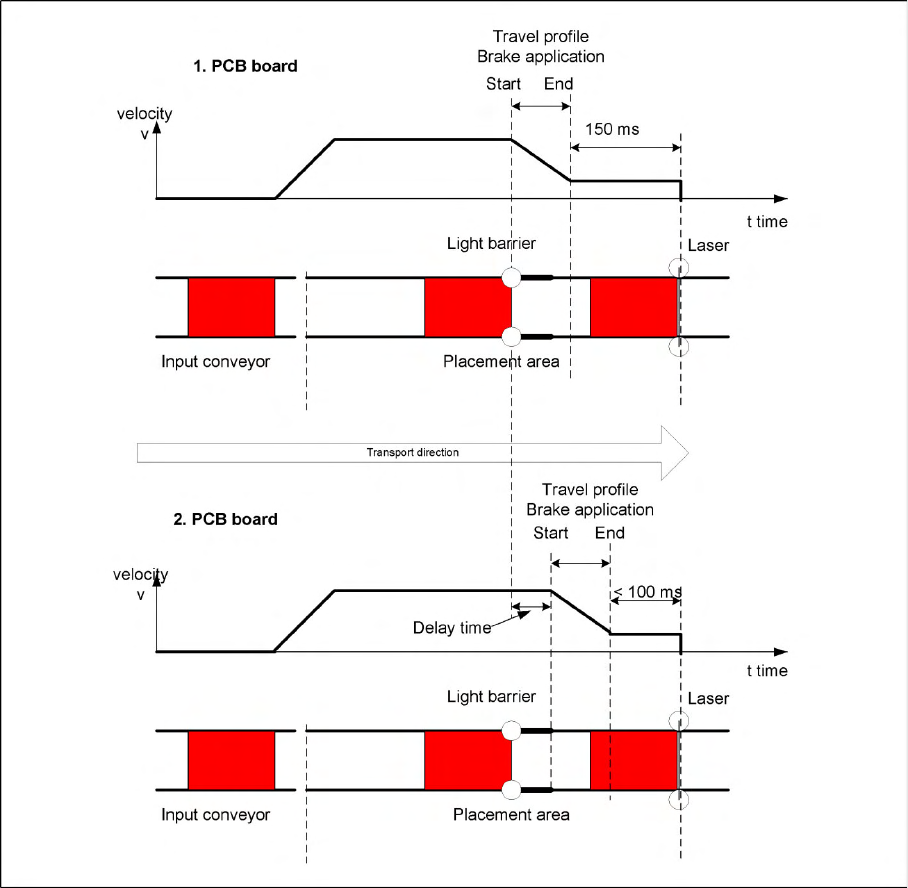
6.5.7 Function "Constant Transport Time in Placement Area"
6-37: Diagrams of PCB braking
The automatic teaching at the beginning of the travel profile guarantees that the stopper is always
reached in the same time, irrespective of the board weight. The transport time remains the same.
Function:
Switching on the laser light barrier
Starting the board braking procedure.
The light barrier in the placement area is used to recognize the board and then start the braking
procedure (travel profile) via the conveyor control software. The software automatically "teaches" the first
board how to move in slow approach mode. Once the travel profile for braking the PCB has begun (on
time), the PCB will be reliably stopped at the laser light barrier, after a maximum of 100ms.
Settings
Conveyor Light Barrier Functions in Input, Intermediate and Output Conveyors
254 Service Manual SIPLACE D4
6.5.8 Light Barrier Functions in Input, Intermediate and Output Conveyors
Recognizing and stopping the PCB boards.
Monitoring the boards in the input conveyor i.e.
If a board is recognized in the input conveyor, it will appear on the operating interface and the
machine will lock the conveyor interface to the previous station. When using boards with outbreaks,
the board may stop although the signal of the light barrier is disabled and the interface to the previous
station is opened again. Then the next PCB would move into the input conveyer with the PCB still
lying in the input conveyer. The board monitoring function moves the board backwards and then
transports it forwards again, until the light barrier switches.
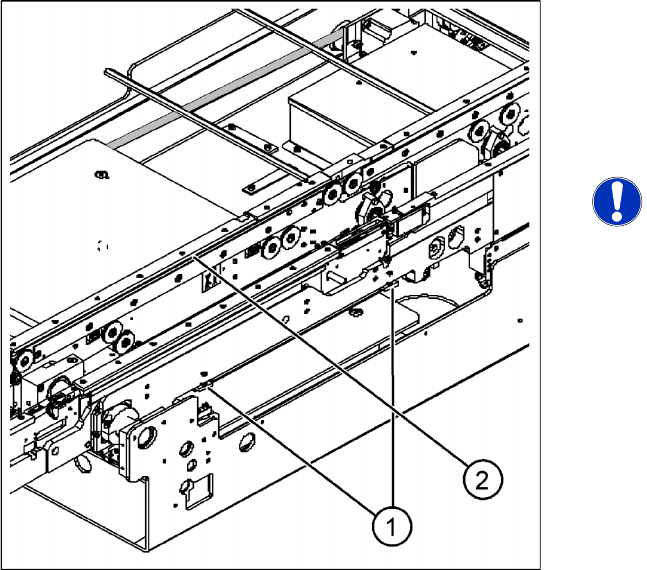
6.5.9 Setting the Clamping Actuator
Legend
1. Actuator
2. Top edge of conveyor belt
X Set the distance between the actuator and the
top edge of the conveyor belt to 94 mm.
NOTE:
The distance between the clamping
actuator (lifting table) and the top edge
of the belt must be checked at all four
contact points.
Settings
Board Clamping Functions Conveyor
Service Manual SIPLACE D4
255
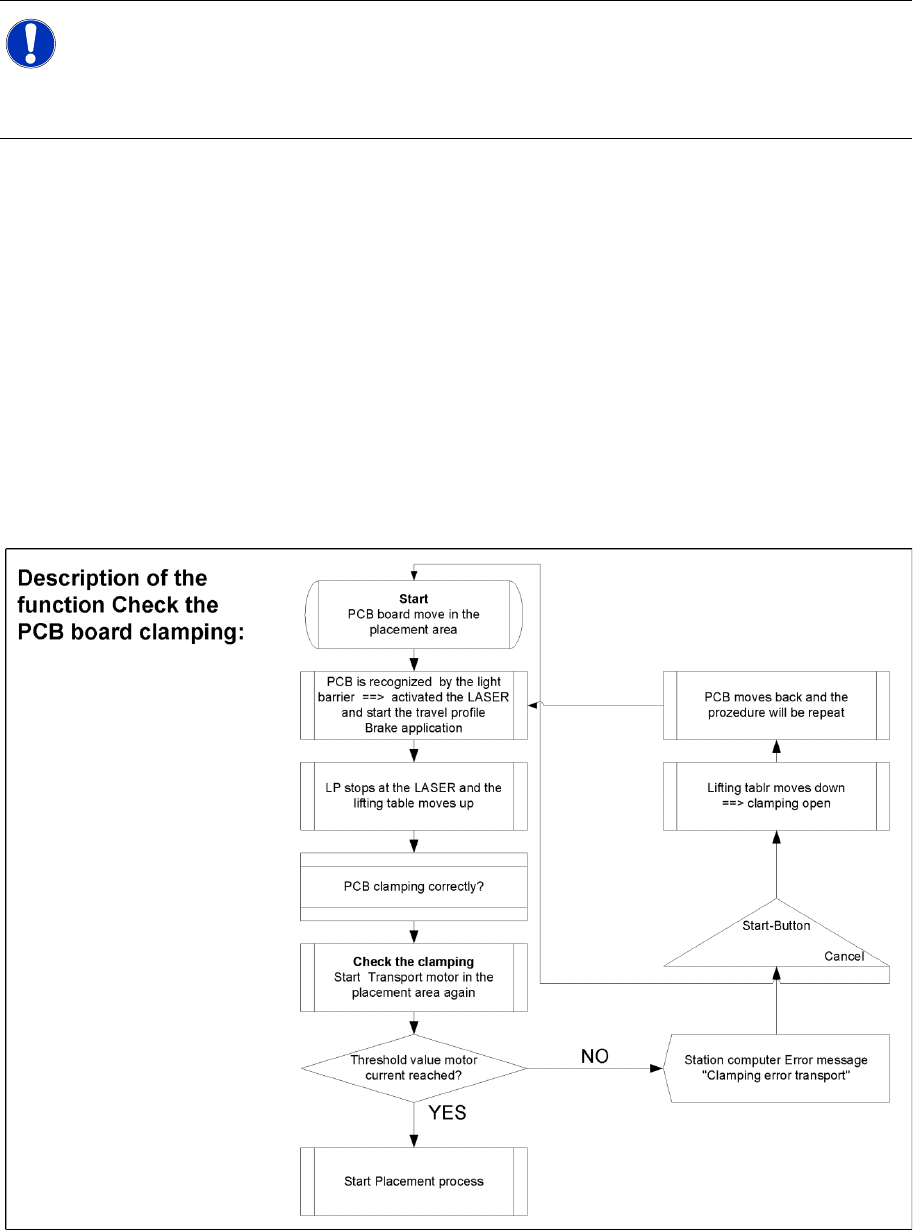
6.5.10 Board Clamping Functions
Function description:
The PCB moves into the placement area, it is recognized by the light barrier, stops at the laser and
the lifting table moves up.
Check PCB clamping: The conveyor motor in the placement area will start again. If the PCB is
clamped correctly the motor current will rise up and reach a defined threshold value. Once the board
has been correctly clamped into place, the placement process will begin.
If this threshold is not reached, the system assumes that the board is on its way to the intermediate
or output conveyor and has therefore not been correctly clamped into place.
The station computer will issue the message "PCB not correctly clamped PA1 (PA2)". The process
can be repeated by pressing the "start button".
The lifting table will move downwards, the board will be transported back and the stopper position
will be approached again.
NOTE:
The check whether a PCB is clamping correctly, is controlled by adding the conveyor motor
currents over a defined period.To check the function you can place a distance plate under the
conveyor side, so that the lifting table can not move to the upper position.
The check is not performed if the option "Vacuum Tooling" is installed.