00198574-01_Process_Foundation_DEK_Micron_EN - 第46页
7 Product File and Machine Optimisation 7.1 Test and Optimise the Under Screen Cleaner Settings 46 Process Foundation DEK Micron-Series 12/2017 Exercise Using the method above: test and, if necessary, adjust the USC sett…

7 Product File and Machine Optimisation
7.1 Test and Optimise the Under Screen Cleaner Settings
Process Foundation DEK Micron-Series 12/2017 45
7 Product File and Machine Optimisation
7.1 Test and Optimise the Under Screen Cleaner Settings
The under screen cleaner can play an important part in maintaining a process that would otherwise
go out of control and lead to defects. It is vital therefore, that the cleaner is functioning correctly and
the settings are optimised for best performance.
Testing the Cleaner
The precise method of testing will depend on the machine type and software. The guidelines below
demonstrate the principles but may need to be modified slightly for your machine.
Testing the cleaner regularly will:
●
Improve performance
●
Reduce defects
●
Save consumable costs
Method
●
Remove the foil and mesh from an old stencil leaving just the frame
●
Load this into the cleaner and perform a W/V/D clean while observing the performance
through the front cover. This is best done in step mode so you can mark how much paper is
being rotated between cleans to ensure clean paper is present
7 Product File and Machine Optimisation
7.1 Test and Optimise the Under Screen Cleaner Settings
46 Process Foundation DEK Micron-Series 12/2017
Exercise
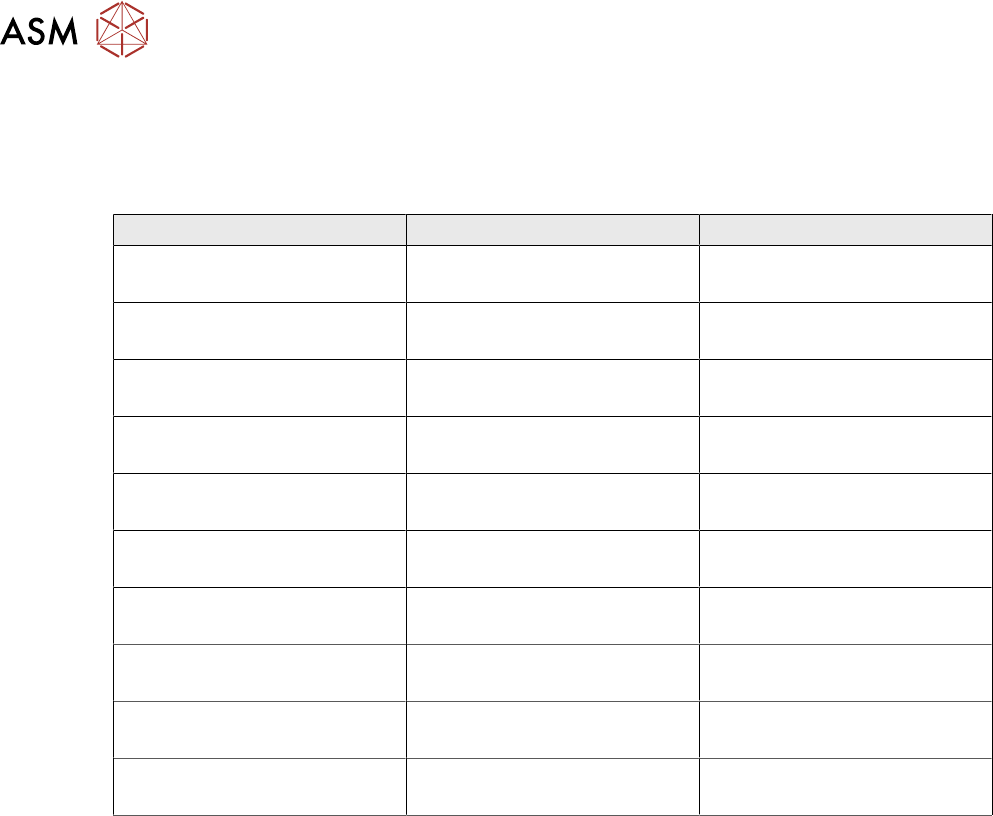
Using the method above: test and, if necessary, adjust the USC settings for best performance.
Complete the table below by identifying the set up parameters and their optimum values:
Under Screen Cleaner Settings:
Parameter Value Comments
Best Working Practices
●
Use Under-Screen Cleaning as seldom as possible
●
Train operators in the correct procedures for consumable replenishment
●
Don't rely on the USC to get rid of heavy deposits – the stencil will still need to be taken out
and cleaned in a "proper" cleaner after the production run
●
Perform an under-screen clean before a downtime period
●
Store spare paper roll close to the machine
●
Store a funnel for the solvent close to the machine
●
Never mix solvent types
●
Inspect pipes and hoses for blockage or damage daily
●
Clean up solvent spillage immediately (to reduce corrosion risk)
●
Check power and machine connections to the vacuum unit daily
7 Product File and Machine Optimisation
7.2 Design an Under Screen Cleaning Strategy
Process Foundation DEK Micron-Series 12/2017 47
7.2 Design an Under Screen Cleaning Strategy
USC Performance
It is important that the under-screen cleaner is fully functional and optimised prior to attempting to
design a cleaning strategy. The methods of achieving this are described in the process
maintenance unit of this workbook.
Why Clean? When to Clean?
Cleaning the under side of the stencil keeps the process in control and reduces end of line defects.
It does, however, have a cost in terms of reduced throughput and consumable consumption. It is
very important, therefore, that the cleaner is optimised to give an effective clean only when
required. The cleaner can also be programmed to clean after a knead operation or after a set
period of downtime.
Cleaning Options
A flexible programming system allows the user to choose between dry, wet (solvent) and vacuum
cycles. For extra optimisation, it is possible to use two independent cleaning modes (Mode 1 and
Mode 2). For instance: a small regular cleaning cycle (i.e. a single dry) may be complemented by a
less frequent but more comprehensive clean (i.e. wet, vacuum, dry). In order to prevent cleaning
frequencies becoming erratic, Mode 1 and Mode 2 should be multiples of each other: i.e. Mode 2
every 5 prints and Mode 1 every 25 prints.
Paste Volume Recovery After Clean
When a clean stencil is first used, it may take two or three prints before the apertures are
sufficiently lubricated to enable effective release of the solder paste. A natural part of the printing
process, therefore, is to run with some element of aperture blockage (perhaps 20% or so, possibly
more with µBGA or other small apertures). A possible disadvantage of using a vacuum under-
screen cleaner is that removing this residue may alter the process for the subsequent one or two
prints.
Designing a Cleaning Strategy
One possible method for determining the best cleaning strategy is as follows:
1. Set up the product with the best print alignment possible – even a small offset can cause large
increases in USC frequency
2. Starting with a clean stencil, run production with the cleaner disabled. Inspect every board and
look for signs of printing defects. Note how many prints are possible before problems start
occurring. Check also the underside of the stencil every ten boards to see if it is getting too
dirty
3. Repeat the previous two steps two more times
4. Once the frequency of defects is established, program the USC to clean one or two boards
before this point to allow a safety margin. Introduce cleaning modes individually until all
defects are eliminated
5. The choice of cleaning programs will be determined by the type of defect observed: stencil
smearing or bridging may require a dry or wet and dry; stencil blockage or insufficient paste
may require a combination of wet, vacuum and dry; solder balling proven to be caused by
solder paste left on the underside of the stencil may need a more intensive program
Note: These recommendations are general and will be determined by the type of material used
– experimentation is vital.
6. If using a wet program, check the printed boards after a clean cycle to ensure there is no
solvent contamination
7. Monitor production and be prepared to make minor changes. Variations in temperature or
solder paste may cause new problems or amplify existing ones. Set the cleaner for worst-
case scenario