80S-2080F480F4-680F5 User’s Manual.pdf - 第366页
SIPLACE 80S-20/F4/F4-6/F5 User’s Manual 5 Vision Functi on s Edition 03/98 from S oftware Version SR.404.xx 5.7 Guidelines for Describing Package Form s Line engi neer 5 - 145 Middle illumination leve l The middl e illum…

5 Vision Functions SIPLACE 80S-20/F4/F4-6/F5 User’s Manual
5.7 Guidelines for Describing Package Forms Edition 03/98 from Software Version SR.404.xx
5 - 144 Line engineer
NOTE
With respect to 0603 components, avoid the nozzle being displayed during imaging. If this seems likely,
remove the component from the nozzle and use the ’Illumination Option’ on Page 101 to see whether the noz-
zle did appear in the image.
5.7.8.5 General Information on Setting Illumination Values
– As a rule it is better to overilluminate the component than to underilluminate it. A saturated image is prefer-
able to a low-contrast image.
– Optimum illumination is attained when only the leads are imaged and the component body is not shown.
– If you cannot clearly separate the image of the component body from the leads, we recommend to illumi-
nate body and leads equally and then to measure the outline.
5.7.9 Setting the component illumination on the 6-nozzle revolver head
camera (vision system for flip-chips, bare dies, etc. - DCA option)
5.7.9.1 General Information on Illumination Methods
The idea of illumination setting is to obtain an image of the leads of a component which is as high-contrast as
possible. At the same time it is also important to suppress representation of the body of the component.
These instructions are intended to help you find the best possible illumination parameters. This, however,
does not imply that you rigidly comply with the values specified in these instructions. The way you should pro-
ceed is first to follow these instructions and then to adjust the parameters yourself where necessary. It may
well be that you come across one or other component the leads of which are better illuminated using values
different to the ones suggested in these instructions.
The illumination system comprises four different illumination levels. The intensities can be programmed indi-
vidually. By using the individual illumination levels one at a time or in combination with one another you can
adapt the illumination to suit a wide range of components.
X plane illumination level
The X plane illumination level is ideally suited for use with flip-chips, µBGAs and melf components. It high-
lights balls particularly clearly.
Flat illumination level
The flat illumination level is used for illuminating BGAs, µBGAs, flip-chips, J-lead components (PLCC), Melfs
and components with convex-type leads. It tends to emphasize body and lead edges. It is, however, less suit-
able for displaying bright component bodies and ceramic components.
SIPLACE 80S-20/F4/F4-6/F5 User’s Manual 5 Vision Functions
Edition 03/98 from Software Version SR.404.xx 5.7 Guidelines for Describing Package Forms
Line engineer 5 - 145
Middle illumination level
The middle illumination level can be used universally with a wide range of components. With bright compo-
nent bodies, ceramic components, µBGAs and flip-chips it should, however, only be used at lower intensity
levels.
Steep illumination level
The main application for the steep illumination level is for reflective leads, ceramic components and bright
component bodies. It is less suitable for bare dies, flip-chips or µBGAs.
NOTE
Most components will require a combination of these three illumination levels to achieve optimum illumination.
Using
one
illumination level will only be successful in exceptional cases.
5.7.9.2 Pseudo color representation
The pseudo color representation provides a powerful and objective assessment of the illumination, by repre-
senting a brightness value in a color.
A contrast of at least 4 color scales between the lead and body is required for a measurement. In the ‘Illumina-
tion’ menu of the package form manipulator, components are displayed in the pseudo color representation on
the station computer monitor.
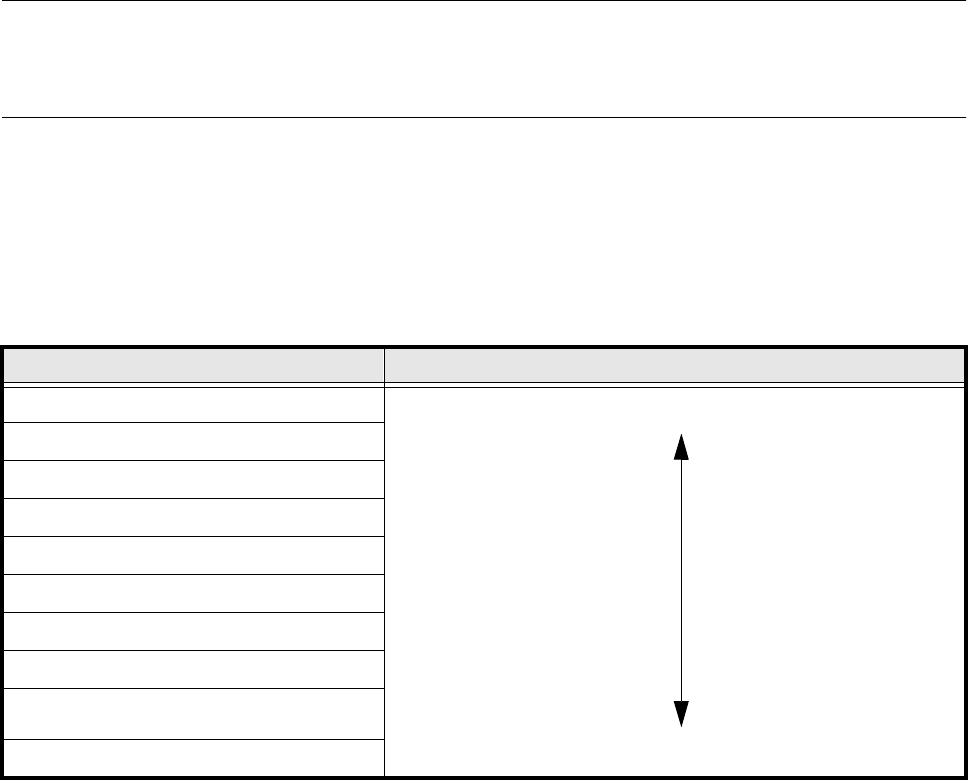
Color scale Brightness
white light
yellow
orange
red
brown
green
light blue
blue
violet
black dark
Tab. 5.7.6 Conversion table for the pseudo color representation at the 6x revolver head
5 Vision Functions SIPLACE 80S-20/F4/F4-6/F5 User’s Manual
5.7 Guidelines for Describing Package Forms Edition 03/98 from Software Version SR.404.xx
5 - 146 Line engineer
5.7.9.3 Settings for Illuminating Components
The standard range of components includes chips (0402 to 2220), tantalum capacitors, Melf components,
PLCCs, QFPs, SOs, SOJs, TSOPs, ICs, power components, flip-chips, µBGAs, BGAs and bare dies.
For the components which are listed below the GF interpreter in the station computer uses the default illumi-
nation parameters listed in Fig. 5.7.12:
– Chips (0402 to 2220)
– Tantalum capacitors (component bodies, non-reflective)
– Melf
– PLCC, QFP, SO, SOJ, TSOP, ICs, power ICs
– Flip-chips, µBGAs, BGAs
– Bare dies
As a rule you will not need to change the illumination parameters for the components.