00197498-03_UM_SiplaceCA-Serie_EN.pdf - 第487页
User manual SIPLACE CA-Series 8 Station Extensions From software version SC.708.0 Edition 12/20 14 EN -DRAFT 8.7 PCB Barcode Scanner 487 so that the barcode labels on the top side and underside of the PCBs can be scanned…
8 Station Extensions User manual SIPLACE CA-Series
8.7 PCB Barcode Scanner From software version SC.708.0 Edition 12/2014 EN -DRAFT
486
8.7 PCB Barcode Scanner
8.7.1 Overview
[ 8
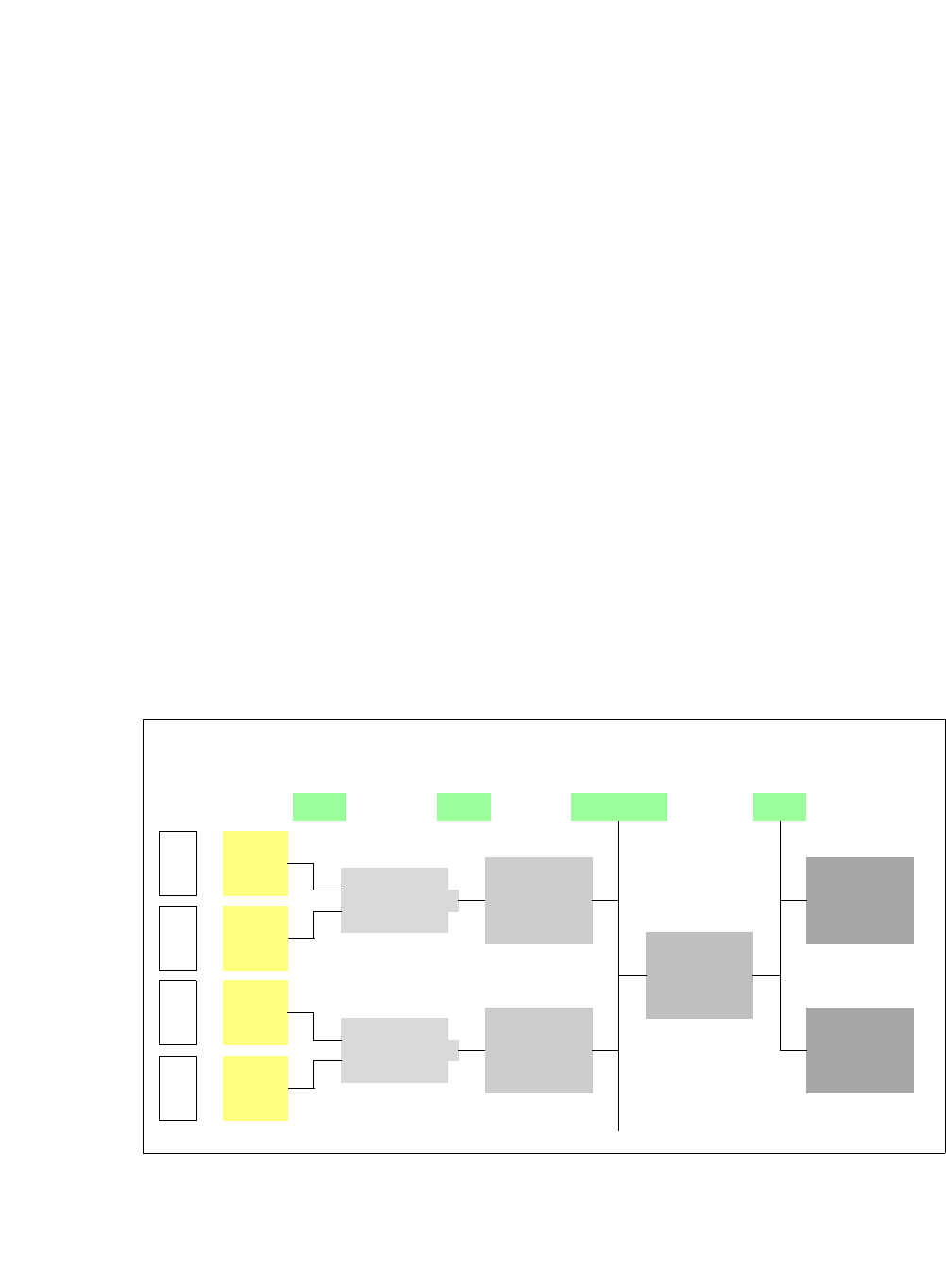
The PCB barcode reader is used to automatically record and decode barcodes on PCBs. The
PCB barcode scanner sends the read data via its serial interface to the transport controller and
then for further processing to the machine controller via the CAN bus.
Fig. 8.7 - 1 PCB barcode circuit diagram
8
The PCB barcode scanners are installed on the input side of the placement machine on the PCB
conveyor. Up to four devices can be retrofitted to each machine. The barcode scanners are fitted
[00176117-XX] Cognex DataMan 100X
[00176112-XX] Assembly kit for DataMan X/HS/HF series topside
(for reading barcodes on the topside of the PCB, one per
barcode scanner)
[00176113-XX] Assembly kit for DataMan X/HS/HF series underside
(for reading barcodes on the underside of the PCB, one
per barcode scanner)
[00176118-XX] Cognex I/A module (one per SIPLACE line)
[00176119-XX] Cognex USB cable DM 100 USB (one per SIPLACE line)
[00176120-XX] Wiring for interface I/A box (one per SIPLACE line)
Device number
1
Bar-
code
scanner
Distribution
board
Transport
controller,
right
Barcode
scanner
under-
2
3
Bar-
code
scanner
Distribution
board
Transport
controller,
left
Barcode
scanner
under-
4
Machine
controller
Station
computer
SIPLACE Pro
computer
LANCAN busV-24V-24

User manual SIPLACE CA-Series 8 Station Extensions
From software version SC.708.0 Edition 12/2014 EN -DRAFT 8.7 PCB Barcode Scanner
487
so that the barcode labels on the topside and underside of the PCBs can be scanned on both
tracks of the dual conveyor.
The barcode scanners are available for 2D codes.
The PCB barcode scanners are fixed to the top and bottom profiled rail using retainers. These can
be positioned as required on the profiled rails, and aligned with respect to the barcode labels. De-
pending on the position of the barcodes, the barcode scanner can be easily assembled so that it
can read the barcodes lengthwise or at right angles to the direction of board transport.
8.7.2 Functions
The PCB barcode scanner supports the flexible manufacture of SMD products, and increases
placement reliability . It recognizes all the code types conventionally used in industrial applica-
tions.
The PCB barcode scanner reads the barcode label on the topside or underside of each incoming
PCB as they are transported onto the input conveyor. Based on the barcode information, the
SIPLACE Pro computer automatically selects the correct placement program from the previously
created barcode allocation list and sends this to the station. If a barcode filter is defined, only in-
formation that is identified as relevant within the barcode is compared. This procedure is carried
out without affecting the time, during placement of the PCB which is already in the machine. If sev-
eral PCBs with the same barcode enter in succession, the program is only transferred the first
time. The following requirements apply to all products to be produced using the PCB barcode:
– The component setup must be identical on all the machines on the line
– All PCBs must be of the same width

8 Station Extensions User manual SIPLACE CA-Series
8.7 PCB Barcode Scanner From software version SC.708.0 Edition 12/2014 EN -DRAFT
488
8.7.3 Technical Data - Cognex DataMan
8
Code types
2D code types Data Matrix ECC 0, 50, 80, 100, 140, and
200 QR-Code and microQR-Code
Image
Sensor 1/3 inch with global shutter
(resolution 752 x 480)
Picture acquisition Max. 60 fps
Lens type Adjustable lens, 3 positions with (6.2 mm;
F:5 aperture), 40 mm, 65 mm and 105 mm working
distance
I/O
Trigger Fast trigger input, manual trigger key
Trigger voltage -25 V DC to +25 V DC
Trigger current 7.7 mA at 24 VDC
3.7 mA at 12 VDC
1.33 mA at 5 VDC
Trigger delay 1 ms (max)
Discrete inputs 2 opto-isolated (one is used as trigger)
Discrete outputs 2 opto-isolated
Status LEDs 2 Status LEDs (reading LED and communication
LED)
Beeper Programmable functions
Illumination
Illumination Types Integrated bright field lighting with exposure control
Communication
Serial RS-232E
USB Supports USB 2.0 (12 Mbit/s)
Power supply
Power consumption 500 mA at 5 VDC max. (Peak), average.: 300 mA at
5 VDC
Operating voltage 5 V DC to 24 V DC
Mechanics
Material Aluminum housing
Assembly 2 mounting holes M3 x 3.5