Understanding_ the_Cleaning_Process_for_Automatic_Stencil_Printers - 第15页
Addition al P arameter s • R ecent s tudies have shown a Va c / Va c /Dr y or a Solvent/ Va c / Va c /Dr y wipe is most ef fective • The f ir st vacuum wipe pulls solder fr om the aper ture and form s st alactite's …
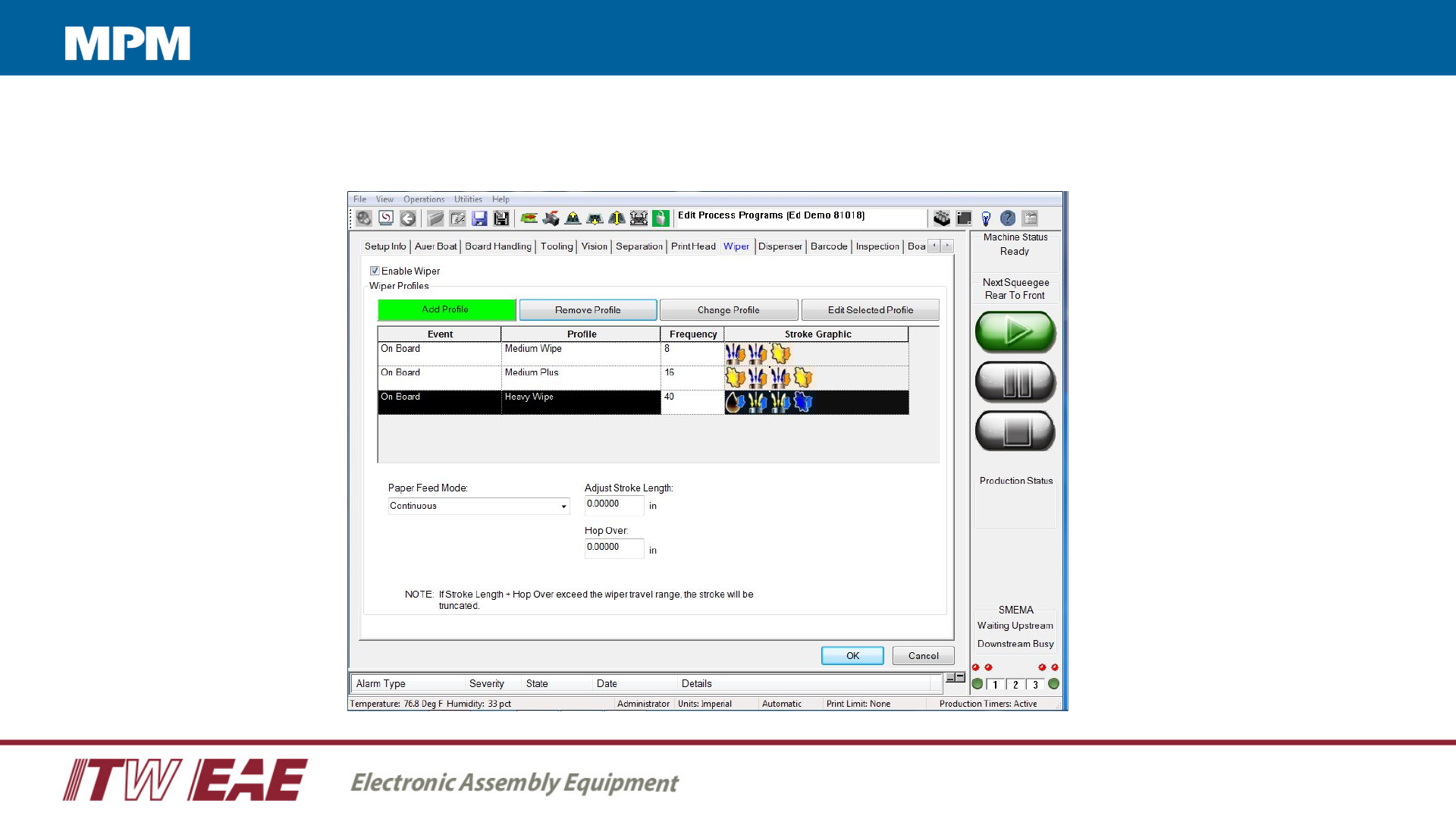
Wiper profile – wipe 3
14
Understanding the Cleaning Process for Automatic Stencil Printers

Additional Parameters
• Recent studies have shown a Vac/Vac/Dry or a Solvent/Vac/Vac/Dry wipe is most effective
• The first vacuum wipe pulls solder from the aperture and forms stalactite's hanging from the aperture
Continuous vs index mode
• Continuous mode – advances the paper during wiper motion ensuring fresh paper is applied during the wipe – maximum paper
consumption
• Index mode – paper is advanced a pre-determined amount then is stationary during wiper motion – minimum paper consumption
• Continuous has shown to clean better and prevent “snowplowing” of the paste particularly when vacuuming
Hop over
• Used to address snowplow effect – retracts plenum and moves over end point
Overtravel
• Wipe stroke pre-determined by squeegee stroke – allows extension of stroke – eliminates contamination of gold fingers if present
Wiper speed
• Recommended speed of wipe or solvent stroke – 2 Inch/second
• Recommended speed of Vacuum stroke – 1 inch/second
15
Understanding the Cleaning Process for Automatic Stencil Printers

Event driven wiping
• Key events that can trigger defects:
• Pause in printing
• First 1-4 prints
• Additional paste added
• Custom Wipes to target specific events in the printer
• Pause in printing
• Based on thixotropic index of paste
• Recommend a medium plus wipe
• Kneed function
• Squeeze out is the issue
• Heavy on the dry wipe / no solvent
• During paste dispense
• Utilize printer window to do additional wipe
16
Understanding the Cleaning Process for Automatic Stencil Printers