Understanding_ the_Cleaning_Process_for_Automatic_Stencil_Printers - 第19页
Hydr o - Ent angl ing • Some pap er is made using a pr o cess called “hydr o -ent angling” • This process involves laying raw fiber s of poly est er and cellulose onto a conveyor belt and int er twining the f iber s with…
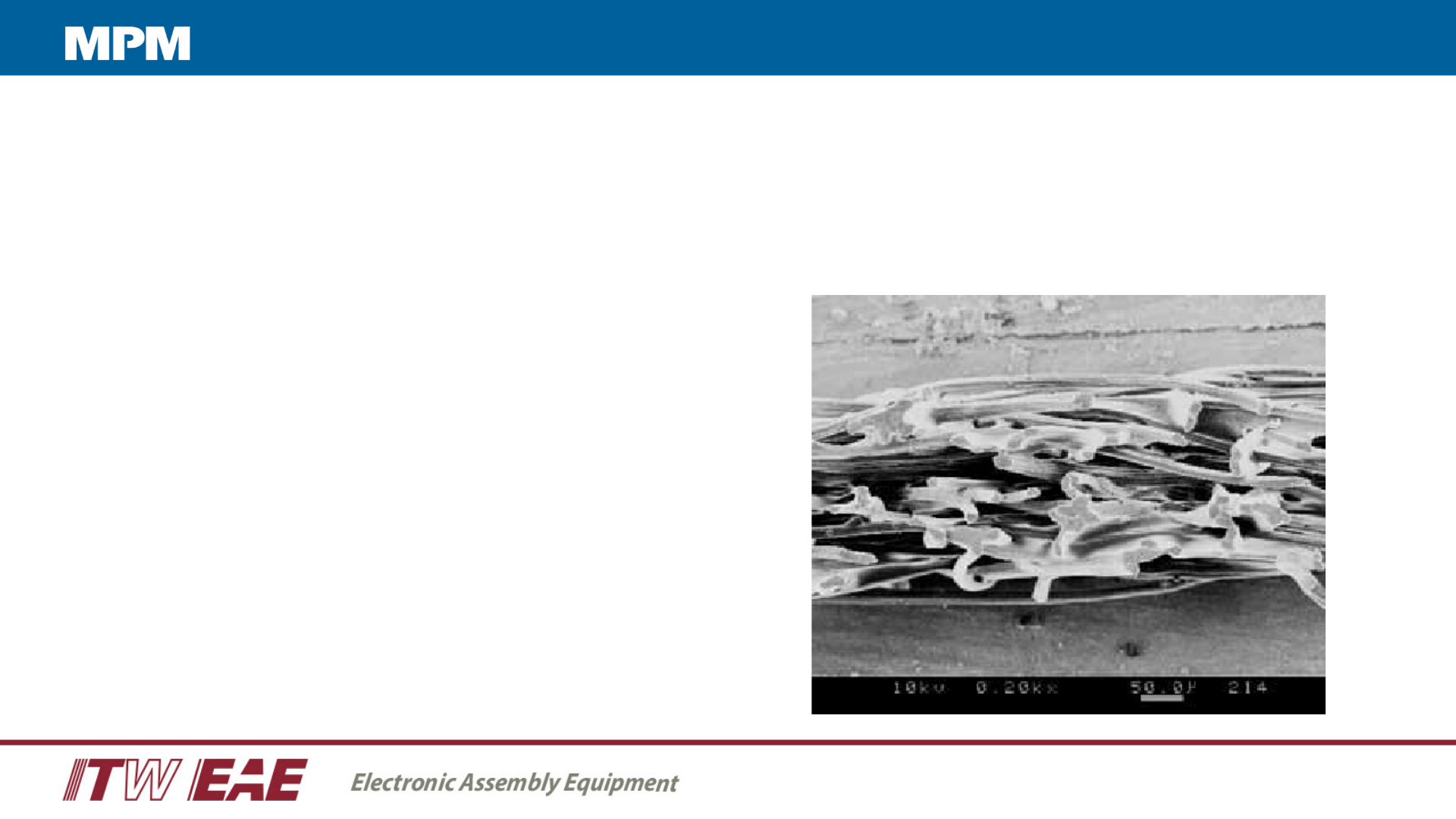
Glue Binders
• Synthetic fibers found in paper usually are polyester or rayon.
• In general, about 30% of the paper’s weight is found in binders.
• These papers have a harder surface, lower tensile strength, absorb less contamination and are less expensive than glue-less versions.
• Cross-section microphotograph of polyester paper made
with binders, enlarged 200 times.
• The fibers are coated with glue, making surfaces hard and unable to
absorb contamination.
• Most empty space in the wipe has been filled with binders, reducing the
ability to pick up solder paste.
Understanding the Cleaning Process for Automatic Stencil Printers
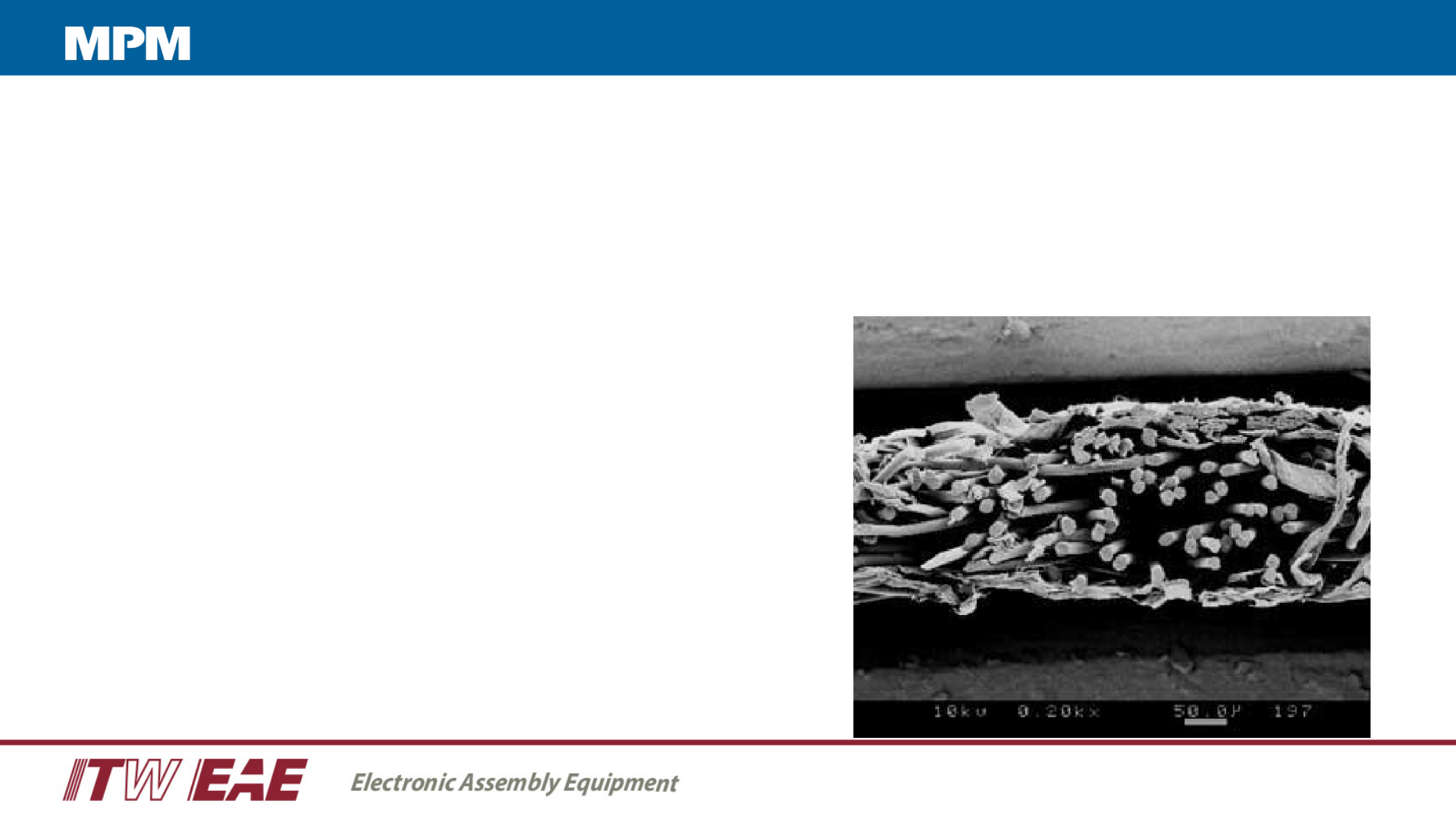
Hydro-Entangling
• Some paper is made using a process called “hydro-entangling”
• This process involves laying raw fibers of polyester and cellulose onto a conveyor belt and intertwining the fibers with high-pressure jets
of water
• Heat and pressure then are used to dry the slurry into the proper configuration
• Lacking glue, hydro-entangled papers have a softer feel
• They are more absorbent, thicker and stronger than ordinary paper
• The flat, rough cellulose fibers (thin, top layer) are highly absorbent, but
weak and prone to lifting
• The rounder polyester fibers (middle and bottom) provide structural
strength and open space to pick up solder paste
Understanding the Cleaning Process for Automatic Stencil Printers
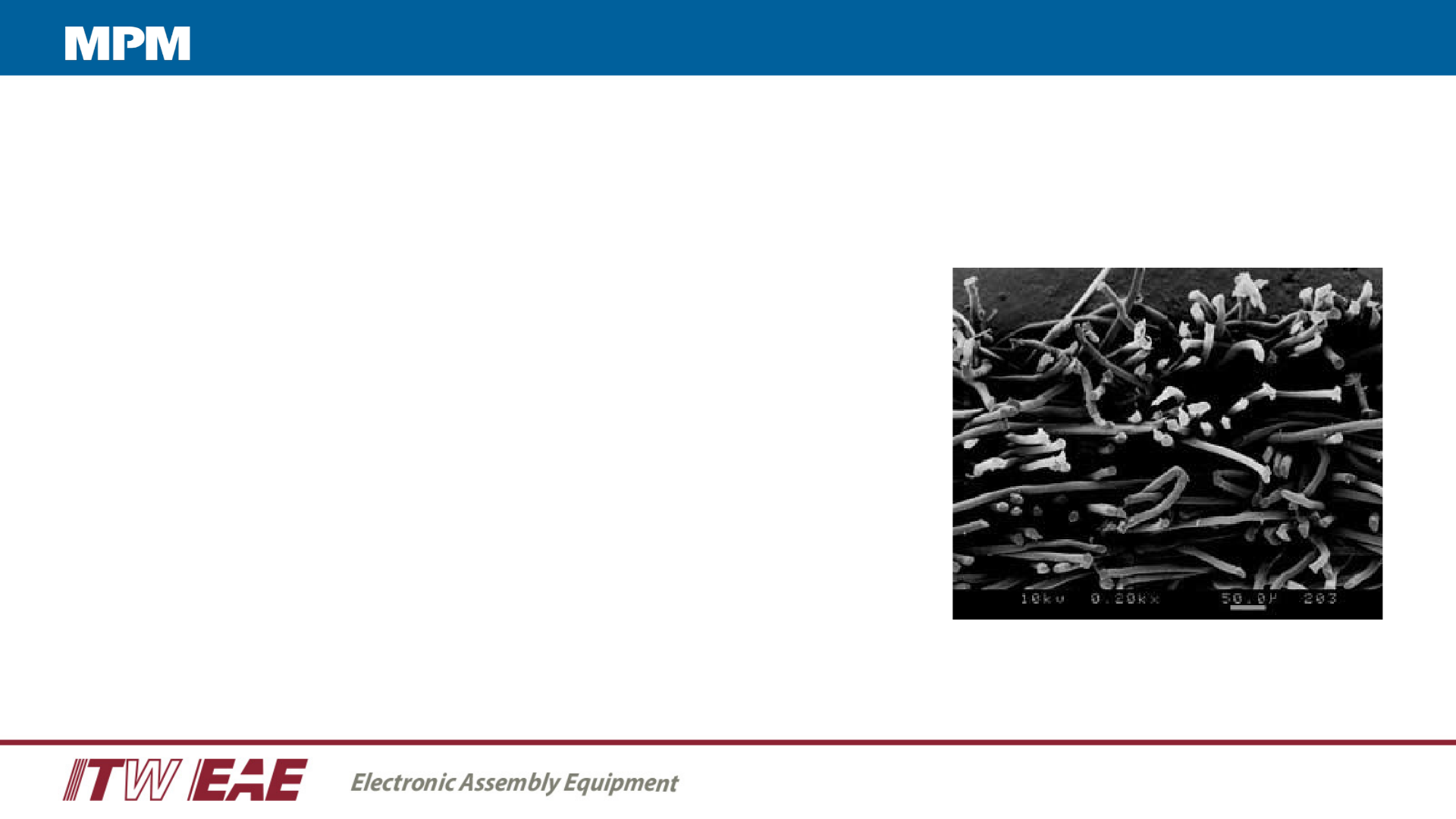
Hydro-Entangled, Single-Fiber Polymer
• A new material consisting of a hydro-entangled, single-fiber polymer based on
regenerated cellulose was developed.
• This fabric, which is completely synthetic, contains no natural fibers or binders.
• Under a microscope, the long, thin, hard fibers are identical and homogenous,
giving the fabric an open structure.
• The material is a pale, off-white color and highly absorbent.
• The fabric scores well on the solder paste pick-up tests for non-liquid
contamination.
• The fibers are smooth, consistent and hard.
• The paper includes extensive voids and cavities to pick up solder paste.
• There is no cellulose to rip or shred, or binders to dissolve and contaminate the
stencil.
Understanding the Cleaning Process for Automatic Stencil Printers