00193411-02.pdf - 第91页
User Manual SIPLAC E HS-60 3 Technical data Software version SR.503.xx 07/2003 US Edition 3.8 Overview of the modules - placement heads 91 3.8.2 Descri ption – The 12-s egment C ollect&Pl ace head w orks usi ng the &…
3 Technical data User Manual SIPLACE HS-60
3.8 Overview of the modules - placement heads Software version SR.503.xx 07/2003 US Edition
90
3.8 Overview of the modules - placement heads
3.8.1 12-segment Collect&Place head with standard component vision camera
3.8.1.1 Structure
3
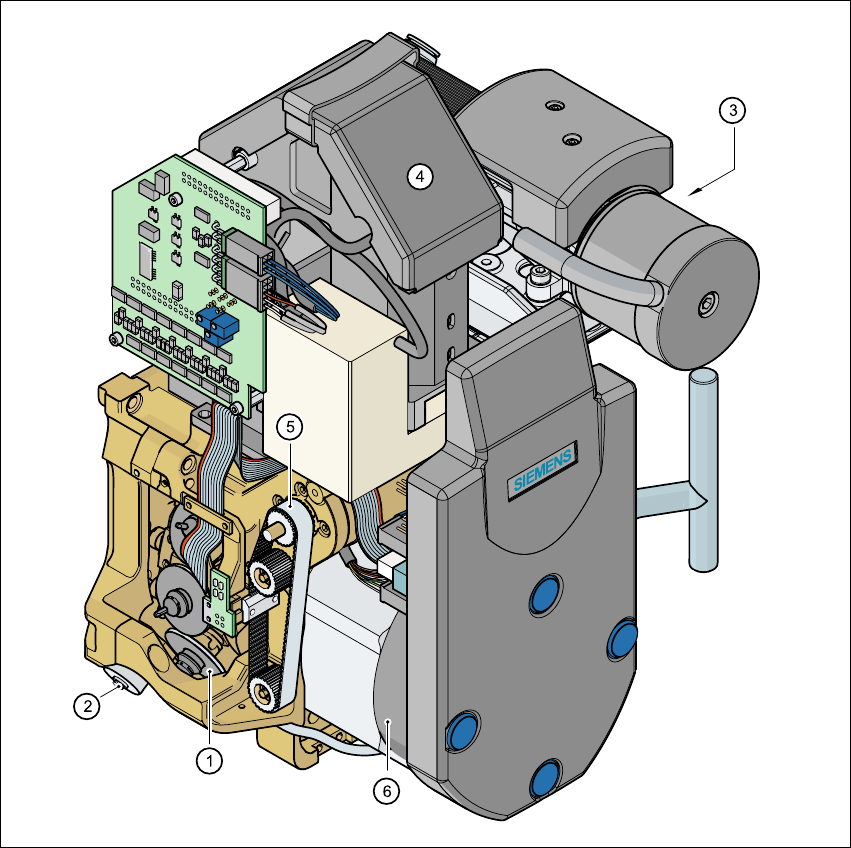
Fig. 3.8 - 1 Structure of the 12-segment Collect&Place head
(1) Star with 12 sleeves (4) CO vision module
(2) Motor for "Reject" valve adjustment drive (5) Z axis drive
(3) Turning station (6) Star motor

User Manual SIPLACE HS-60 3 Technical data
Software version SR.503.xx 07/2003 US Edition 3.8 Overview of the modules - placement heads
91
3.8.2 Description
– The 12-segment Collect&Place head works using the "collect & place" principle, i.e. the com-
ponents are held by the nozzles with the aid of a vacuum and, after one complete pick-up cycle,
are placed gently and accurately on the PCB with the aid of forced air. The vacuum in the noz-
zles is also checked several times to determine whether the components were picked up and
set down correctly.
– The "adaptive" sensor stop mode of the z axis compensates for any irregularity of the PCB sur-
face when the components are set down.
– All the components are inserted with the same cycle time. Before the component is inserted, it
is measured by the optoelectronic vision module.
– The component vision module creates an image of the current component.
– The precise position of the component is also determined.
– The package form of the current component is compared against the programmed package
form in order to identify it. Any components that cannot be identified are rejected.
– The turning station turns the component to the required placement position.
– Defective components are rejected and are picked up again during a repair run.
3.8.3 Technical data
3
Component range 0201 to PLCC44 including BGA, µBGA, flip-
chip, TSOP, QFP PLCC, SO to SO32, DRAM
Component specification
Max. height
Min. lead pitch
Min. bump pitch
Min. ball/bump diameter
Min. dimensions
Max. dimensions
Max. weight
6 mm
0.5 mm
0.35 mm
0.2 mm
0.6 mm x 0.3 mm
18.7 mm x 18.7 mm
2 g
Programmable set-down force 2.4 to 5.0 N
Nozzle types 9 xx
Max. placement rate 15,000 comp/h
Angular accuracy ± 0.7° / 4 sigma
Placement accuracy with standard vision module ± 80 µm / 4 sigma
3 Technical data User Manual SIPLACE HS-60
3.9 Overview of the modules - vision modules Software version SR.503.xx 07/2003 US Edition
92
3.9 Overview of the modules - vision modules
Each placement system has
– four component vision modules on the placement heads and
– four PCB vision modules on the underside of the X axis gantries.
The vision analysis units are located in the control unit for the placement system. The component
vision module is used to determine:
– the precise position of the components at the nozzle and
– the geometry of the package form.
The PCB vision module uses fiducials on the PCBs to determine:
– the position of the PCB,
– its rotation angle
– and the PCB skew.
The PCB vision module also uses fiducials on the feeder modules to determine the exact pick-up
position of components. This is particularly important for small components.