M20_Ope_E.pdf - 第57页
Chapter 2 Creating and Editing a Program 2-13 guide window outlining the component on the Vision Window. This component outline is based on th e component image data. The guide window is available only when the component…
Chapter 2 Creating and Editing a Program
2-12
7. <Rel/Abs>, <Reset>buttons:
First click [Rel] button, then [Reset] button to initialize current
coordinates as a customized origin to teach. Click [Abs] button to be
back to the original coordinates referenced from a programmed origin.
8. Navigator Matrix - Outer Arrow Buttons:
Press down an arrow button so the head moves to the direction of the
arrow with the axis speed specified at “Axis Speed”.
9. Navigator Matrix - Inner Arrow Buttons:
Press down an arrow button so the head moves to the direction of the
arrow. Head travels for the distance specified at “Head Travel” by a
click action, and the head movement gradually becomes fast as you
keep pressing an arrow button. To stop the head, release the mouse.
10. Teach Coordinates: After aligning the teach camera to the desired coordinates, click this
button to acquire the coordinates (one-point teach). Use this button also
to acquire coordinates after scanning a programmed step with
Trace>Move and adjusting the coordinates. When [Fiducial Correction]
option is selected, coordinates with fiducial offset appended are
acquired.
P
One
11. Fiducial Lamp: This lamp turns yellow when the fiducial compensation is applied to
the current coordinates.
12. <CLR> button: Clears all the acquired fiducial offsets.
13. [Trace] tab: Allows the specified head to trace the specified
(placement/pickup/fiducial) program steps. When the main/aux.
teach camera is specified, each traced step can be monitored on the
Vision Window. Click an X/Y/Z/T field of the program step and
right-click the mouse. The Teach dialog box opens. Then specify what
to trace.
14. Fiducial Correction: With this option selected, before the mounter traces the specified step,
the mounter scans fiducials to compensate the specified step.
Current Step
: Traces only the current step. Click <Move> button to execute. Z
coordinate can be traced also. Select an axis/axes under [Axis].
Step Type
: Traces specified type of steps from the current step to the end of the
program. Click <Step Type> button and select a type of steps from the
below choices:
<PCB>: Traces placement steps.
<Feeder>: Traces pickup points (only for ST-F/R).
<Fiducial>: Traces fiducial steps.
After specifying what to trace, click <Move> button at each step. Z
coordinate can be traced also. Select an axis/axes under [Axis].
15. <Move> button: Allows the specified head/camera to move to the coordinates on
specified program step under the conditions of [Trace] tab.
16. Fiducial Center Teach When < Fiducial Center Teach > in the teach window is clicked while
you are at a fiducial mark line, the center coordinates of the mark will
be detected. A message 「Do you want to teach coordinates?」 appears
when the center coordinates are detected, so click <Yes> if you want to
reflect the detected center coordinates to the program. If not, click
<No>.
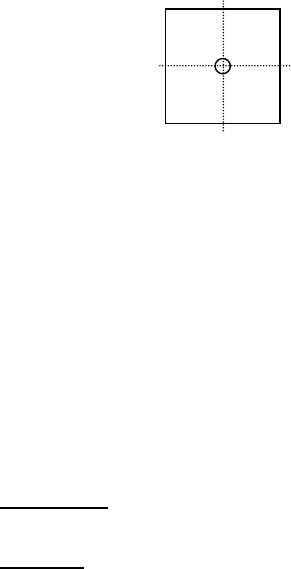
17. Guide Window: When “XY axes” is specified for [Axis] and “Main Teach Camera” is
specified for [Head], pressing <Guide Window> button provides the
Chapter 2 Creating and Editing a Program
2-13
guide window outlining the component on the Vision Window. This
component outline is based on the component image data. The guide
window is available only when the component is processed with
single-view process and at the same time the component’s placement
angle T is either 0, 90, or 180.
18. Cross Hairs: Displays cross hairs on the Vision Window. The intersection of the
cross hairs corresponds to the teach point.
19. Search Line: See Chapter 9 Running a Job > Line Search (ASJ).
20. Fiducial Offset: Shows the current fiducial offset in performing <Fiducial Move>
operation (Y, Y, and T).
21. Fid No.: Shows [Fiducial] setting of the current program step (Placement &
Mark Data).
22. Set Illumi.: Enter the illumination setting for teach entry in the Illumination dialog
box (Teach>SetIllumi.). You can register up to seven illumination
settings for different purposes (teaching the PCB, feeder stations, tray,
and others). Enter the illumination setting as follows: Click a button
under [Group] and type in any name for identifying the setting. Drag
the sliders appropriately and click <Execute> button to activate the
setting. Check the Vision Window to see if the video image is clearly
monitored. If not, adjust the sliders and re-click <Execute> button.
When the adjustment is complete, under [Group], click the next button
and enter the setting the same way.
23. Wide View: Allows the teach camera to capture nine views and display the
assembled view as one picture in the monitor so that you can observe
wider area of a PCB.
Nine views are assembled from the standard center view and the eight
surrounding views which can be seen by the inner arrow buttons.
The wide view will be cancelled when you operate an axis, press the
<Move> button, or press the zoom buttons.
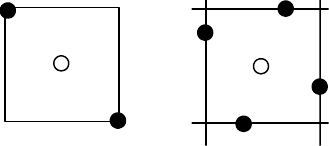
24. [2/4 Points] tab: When “XY axes” is specified for [Axis], specify the number of teach
points.
P
Four points (lines)
Two
P
The system calculates the center coordinates P. See the following Action
section for the procedure to use this feature.
Note: When performing the two-/four-point teach, do not use <Teach
Coordinates> button.
Action: The following shows how to teach X, Y coordinates on a PCB using the main teach camera
(two-point teach):
① In the program editor, click the X/Y field of the program step for which to perform teach.
② Click Tool>Teach or right-click in a cell you want to teach. The Teach dialog box appears.
③ Under [Axis], select “XY axes”.
④ Under [Head], select “Main Teach Camera”. The camera lighting is turned on.
⑤ Click [2/4 Points] tab. Select <Two>.
⑥ Click in the navigator matrix (Outer Arrow buttons) to assign head moving direction. The
head starts to move. While keep pressing the left button of the mouse, the head keeps
moving.
⑦ While watching both the actual head movement and the Vision Window, adjust head moving
direction by moving the mouse. Continue until the head comes close to the specified step.
Chapter 2 Creating and Editing a Program
2-14
⑧ Click in the navigator matrix again for final alignment. If necessary, adjust the axis speed for
[Axis Speed]. For fine teaching, use Inner Allow buttons. When the first teach point is aligned
to the camera center, click to stop the head. Click <1st Point> button.
⑨ To obtain the second teach point, repeat steps 7 through 8.
⑩ When the second teach point is aligned to the camera center, click to stop the head. Click
<2nd Point> button. The coordinates of the component center are calculated and entered to
the X, Y fields of the current program step.
⑪ If there are other steps to teach, repeat steps 1 through 11 to teach them. Then click <Close>
button to end.
Switching between Different Windows for Teach Entry
You may open several editor/library windows at a time and switch the line to teach between
windows. In this case, you don’t have to close and reopen the Teach dialog box each time you
switch to a different window. Instead, when you switch to a different window, select the
coordinate setting field and right-click the mouse. This allows the system to identify in which
window you are going to perform teach.
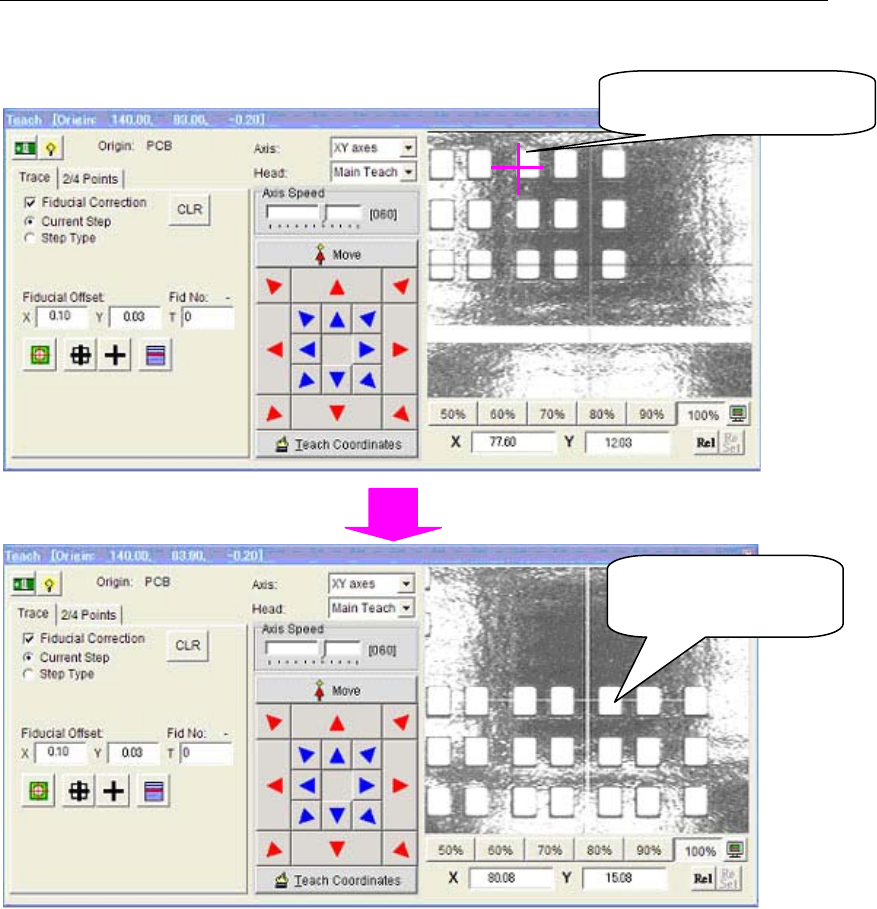
2-2-3 Click Move (Teach screen)
On the Teach Screen, when you double-click on any position of the Integrated Vision Window,
Teaching Camera immediately moves there so that the Camera center meets to the selected
position.
Teaching Camera has
just moved here.
When you double-click
here …