MDO3000 Programmer Manual.pdf - 第442页
Commands Listed in A lphabetical Order T able 2-56: Math expression elements (cont.) Element Description Example TOV ershoot<wfm> T otal overshoot is the summation of positive overshoot and the absolute value of ne…
Commands Listed in Alphabetical Order
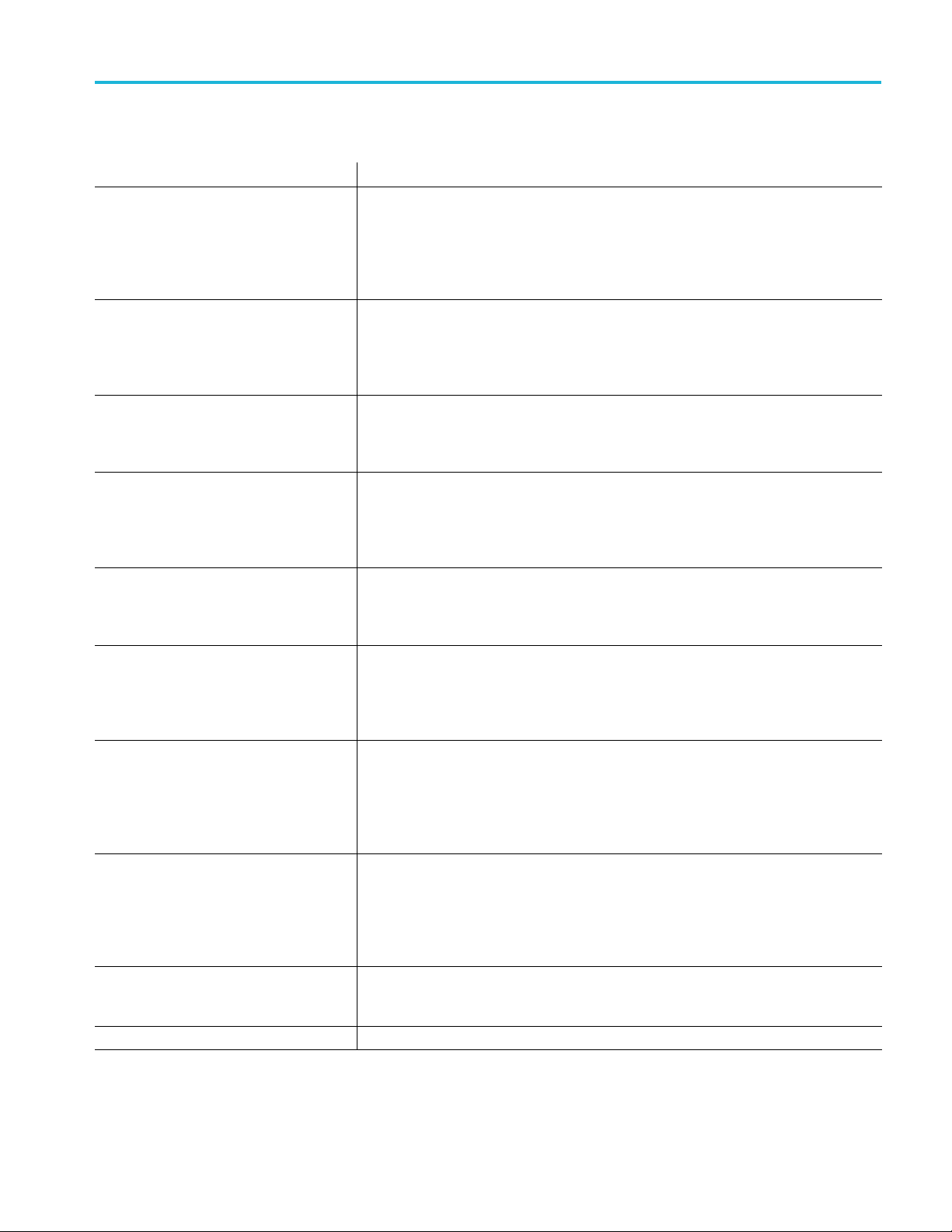
Table 2-56: Math expression elements (cont.)
Element Description Example
NWIdth(<wfm>)
Negative pulse width: the distance
(time) between the mid reference
(default 50%) amplitude points of a
negative pulse. The measurement is
made on the first pulse in the waveform
or gated region.
:MATH:DEFINE "NWIDT H(CH1)"
PDUTy(<wfm>) Positive duty cycle: the ratio of the
positive pulse width to the signal period
expressed as a percentage. duty cycle
is measured on the first cycle in the
waveform or gated region.
:MATH:DEF
INE "PDUTY(CH1)"
PERIod(<wfm>) The time required to complete the first
cycle in a waveform o r gated region.
Period is the reciprocal of frequency
and is measured in seconds.
:MATH:DEFINE "PERIO D(CH1)"
PHAse(<wfm>) The amount of time that one waveform
leads or lags another waveform,
expressed in degrees where 360°
makes up one waveform cycle. See
also Delay.
:MATH:DEFINE
"PHASE(CH1,CH2)"
PK2pk(<wfm>) Peak to peak: the absolute difference
between the maximum and minimum
amplitude in the entire waveform or
gated region.
:MATH:DEFINE "PK2PK (CH1)"
POVershoot(<wfm>)
Positive overshoot: this is measured
over the entire w aveform or gated
region and is expressed as: Positive
Overshoot = (Maximum – High) /
Amplitude x 100%.
:MATH:DEFINE
"POVERSHOOT(CH1)"
PWIdth(<wfm>) Positive pulse width: the distance (time)
between the mid reference (default
50%) amplitude points of a positive
pulse. The measurement is made on
the first pulse in the waveform or gated
region.
:MATH:DEFINE "PWIDT H(CH1)"
RISe(<wfm>) The time required for the leading edge
of the first pulse in the waveform
or gated region to rise from the low
reference value (default = 10%) to the
high reference value (default = 90%) of
the final value.
:MATH:DEFINE "RISE( CH1)"
RMS(<wfm>) The true Root Mean Square voltage
over the entire w aveform or gated
region.
:MATH:DEFINE "RMS(C H1)"
SINe<wfm> Sine measurement of <wfm>
:MATH:DEFINE "SINE( CH1)"
MDO4000/B/C, MSO/DPO4000B and MDO3000 Series Oscilloscopes Programmer Manual 2-411
Commands Listed in Alphabetical Order
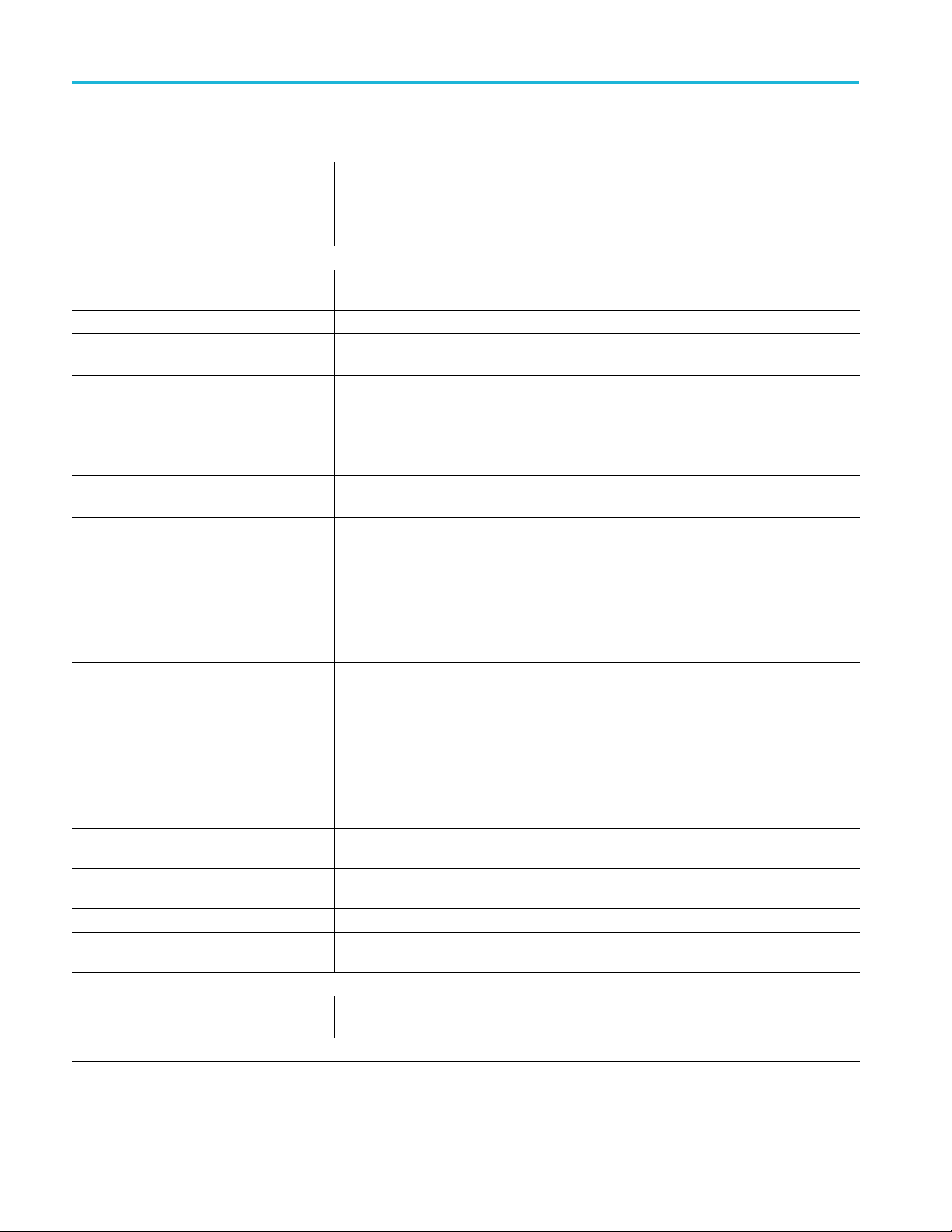
Table 2-56: Math expression elements (cont.)
Element Description Example
TOVershoot<wfm> Total overshoot is the summation of
positive overshoot and the absolute
value of negative overshoot.
Trigonometric operations on expressions
ABS(<expr>) Absolute value of (<expr>)
:MATH:DEFINE
"ABS(CH2-CH1)"
COSINE(<expr>) Absolute value of (<expr>)
:MATH:DE
FINE "COSine(CH1)"
DEG(<expr>) Converts (<expr>) from radians to
degrees
:MATH:DE
FINE "CH1 *
DEG(VAR1)"
DIFF(<expr>) Differential of (<expr>)
Executes a differentiation operation on
the expression that follows. Measures
the slope of a curve at each point on the
input waveform.
:MATH:DEFINE "DIFF(CH1)"
:MATH:DEFINE
"DIFF(
ABS(CH1))"
EXP(<expr>) Base of natural logarithm constant "e"
raised to the power of (<expr>)
:MATH:DEFINE
"EXP(DIFF(CH1))"
FFT(<expr>) Executes a Fast Fourier Transform
operation on the expression that follows.
Calculates the set of frequencies that
are present in the input waveform.
NOT
E. If the FFT operator
is used, it needs to be the
outer-most operator.
:MATH
:DEFINE "FFT(CH1)"
:MATH:DEFINE
"FFT(CH1+CH2)"
:MAT
H:DEFINE "FFT(CH1+
INT(CH2))”
Not acceptable:: :MATH:DEF INE
“CH
1 + FFT(CH2)”
INTG(<expr>) Integral of (<expr>)
Executes an integration operation on
th
e expression that follows. Measures
the accumulated area under the input
waveform.
:MATH:DEFINE "INTG(CH1)"
:MATH:DEFINE
"INTG(CH1+CH2)"
LOG(<expr>) Base 10 logarithm of (<expr>)
:MATH:DEFINE "LOG(CH1)"
RAD(<expr>) Converts (<expr>) from degrees to
radians
:MATH:DEFINE
"RAD(PHASE(CH1,CH2))"
SQRT(<expr>) Square root of (<expr>)
:MATH:DEFINE
"SQRT(SINE(CH1))"
SINe<expr>) Sine of (<expr>)
:MATH:DEFINE
“SINE(CH1+CH2)”
TAN(<expr>) Tangent of (<expr>)
:MATH:DEFINE "TAN(CH1)"
TRE(<expr>) Trend plot of <expr>
:MATH:DEFINE
"TRE(PERIOD(CH1))"
User-defined variables
VAR1, VAR2
Specify the variables using the
MATHVAR:VAR<x> command.
:MATH:DEFINE "VAR1+CH1"
Relational and logical operators
2-412 MDO4000/B/C, MSO/DPO4000B and MDO3000 Series Oscilloscopes Programmer Manual
Commands Listed in Alphabetical Order
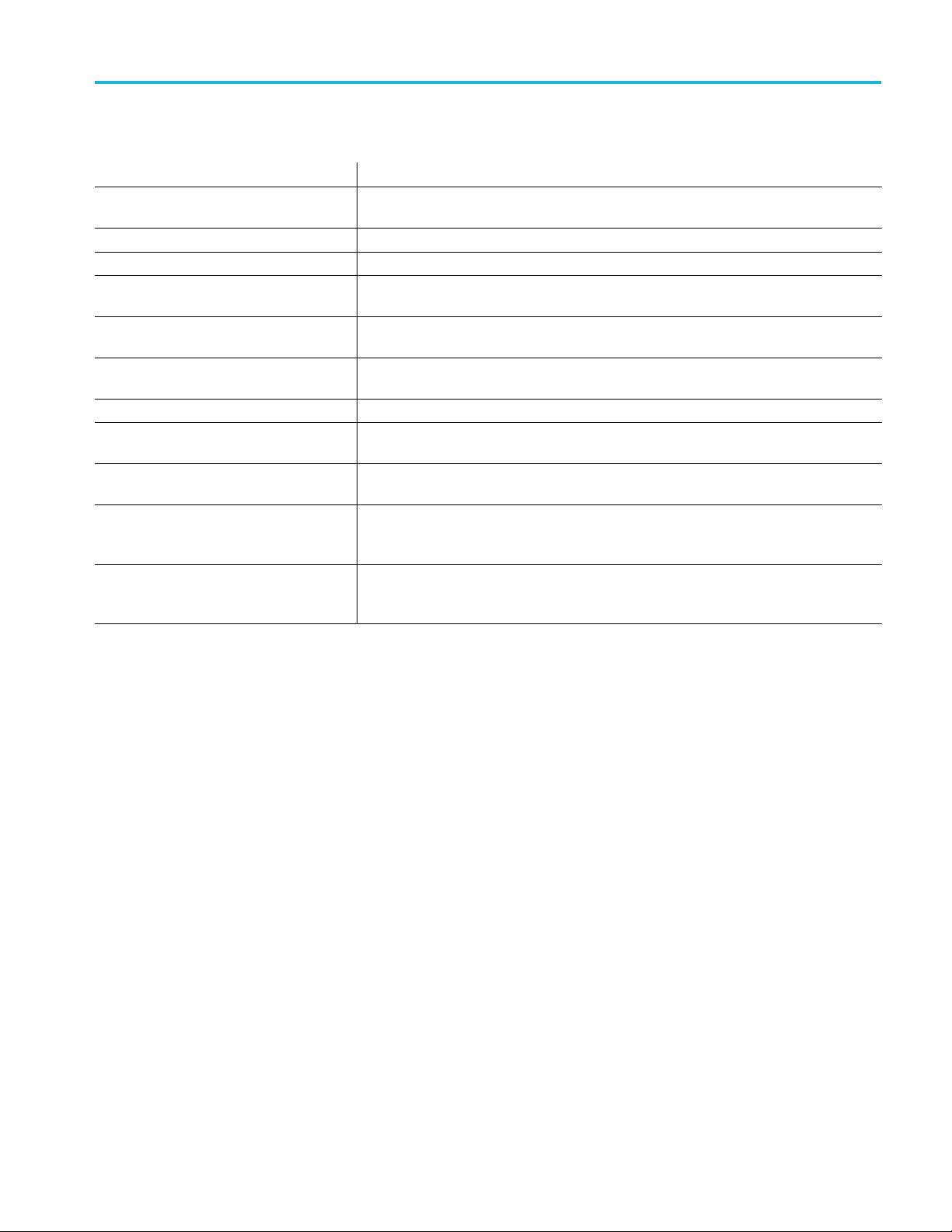
Table 2-56: Math expression elements (cont.)
Element Description Example
+,-,*,/
Addition, subtraction, multiplication, and
division operators
<
“Less than” operator
:MATH:DEFINE "(CH1 < CH2)"
>
“Greater than” operator
:MATH:DEFINE "(CH1 > CH2)"
<=
“Less than or equal to” operator
:MATH:DEFINE "(CH1 <=
CH2)"
>=
“Greater than or equal to” operator
:MATH:DEFINE "(CH1 >=
CH2)"
!= “Not equal to” operator
:MATH:DEFINE "(CH1 !=
CH2)"
==
“Equal to” operator
:MATH:DEFINE "CH1== CH2"
|| Logical “OR” operator
:MATH:DEFINE "(CH1 != CH2)
|| (CH3 == CH4)"
&& Logical “AND” of expressions
:MATH:
DEFINE "(CH1 != C H2)
&& (CH3 == CH4)"
!( “NOT” function, which changes
non-zero values to zero, and zero
value
sto1.
:MATH:DEFINE "(CH2- CH1) *
!(CH1 >= CH2)"
+-, 0-9, ., 0-9, E , +-, 0-9
Spec
ifies a numeric value in (optional)
scientific notation (for example:
2.34E-9).
:MATH:DEFINE "1E2"
Examples
Some examples of DUAL math expressions are as follows:
MATH1:DEFINE "CH1+CH2" adds the Ch 1 waveform and Ch 2 waveform,
storing the results in Math 1.
MATH:DEFINE? might return :MATH1:DEFINE "CH2*REF2" as the expression
t
hat defines Math 1.
Some examples of
FFT math expressions are as follows:
MATH:DEFINE "FFT(CH1)"
MATH:DEFINE "FFT(REF1)"
MATH:DEFINE "FFT(RF_NOR MAL)"
Some examples of ADV anced math expressions are as follows:
MATH:DEFINE "AMPLITUDE( CH1) * ( VAR1 + CH 2) - CH3"
MATH:DEFINE "SINE(CH1)* (VAR1+CH2)*CH3 - CAREA(C H4)"
MDO4000/B/C, MSO/DPO4000B and MDO3000 Series Oscilloscopes Programmer Manual 2-413