IPC-4556 印制板化学镍钯浸金(ENEPIG)规范ENG.pdf - 第31页
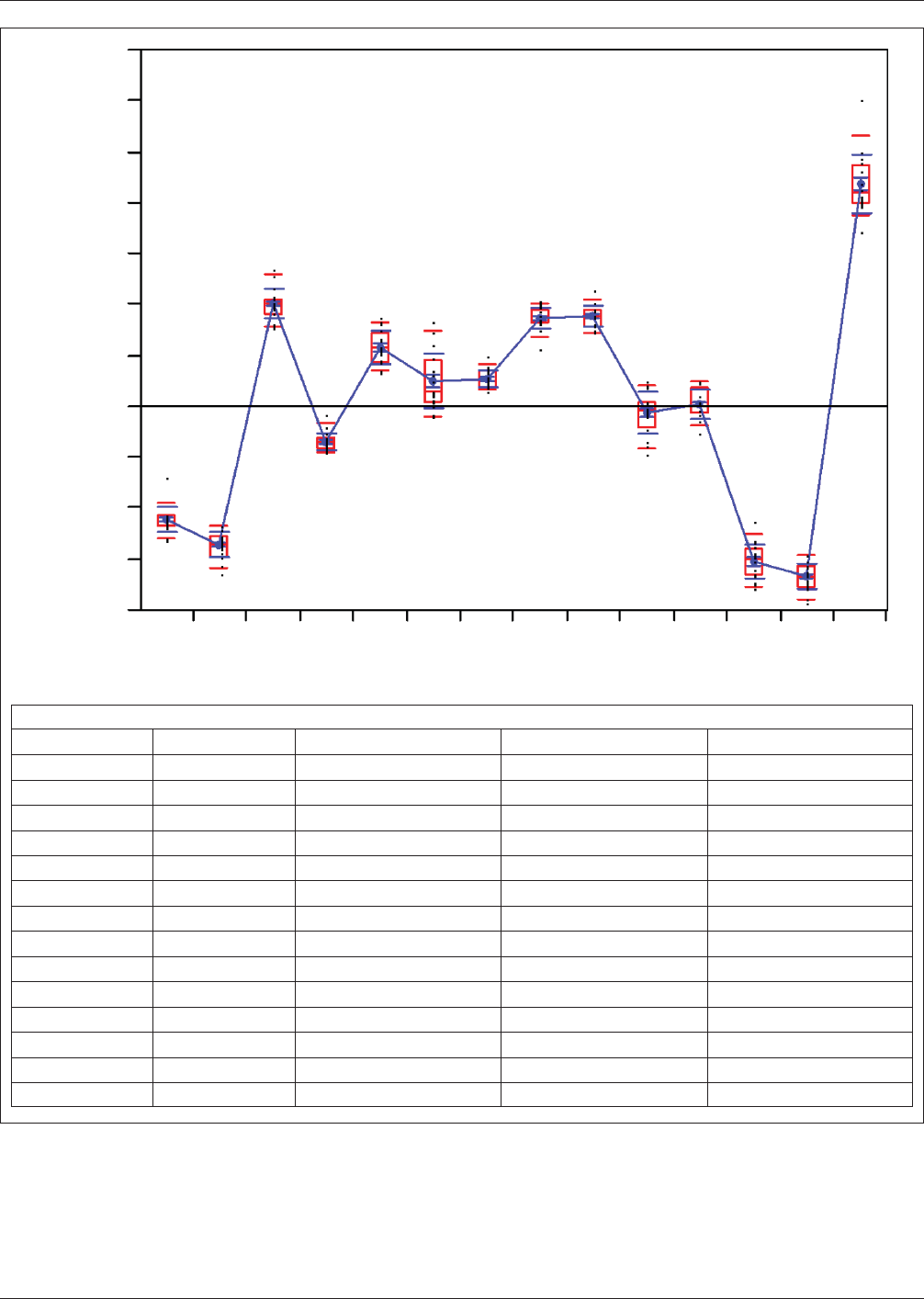
Results: From the round robin testing, the following can be stated: 1) For Immersion Gold readings, the majority of the readings were on the high side with only one location reading the thickness correctly . T wo locatio…
260
250
240
230
220
210
200
200
190
170
160
Figure A3-4 Electroless Nickel Thickness Readings in Microinches for the Sixteen Test Pads Where C Is the Reference XRF
150
microinches Ni
abcdef gh
test unit
ijklmn
Means and Standard Deviations
Level Number Mean Std Dev Std Err Mean
a 16 167.777 2.71270 0.6782
b 16 162.850 2.70604 0.6765
c 16 210.259 3.19157 0.7979
d 16 183.289 1.91206 0.4780
e 16 201.806 3.30343 0.8259
f 16 195.055 5.64116 1.4103
g 16 195.575 1.84914 0.4623
h 16 207.644 2.34321 0.5858
i 16 207.906 2.16193 0.5405
j 16 188.837 4.13874 1.0347
k 16 190.637 3.09901 0.7748
l 16 159.694 3.62721 0.9068
m 16 156.775 2.75064 0.6877
n 16 234.000 6.01565 1.5039
IPC-4556 January 2013
20

Results:
From the round robin testing, the following can be stated:
1) For Immersion Gold readings, the majority of the readings were on the high side with only one location reading the
thickness correctly. Two locations produced readings; one high and one low; that were so far out of the range as to be
meaningless.
2) For Electroless Palladium, four of the machines recorded readings that were correct with the majority of the other read-
ings being low. Again, one of the machines that produced meaningless gold readings also produced similar readings for
Palladium and maintained consistency regarding the error reading being low.
3) For the Electroless Nickel, there were eight participants that were within an acceptable range of the actual readings.
The remainder of the locations read the sample LOW.
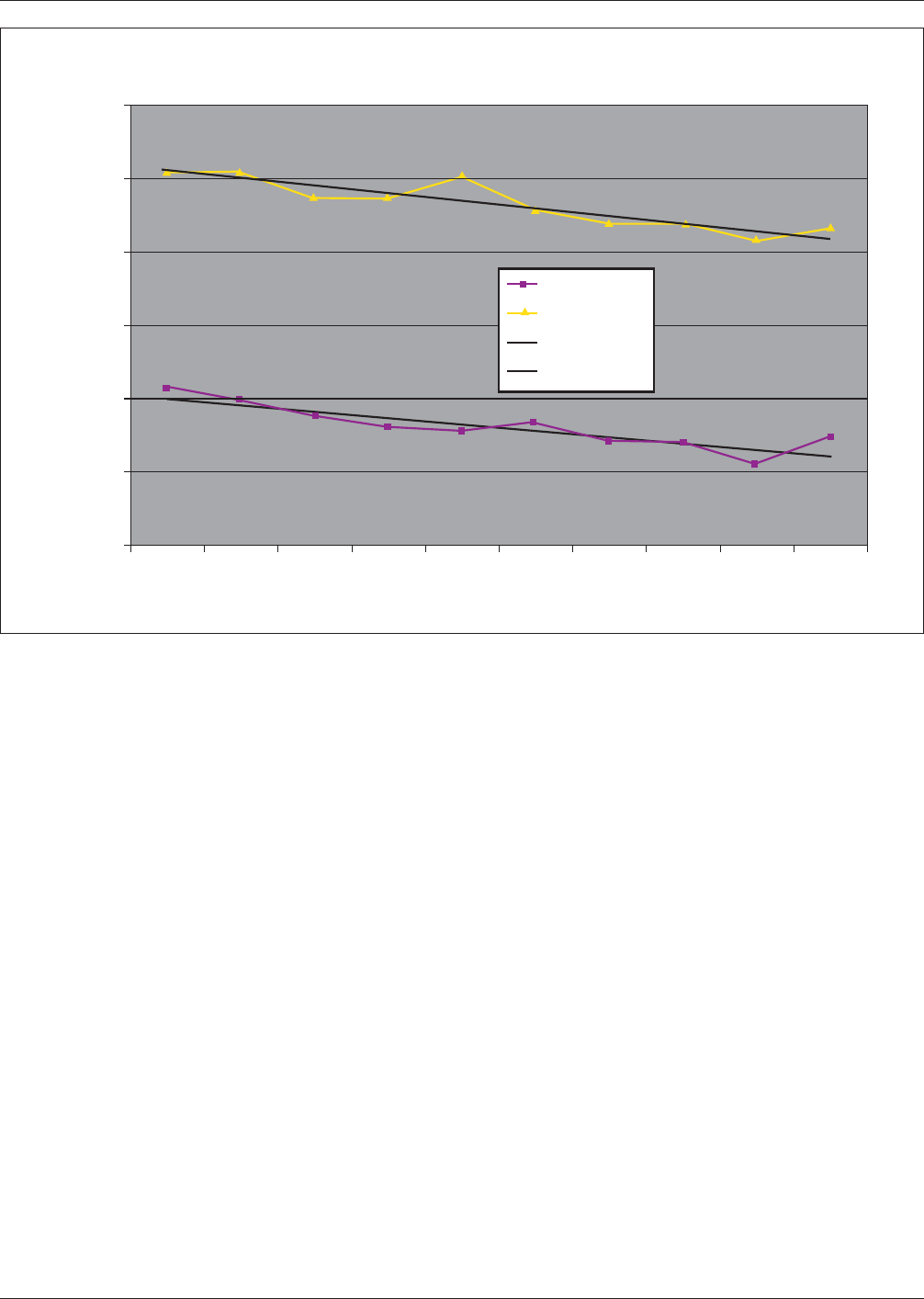
In addition to this testing, another series of XRF measurements were taken to evaluate the impact of feature size on the
deposit thickness plated at the same time on the same board. The board was again measured on the same reference XRF
unit. A summary of the results is shown in Figure A3-5.
Table A3-1 Comparison of the Accuracy of Measurements Relative to the C Readings for All Three Deposits
XRF machine Nickel Thickness Palladium Thickness Gold Thickness
A Low Low High
B Low High High
C Correct Correct Correct
D Low Correct High
E Correct Low High*
F Correct Low High
G Correct Low* Low*
H Correct Correct High
I Correct Correct High
J Low Low Low
K Correct Low Low
L Low Correct High
M Low High Correct
N Correct High* High
*Note: Readings were so far out as to be meaningless
January 2013 IPC-4556
21
SUMMARY
• Based on the round robin testing, there should be concern regarding accuracy of ENEPIG measurements. If the protocols
outlined in the XRF APPENDIX 4 are not followed, then some equipment will at best be a random number generator.
• It is imperative that Gauge Repeatability & Reproducibility protocols be run on all XRF equipment used in the supply
chain and comparison testing using traceable certified national standards to ensure accuracy of measurement and hence
performance of the ENEPIG deposit.
• Some equipment currently in use for other surface finishes will not meet the requirements for accuracy and repeatability
and will need to be replaced - this is the cost of supplying and using ENEPIG as a multifunctional surface finish.
• Feature size affects the deposit thickness for ENEPIG similar to other finishes. The use of the specified 60 mil X 60 mil
pads cannot be emphasized enough to minimize variation between measurements that will make meeting the proposed
specification limits nearly impossible.
• The XRF supplier base was absent from the study and their lack of participation in correctly setting up, evaluating equip-
ment and suggesting alternatives for older equipment is troubling, to say the least. Without their support, ENEPIG perfor-
mance will be open to criticism that is not warranted, due to incorrect thicknesses being supplied.
IPC-4556-A3-5
Figure A3-5 The Impact of Feature Size on Electroless Palladium and Immersion Gold Deposition Thickness Plated
on the Same PB
microinches
Au & Pd thickness as a function of pad area
380 380 452 452 612 612 1792 1792 50343 50343
area in mils square
y=-0.2012x+10.443
R
2
= 0.8099
y=-0.1752x+4.2373
R
2
= 0.7856
Au
Pd
Linear (Au)
Linear (Pd)
IPC-4556 January 2013
22