Nexus_en - 第5页
5 Operating principles Heating and cooling A major benet of the Nexus contact soldering system is that the heating or cooling gradient can be pr edened based on pre - determined parameters. The gradients can be preset …
4
› Heating and cooling on a usable area of
500 mm x 500 mm
› Clearance of 100 mm above heating plate
› Max. operating temperature 400 °C
*
,
optional up to 450 °C
› Heating rate max. 150 K/min
*
,
cooling rate max. 180 K/min
*
› Vacuum up to 1mbar (optional 0,1 mbar)
› Fluxless activation with different gases possible
› One gas line for N
2
with pressure regulator and gas
monitoring; proportional valve
› Each gas supply line is equipped with a switch to save
purging gas while the machine is not in use
› The vacuum system can be equipped with adjustable
ow ratios. The volumetric ow rate for process gases is
adjustable and controlled by a proportional valve.
› Fluxless operation with 100 % nitrogen, forming gas,
formic acid or up to 100 % hydrogen
› Formic acid bubbler with fill level compensation to keep
the saturation always at the same level (saturation level
of N
2
depends on the fill level of the bubbler)
› Optional Residue Management System for use with
solder paste
Benets for exible processes
Nexus at a glance
*
related to contact plate
5
Operating principles
Heating and cooling
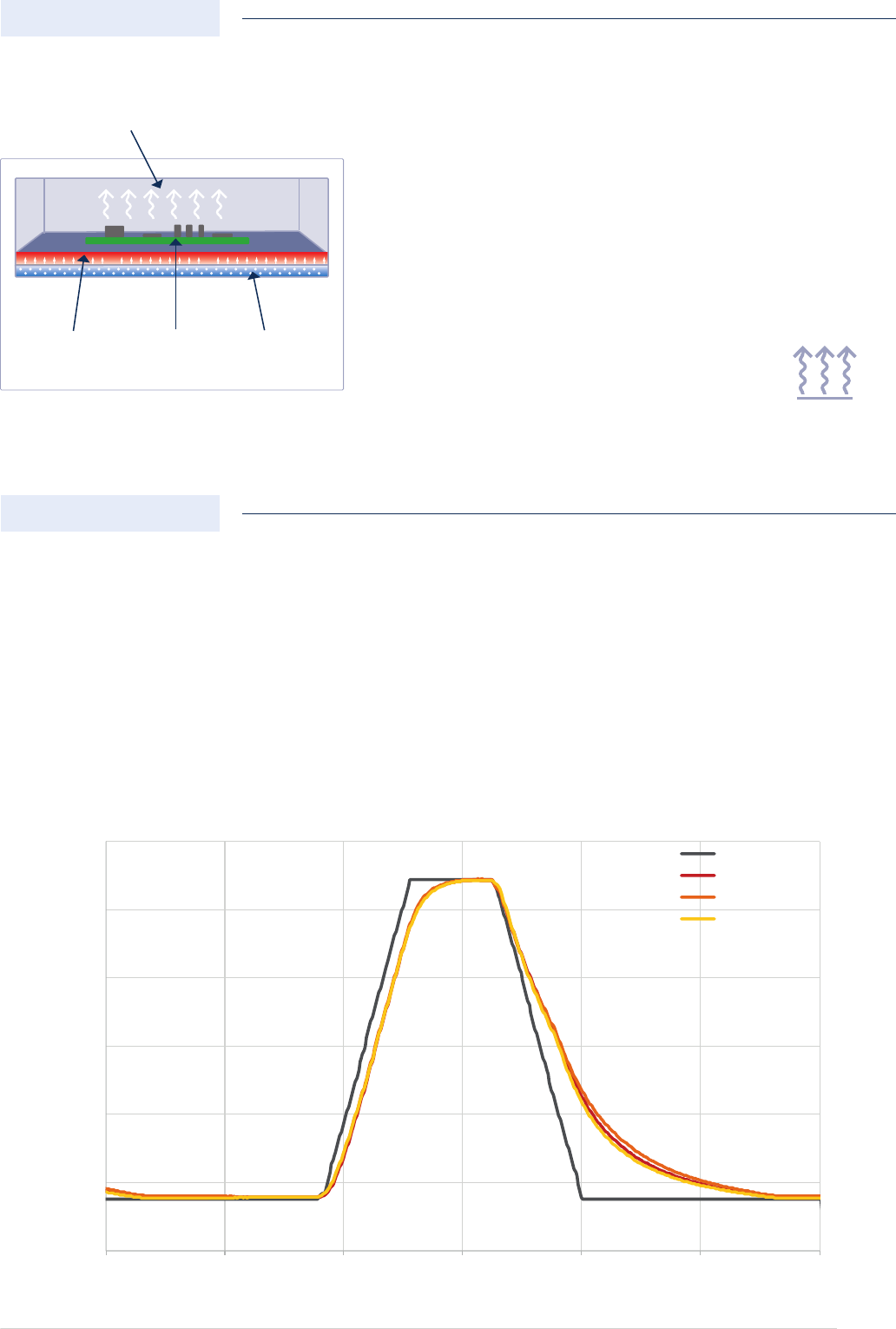
A major benet of the Nexus contact soldering system is that the heating or cooling gradient can be predened based on pre-
determined parameters. The gradients can be preset as required. Within these specication limits, the temperature is adjusted
automatically by the Nexus so that these limit values are not exceeded. This eliminates the possibility of a malfunction of the
assembly to be soldered.
The heating output of the Nexus has been designed for a uniform heating process when fully loaded with high-mass assemblies
meaning that short cycle times are also no problem. Sensor components determine and verify the temperatures recorded on the
goods carrier support.
0
50
100
150
200
250
300
2200 2300
2400 2500
2600 2700 2800
Temperature in °C
Time in s
Set value
Controller 1
Controller 2
Controller 3
The vacuum soldering process generates temperatures of
up to 400 °C and is an ideal solution for void-free and flux-free
applications. The Nexus not only provides your manufactu-
ring operation with advantages for the soldering process, but
rather for bonding processes as well.
heating plate
PCB cooling
hermetically sealed process chamber
direct
heat transfer
6
Example vacuum heating process
Reliable vacuum processes
for improved quality
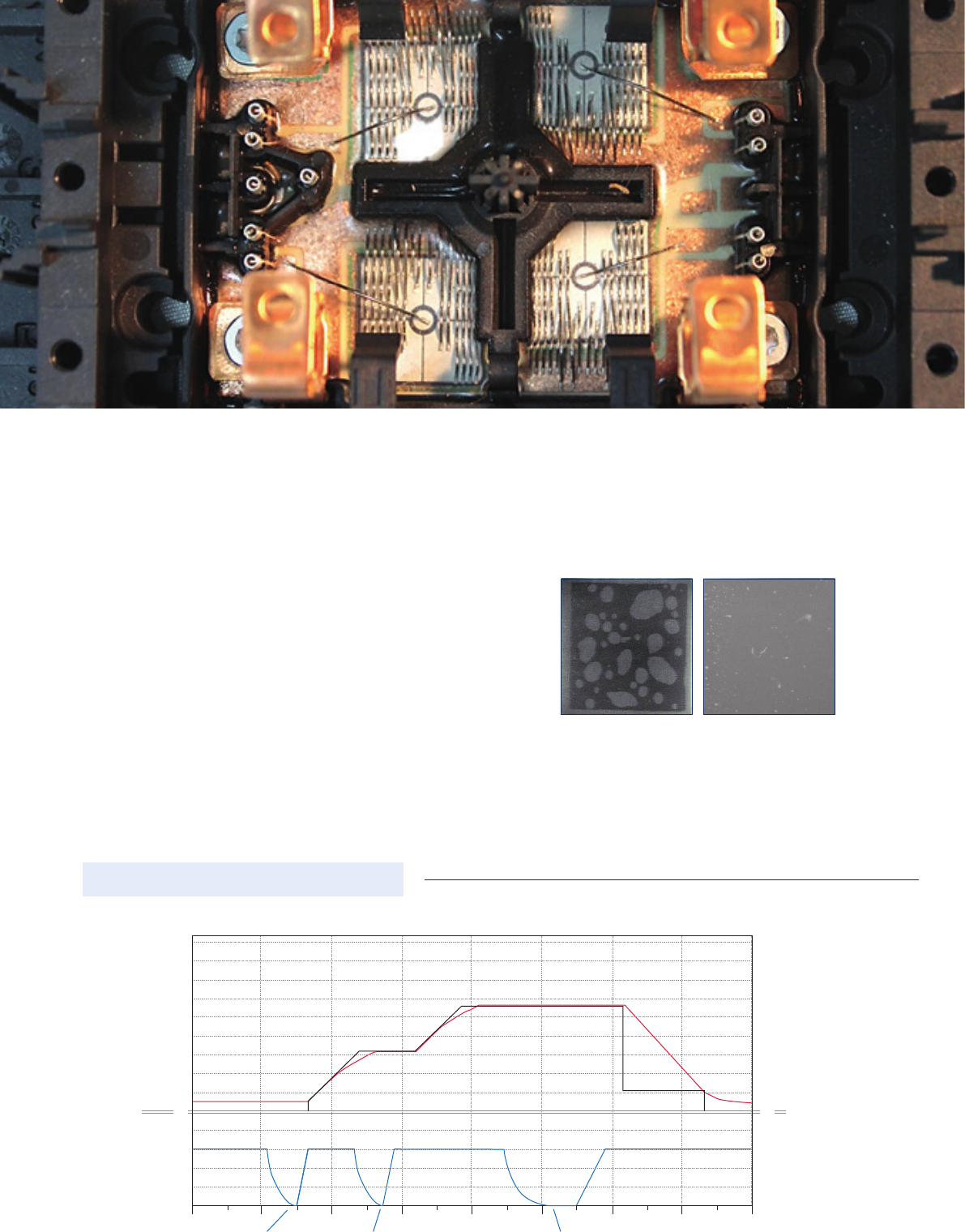
Increased productivity and quality advantages can be
achieved in the production of power electronics by means of
vacuum soldering. Vacuum provides for oxide-free processes
as well as improved wetting, and thus for more effectively
lled solder joints. Beyond this, vacuum drastically reduces
the number of voids in solder joints and supports processes
such as plasma cleaning and gas exchange for advanced
packaging. Temperatures of up to 400 °C are possible with
Nexus.
without vacuum with vacuum
400 400
300 300
200 200
100 100
0 2 4
vacuum for
void-free solder joints
evacuate and ood
with nitrogen
vacuum and input, e.g.,
formic acid for oxide-free
wetting surfaces
heat up to
solder temperature
activation
phase
pre-heating
phase
cooling phase
solder temperature
6 8min
1000
°C °C
1000
hPa hPa
0 0
0 0