Nexus_en - 第7页
7 Controlled chamber pressur e A controlled gas sampling system via a vacuum pump from the pr ocess chamber prevents overpressur e during controlled flushing via a separate proportional valve for f eeding into the proces…
6
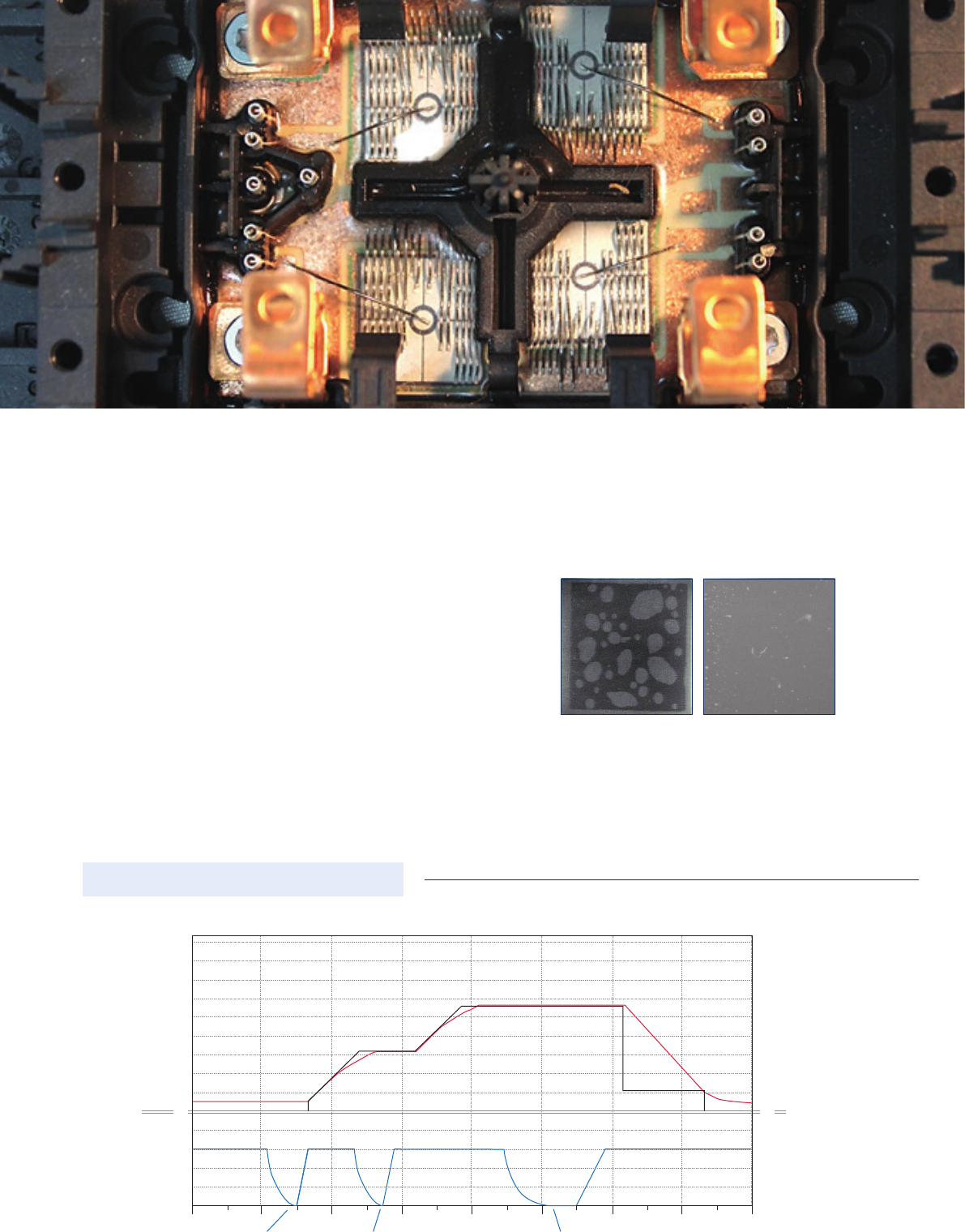
Example vacuum heating process
Reliable vacuum processes
for improved quality
Increased productivity and quality advantages can be
achieved in the production of power electronics by means of
vacuum soldering. Vacuum provides for oxide-free processes
as well as improved wetting, and thus for more effectively
lled solder joints. Beyond this, vacuum drastically reduces
the number of voids in solder joints and supports processes
such as plasma cleaning and gas exchange for advanced
packaging. Temperatures of up to 400 °C are possible with
Nexus.
without vacuum with vacuum
400 400
300 300
200 200
100 100
0 2 4
vacuum for
void-free solder joints
evacuate and ood
with nitrogen
vacuum and input, e.g.,
formic acid for oxide-free
wetting surfaces
heat up to
solder temperature
activation
phase
pre-heating
phase
cooling phase
solder temperature
6 8min
1000
°C °C
1000
hPa hPa
0 0
0 0
7
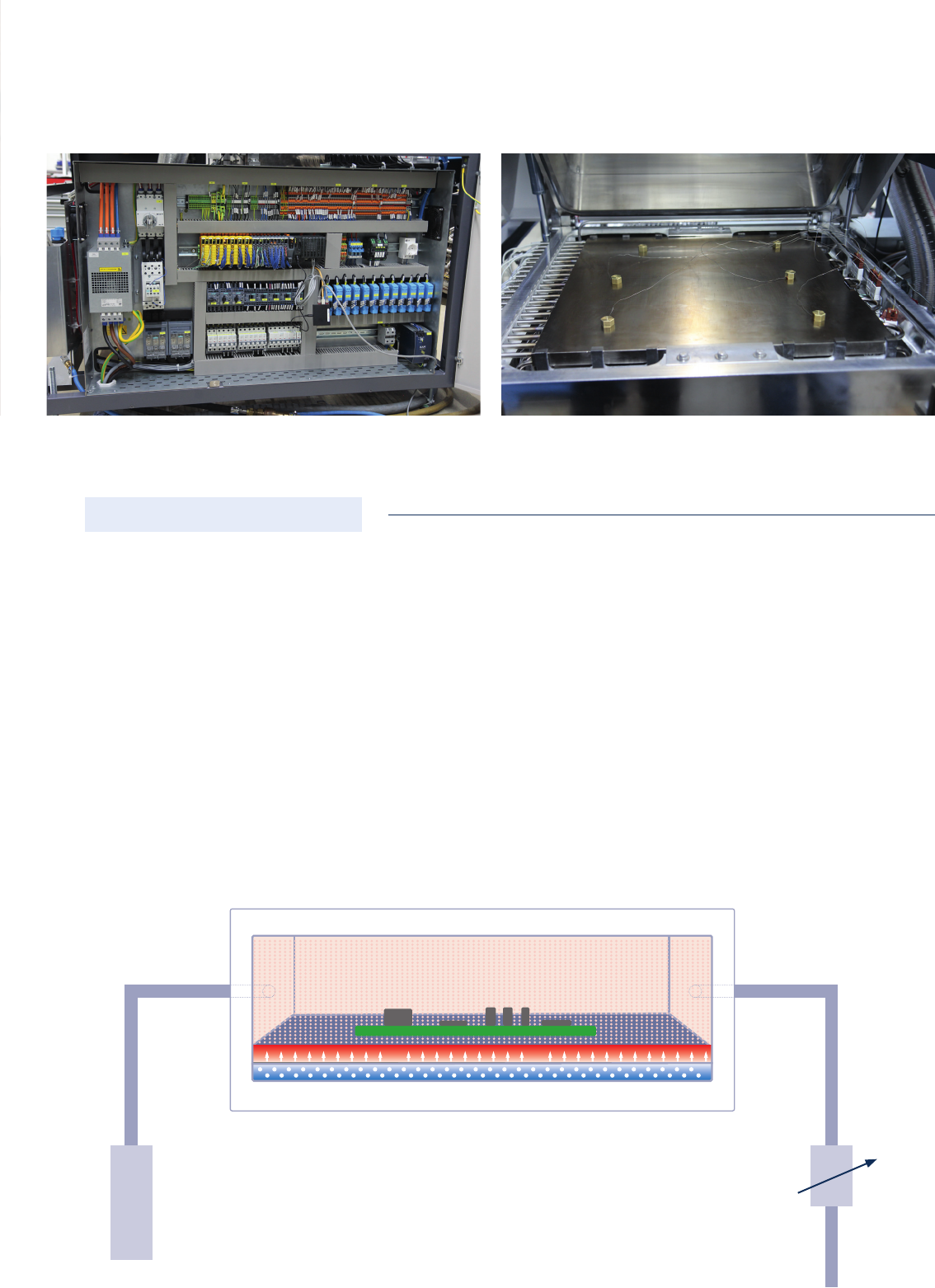
Controlled chamber pressure
A controlled gas sampling system via a vacuum pump from the process chamber prevents overpressure
during controlled flushing via a separate proportional valve for feeding into the process chamber; thus each
pressure level can be set as required using a software programme.
controlled chamber pressure with nitrogen atmosphere
pressure level constant
proportional valve
for nitrogen input
vacuum pump to control the chamber
pressure of 0 - 1000 mbar
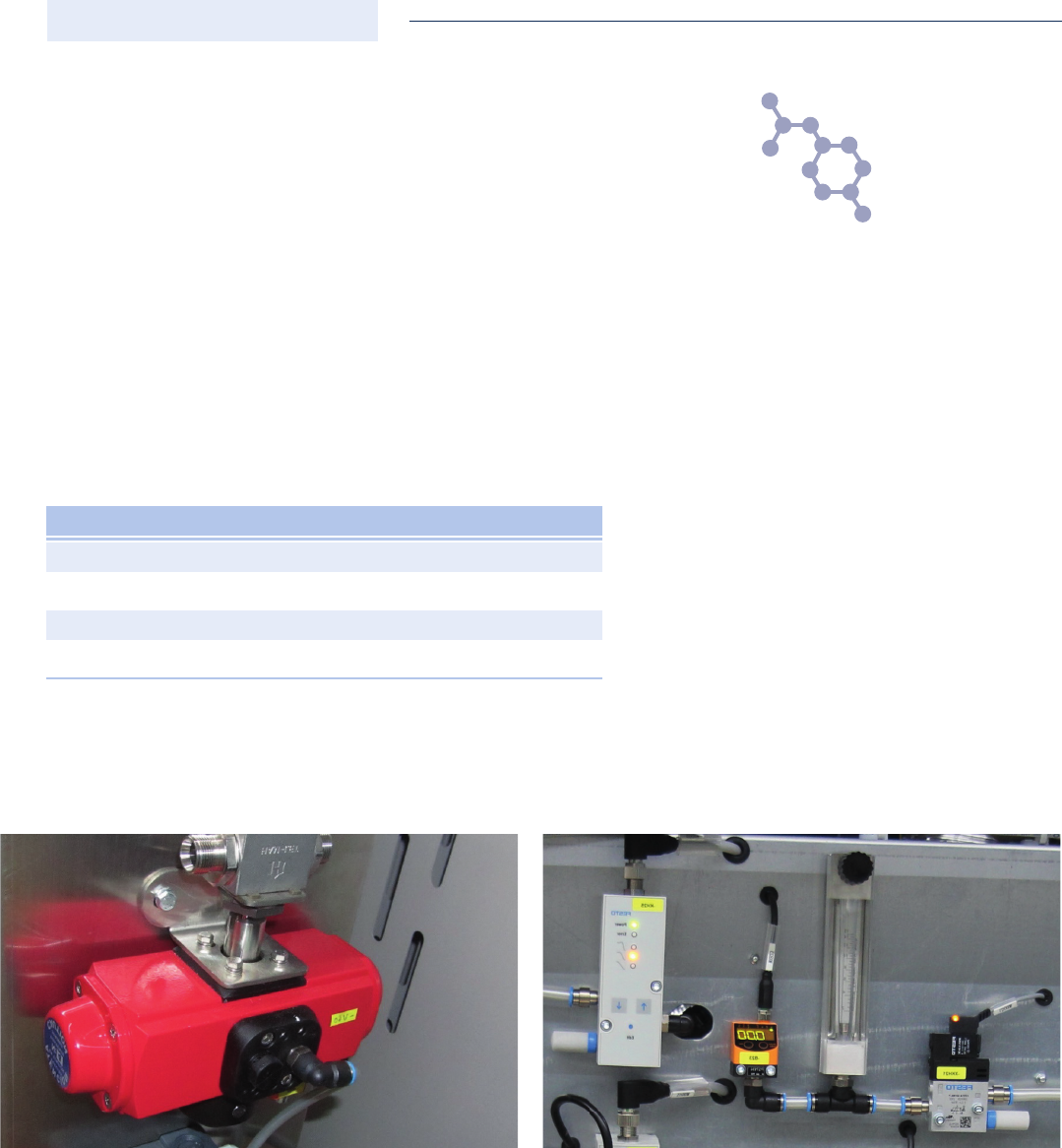
Inert gases and forming gas
Nitrogen (N
2
) is typically used to protect against
oxidation. In combination with 5 % hydrogen, the forming gas
is also used for reducing oxides; no special safeguards are
necessary within this mixing ratio.
Forming gases with a hydrogen content from 5 % to 100 %
need necessarily appropriate safeguards and are used only at
280 °C or higher. Depending on the process temperature, the
use of formic acid can be benecial.
Activation (Gas)
Investment Wetting
Nitrogen N
2
Forming gas N
2
/H
2
(95 %/5 %)
Hydrogen H
2
100 %
Formid acid HCOOH
N
2
N
2
/H
2
Various media
for a wide range of requirements and demands
Depending on the process temperature and the desired oxide freedom, the use of different process media is possible.