M3plus_OperationManual_e.pdf - 第104页
3 - 39 4. Creating the component information 3 Creating the PCB data Simple BGA A, B: Body Size X, Body Size Y Enter the correct dimensions measured with a vernier caliper or micrometer. C: Body Size Z Enter the correct …
3 -38
3
Creating the PCB data
4. Creating the component information
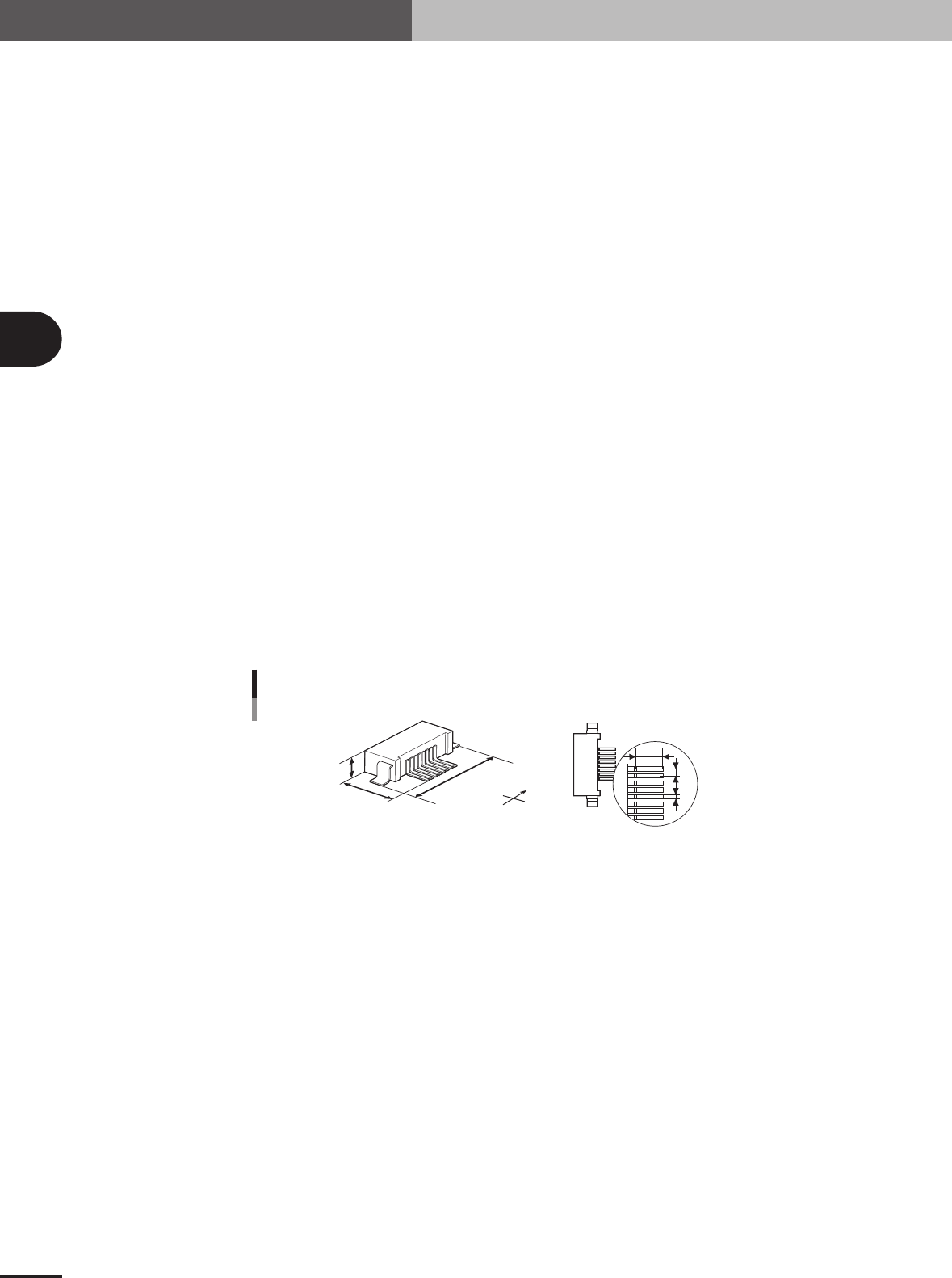
Connector E
A, B: Body Size X, Body Size Y
Enter the correct dimensions (mm) including the leads, measured with a vernier caliper or mi-
crometer.
C: Body Size Z
Enter the correct thickness (mm) measured with a vernier caliper or micrometer.
D, E, F: Cntr. Offset XYR
Enter the lead position offset (positional shift) relative to the center of the component.
G: Ruler Offset
Enter the distance in pixels from the end of the leads to an imaginary line used to measure the lead
width and pitch. Use the default setting in most cases.
H: Ruler Width
Enter the width of an imaginary line used to measure the lead width and pitch. Set this parameter
to "1 to 2" for components with a lead length shorter than 0.3mm, and to "2 to 3" for components
with a lead length longer than 0.3mm. Use the default setting in most cases.
I: LeadNumber
Enter the number of leads existing on one side.
J: Lead Pitch
Enter the correct lead pitch (lead-to-lead spacing).
K: Lead Width
Enter the correct lead width.
L: ReflectLL
Enter the projected length of leads which reflect light during recognition. Use the default setting in
most cases.
A : Body Size X
B : Body Size Y
C : Body Size Z
J : Lead Pitch
K : Lead Width
L : Reflect LL
Bottom view
S
N
W
E
B
C
A
L
J
K
Shape parameters for connector E
23426-5E-20
3 -39
4. Creating the component information
3
Creating the PCB data
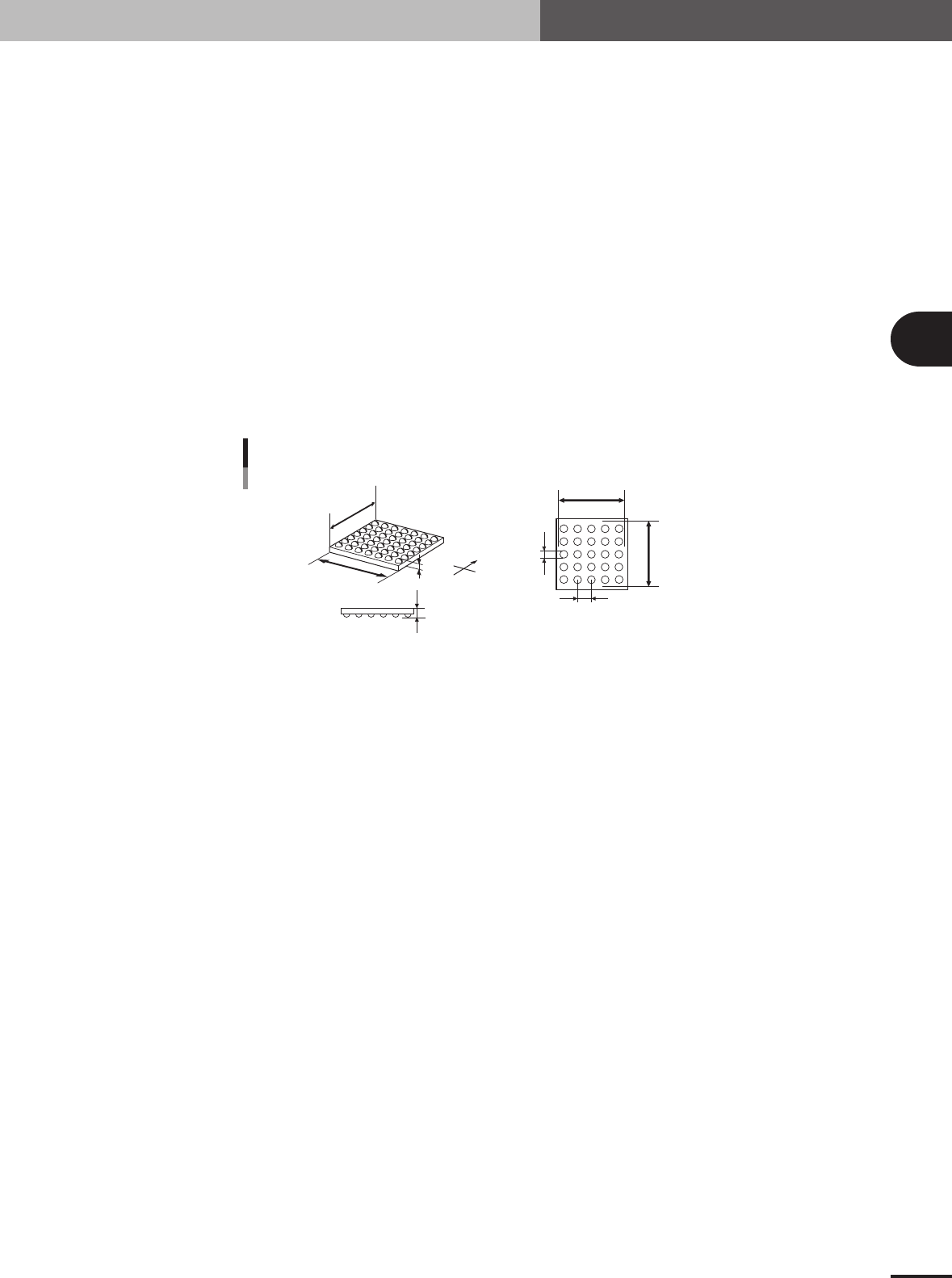
Simple BGA
A, B: Body Size X, Body Size Y
Enter the correct dimensions measured with a vernier caliper or micrometer.
C: Body Size Z
Enter the correct diameter measured with a vernier caliper or micrometer.
D: Dot Amount
Enter the total number of ball terminals of the BGA component.
E, F: Dot number N, Dot number E
Enter the number of ball terminals arrayed in the N and E directions. If the number of terminals per
array differs from each other, enter the largest number of terminals per array.
G: BGA pitch
Enter the spacing between ball terminals
H: BGA diameter
Enter the diameter of ball terminals.
N
S
E
W
B
A
C
E
F
G
H
C
A : Body Size X
B : Body Size Y
C : Body Size Z
D : Dot Amount
E : Dot number N
F : Dot number E
G : BGA pitch
H : BGA diameter
Bottom view
Side view
Shape parameters for BGA component (Simple BGA setting)
23423-5E-20
3 -40
3
Creating the PCB data
4. Creating the component information
4.7 Tray parameters
Open the Tray tab screen and set each parameter as follows.
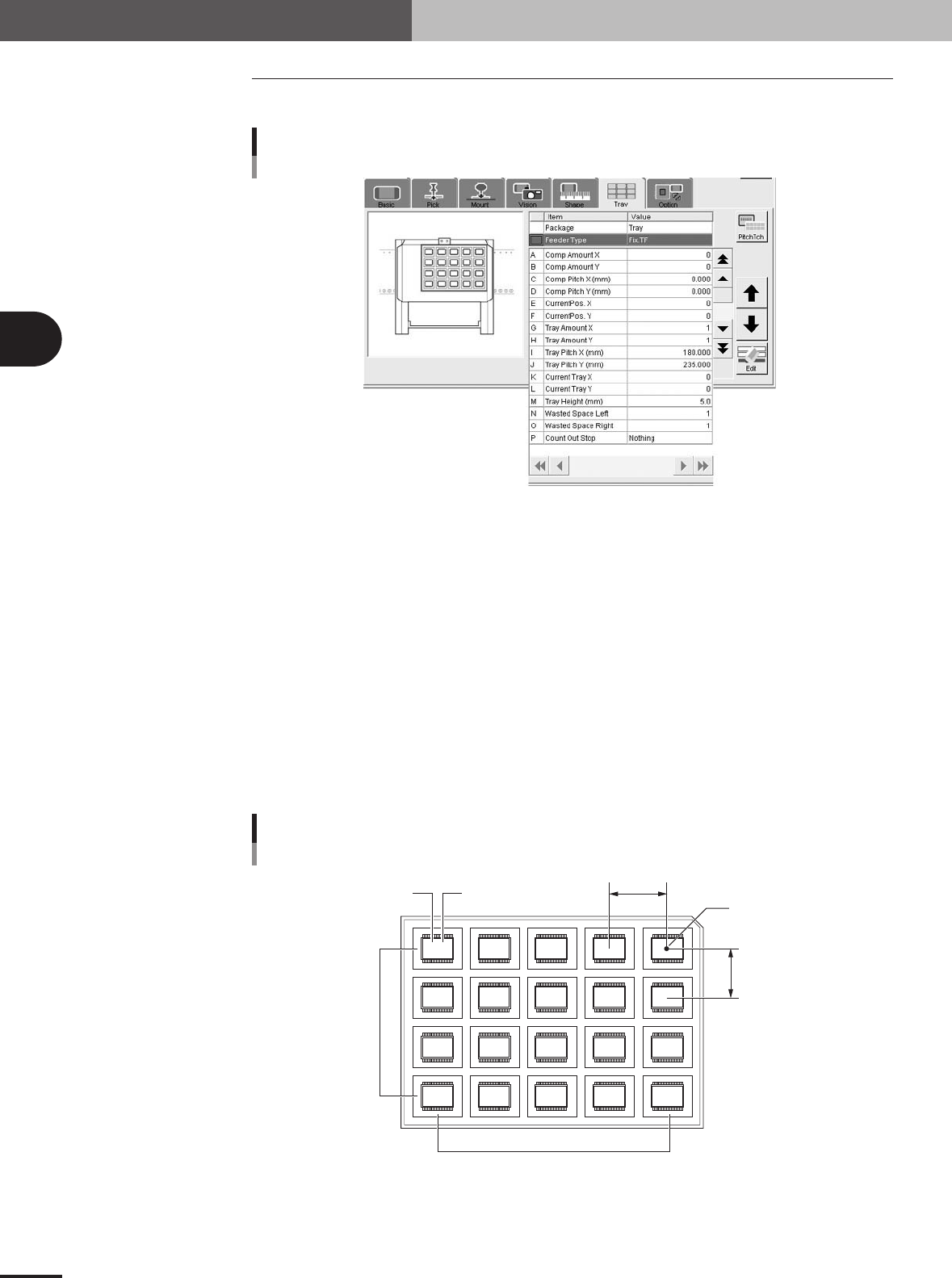
Tray parameters
27444-5E-20
A, B: Comp. Amount XY
Enter the number of components in the XY directions on a tray. When using a tray shown in the
figure below, for example, set "5" to the Comp. Amount X and "4" to the Comp. Amount Y.
C, D: Comp Pitch XY
Enter the component pitch (center to center spacing) in millimeters in the XY directions.
E, F: Current Pos. XY
These parameters indicate which row and column on a tray the component is currently picked up
from. The row and column on a tray are counted from the tray origin (center of the component
placed closest to the back right corner of the tray as viewed from the front of the machine).
Normally, enter "1" in both the Current Pos. X and Current Pos. Y parameters when you have
created new component information.
Since these parameters automatically change as the components are picked up, so you can check
which row and column on the tray the components have been used from.
Tray reference position
Comp Amount / Current Pitch / Current Pos. settings
5,4
4,4 3,4 2,4 1,4
5,3 4,3 3,3 2,3 1,3
5,2 4,2 3,2 2,2 1,2
5,1 4,1 3,1 2,1 1,1
A
C
FE
D
B
23431-5E-20