M3plus_OperationManual_e.pdf - 第263页
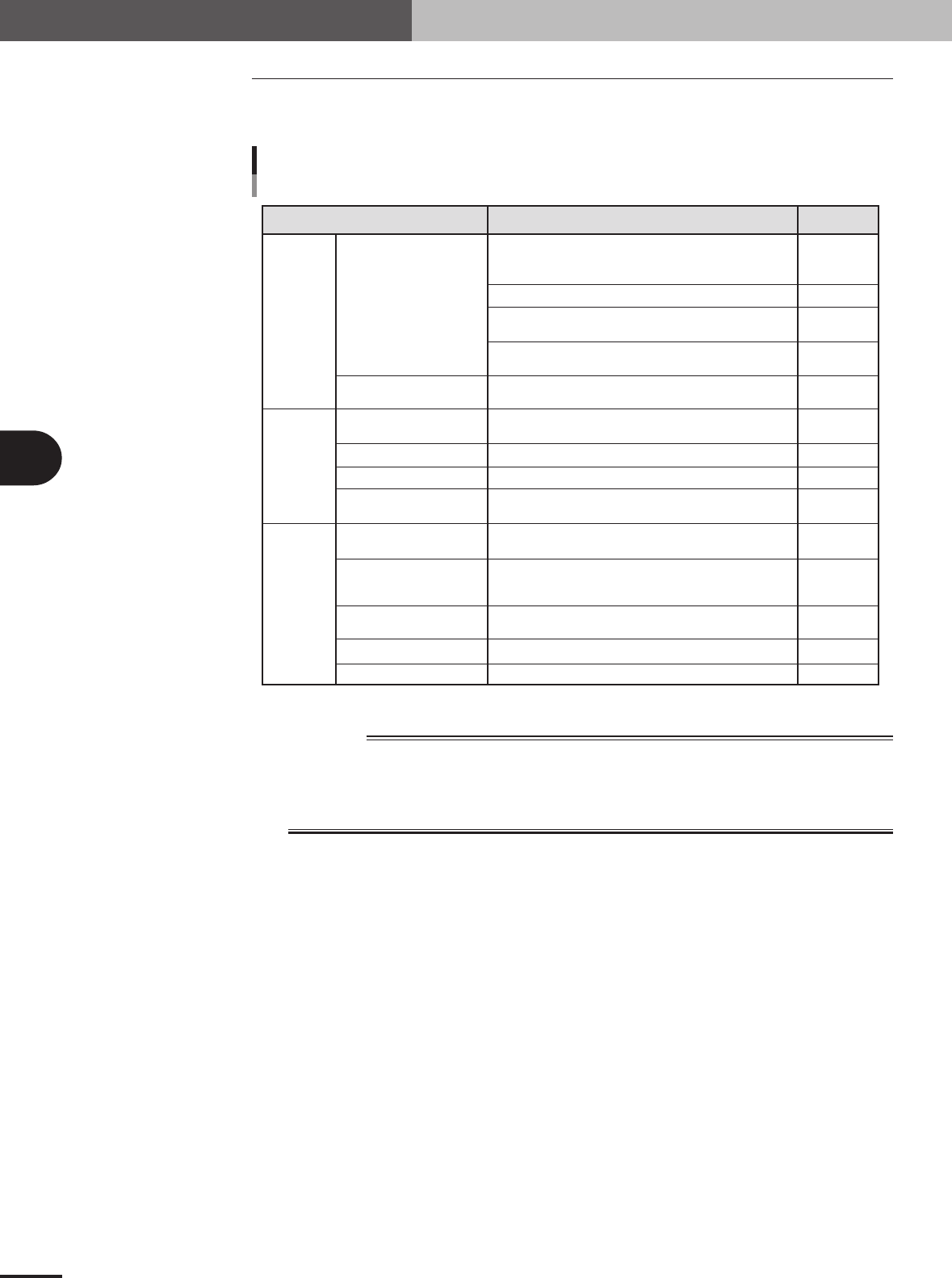
4 - 2 4 Inspection and maintenance w ork 4.3 Inspection and maintenance 4.3.1 Inspection location and period Inspection location and procedure When Inspection point Inspection location and period Drive parts Electrical p…
4
Inspection and maintenance work
4 -1
4. Inspection and maintenance work
4.1 Precautions
Always observe the following precautions when inspecting the TSF1.
• The inspection must be carried out by competent personnel who has received YAMAHA training,
or under the direction of a YAMAHA approved dealer.
• Always turn off the power before beginning inspections. At times when power must be supplied to
make an inspection, NEVER get within the machine movement range.
•Use only lubricants specified by YAMAHA or the YAMAHA dealer.
4.2 Inspection points before operation
Inspect the following points before using the TSF1.
c
CAUTION
Always turn off the power before beginning inspections. At times when power must be supplied
to make an inspection, NEVER get within the machine movement range.
Check for components or debris that have fallen into the TSF1
Check particularly the sliding assemblies (ball screw and linear guide) and peripheral parts.
w
WARNING
IF YOU BLOW AIR TO REMOVE DEBRIS AND FOREIGN MATTER (SUCH AS CHIPS THAT HAVE
FALLEN INTO THE TSF1), THEY MIGHT GET INTO A NARROWER SPACE. AVOID USING AIR
BLOW, BUT USE TWEEZERS OR SIMILAR TOOLS TO REMOVE DEBRIS OR FOREIGN MATTER.
CONTINUED OPERATION WITH DEBRIS OR CHIPS STILL ADHERING TO THE INTERIOR MIGHT
CAUSE THE TSF1 TO MALFUNCTION.
Signal cable and connector
Check that there are no bends or breaks in the signal cable and also that the connector shell and pins
are not deformed.
c
CAUTION
Using the signal cable that is bent excessively or the deformed connector might cause commu-
nication errors.
Lubrication
Check that grease is spread over the ball screw and linear guide surfaces.
c
CAUTION
Periodic greasing of the moving parts is essential to ensure safety and long-term use.
Shuttle movement
Check whether abnormal noise or vibration is produced from the ball screw or linear guide during
return-to-origin operation.
n
NOTE
For details on the inspection locations and procedures, refer to the next section 4.3, "Inspection and maintenance".
4 -2
4
Inspection and maintenance work
4.3 Inspection and maintenance
4.3.1 Inspection location and period
Inspection location and procedure WhenInspection point
Inspection location and period
Drive parts
Electrical
parts
Mechanical
parts
Ball screw
Linear guide
Parts around ball screw and
linear guide
Overrun sensor (±)
Origin sensor
Emergency stop button
Cover limit switch
Signal cable/connectors
Upper safety cover
Clamp/unclamp lever
Positioning pin
Hold knob
Tray guide F/R
Visually check the surface for dust and debris deposition.
Also check if grease is spread evenly. If debris is found,
remove it.
Apply a thin coat of grease by hand to the surface.
Check that no abnormal noise is heard or no vibration
occurs by JOG operation.
Check that no abnormal noise is heard or no vibration
occurs during return-to-origin.
Visually check for dust and debris deposition. If found,
remove it.
Visually check for dust buildup. Clean with a cotton swab
stick if necessary.
Check that it works correctly.
Check that it works correctly.
Visually check that the cables and connectors are not
damaged or deformed.
Check that there is no play or looseness by opening and
closing the cover.
Check that the clamp works correctly by detaching the
TSF1 from the feeder plate and then attaching it to the
feeder plate.
Visually check that the pins are not damaged or deformed.
Check that the tray is securely locked in place.
Check that the tray is securely locked in place.
Before operation
Monthly
Monthly
Before operation
Before operation
Monthly
Monthly
Monthly
Before operation
Monthly
When installing
TSF1
When installing
TSF1
When using tray
When using tray
75400-5V-00
w
WARNING
IF YOU BLOW AIR TO REMOVE DEBRIS AND FOREIGN MATTER (SUCH AS CHIPS THAT HAVE
FALLEN INTO THE TSF1), THEY MIGHT GET INTO A NARROWER SPACE. AVOID USING AIR
BLOW, BUT USE TWEEZERS OR SIMILAR TOOLS TO REMOVE DEBRIS OR FOREIGN MATTER.
CONTINUED OPERATION WITH DEBRIS OR CHIPS ADHERING TO THE INTERIOR MIGHT
CAUSE THE TSF1 TO MALFUNCTION.
4 -3
4
Inspection and maintenance work
4.3.2 Applying grease
To apply grease to the shuttle axis ball screw and linear guide, proceed as follows.
1
Turn off the mounter power switch.
2
Detach the TSF1 from the mounter.
3
Open the TSF1 upper safety cover.
4
Remove debris from the ball screw and linear guide.
1.Move the shuttle to one end of the axis and wipe clean the ball screw surface and
lead groove and the linear guide surface and sliding grooves with a shop cloth.
2.While moving the shuttle to the opposite end of the axis, wipe the ball screw
surface and lead groove and the linear guide surface and sliding grooves with a
shop cloth.
c
CAUTION
Use a clean, lint-free shop cloth to wipe the ball screw and linear guide. Check that there is no
lint residue on the wiped area.
5
Apply grease to the ball screw and linear guide.
Apply grease by hand uniformly over the ball screw surface and lead groove and the
linear guide surface and sliding grooves.
6
Remove excess grease.
After moving the shuttle back and forth a few times between the ends of the shuttle
axis, wipe away excess grease.
7
Install the TSF1 to the mounter.
8
Spread the grease over the entire sliding area.
Start the mounter, perform return-to-origin and move the TSF1 shuttle in JOG mode to
spread the grease over the entire sliding area.
c
CAUTION
Check that no abnormal noise is heard during return-to-origin and JOG operation.
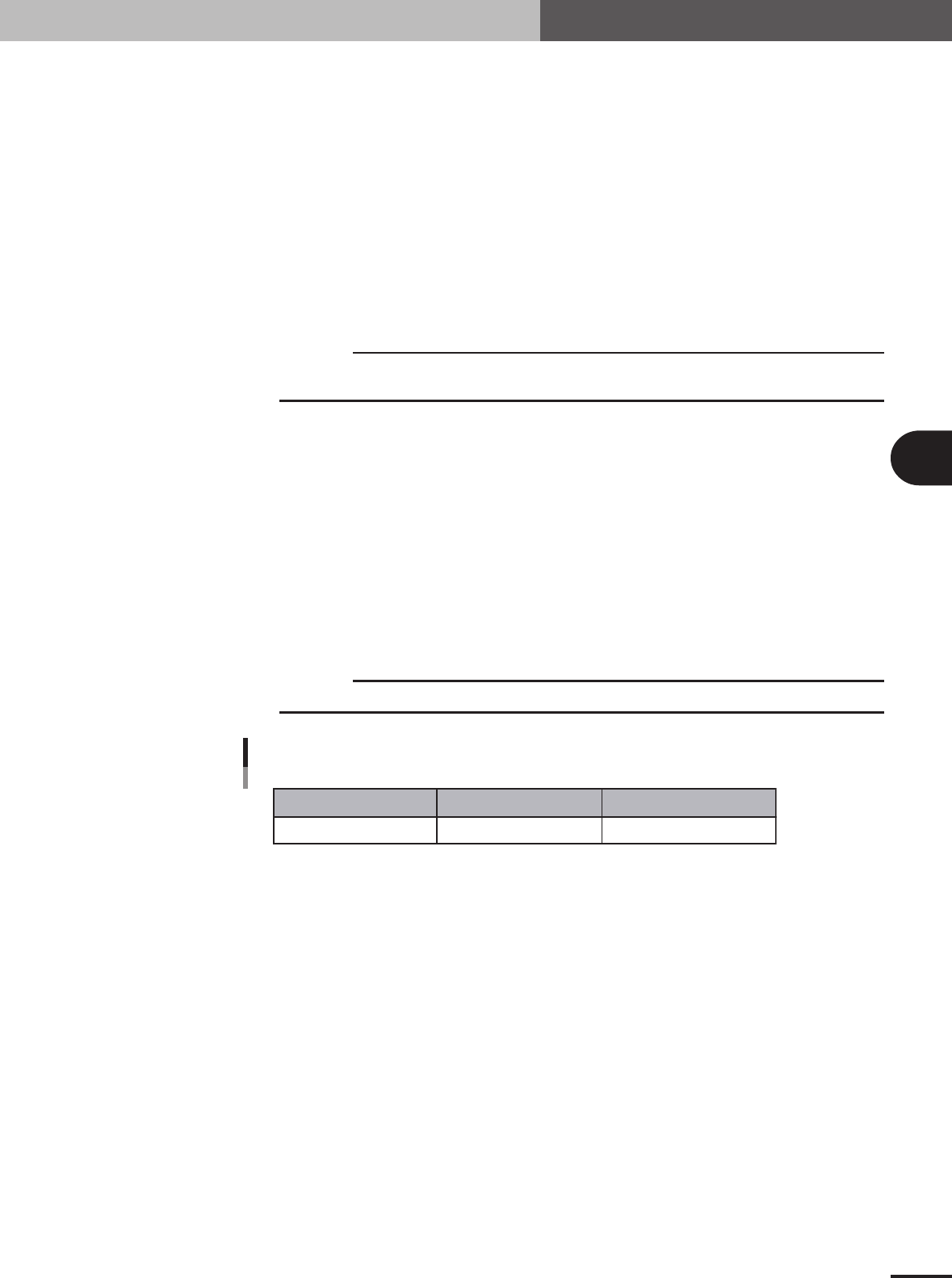
Recommended grease
Name
Part name Part No.
AFB grease GREASE, AFB LG0-M86A4-00X
75401-V5-00