M3plus_OperationManual_e.pdf - 第85页
3 - 20 3 Creating the PCB data 3. Creating the PCB information 3.4.3 Local fiducial functions There are three kinds of local fiducial functions relating to mount data: "point fiducial", "local fiducial&quo…
3 -19
3
Creating the PCB data
3. Creating the PCB information
3.4.1 Board fiducial function
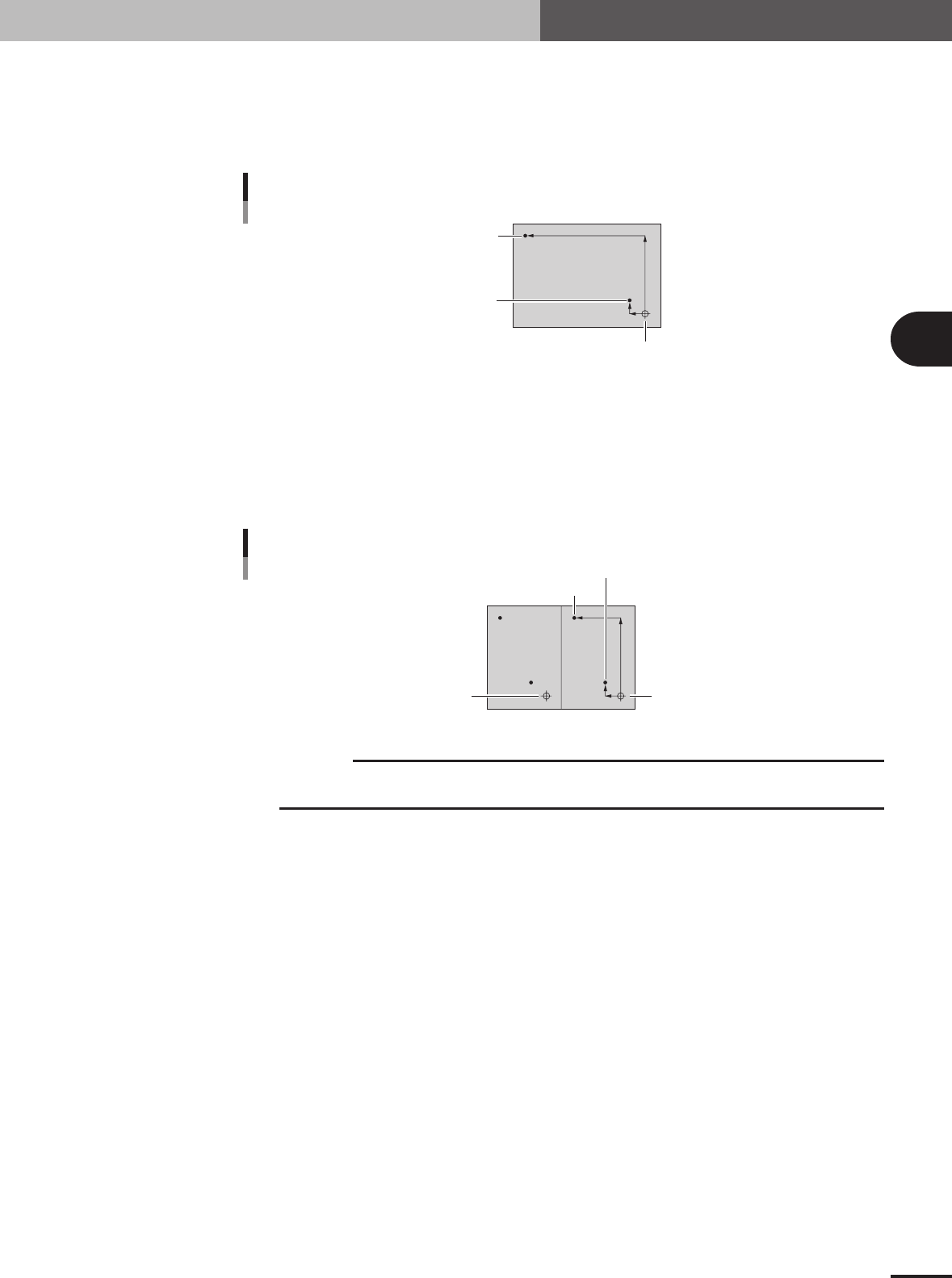
The board fiducial function corrects the positioning error of the entire PCB by using a
pair of fiducial marks. This function is particularly effective in correcting the positioning
error caused by PCB clamping mechanism fluctuations. As shown in the figure below, a
pair of fiducial marks must be diagonally located on the entire PCB.
Board fiducial marks
Mark 1 (X1, Y1)
Mark 2 (X2, Y2)
PCB origin
23409-5E-20
3.4.2 Block fiducial function
The block fiducial function corrects the positioning error of each block on a multi-block
PCB, by using a pair of fiducial marks provided in the block. This function is also effec-
tive in correcting the positioning error caused by PCB clamping mechanism fluctuations.
As shown in the figure below, a pair of fiducial marks must be diagonally located in each
block.
Block fiducial marks
Mark 1 (X1, Y1)
Mark 2 (X2, Y2)
Reference block origin
Block repeat No.2
23410-5E-20
c
CAUTION
The block fiducial can only be effective for multi-block PCB data with "block offset" specified
on the Offset tab screen.
3 -20
3
Creating the PCB data
3. Creating the PCB information
3.4.3 Local fiducial functions
There are three kinds of local fiducial functions relating to mount data: "point fiducial",
"local fiducial" and "4-point fiducial" functions. These are generally called the local
fiducial functions.
The local fiducial functions are used to enhance the local mounting position accuracy of
individual mount data, rather than improving the mounting position accuracy on an entire
PCB or block as is done by the board fiducial or block fiducial function.
1. Point fiducial function
The point fiducial function is used to enhance the mounting position accuracy only of a specific
component. In general, as the PCB size becomes larger, the land pattern layout tends to become
inaccurate due to flexing, twist and expansion/shrinking of the PCB. Therefore, the point fiducial
function is effective when mounting QFP components with a fine lead pitch on a large PCB. (Note
that the PCB and block fiducial functions are not effective in this case, although they are useful in
correcting a positioning error caused by the PCB clamping fluctuations.)
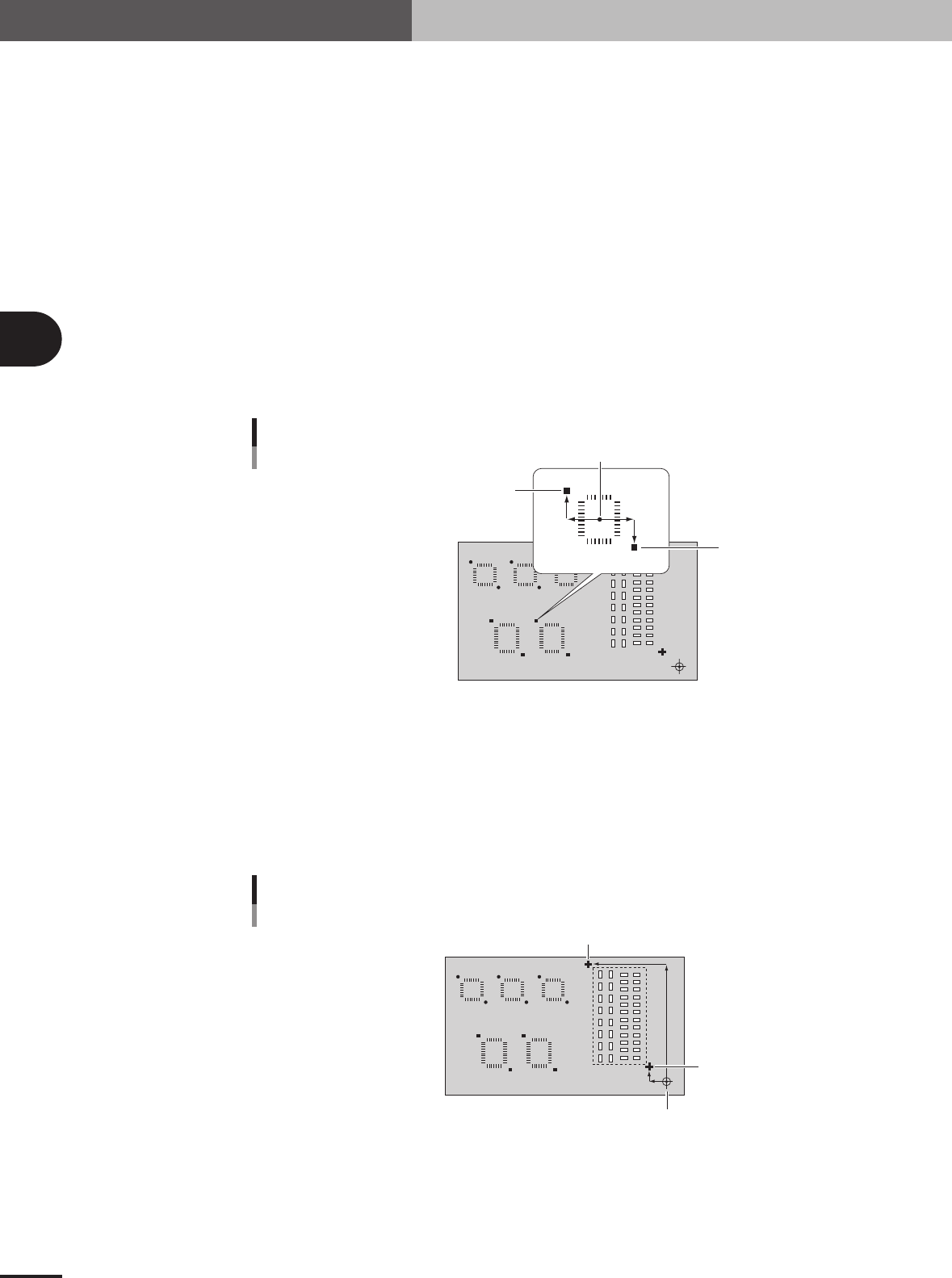
The point fiducial function uses a set of two fiducial marks diagonally located across the land
patterns on which you want to improve mounting position accuracy. It is okay if these two marks
are different in shape, but use the same marks for the same type of component.
Point fiducial marks
Mounting center
Mark 1 (X1, Y1)
Mark 2 (X2, Y2)
23411-5E-20
2. Local fiducial function
The local fiducial function improves the mounting position accuracy of two or more components
within a specified area, by using a pair of fiducial marks. This function is also effective in correct-
ing the mounting position errors when two or more different types of PCBs are supplied on the
same transfer pallet. The local fiducial marks must be arranged diagonally across the specified
area, but can be different in shape from each other.
Local fiducial marks
PCB origin or block offset
Mark 1 (X1, Y1)
Mark 2 (X2, Y2)
23412-5E-20
3 -21
3
Creating the PCB data
3. Creating the PCB information
3. 4-point fiducial function
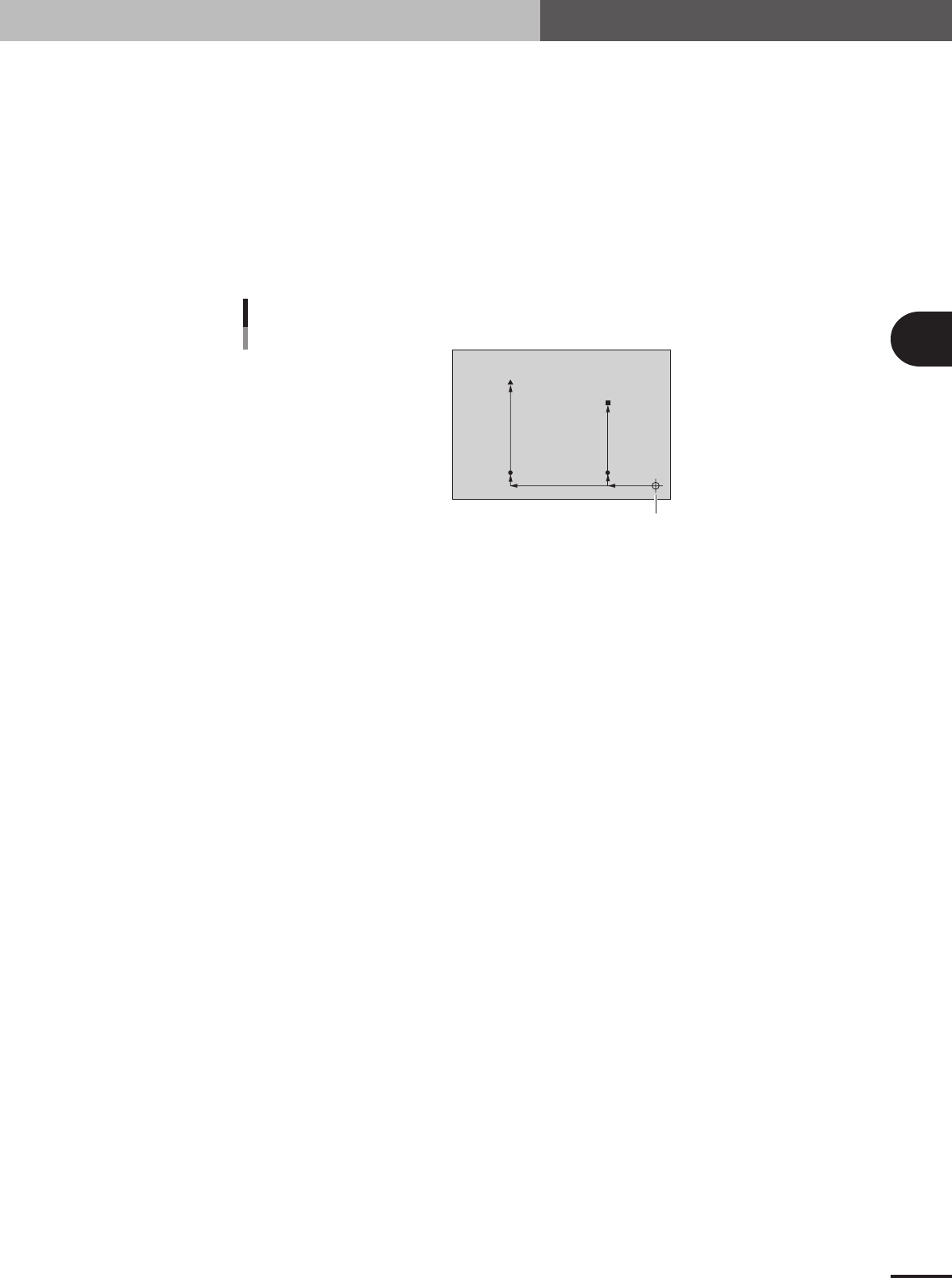
The "4-point fiducial" function is used to enhance the mounting position accuracy by recognizing 4
fiducial marks provided on a PCB. This function is effective in the following cases.
• PCBs with 4 or more fiducial marks which meet the conditions
• Large PCBs
• PCBs made of materials which tend to expand, flex or warp.
(paper phenol, paper, glass epoxy, other flexible materials)
The 4-point fiducial data settings are basically the same as those for point fiducial and local
fiducial marks. However, because the 4-point fiducial function requires 4 XY coordinate points,
you must use two data lines ("4Local-M" and "4Local-S") on the Offset tab screen in order to
register one set of 4-point fiducial marks.
4-point fiducial marks
(-50, 10)
(-200, 10)
(-50, 150)
(0, 0)
(-200, 200)
Mark 3
PCB origin
Mark 2
Mark 4
Mark 1
23413-5E-20