YG300_Mainte_E - 第42页
3-4 3 Periodic maintenance items 2 . 2 C l e a n i n g a n d l u b r i c a t i n g a n o z z l e h o l d e r I f t h e n o z z l e h o l d e r s p r i n g - a c t i o n i s p o o r, t h i s a d v e r s e l y a f f e c t …

3-3
3
Periodic maintenance items
2. Monthly inspection
This section mainly explains the cleaning and lubrication procedures after inspection.
2.1 Inspecting ball screws and linear guides of each axis
Inspect the ball screws and the linear guides on the X, Y, U, W and T axes. Check the following points.
Checkpoints
1. Any foreign matter adhering to the ball screws and linear guides?
Check if any fallen chips have adhered to the ball screws and/or linear guides.
2. Do the ball screws and linear guides have the correct amount of grease?
Check if grease has flowed off or splattered in the air failing to adhere. Also check if grease has discolored or hardened.
3. Any abnormal sounds from the ball screws?
Press the emergency stop button. Then check for any abnormal sounds while pressing the head assembly or conveyor
table by hand along the X-axis or Y-axis back and forth.
Countermeasures
1. Ball screws and linear guides may be damaged when chips and other material bite into them. If chips are adhering,
wipe them off along with the grease or remove with tweezers, etc.
2. Apply grease while referring the cleaning and greasing procedures explained later in this chapter.
3. Consult your YAMAHA sales office or representative when abnormal sounds occur even after trying the
countermeasures in the above steps 1 and 2.
3-4
3
Periodic maintenance items
2.2 Cleaning and lubricating a nozzle holder
If the nozzle holder spring-action is poor, this adversely affects all operations of component pickup,
recognition and mounting. Periodically (once every two months) clean the nozzle holder with alcohol (IPA or
ethanol) and lubricate it with turbine oil to maintain smooth movement.
e
1
Press the emergency stop button.
The machine must be in emergency stop to
ensure safety during work.
2
Remove the nozzles and immerse
the nozzle holder in alcohol.
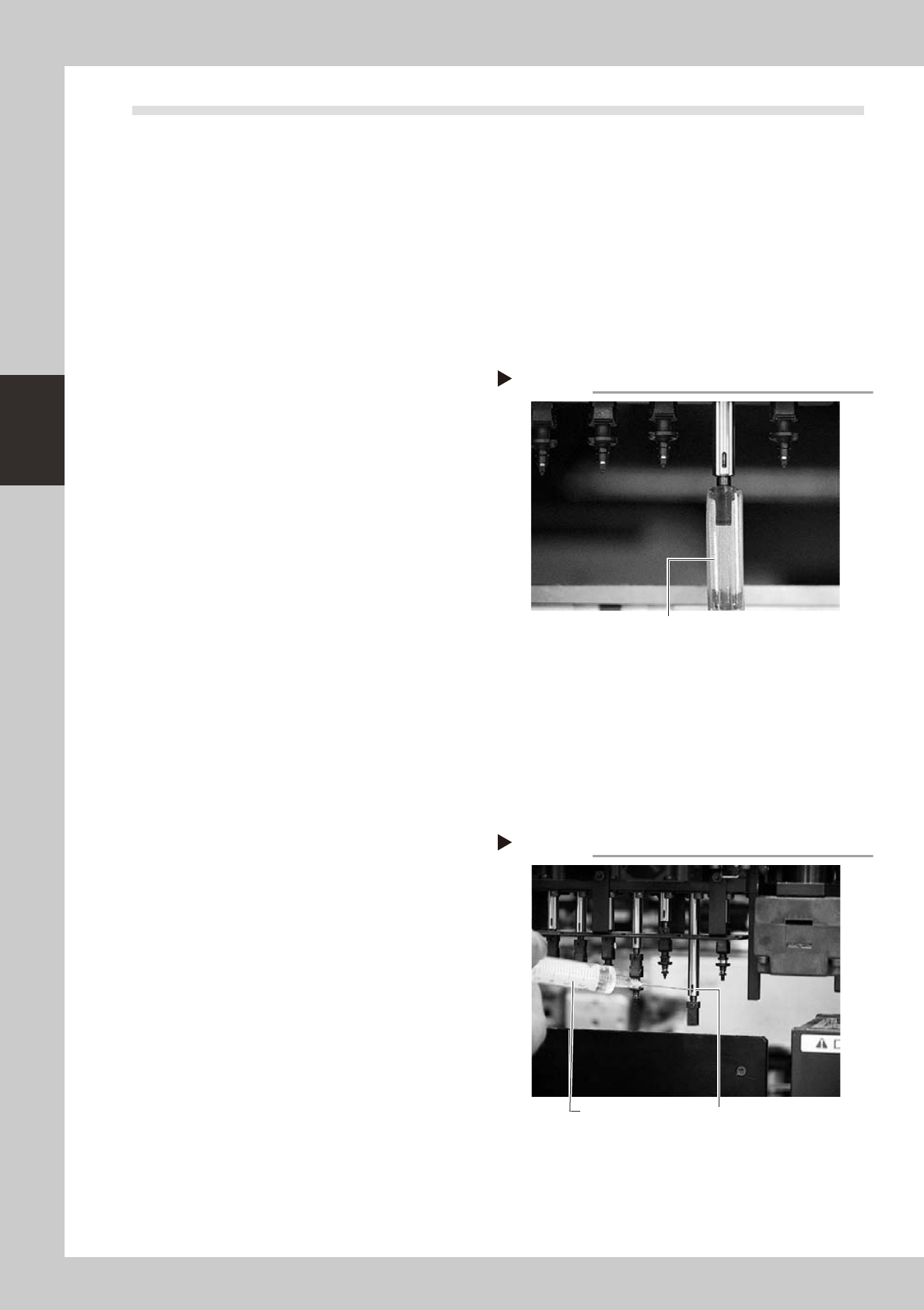
Clean the nozzle holder by immersing it in
alcohol as explained below.
1. Place a cloth under the head.
2. Prepare a small container deep enough
to hold the entire nozzle holder. Then
pour this container about 80% full of
alcohol.
3. Lower the head by hand while bringing
the alcohol container up against the
nozzle shaft so the entire nozzle holder is
immersed in alcohol for several seconds.
4. Remove the alcohol container and push
up on the nozzle holder with your finger
several times.
53306-F1-00
3
Immerse the nozzle holder in
alcohol again.
Repeat steps 2 and 3 until the spring-action
becomes smooth.
4
Use air blow to remove foreign
matter.
Insert an air blow gun into the air joint
section and blow air while holding a
cleaning cloth or paper towel against the
lower end of the head.
5
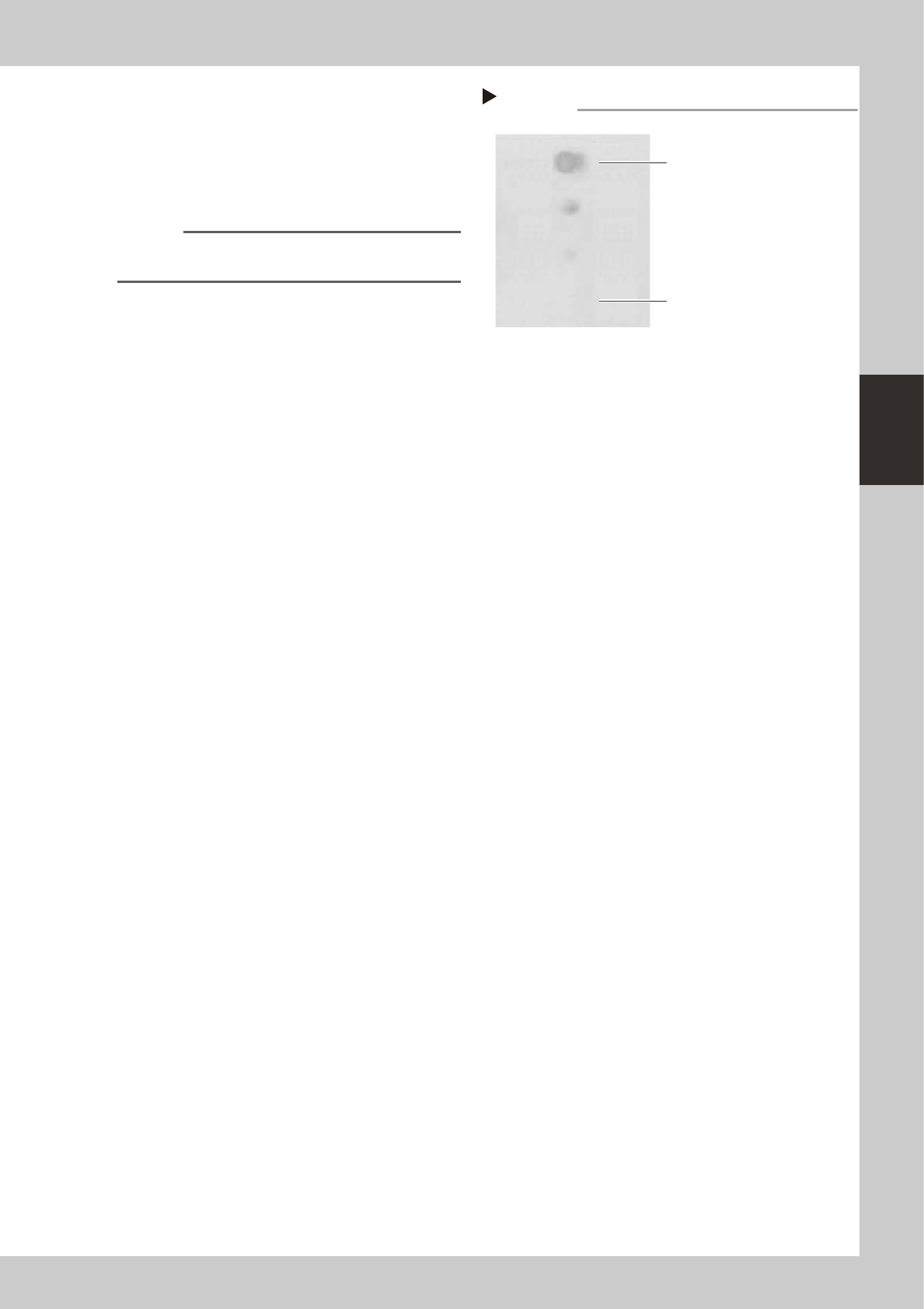
Lubricate the slide section and
check the movement.
Apply turbine oil to the buffing section (slide
section) and push up the nozzle holder by
hand several times to check that it moves
up and down smoothly.
53307-F1-00
6
Wipe away excess oil.
Wipe away excess oil with a lint-free
cleaning cloth or paper towel.
7
Blow off excess oil remaining in the
nozzle holder.
As in step 4, insert the air blow gun into the
air joint section and blow air through the
spline shaft while holding a cleaning cloth or
paper towel against the lower end of the
head.
Cleaning the nozzle holder
Step 2
Container holding alcohol
Lubricating the nozzle holder
Step 5
Lubricate here.
Nozzle holder
lubricating syringe
3-5
3
Periodic maintenance items
8
Check that the oil was removed.
Blow air through the spline shaft again while
using commercially-available oil blotting
paper, and check for residual oil in the
nozzle holder.
53308-F1-00
n
NOTE
Performing step 7 is usually sufficient to remove residual
oil. However, if oil still remains then blow air once again.
9
Reinstall the nozzle.
Reinstall the nozzle back onto the head or
the nozzle station (option).
Step 8
Checking for residual oil
Oil blotting paper
Oil may appear after blowing air.
Repeat the air blow until oil no longer
appears.