PI series 3D SPI-brochure.pdf - 第4页
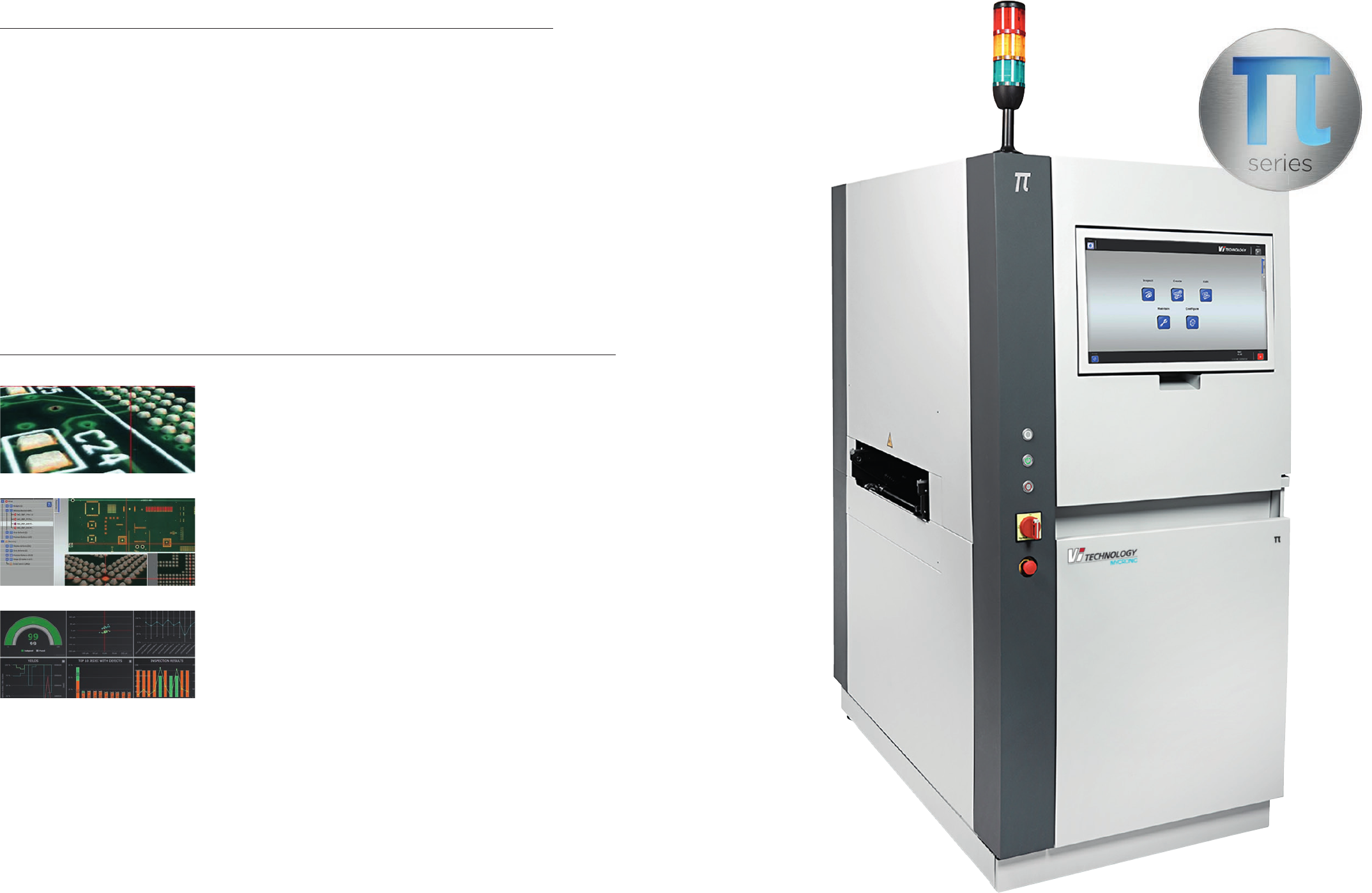
6 7 C l ea r an d s i mp l e inspe c ti on c ontrol E o r tl e s s au to - progr amm ing Thank s to a natu ral touchscreen interface, the PI S eries can easily be set up an d run by an yone with ju st an hou r ’s t rain…
4 5
PI series 3D SPI
Perfect solder joints
made simple
Measure paste volume with extreme precision. Improve your
process and tolerance settings with automatic pad grouping.
And monitor your process in real time, both online and o ine.
The PI series gives you highly accurate SPI data, combined
with a range of smart auto-programming functions that ensure
high-quality inspection regardless of operator experience.
ACCURATE Z-REFERENCING TECHNOLOGY
Captures hundreds of references across an
ultra-large 55 x 350 mm 3D fi eld of view.
SIMPLE AUTO-PROGRAMMING
Ensure high-quality inspection regardless of
operator experience with the industry’s only
auto-programming SPI.
REPEATABLE PROCESS RESULTS
Unique warp compensation delivers accurate
measurements in real production environments,
with no false calls.
6 7
Clear and simple
inspection control
Eortless
auto-programming
Thanks to a natural touchscreen interface, the PI Series can easily
be set up and run by anyone with just an hour’s training. This
intuitive design allows any operator to quickly access the system’s
full capabilities with no additional calibration or fine-tuning.
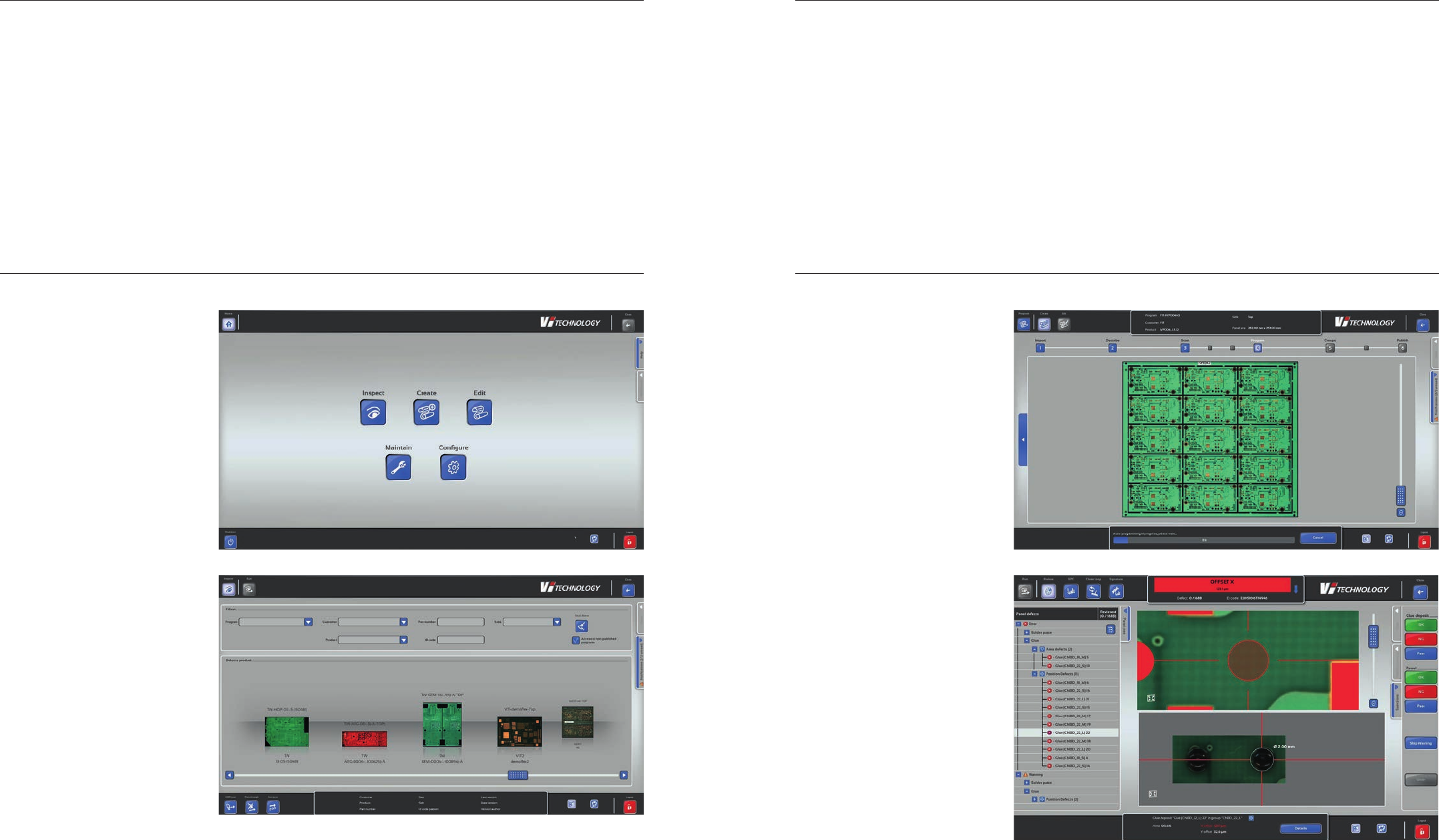
The industry’s only auto-programming SPI system, the PI Series requires
only a single bare board scan to accurately program itself. No fine tuning.
No manual calibration. And no unnecessary training times needed to
bring programmers or operators up to speed.
• Let the system program itself
with just one bare board scan.
• No fine tuning required due
to smart auto-programming
functions. Performance remains
consistent regardless of color
or finish variations, making the
PI Series ideal for new product
introductions.
• Simultaneous glue dot
inspection capabilities, in
addition to paste inspection.
• Intuitive touchscreen interface
makes all system capabilities
easy to access and navigate,
with no need for keyboard or
mouse inputs.
• Automatic calibration is
carried out with the touch of
a button.
• Consistent performance over
time is ensured by embedded
geometric and radiometric
calibration tools, which also
guarantee machine-to-
machine portability.
8 9
Measure paste volume
with unmatched accuracy
Take control
over your print process
The PI Series’ patented Z-referencing technology captures
hundreds of references across an ultra-large 3D field of view,
giving you unprecedented accuracy for even the smallest paste
volume measurements.
PI’s automatic pad grouping by AAR (Area Aperture Ratio) allows you
to continuously improve your process and set tolerances independently
of products. Together with the SIGMA Link software suite, this means you
can transform your inspection data into actionable process information.
• Highly accurate paste volume
measurement using a patented
Z-referencing technology that
overcomes the limitations of
traditional SPI systems.
• Superior accuracy in real
production environments,
with no false calls due to a
unique warp compensation
enabled by multi-frequency,
multi-pattern moiré,
combined with patented
dual Z-axis motion.
• Unambiguous information
for defect classification with
high-resolution textured 3D
images.
• Improve your process and set
tolerances independently of
products with meaningful auto-
matic pad grouping by AAR.
• Gain new insights into your
process with extra-large review
images in textured 3D for easy
diagnostics.
• Monitor your process in real
time with SIGMA Analysis,
which helps you report and
monitor your progress with
useful trend analyses.
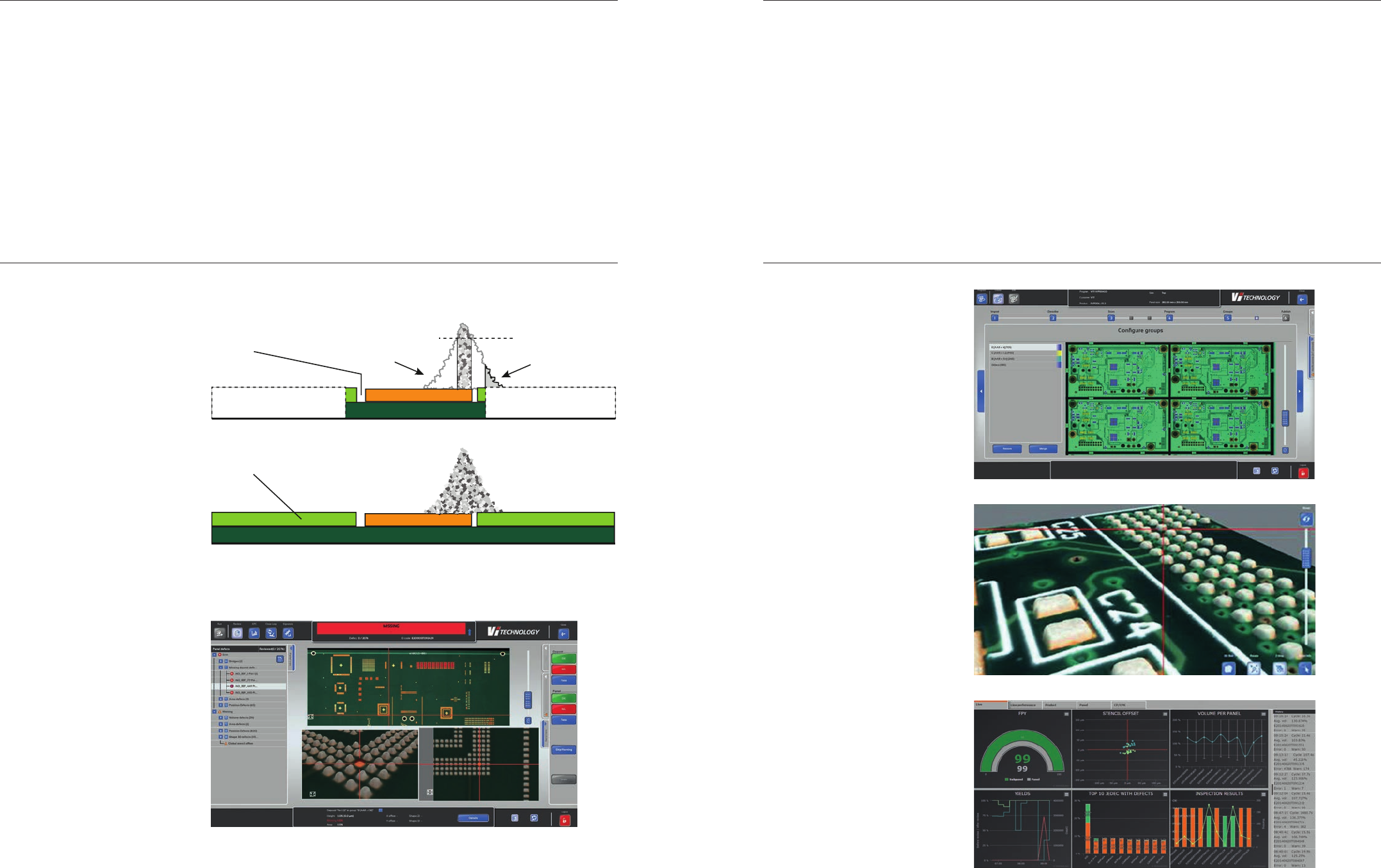
Traditional SPI: The typical threshold for a traditional SPI is usually 40
micrometers (μm), meaning height and volume under this limit goes
unmeasured. As a result, volume is underestimated on small pads, precisely
when you need to know how much paste is truly deposited.
PI Series: PI’s patented Z-referencing method leverages the entire textured
3D board information, rather than just cropped images around the pads, to
define a stable and accurate Z-reference.
Traditional SPI
PI
Unstable Z-reference
Stable Z-reference
Not measured
Not measured
Threshold @ 40 μm