Heated Stage App Note.pdf - 第2页
What’ s going on during reow? Application Note Figures 3, 4 and 5 ar e X-ray images showing HIP forming in real-time. Figur e 3 shows a BGA after placement but before heating. The solder begins to reow at 230°C as show…
Head-In-Pillow
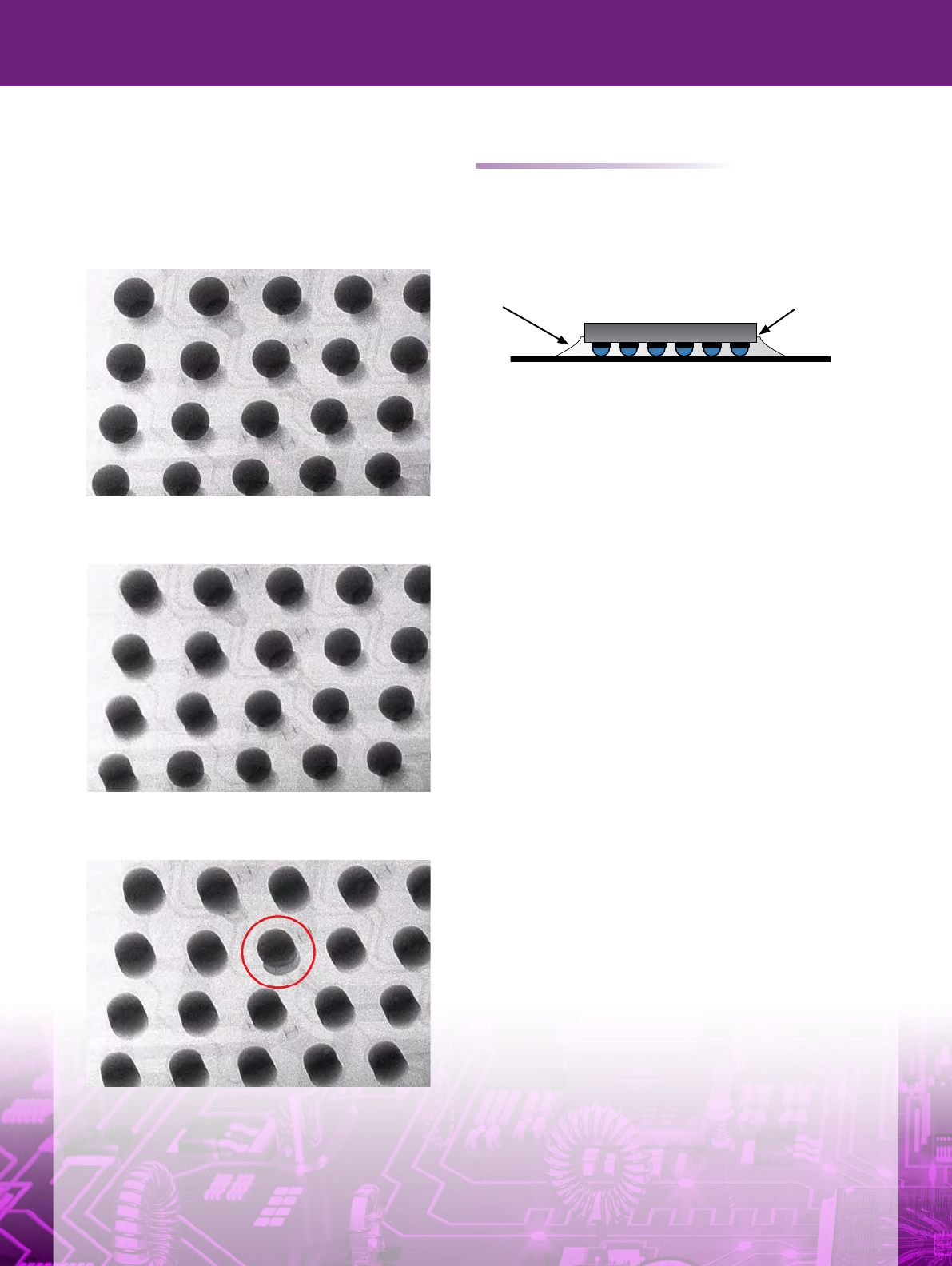
One of the most commonly looked for defects is
Head-In-Pillow or HIP. Often seen in Ball Grid Array
(BGA) device connections post reow, where the
BGA ball and solder paste on the PCB pad do not
form a cohesive joint.
Heated Stage Reow Simulator
It is a high priority of SMT manufacturers to minimize
solder defects. Doing this requires an understanding
of the conditions by which reow can go wrong.
By gaining this insight, one can greatly improve the
quality of products manufactured. X-ray inspection
has provided great insight, pre and post reow.
The Heated Stage provides yet further insight to
understand defect formation during reow, by seeing
it as it happens.
What’s going on during reow?
Application Note
Print SPI Placement AOI Reow
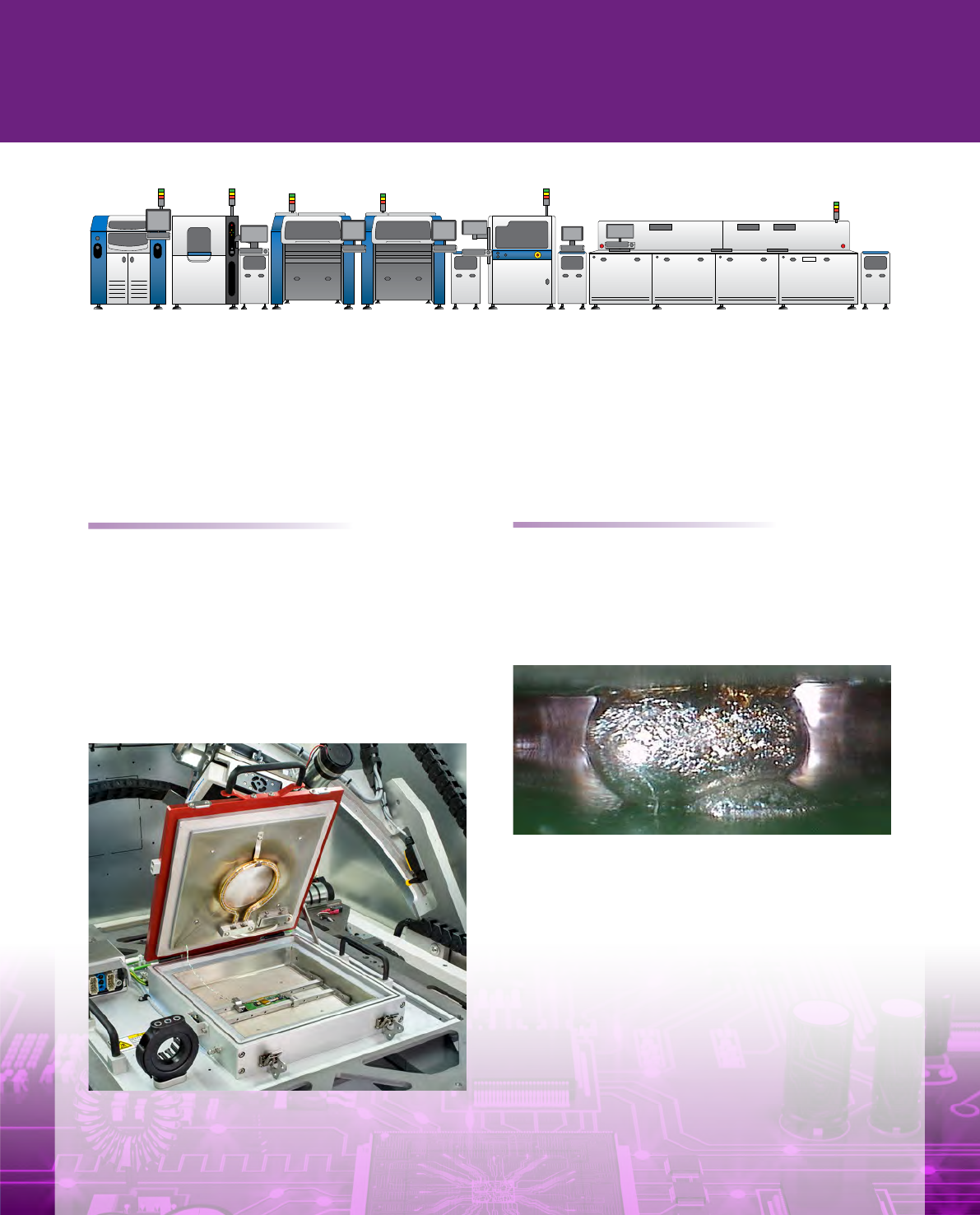
Figure 1 : Heated Stage Reow Simulator inside Quadra X-ray
Inspection System.
Figure 2: Optical image of a HIP defect.
Pre-reow factors that can cause HIP include
insufcient paste, bad placement, contamination/
oxidization (during handling or storage) and BGA
ball and solder paste alloy differences. During reow,
board/component warpage, poor wetting and
co-planarity issues can also create this problem.
Of course, ill chosen temperature proles can
exacerbate these conditions further.
The Heated Stage Reow Simulator for the Quadra
®
X-ray Inspection Systems is an
extremely powerful tool. Watching in real-time provides a new perspective on defect
formation and inspection.
What’s going on during reow? Application Note
Figures 3, 4 and 5 are X-ray images showing HIP
forming in real-time. Figure 3 shows a BGA after
placement but before heating. The solder begins
to reow at 230°C as shown in Figure 4. Figure
5 shows the HIP defect fully formed and clearly
different from the other connections.
Figure 4: X-ray image from the Heated Stage. Reow
begins on outer connections rst at around 230°C .
Figure 5: X-ray image from the Heated Stage showing HIP
defect forming.
Underll is not always your friend
There are ever increasing demands on portable
electronics for greater functionality, higher reliability and
mechanical toughness. OEMs are looking for solutions
for better heat distribution and impact resistance for
components like BGA. One such solution is underll.
Figure 6: Underll placement beneath BGA.
Underll is a liquid or polymer sometimes applied to a
corner or one edge of the component. The PCB and
component are heated to between 125°C and 165°C.
Capillary action then draws it under the device and
encapsulates the connections. Once cured, underll
will minimize the expansion differences of materials so
device and PCB are held together more rmly. This
reduces working life stresses on the roots of the
solder balls.
Should one of these high value products fail to meet
quality control, usually it will be reworked. This can lead
to components with underll, near the rework area,
being subjected to reow temperatures for a second
time. Under these conditions the underll will hold the
device and PCB together as designed. But now this
property can be potentially harmful. What happens is
revealed in real-time using the Heated Stage
(Figures 7 to 9).
The following example illustrates the typical behaviour of
BGAs with cured underll that are exposed to elevated
temperatures during PCB rework. The device in question
is mounted in the Heated Stage and the temperature is
increased. The solder joints are monitored in real-time
on the X-ray system screen. The video of the process
is also recorded. When the temperature reaches 230°C
the solder connections start to deform and expand.
However, due to the cured underll, there is not enough
ex in the device/PCB assembly to compensate for
the expanding solder, Thus resulting in solder being
squeezed out, growing solder beads around the device,
solder bridging and solder joints that are severely
compromised (Figure 8). In some extreme cases the
BGA balls simply explode (Figure 9).
The Heated Stage provides critical insight into the
processes during reow. In this case, great care needs
to be taken when reworking PCBs with underll.
Figure 3: X-ray image from the Heated Stage before
reow. BGA placed on solder paste deposits.
Underll BGA die
PCB substrate
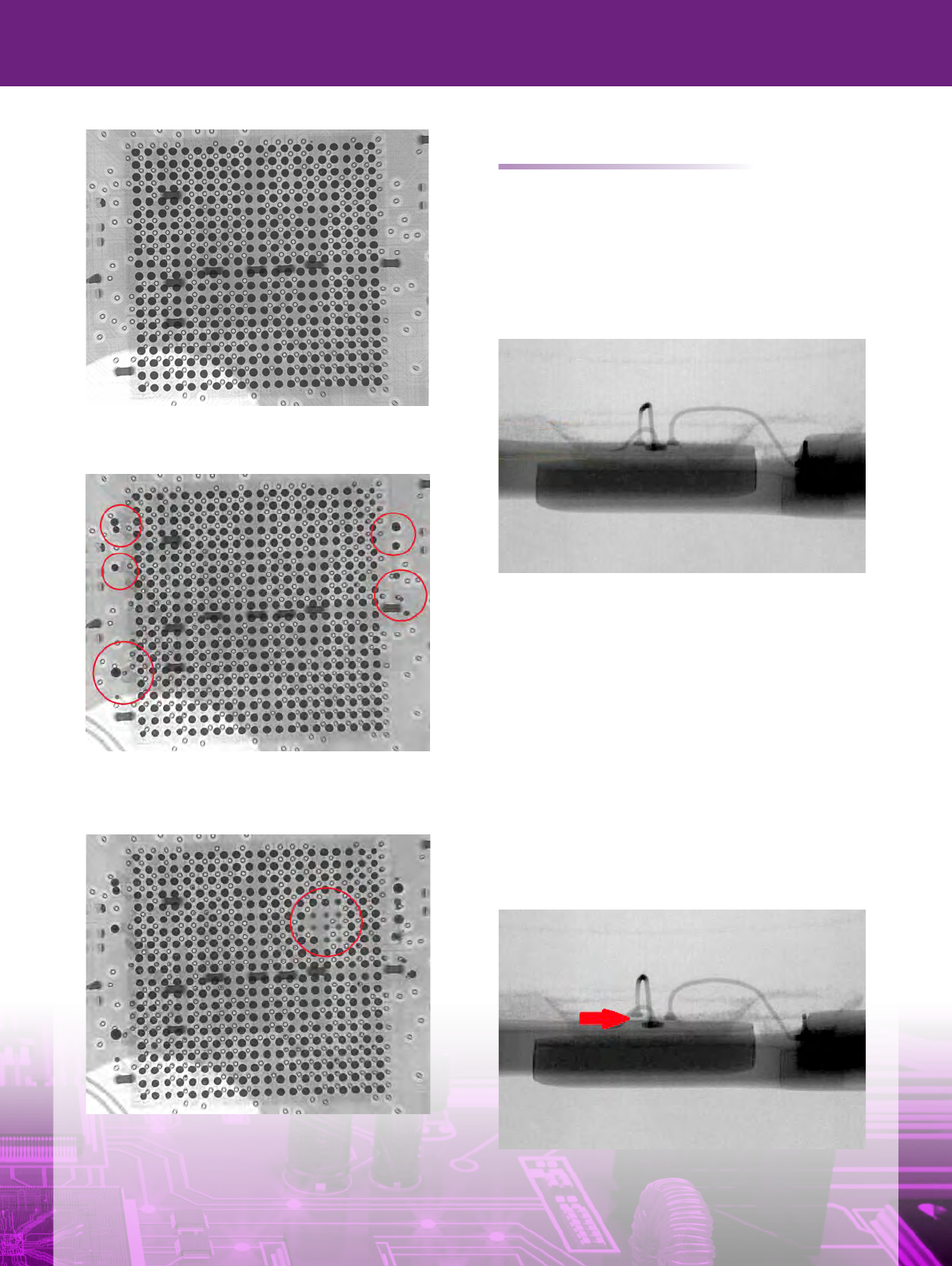
Figure 7: X-ray image from the Heated Stage. BGA with
underll before second reow.
Figure 8: X-ray image from the Heated Stage. Liquidus
temperature is reached. Solder is seen to be leeching out
away from the device.
Figure 9: X-ray image from the Heated Stage. As the heat
continues to rise eight connections explode.
Bond wire delamination
Some defects are impossible to see during the
inspection stage at the end of the production
process. This can mean that a product may have
failed tests but with no clear answer as to why.
In the following example one such case is
investigated (Figures 10 to 12).
Figure 10: X-ray image from the Heated Stage. Side view of
a small LED, showing the bond wires connected to the die
surface before applying heat.
It was known that this type of LED failed to work
post-reow but the exact failure mode was not
conrmed.
A fresh device was mounted in the Heated Stage and
the effects of the reow temperatures on the LED,
were investigated in real-time.
At around 195°C one of the bond wires has become
lifted (Figure 11). Critically this has happened before
the solder connecting it to the PCB has reowed.
Figure 11: X-ray image from the Heated Stage. Bond wire
showing clear separation from the die surface, around 195°C.