nozzle.pdf - 第8页
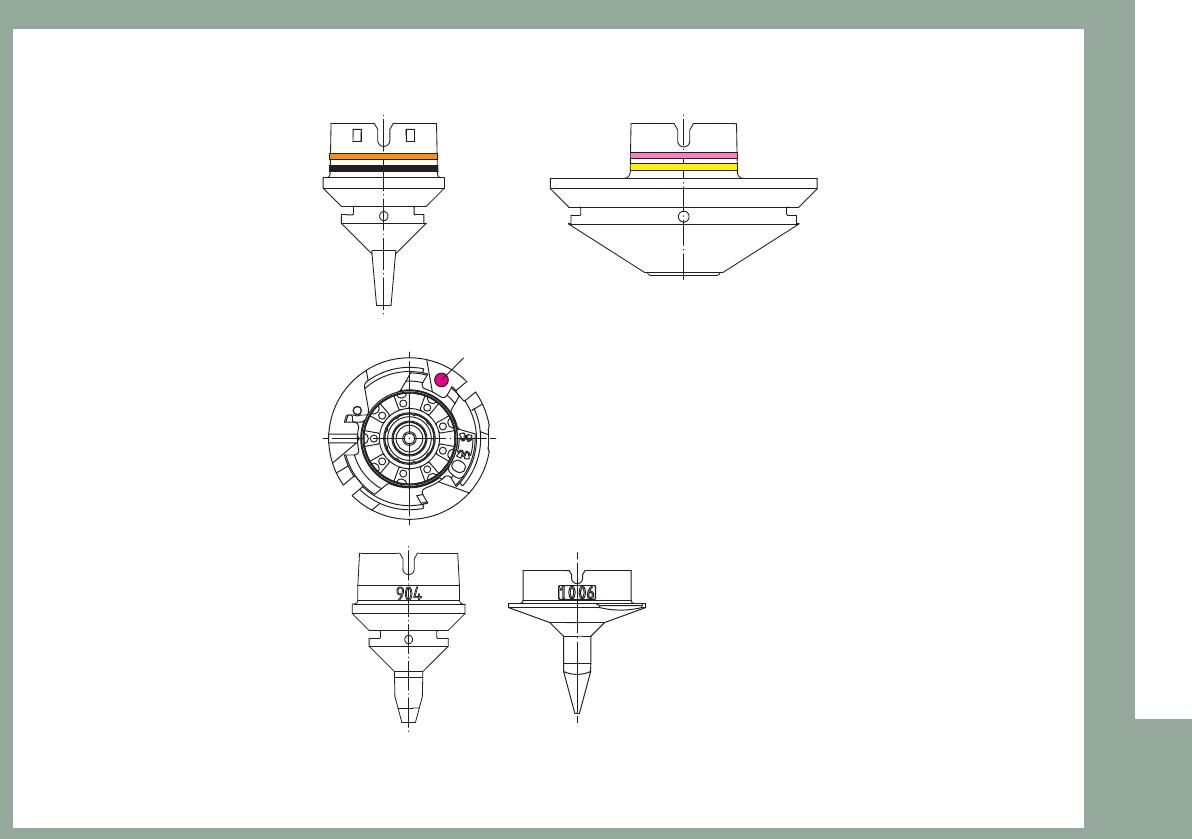
1 – 8 Ways of iden tific ation of the nozzle t ypes. Color ring: Color point: Identif ication by numbers:
1 – 7
Nozzle Families and Color Coding
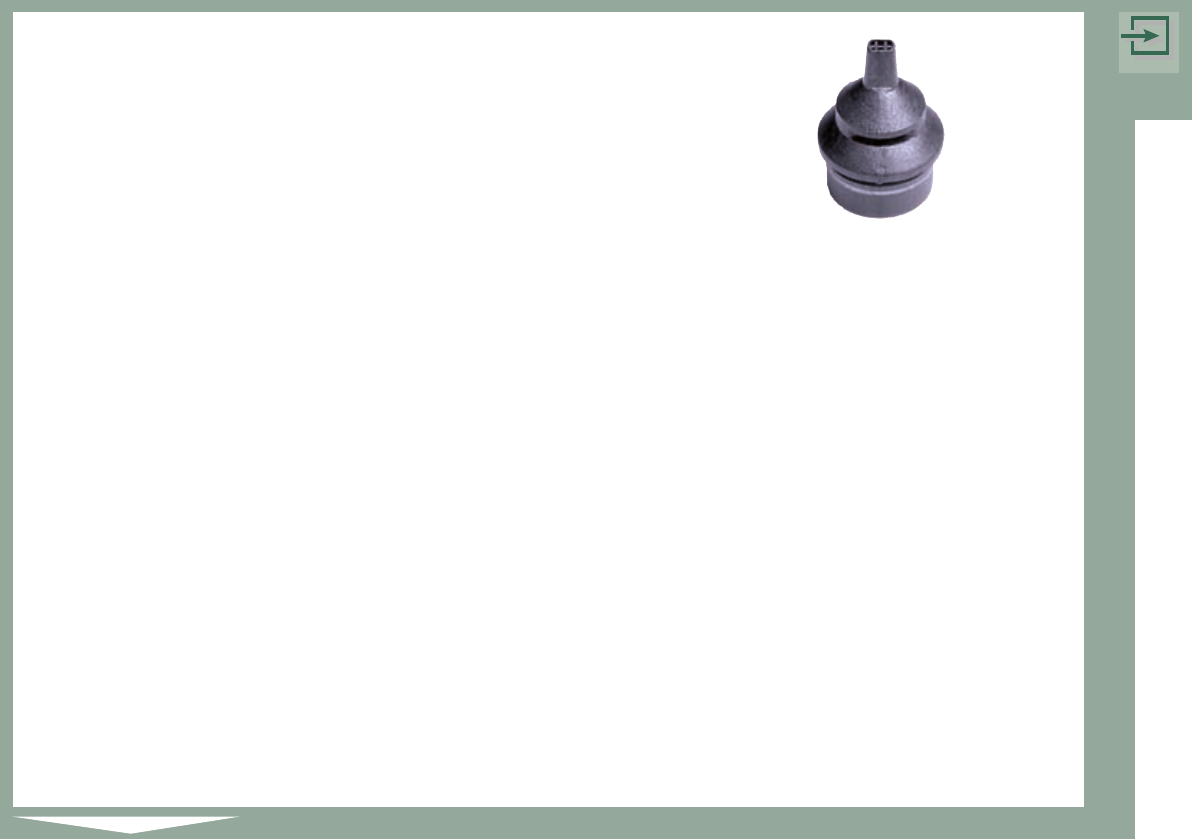
5xx Nozzle Series:
The nozzles of the 5xx series are marked with a color point and equipped with
an adapter.
8xx and 9xx Nozzle Series:
For better differentiation between the nozzle types there are two color rings around the side of the nozzle
base. The first color ring indicates the nozzle size, and the second indicates the nozzle material and thus the
nozzle family. This identification is no more valid for ceramic nozzles (9xx).
9xx Ceramic Nozzle Series:
To make the recognition even easier and to avoid accidental disposal this ceramic nozzle family is marked with
3 digit numbers.
1xxx Nozzle Series:
All nozzles of this family have a 4-digit nozzle type identification number directly on the nozzle.
Introduction
1 – 8
Ways of identification of the nozzle types.
Color ring:
Color point:
Identification by numbers:

1 – 9
Introduction
0° Description of the components
In order to work with uniformly defined package forms, the description of standard
components is subject to four rules. This is referred to as the “0° description”. It allows the
pickup angle for placement to be defined exactly.
To describe the package form of a component, the dimensions should always be
taken from the corresponding data sheet. It should be noted that it is always the
top view of the component that is described.
The display area of the package form (GF) editor always shows the 0° description of a component.
The zero point of the coordinate system is always at the center of the display area in the package
form (GF) editor. The x-axis points to the right, and the y-axis points upward. The component‘s
center point generally corresponds to the zero point of the coordinate system. Rule 1 defines the
alignment of the sides of the component in the x- and y-axis directions.
Rule 1: The long side of a nozzle with a rectangular suction area must be aligned
along the x-axis of the component.
When the component is picked up, the x-axis of the component always points in the same
direction as the long side of the nozzle (exception: special nozzles with 90° rotation).