EN_Laser_Plastic_Welding_Standalone.pdf
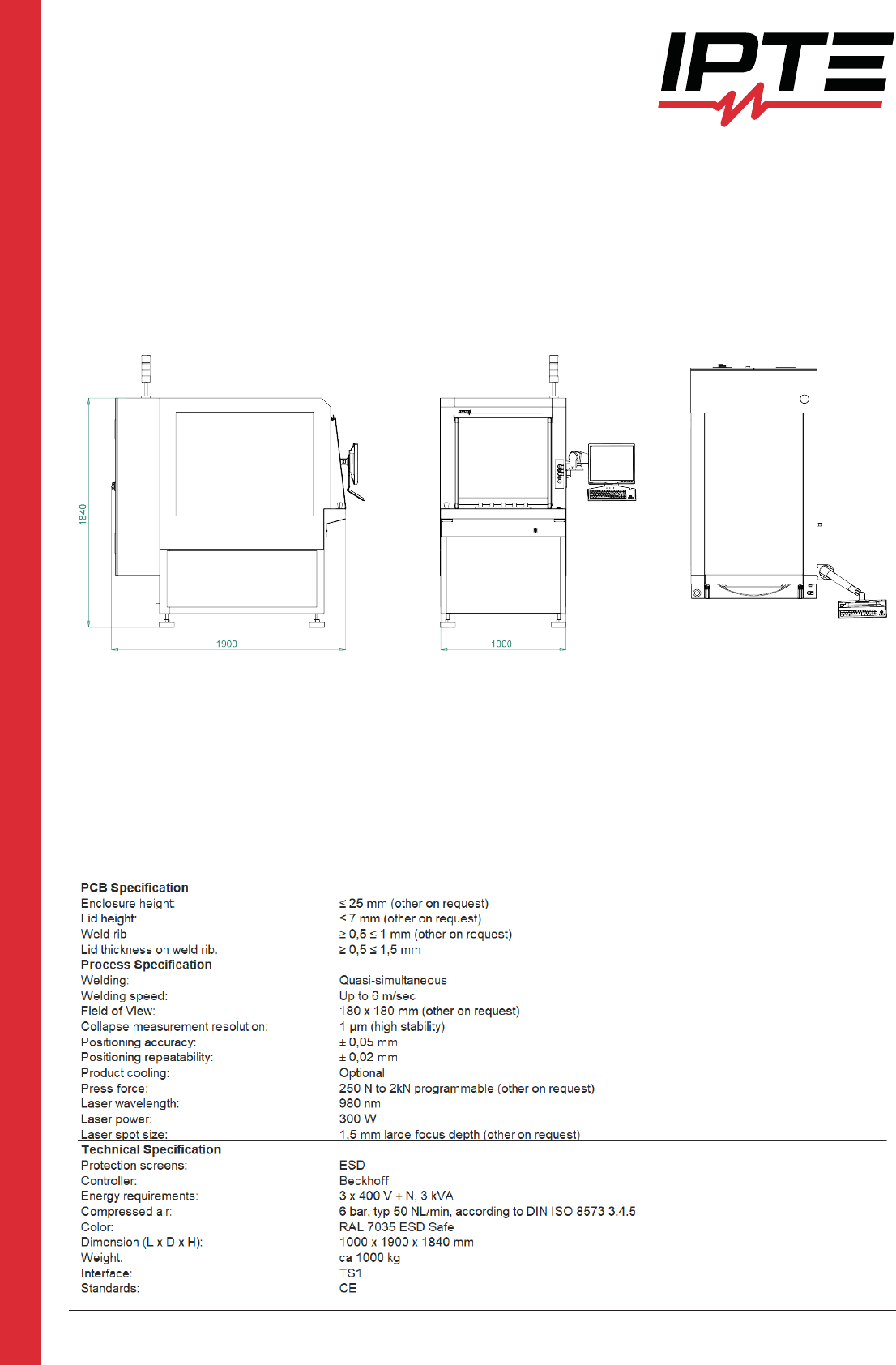
EN Laser Plastic Welding Standalone K e y features - Optimal and closed loop w elding process - Quasi-simultaneous welding - Shor t cy cle times - Easy e xchange of clamping unit (SMED) - Easy programming (T S1) - Precis…
EN Laser Plastic Welding
Standalone
Key features
- Optimal and closed loop welding process
- Quasi-simultaneous welding
- Short cycle times
- Easy exchange of clamping unit (SMED)
- Easy programming (TS1)
- Precision collapse measurement
- Sturdy C-Shape
- Integrated lift mechanism
Options
- Pendant Tool
- Fume extractor and flow detection
- Laser Power measurement tool
- Press Force measurement tool
- Marking block tool with exchangeable marking plates
- Turntable
- Drawer
Laser Plastic Welding
StandAlone
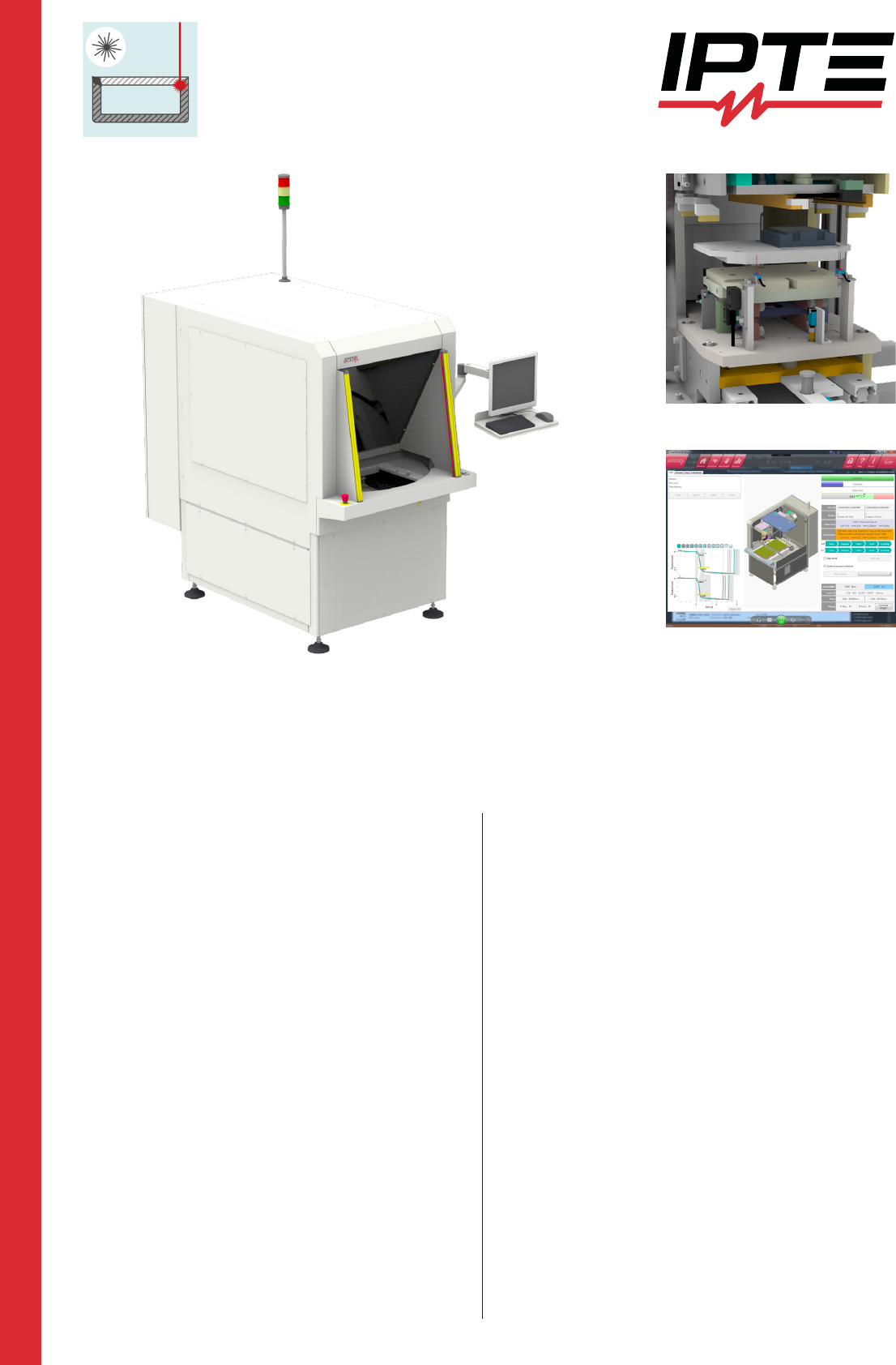
The standalone Plastic Laser Welding system is
developed for modular structured productions
with a high variety of products. This flexible usage
is guaranteed through a quick change of product-
specific carrier and the easy re-equipping of the
layout-depending tools
This off-line version features a turntable loading/
unloading and welding position. The Operator
places the un-welded parts into the nest. The
turntable is rotated so the welding process takes
place at the rear. The operator can in the same time
unload the welded part and loads a new un-welded
part.
The welding head is integrated into the cell. The
welding head is designed with a robust C-frame
that prevents mechanical deformation during
press-on and ensures stability over time.
The power laser diode is connected with an optical
fiber to the galvanometer head. The laser welding
method used is a quasi-simultaneous welding
principle. The laser beam is deflected by a fast scan
head through a lens to position and focus the spot
onto the required seam contour of the product. The
contour is scanned repeatedly during the welding
process.