00197458-01_UG_EDM_V2.2_en.pdf - 第53页
EDM V2.2 / U ser Guid e Ausgabe 10/2013 E dition 53 ● Processing instruc tions – Comment Options define wheth er a comm ent dialog is shown o n the EDM L ine when a matc hing change is detec ted and, add itionall y, the …
EDM V2.2 / User Guide Ausgabe 10/2013 Edition
52
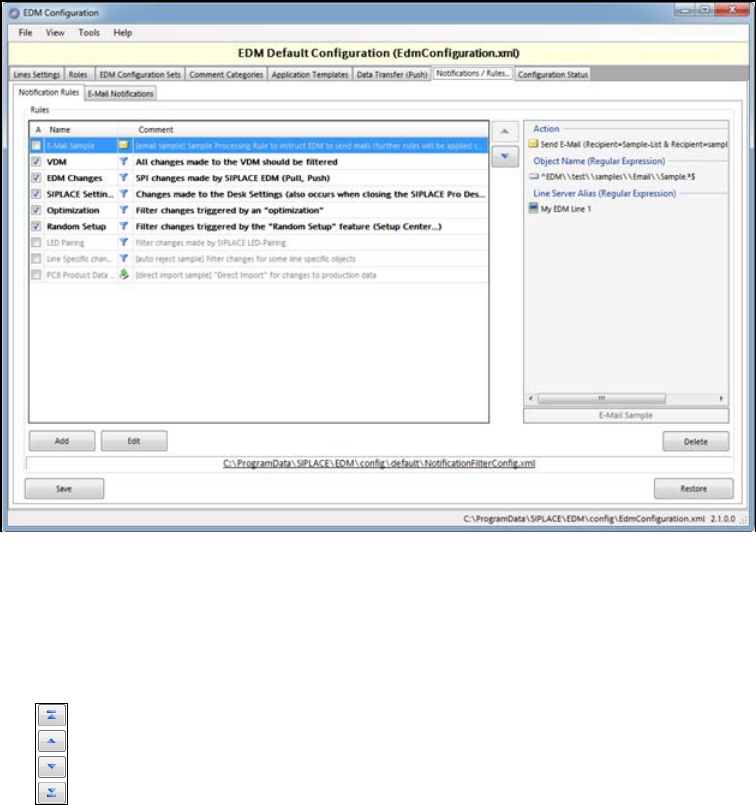
Figure 5-10: Notification Rules set editor
Rule Set Evaluation
● The rules are evaluated in descending order of the rule set list.
► Use the up and down buttons to control the sequence of the rules.
● The handling option of the first rule that matches the incoming notification determines its target
destination, and the evaluation of the rule set is terminated.
However, a matching rule with Not Specified handling option just applies its processing
instructions (e.g. sending an e-mail or changing the comment), and the evaluation continues
with the next rule in the list.
● If none of the rules matches, the default behavior (showing a comment dialog on the EDM Line
and sending the changes to the clearing pool) is applied.
5.1.7.2 Notification Rules
A notification rule consists of two parts:
1. Patterns to describe the set of notifications the rule applies to.
2. Actions to be applied on matching notifications:
● Handling options to describe the target destination of the notifications
– Filter at line server. Matching notifications are discarded on the EDM Line, and no
data is transferred to the EDM Master.
– Auto Reject. Changes are discarded on the EDM Master. These changes bypass the
data preparation engineer.
– Direct Import. Changes are imported into the Master database, without being
displayed in the clearing pool. These changes bypass the data preparation engineer.
– Not Specified. Special rule that only applies "processing instructions".
EDM V2.2 / User Guide Ausgabe 10/2013 Edition
53
● Processing instructions
– Comment Options define whether a comment dialog is shown on the EDM Line when
a matching change is detected and, additionally, the user may define default values for
the comment entries, see "Rule Action Editor – Comment Options" on page 55.
– E-Mail Options, see "Rule Action Editor – E-Mail Options" on page 55.
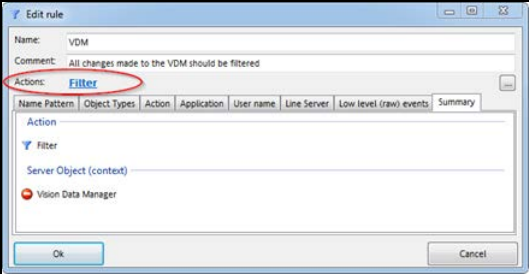
Figure 5-11: Notification rule editor window
Rule Patterns
Change notifications can be filtered using a combination of:
● name of the changed object (FullTypePath)
● (SIPLACE Pro) object types
● action
● application
● user names (SIPLACE user or Windows user)
● line server
● "low level" (raw) events (should only be used if really necessary)
– sub-object type
– properties
– events
– association delegates
There is a separate tab for each of these properties. If no value is selected in one of the tabs, the
associated property is not relevant (i.e. the rule matches all notifications if no property values are
selected at all). If one or more values are selected, in general, these categories comprise a set of
"OR" rules. This means that as soon as at least one of the defined conditions applies to the
incoming notification, the notification rule is matched (e.g. if there are several "object types"
selected, the rule applies to all of them).
The whole rule matches only if every category (tabs) matches ("AND" logic). E.g. if a "name" is
defined and several "object types" are selected, the rule matches if and only if the notification refers
to one of the selected object types and the object name referred to matches the name pattern.
EDM V2.2 / User Guide Ausgabe 10/2013 Edition
54
5.1.7.3 E-mail Configuration
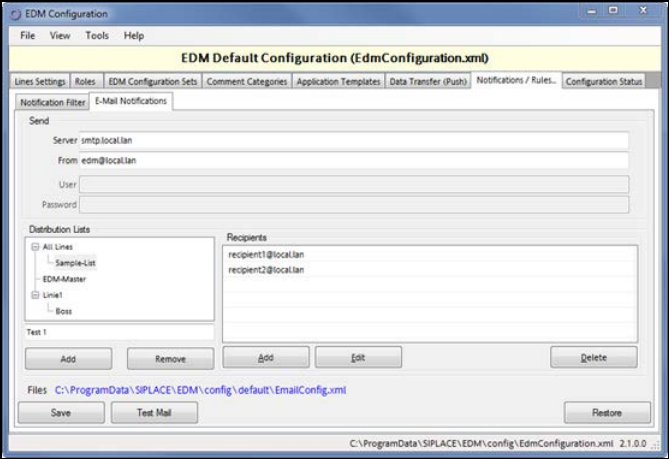
EDM e-mail notification uses SMTP to distribute notifications arriving at the Master Server. The
following must be configured:
● The network address of the SMTP server (Server)
● User and password: These fields are only active, if UseSmtpAuthentication in Advanced
Settings is set to True. The password used for SMPT authentication is saved in the
configuration files, using basic encryption.
● The sender to be entered in the message (From)
● A set of distribution lists
E-mail distribution lists make it possible to keep e-mail traffic to a minimum and to send the e-mails
to precisely the person(s) responsible. A distribution list only responds to notifications from a
specific line.
The storage location of the configuration file is specified for informational purposes and must not be
changed. Direct manipulation of the configuration file should be avoided.
Distribution Lists
A line must be selected before a new distribution list can be added. A name and a comment are
assigned to each new list.
Managing distribution lists
After a distribution list has been selected, the e-mail addresses of the recipients can be entered. All
recipients on the distribution list receive e-mails regarding notifications that refer to one of the
selected object types. Only those notifications that originate from the line for which the distribution
list was created are taken into account.
Figure 5-12: Configuration of e-mail distribution lists