ISM-1100_INM.pdf - 第9页
Quick reference handbook Barcode Reader software Quick reference handbook Barcode Reader software rev_6 Edition 06/2017 - Reproduction forbidden Page 9 STEP 3 BARCODE CONFI GURATI ON By clicking the button “ 7 Configurat…
Quick reference handbook Barcode Reader software
Quick reference handbook Barcode Reader software rev_6 Edition 06/2017 - Reproduction
forbidden
Page 8
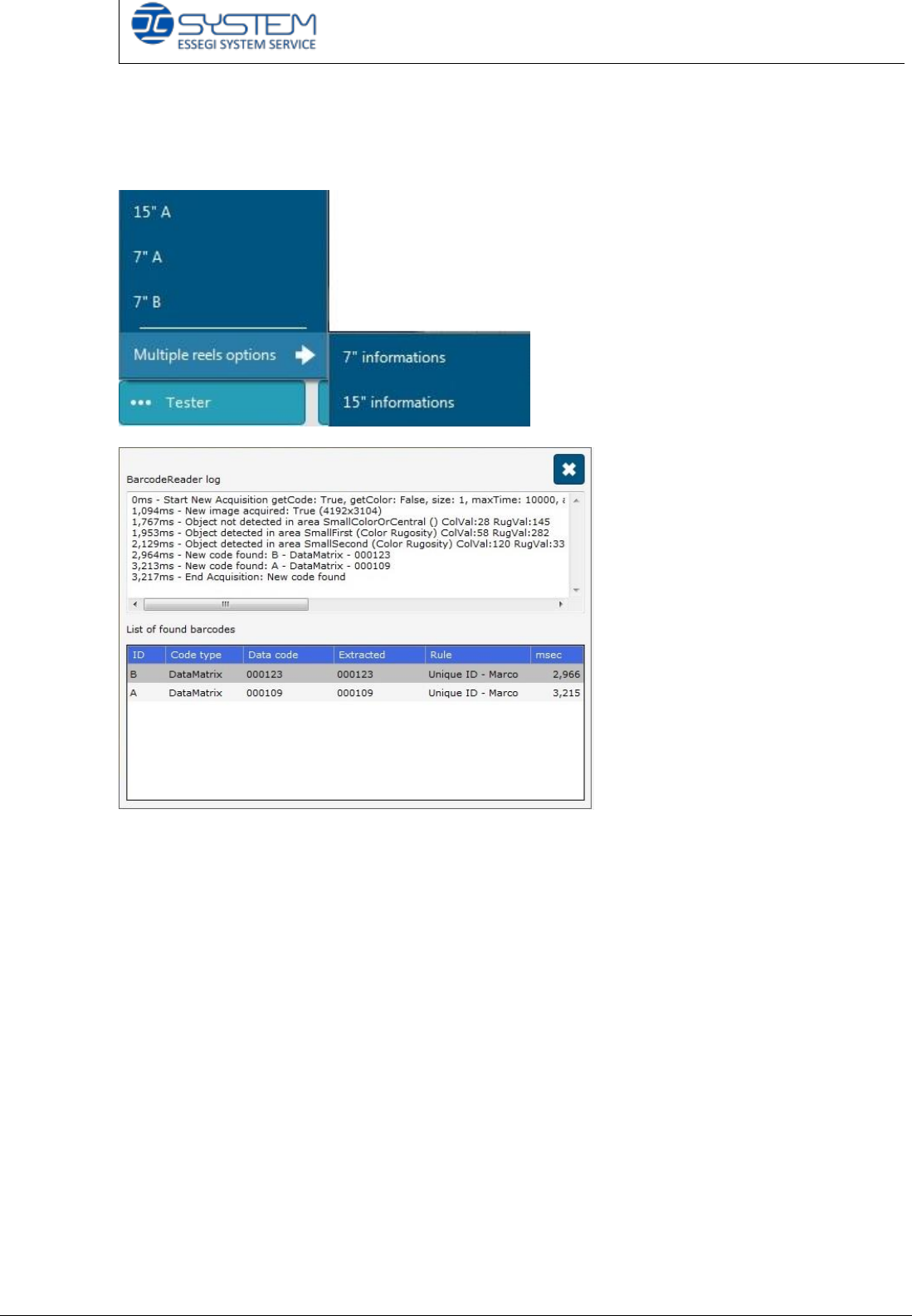
Choosing the “Multiple reels options” option, it is possible to check information
about the reels located in the 7” or 15” areas.
At bottom-right side, there is information about the found barcode regarding:
- ID: area which indicates the position of the barcode.
- Code type: it shows the type of the barcode (Datamatrix, Qrcode, ecc)
- “Data code”: it shows the code found from the barcode.
- “Extracted”: it indicates the extracted code from the rules set in the barcode
settings tab.
- “Rule”: it indicates which type of information associated to the rule
- msec: it shows the time to read the barcode.
Quick reference handbook Barcode Reader software
Quick reference handbook Barcode Reader software rev_6 Edition 06/2017 - Reproduction
forbidden
Page 9
STEP 3
BARCODE CONFIGURATION
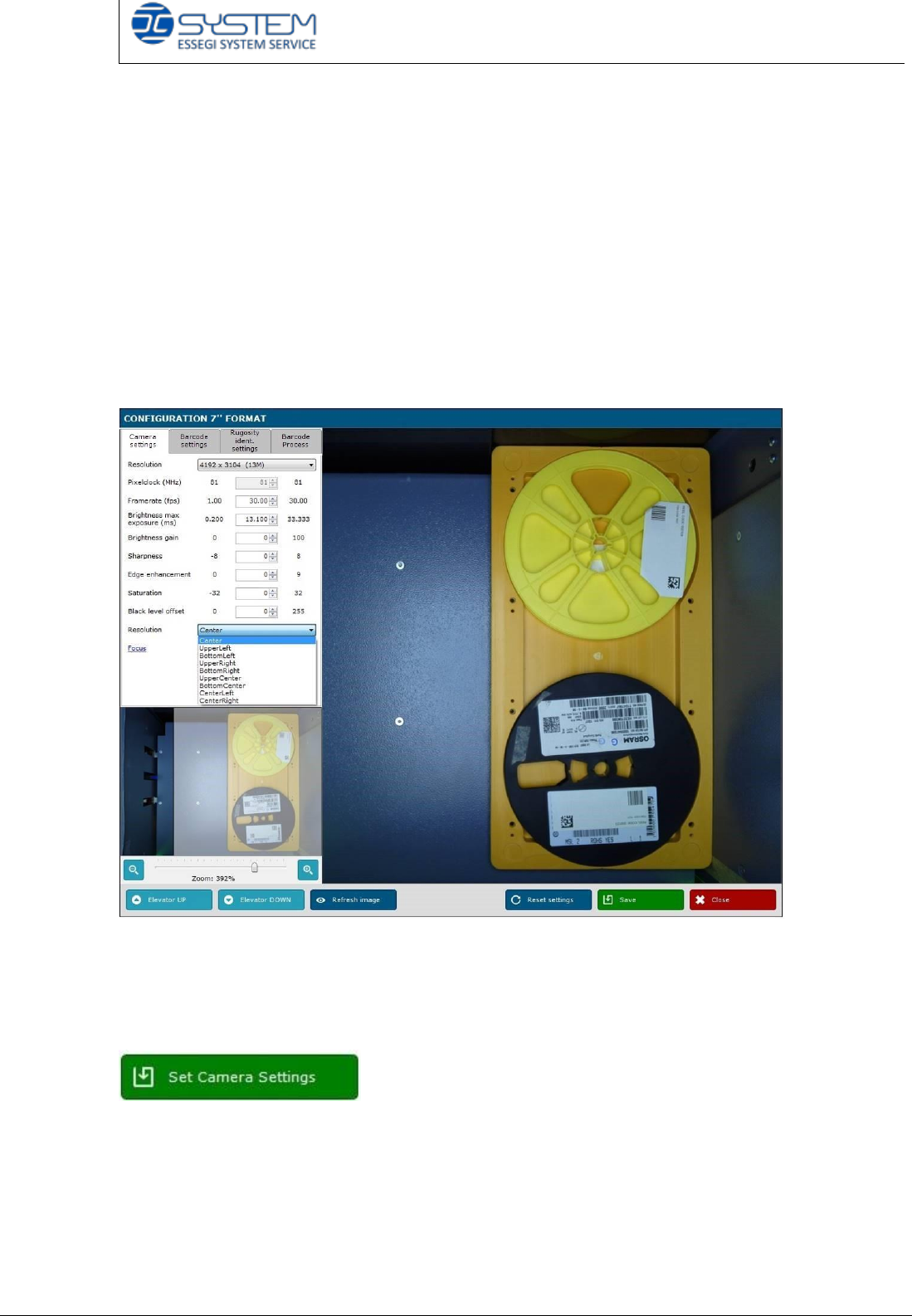
By clicking the button “7 Configuration” or “15 Configuration”, you automatically
open the AutoSMD BarcodeReader software configuration window.
On the right side of this window, there are four tabs:
- Camera settings
- Barcode settings
- Roughness identification settings
- Barcode process.
A little lower on the left side, you can find the “Elevator UP/DOWN” buttons and
the whole image of the reel. To see the specifics about the barcode label, move
the little square on the code required.
The “Set Camera Settings” button is needed to save the camera settings.
Quick reference handbook Barcode Reader software
Quick reference handbook Barcode Reader software rev_6 Edition 06/2017 - Reproduction
forbidden
Page 10
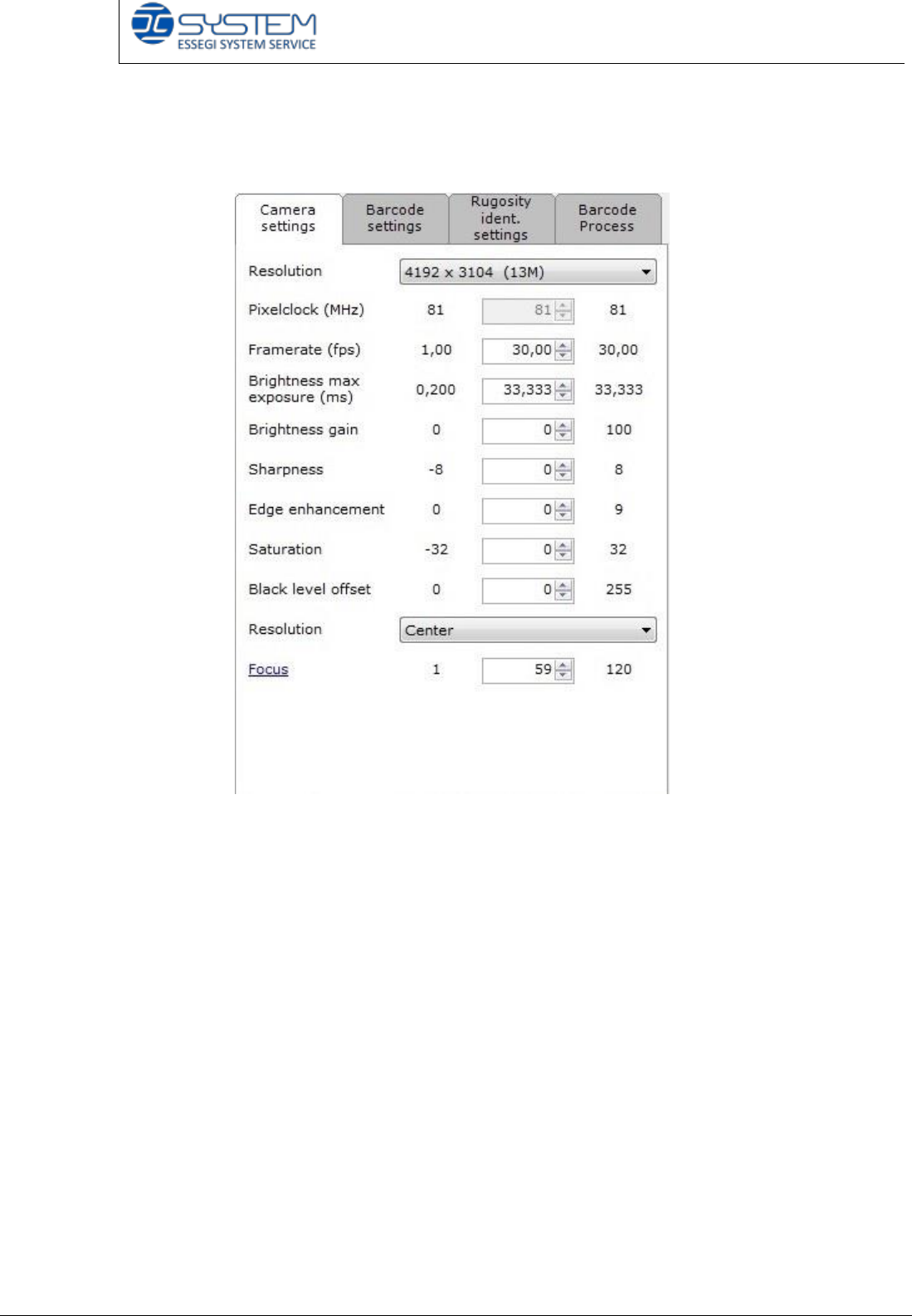
CAMERA SETTINGS TAB
In this tab, you can change the parameters of the camera to adjust the image.
Resolution: it is the number of distinct pixels in each dimension that can be
displayed. It is usually quoted as width × height, with the units in pixels.
Pixel clock: it is the speed at which the pixels are transmitted.
Frame rate: it is the number of frames which are transmitted every second.
Brightness max exposure: it indicates the time of exposition to the light. More
time of exposition means to get a brighter photo
Brightness gain: it indicates the amplification of signal. More Brightness gain is
equivalent to have an image brighter.
Sharpness: quality of an image indicating clear or distinct reproduction of details.
Edge enhancement: it is needed to improve the definition (sharpness) of outlines.
Saturation: this parameter can modify the vividness or richness of colour.
Black level offset: it is needed to blacken the dark colours.