RDS_Lacktrockner_en.pdf - 第7页
7 When drying using the convection process, the process atmosphere is heated up using a hot-air fan and then flows onto the components. The heating elements are attached above and below the transport system. The flow spe…
6
Optimum heat management
with IR radiation and convection
Thanks to our many years of experience, we
know precisely which actuators are needed to
set up a system that can be adapted simply and
individually to the various process requirements
and product landscapes of our customers.
The RDS systems are modularly structured.
The efcient upper and lower heaters work with
infrared radiation (IR) and/or convection to dry the
various materials reliably. By implementing these
two heat transfer processes, the systems are
optimally designed for the processing of lacquers
and castings containing solvents. The RDS drying
oven thus consists of several separately adjusta-
ble heating zones. In the warming-up phase, the
component and the protective lacquer are heated
up. Both the upper and lower IR radiators can be
controlled with different set-point temperatures.
Thus in the inlet area of the dryer, an increased
amount of IR radiation and a reduced convective
heat transfer is applied to the component. This
means that lacquers in particular are heated up
evenly and, thanks to the low convection, are not
dispersed onto the component.
In the drying phase, the temperature is main-
tained until the material has hardened completely.
A stronger convection is needed for this, as the
evaporating solvents need to be discharged. In the
subsequent cooling phase, the components are
cooled down gently.
7
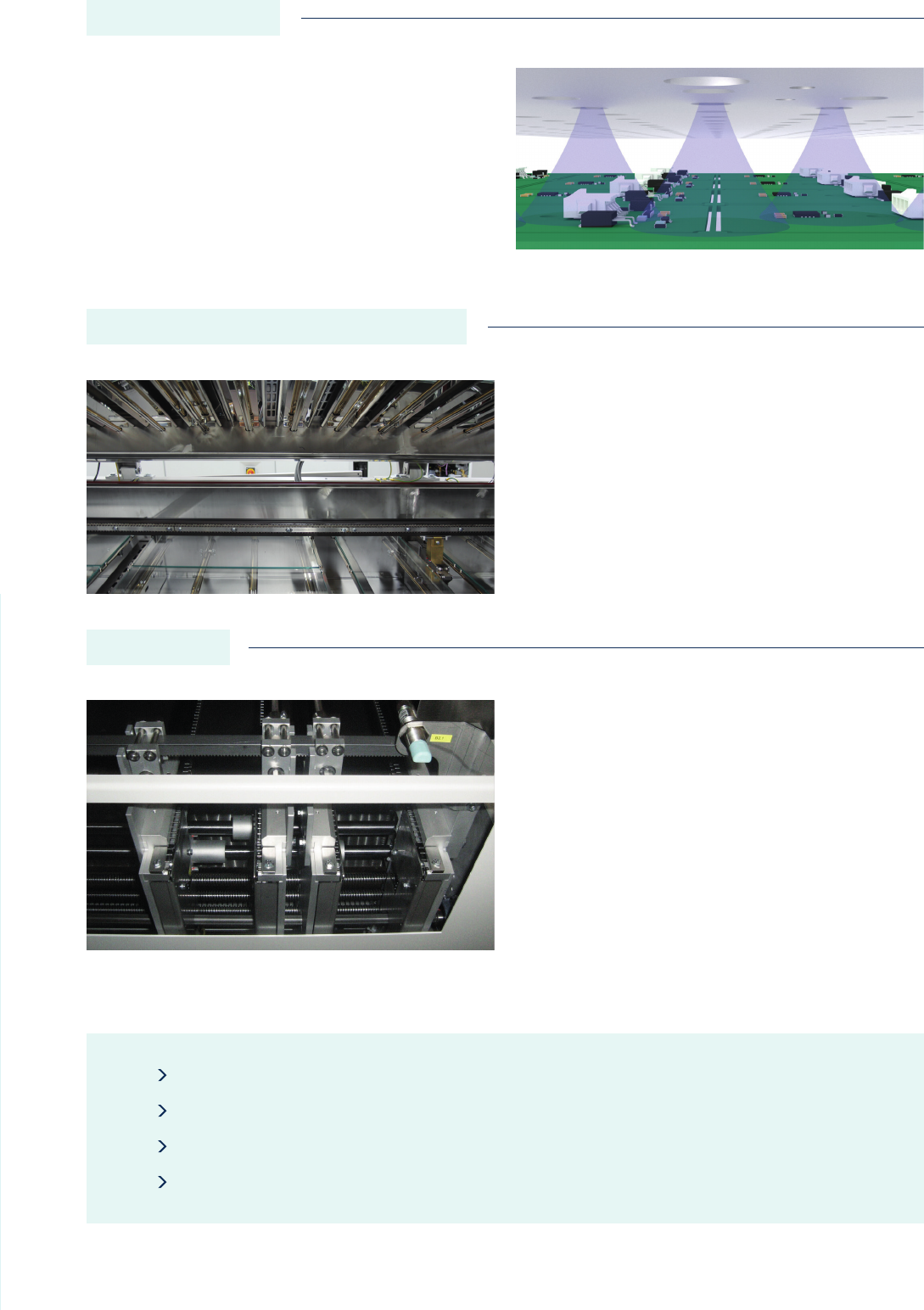
When drying using the convection process, the process
atmosphere is heated up using a hot-air fan and then flows
onto the components. The heating elements are attached
above and below the transport system. The flow speeds of
the upper and lower heating zones are individually adjus-
table so that the component is heated through evenly. This
prevents tension in the material.
Convective drying
In the combination heating process, the heat transfer is car-
ried out with infrared radiation, which is supported by central
convection heating. All heating chambers are equipped with
high-performance IR radiators. The IR radiation penetrates
the circuit board and drives out the solvents from the interior.
This enables a faster and more efcient drying process. For
the additional convection, the volume flow can be pre-set.
The heating base of all IR radiators can also be equipped
with glass covers to protect against contamination and for
easier cleaning.
Combination heating process with IR
First-class heating performance and top heat management
Upper and underside heating using convection and/or IR heating elements
Variable heating chamber length and optimum process adjustment
Flexible transport systems based on customer request
The RDS drying systems can be designed as single lane or
dual lane transport, with a pin chain conveyor and variable
width adjustment or as heavy load transport for goods
carriers based on the customer’s requirements. The optional
underfloor return transport that can be integrated offers a
space-saving solution for circuit board/goods carrier return.
The following transport variants are available:
› Single lane transport: 80 – 460 mm
› Dual lane transport: 2 x 90 – 250 mm
› Heavy load transport: based on customer requirements
Transport system
Transport
8
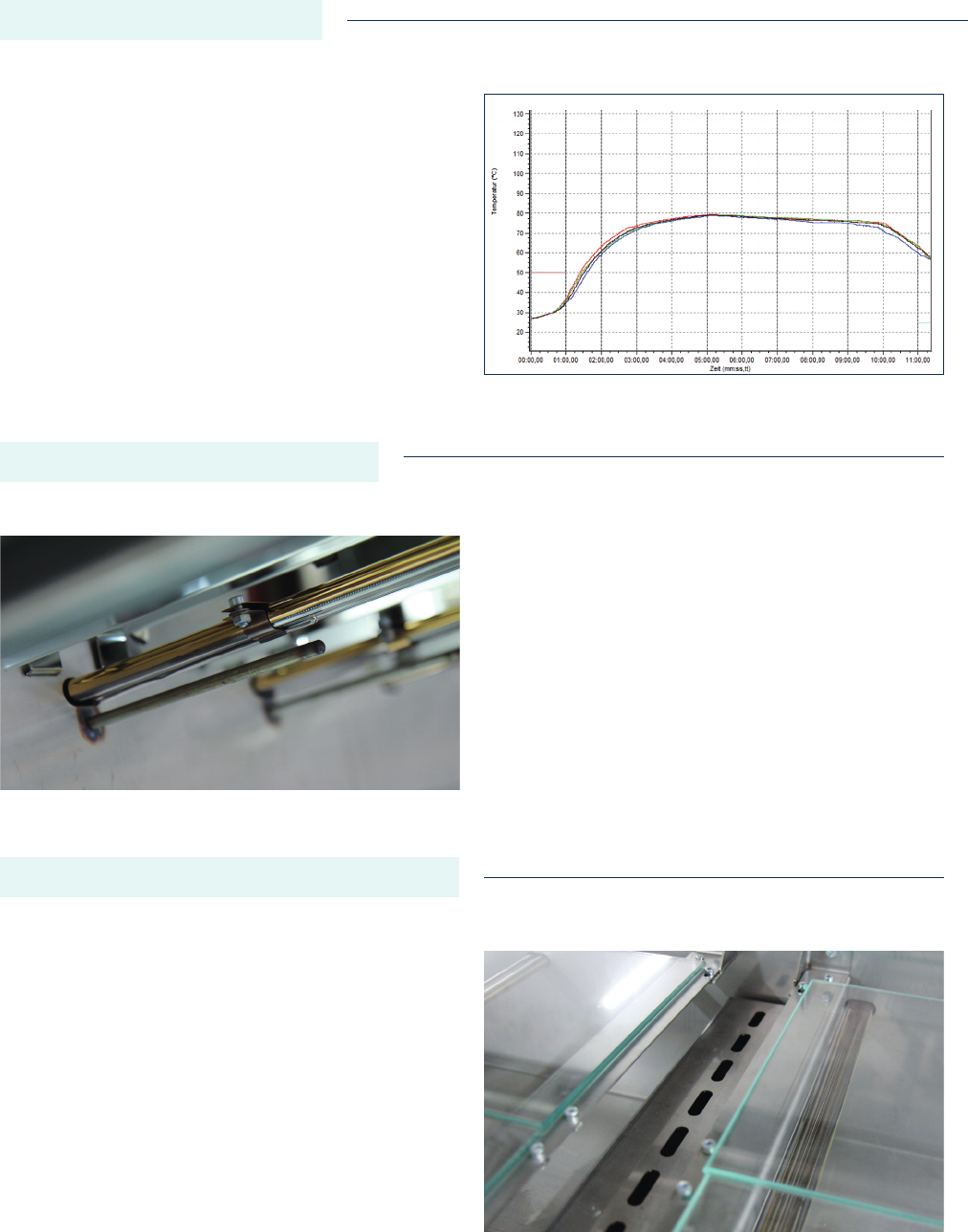
Internal temperature monitoring
For optimum hardening of the components, the RDS dryers
feature internal temperature monitoring. Thermal elements
have been installed in every heating zone, which precisely
measure the temperature in the system. The values are
displayed on the monitor. As soon as the tolerance values
are exceeded, an acoustic alarm signals and the heating is
switched off.
The exceptional thermal insulation of heating
zones and the individually adjustable tempera-
tures allow for optimum proling of your drying
processes – which are perfectly adapted to the
requirements of the products.
The exhaust system ensures safe removal of solvents
among other things. Appropriate mechanisms are attached
to the input and output of the process chamber, as well
as between the heating zones. The process exhaust air is
supplied directly to the extraction through the fan. The sub-
stances to be hardened and the exhaust products released
determine the extraction volume. The extraction function
is monitored by a pressure sensor. If there is a problem, the
heating switches off automatically and the inflow of new
components is stopped. This prevents any flammable gas
mixtures from forming in the system.
Optimum proling capability
Exhaust system and integrated extraction
Temperature curve
Process stability
thanks to clever features