Nexus_EN_CN.pdf - 第8页
Inert gases and forming gas | 惰性气体与混合气体 Nitrogen (N 2 ) is typically used to protect against oxidation. In combination with 5 % hydrogen, the forming gas is also used for reducing oxides; no special saf eguards are neces…
7
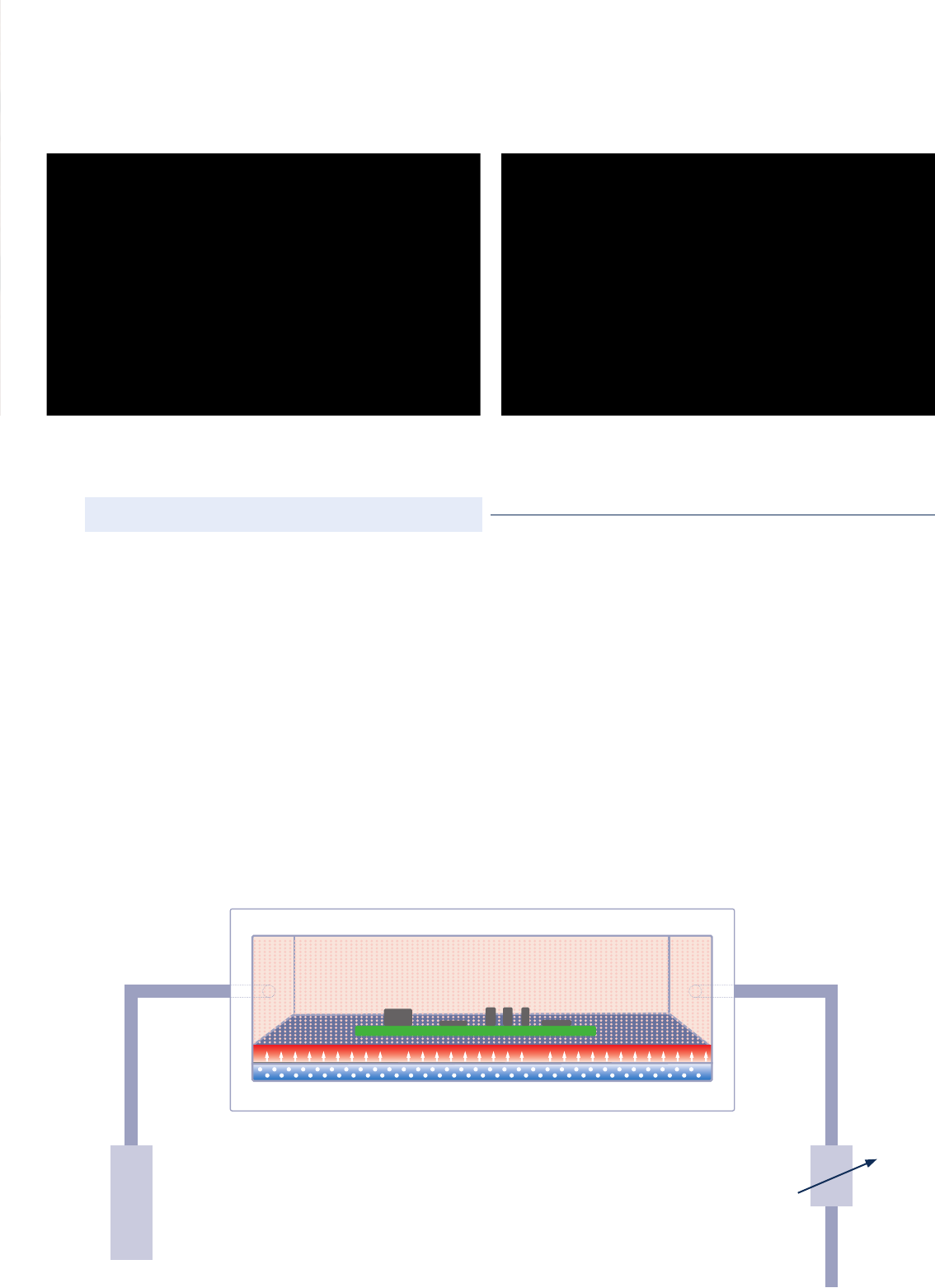
Controlled chamber pressure
|
控制腔体压力
A controlled gas sampling system via a vacuum pump from the process chamber prevents overpressure
during controlled flushing via a separate proportional valve for feeding into the process chamber; thus each
pressure level can be set as required using a software programme.
可控制采样系统经由真空泵从真空腔内取样,通过比例阀控制注入气体的流量以防止气体注入时产生过压; 因此,可以
使用软件程序根据需要设置每个压力级别。
controlled chamber pressure with nitrogen atmosphere
pressure level constant
压力水平常数
proportional valve
for nitrogen input
氮气输入比例阀
vacuum pump to control the chamber
pressure of 0 - 1000 mbar
真空泵可以控制腔体
压力在0-1000 mbar
在氮气气氛下控制真空腔压力

Inert gases and forming gas
| 惰性气体与混合气体
Nitrogen (N
2
) is typically used to protect against
oxidation. In combination with 5 % hydrogen, the forming gas
is also used for reducing oxides; no special safeguards are
necessary within this mixing ratio.
混合气体也用于与5%的氢气混合使用,以减少氧化物,在此混合比例
内,无需采取特殊措施。
Forming gases with a hydrogen content from 5 % to 100 %
need necessarily appropriate safeguards and are used only at
280 °C or higher. Depending on the process temperature, the
use of formic acid can be benecial.
5%至100%氢含量的混合气体可能需要更高等级的防护装置,并且只能
在280°C或更高温度下使用。根据工艺温度的不同,使用甲酸有益于
工艺。
Activation (Gas)
Investment Wetting
Nitrogen N
2
Forming gas N
2
/H
2
(95 %/5 %)
Hydrogen H
2
100 %
Formid acid HCOOH
N
2
N
2
/H
2
Various media
for a wide range of requirements and demands
各种介质
广泛适用于各种需求
Depending on the process temperature and the desired oxide freedom, the use of different process media is possible.
根据工艺温度和所需的氧化物自由度,可以使用不同的工艺介质。
Formic acid tank (bubbler) |
甲酸罐(鼓泡器)
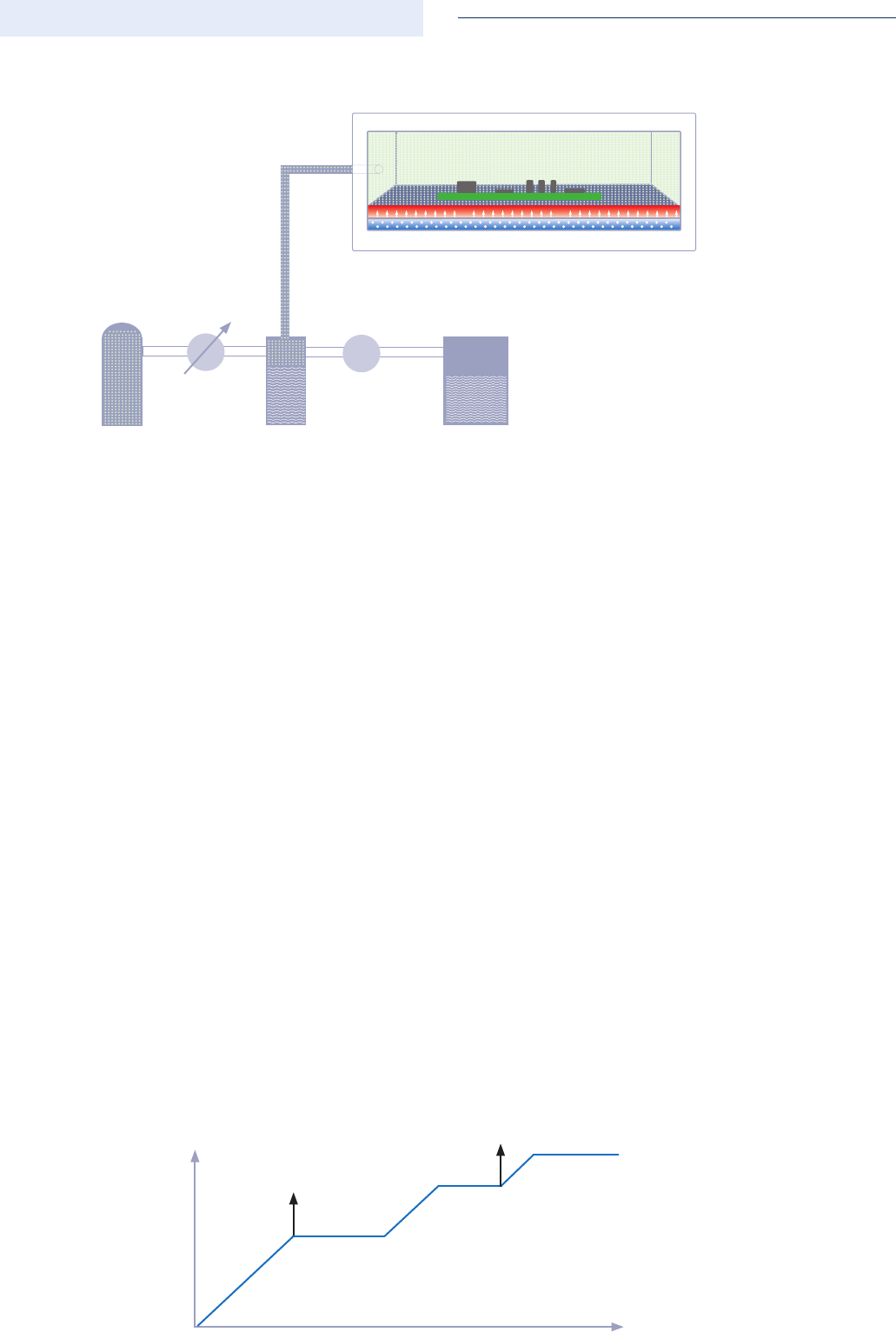
To achieve a stable, reliable, flux-free soldering process, the inert carrier gas (N
2
) is enriched with formic acid (HCOOH) and
transferred into the process chamber. So that the “saturation” of the carrier gas with formic acid remains constant, it is neces-
sary to keep the parameters constant while the liquid formic acid is flowing through. These include the flow velocity, flow rate,
temperature and the lling capacity of the formic acid tank (bubbler). Thanks to today’s control engineering, the nitrogen flow
rate can be monitored easily and reliably. Unlike the ll level of formic acid in conventional bubbler solutions which must be
manually relled with acid – taking into account the protective measures for employees – and here are subject to a greater
fluctuation in the lling capacity. This is not the case for this new generation of bubblers which monitor and readjusts the ll
level. This allows a stable process, and also increases the safety of employees, because original containers (standard 10 l)
with formic acid can be inserted into the housing of the bubbler without decanting. To make the device even safer, the housing
is monitored and equipped with its own suction system.
为了实现稳定,可靠,无助焊剂的焊接制程,惰性载气(N2)中将注入甲酸(HCOOH),并将其输送到制程腔体内。为确保含有甲酸的载
体的“饱和度”保持恒定,当甲酸液体流过时,参数必须保持恒定。这些参数包括甲酸罐(起泡器)的流速、流量、温度和填充容量等。得益
于当今的控制技术,氮气流速可轻而易举地、稳定地得到监控,而传统起泡器对于甲酸液位的控制完全达不到该程度。这些传统起泡器需
要手动加酸,同时员工必须采用合适的安全防范措施,并且加酸量不稳定,波动范围较大. 对于监视和重新调整填充水平的新一代起泡器而
言,情况并非如此。由于可以将带有甲酸的原始容器(标准10升)不倾倒地插入起泡器的壳体中,因此可以实现稳定的过程,并还可以提高
员工的安全性。为了使设备更加安全,需要对外壳进行监控并配备其自己的抽吸系统。
The removal of the oxides on metals with formic acid is performed using a two-step process; the schematic sequence of
this process can be seen in the following diagram. During the rst step, so-called formates of the metal are formed and the
formates are decomposed (Cu) or vaporised (SnO, SnO
2
) at approx. 200 °C. The H+ formed during the second step supports
oxide removal as well as the molten solder from the melting temperature in the reductive environment. This allows for a highly
wettable surface on copper and other metals. The application is suitable from process temperatures upwards of 200 °C.
使用甲酸去除金属上的氧化物的过程分两步进行: 这个过程的原理图顺序如下图所示。在第一步中,下图显示了此过程的示意性顺序。 在
第一步过程中,形成了所谓的金属甲酸盐,并且甲酸盐在大约30℃下分解(Cu)或汽化(SnO,SnO2)。 200℃。 第二部分中形成的H +有
助于还原性环境中的熔融温度除去氧化物和熔融焊料。 这样可以在铜和其他金属上形成高度可润湿的表面。 该应用适用于200°C以上的制程
温度。
controlled chamber pressure with nitrogen atmosphere
在氮气气氛下控制真空腔压力
pressure level constant
压力水平常数
formic acid tank (bubbler)
甲酸罐(鼓泡器)
pump
泵
proportional valve
or mass ow controller
比例阀
或质量流量控制器
HCOOH
N2
0 °C
150 °C
200 °C
SnO
2
+ 2 H - COOH Sn + CO
2
+ H
2
O
SnO
+ H - COOH Sn + CO
2
+ H
2
O + H
2
M - COOH
2
M + 2CO
2
+ H
2
MO + 2H - COOH M - (COOH)
2
+ H
2
O