ED-7306_E.pdf - 第16页
JEITA ED-7306 - 14 - 3.5 Maximum permissible package warpage of BGA and F BGA 3.5.1 The maximum permissible package warpage of BG A and FBGA is described i n Explanatory Table 1 , which is calculated from th e experiment…
JEITA ED-7306
- 13 -
3.4 Solder ball bridges after BGA board level assembly
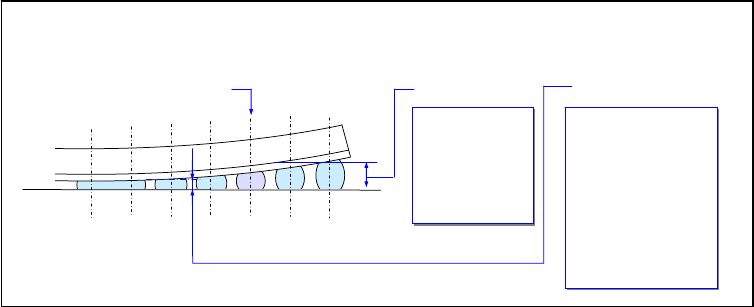
The occurrence of the solder ball bridges depends on how much package warps during reflow process. The
mechanisms of the solder ball bridges are described below:
(1) If the package warpage is less than the maximum permissible warpage just above the melting point,
all solder balls are once soldered to the lands on PWB.
(2) Further elevation of the temperature makes some balls flattened while others stretched because of
the increase in package warpage.
(3) The collapsed balls have larger diameters, while the stretched balls become thinner but are still
connecting the package and PWB owing to surface tension.
(4) When the diameters of the collapsed balls expand beyond the certain percentage of the ball pitch
(80 % of the ball pitch obtained from the experimental data), the failure rate of the short circuits
increases.
Therefore, the maximum relative displacement of the package without the solder bridge is the difference
between the height of the stretched balls (the highest joint height) and that of the flattened balls (the lowest
joint height) whose diameter is 80 % of the ball pitch. (See Explanatory Fig. 2)
The maximum relative displacement is defined as the difference between the highest and
the lowest joint heights of BGA package mounted on the ideally f lat seating plane, where
none of solder joints bridge.
NOTE: Constants of the calculations are obtained from the experiment and used for simplicity.
Explanatory Fig. 2 Calculation of the maximum relative displacement immune
from solder ball bridges
Highest ball
height of BGA
without solder
bridge.
Lowest ball
height of BGA
without solder
bridge.
Empirical
data
↓
Nominal joint
height x 1.3
Empirical
data
↓
Nominal joint
height x 1.3
Nominal joint height of
ideally flat package
Ball pitch>Ball
width
↓
Empirical data:
Pitch x 0.8
↓
Height
calculation
Ball pitch>Ball
width
↓
Empirical data:
Pitch x 0.8
↓
Height
calculation
Ideally flat
seating plane
JEITA ED-7306
- 14 -
3.5 Maximum permissible package warpage of BGA and FBGA
3.5.1 The maximum permissible package warpage of BGA and FBGA is described in Explanatory Table 1,
which is calculated from the experimental data.
3.5.2 Given that PWB is an ideally flat seating plane, the maximum relative displacement from the seating
plane is the difference between the highest and lowest joint heights of BGA which is immune from the
open solder joints or solder ball bridges.
3.5.3 The maximum permissible package warpage of BGA and FBGA is determined to be 80 % of the
maximum relative displacement, where either open solder joints or solder ball bridges was not seen.
The other 20 % is given to the permissible warpage of PWB. The ratio reflects the difficultness in
maintaining straight of the package versus PWB at elevated temperature, i.e. complexity in the
materials and structure of package vs. PWB.
3.5.4 The criteria of maximum permissible package warpage for solder joints without open or short circuits
are obtained separately. Less than 10 µm of difference indicate that the open solder joints and solder
bridges are the phenomena caused by the same reason but viewed from opposite sides. The current
magnitudes of package warpage barely satisfy the budget allocation of the tolerance, 80 % to the
package. However, along with the progress in technology, the methodology to reduce the package
warpage will be established, and then the criteria will be reviewed.
JEITA ED-7306
- 15 -
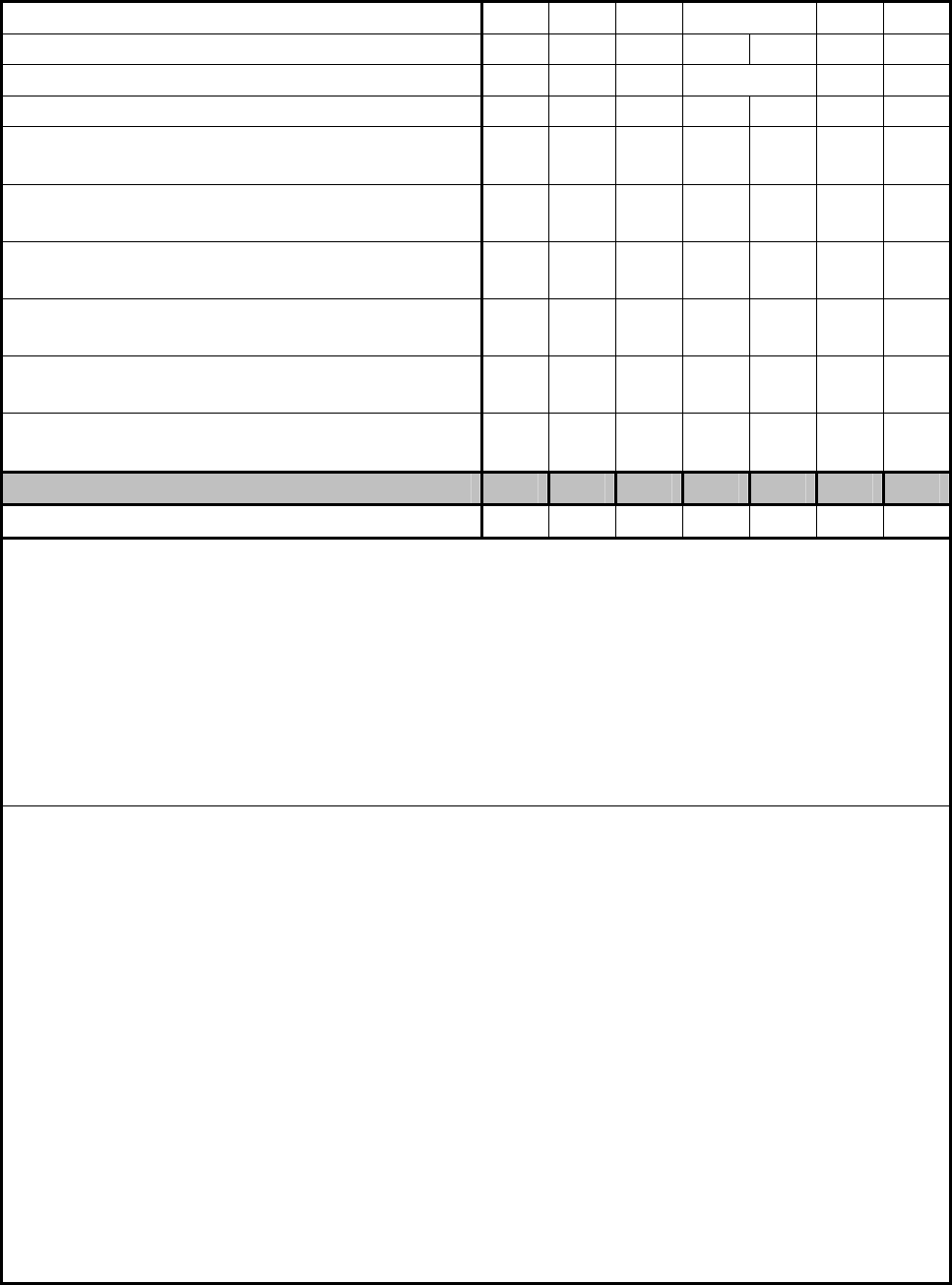
Explanatory Table 1 Maximum permissible package warpage for BGA and FBGA
Unit: mm
Solder ball pitch 0.4 0.5 0.65 0.8 1.0 1.27
Condition of solder ball height
a)
0.20 0.25 0.33 0.35 0.40 0.50 0.60
Condition of solder paste thickness after reflow
b)
0.08 0.10 0.11 0.13 0.14 0.15
Nominal solder joint height of the ideally flat package 0.18 0.23 0.29 0.31 0.36 0.43 0.5
Highest solder joint height of BGA without open
solder joint
c)
0.28 0.35 0.44 0.48 0.53 0.64 0.75
Lowest solder joint height of BGA without open
solder joint
d)
0.16 0.20 0.25 0.27 0.31 0.37 0.44
Highest solder joint height of BGA without solder
bridge
e)
0.24 0.29 0.38 0.40 0.46 0.55 0.66
Lowest solder joint height of BGA without solder
bridge
f)
0.12 0.15 0.20 0.19 0.25 0.28 0.34
Max relative displacement of BGA without open
solder joint
g)
0.12 0.15 0.19 0.21 0.22 0.27 0.31
Max relative displacement of BGA without solder
bridge
h)
0.12 0.14 0.18 0.21 0.21 0.28 0.32
Max permissible package warpage (Absolute value)
i)
0.10 0.11 0.14 0.17 0.17 0.22 0.25
Coplanarity at room temperature (For reference) 0.08 0.08 0.10 0.10 0.10 0.20 0.20
NOTE: Assumptions of the calculations are
• The structure of the lands on PWB is non solder mask defined;
• The diameter of the lands on PWB is the same as that of package;
• Solder joint height between package and PWB is the distance between the face-to-face copper
lands;
• Thicknesses of the metal masks for solder paste printings are
- 0.10 mm for 0.4 mm pitch FBGA,
- 0.12 mm for 0.5 mm and 0.65 mm pitch FBGA, and
- 0.15 mm for 0.8 mm, 1.0 mm, and 1.27 mm pitch BGA;
• Opening diameter of the solder printing mask is the same as that of the lands on PWB.
Table footnote:
a)
It follows the specification in JEITA EDR-7315 and JEITA EDR-7316.
b)
It is the thicknesses of molten solder paste on copper lands without any component attached,
supposed 50 % of solder paste is metal content (solder).
c)
It is the sum of the solder ball height and the molten solder-paste thickness, where the solder
connections are immune from open circuit.
d)
It is 87 % of the nominal standoff height of the ideally flat package. The ratio is obtained from the
empirical data taken from the intentionally concave-warped sample.
e)
It is 130 % of the nominal standoff height of the ideally flat package. The ratio is obtained from the
empirical data taken from the intentionally convex-warped sample.
f)
It is the sum of the molten solder and the solder ball height when the ball diameter expands to 80 % of
the ball pitch. It is known that the balls do not bridge as far as the collapse of solder balls does not
make the ball diameter expand beyond 80 % of the ball pitch.
g)
It is the difference between the highest and the lowest solder joint height, where open solder joint is
not seen.
h)
It is the difference between the highest and the lowest solder joint height, where solder ball bridge is
not seen.
i)
It is 80 % of the maximum relative displacement.