2026 Ersa-Selective-Soldering-Product-Overview-en.pdf - 第15页
mm 2 Compon ent -frien dly & ener gy- s av ing mat ri x h eat in g Per for m dif ferent s older ing task s ind epende ntly of each other f or high flexibil ity and high throughp ut. A ssembly siz es up to 685 x 508 m…
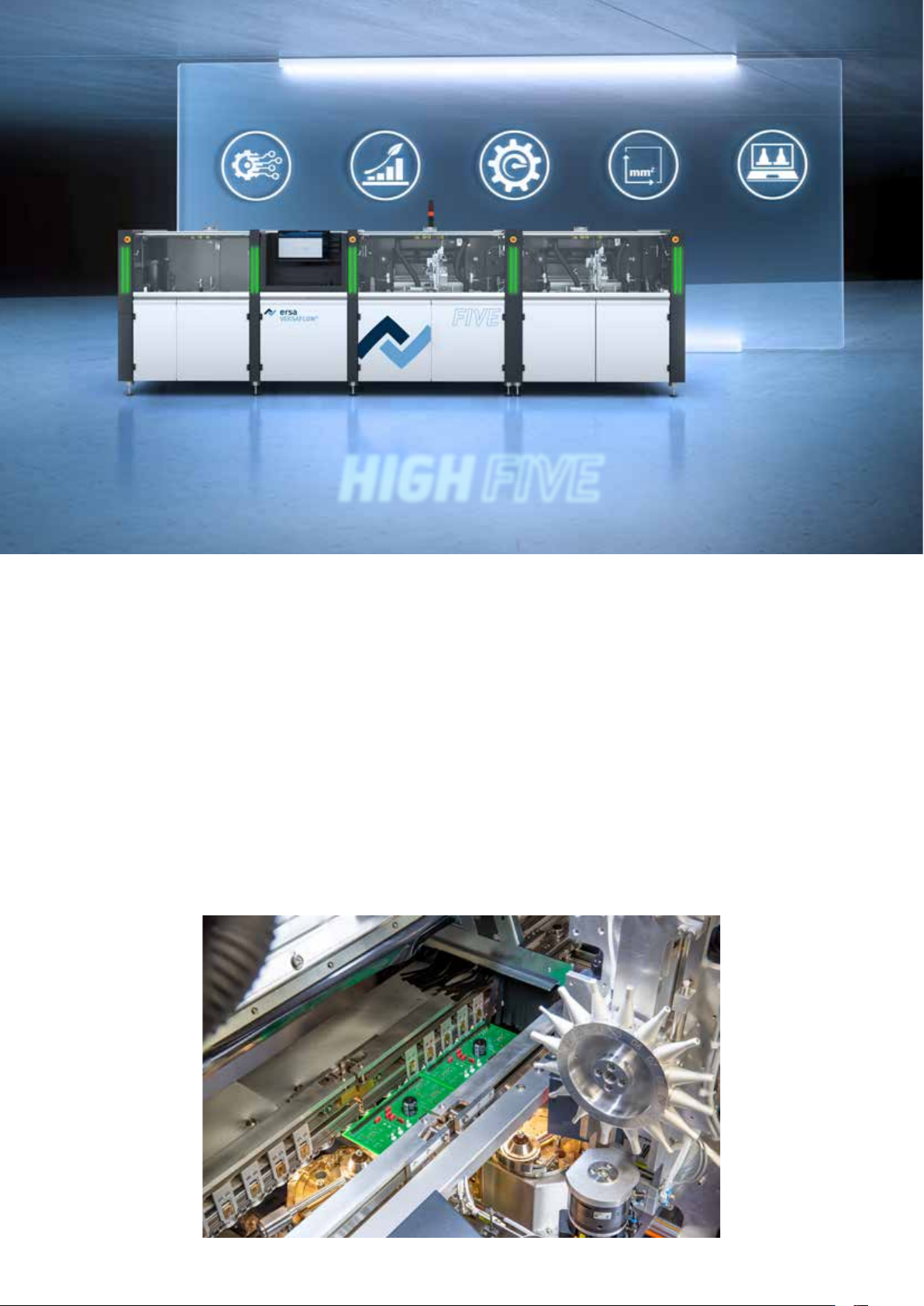
HIGH FIVE
VERSAFLOW FIVE
No compromises on flexibility or throughput.
Ersa VERSAFLOW FIVE
VERSAFLOW FIVE is the latest innovation
in ultra-high-end selective soldering and
sets new standards for automation and
flexibility in electronics manufacturing.
Designed for demanding applications
in sectors such as automotive, medical
technology and aerospace, it guarantees
optimal production processes with maxi-
mum efficiency. Thanks to its high degree
of automation, the machine enables auton-
omous production and increases produc-
tivity significantly. It is ideal for electronics
manufacturers with high production
volumes and changing requirements, as it
offers maximum productivity and through-
put without compromising on quality. And
it is ideal for electronics manufacturers
with high production volumes and changing
requirements, as it offers maximum pro-
ductivity and throughput without compro-
mising on quality.
for ultimate selective soldering.
Optional nozzle changer
for maximum process
reliability and automated
setup change
14
mm
2
Component-friendly & energy-
saving matrix heating
Perform different soldering
tasks independently of each
other for high flexibility and
high throughput.
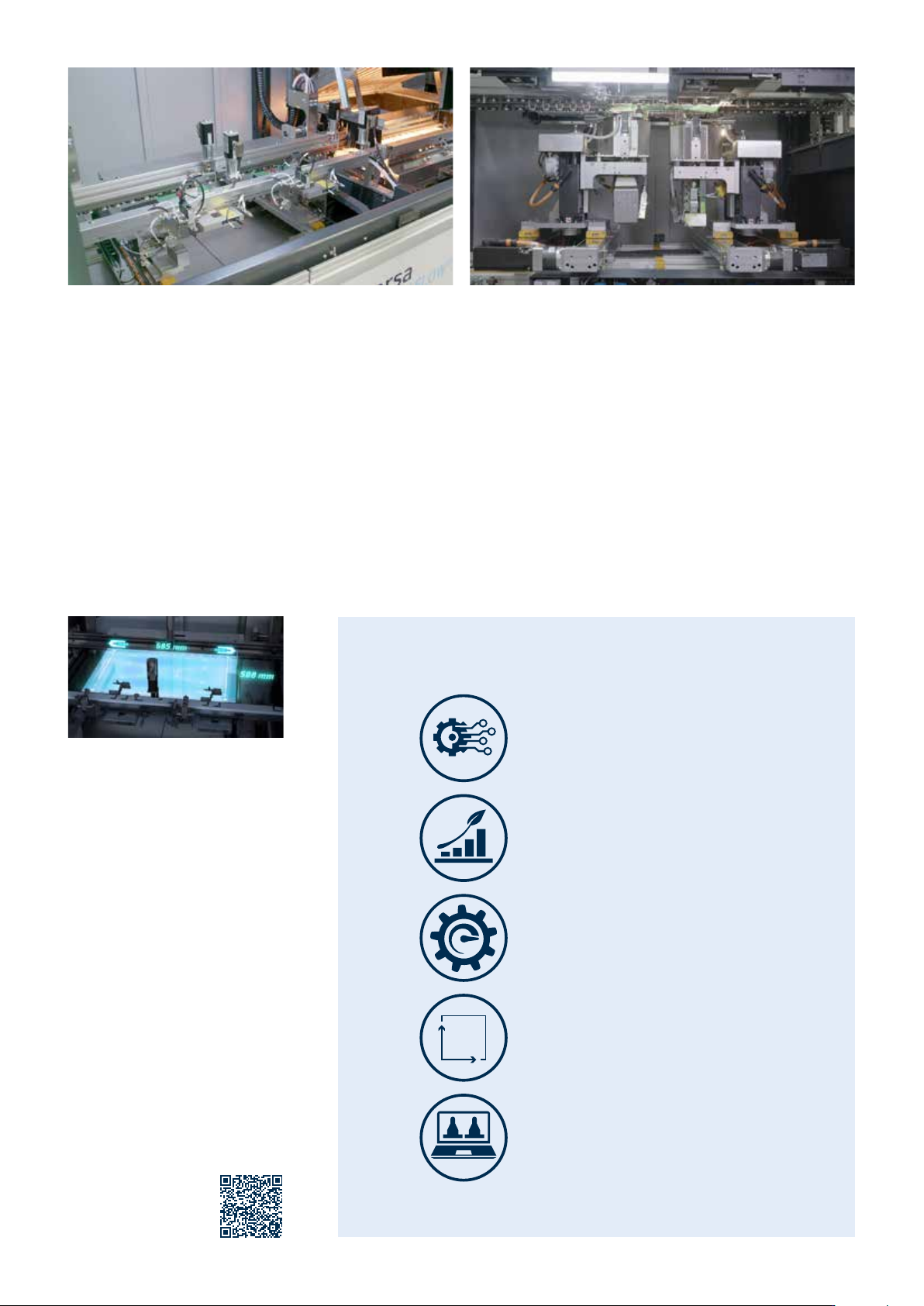
Assembly sizes
up to 685 x 508 mm
CAD Expert Mode
Autonomous production
Technical highlights:
VERSAFLEX 2.0 with synchronous
and asynchronous mode
Automated nozzle changer
Module-specific LED strips facil-
itate error diagnosis and improve
user-friendliness thanks to clear
status displays.
Technical highlights:
Independent axis systems with 20 mm
more stroke (Z-axis)
Collision monitoring for the solder pots
Automatic nozzle activation
Further information
VERSAFLEX 2.0
The VERSAFLOW FIVE is the first gen-
eration of machines to feature the new
VERSAFLEX 2.0 module. This module
allows two printed circuit boards to be
processed completely independently of
each other and in parallel within a single
module, eliminating any waiting times and
maximizing throughput and batch sizes.
Synchronous mode:
The axes move in parallel at a fixed dis-
tance from each other, which shortens
cycle times and increases output during
panel processing.
Asynchronous mode:
The two axis systems operate autonomous-
ly, each with its own soldering program, for
processing two different flat assemblies
or large printed circuit boards, without any
waiting times.
Safe processing of XL assemblies
measuring up to 685 x 508 mm
15
1. 2.
3. 4.
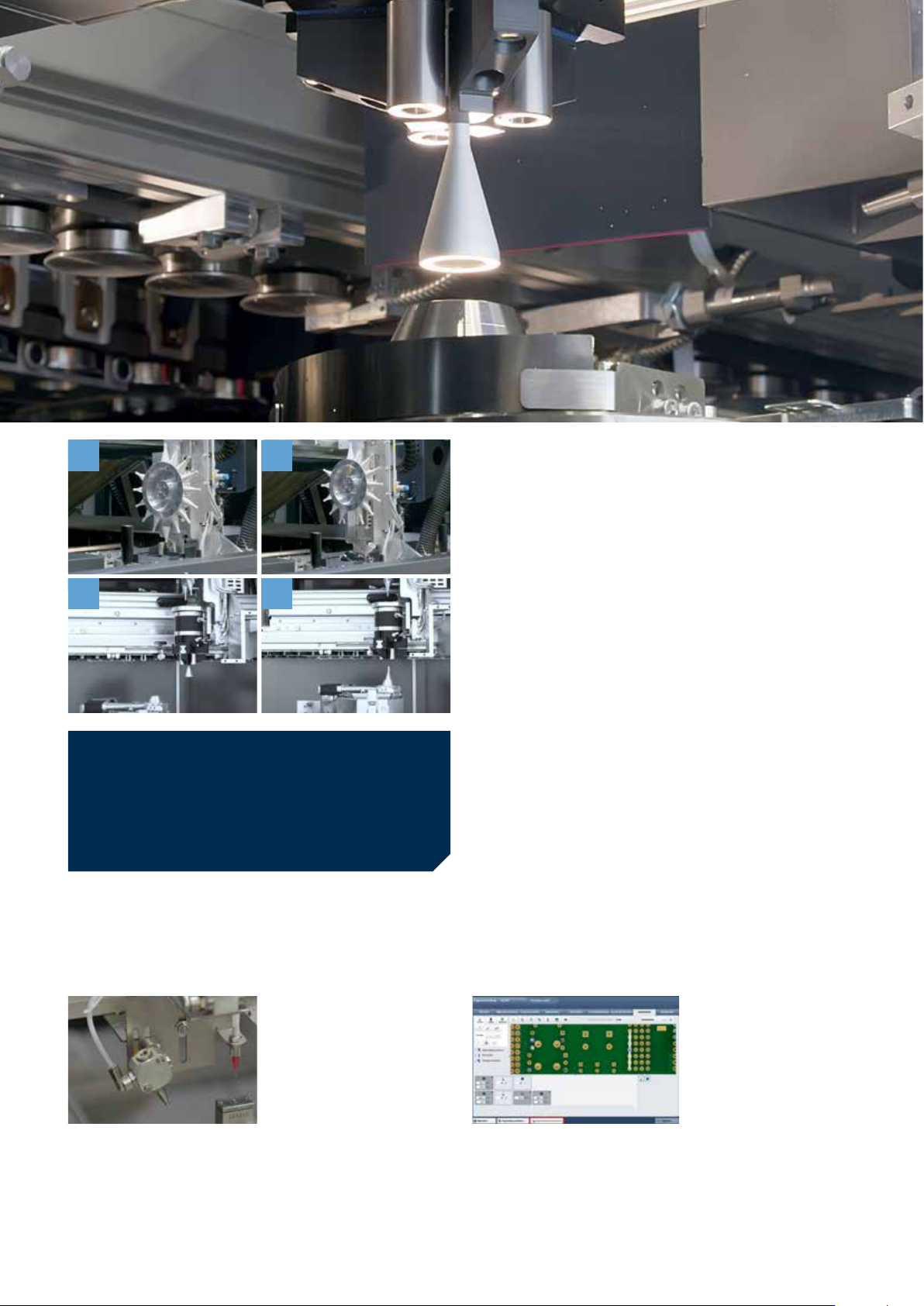
Automatic nozzle changer
The automatic nozzle changer is a new feature of the
VERSAFLOW FIVE, especially for scenarios with frequent
program changes and limited operator presence. It replaces
manual nozzle changing, thereby increasing efficiency and
process reliability throughout the entire soldering process.
Automatic change during operation
The nozzle changer can operate on an event-driven basis
according to runtime or board counter, or it can be started
manually at any time. When the program starts, it automati-
cally inserts the specified soldering nozzle.
Safety during setup
VERSACAM can optionally be used for optical setup control.
CAD Expert Mode
The Expert Mode in CAD
Assistant 4 enables
manual routing of fluxer
and solder modules
to further optimize
throughput and cycle
time. This feature allows
you to specify the order in which the fluxer and solder modules
process a board. Expert Mode is available in both synchronous
and asynchronous modes for two-stopper operation.
Automatic flux nozzle
cleaning
The automatic flux nozzle
cleaning significantly
reduces the need for
manual intervention. It
automatically removes
contamination from
Dropjet spray heads, thus maintaining consistent spray quality.
This is especially important during periods of low staff availability,
such as night shifts or line start-ups, as it ensures high process
reliability and minimizes downtime.
Advantages:
Higher overall equipment
effectiveness (OEE) due to
shorter setup times
Higher process reliability
Predictable machine
availability
Ideal for unattended
operation
16